Friesenhausen Castle: A Moated Castle in Germany
Site at a Glance
- Popularity
- Medium
- Country
- Germany
- Primary era
- Early Modern
- Eras represented
- Medieval, Early Modern
- Civilizations
- Holy Roman Empire
- Site type
- Domestic
- Remains
- Castle
On this page7 sections
History
Friesenhausen Castle is a moated complex in Germany that took shape during the 13th and 14th centuries. Its history includes Gothic, Renaissance, and Baroque phases. The Lords of Heldritt, the Lords of Steinau von Steinrück, and the Marschalk von Ostheim family were among its owners; their families shaped local history over eight generations.
Medieval and Renaissance phases
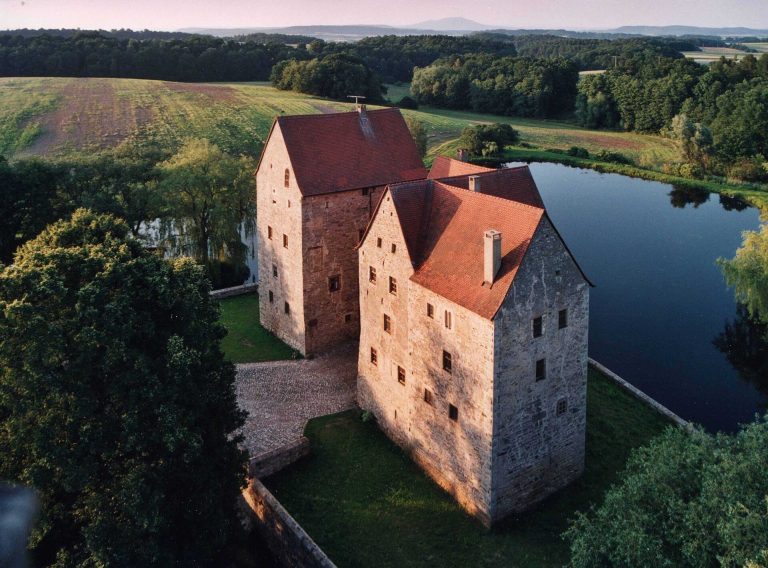
A separate Gothic castle stood in a lake beside the complex from 1300 until 1741. The Truchseß family of Wetzhausen held it at times, and evidence of the family remains in the Protestant Church of St. George. Around 1563, the married couple von Ostheim-Steinau von Steinrück had a Renaissance castle built over the old courtyard, above the earlier Gothic castle.
Baroque remodelling
Johann Gottfried von Guttenberg, prince-bishop of Würzburg, acquired both castles. A prince-bishop held both religious office and authority over a territory. The lakeside castle was held as a Saxon fief, meaning land granted under obligations of allegiance and service, while Friesenhausen Castle was a fief of the Prince-Bishopric of Würzburg, the territory governed by its prince-bishop.
The castle was remodeled in the Baroque style, with further building work under Würzburg cathedral canon Johann Philipp Fuchs von Dornheim and the Lords of Dalberg. A cathedral canon was a member of the clergy chapter associated with a cathedral. The Dalbergs had lived at the castle since 1729 and had the lakeside castle demolished in 1741. After them, the princes of Salm-Salm lived there.
Twentieth-century use and restoration
From 1938, the castle housed the Reich Labour Service, a state labor organization in Nazi Germany. Toward the end of the Second World War, it accommodated prisoners of war and later served as a military hospital for wounded German soldiers. In 1946, it became a transit camp for German expellees from Silesia and the Sudetenland for one year. Caritas, a Catholic charitable organization, subsequently used it as a retirement home.
The Baroque castle stood empty from 1958 until Wolfgang and Marianne von Eichborn acquired and renovated it in 1973. It is now owned by Johann-Friedrich and Gudula von Eichborn.
Remains
Castle complex
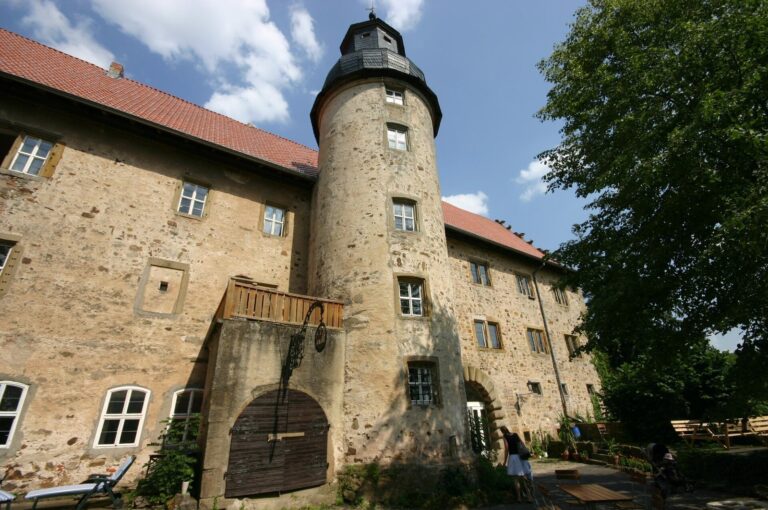
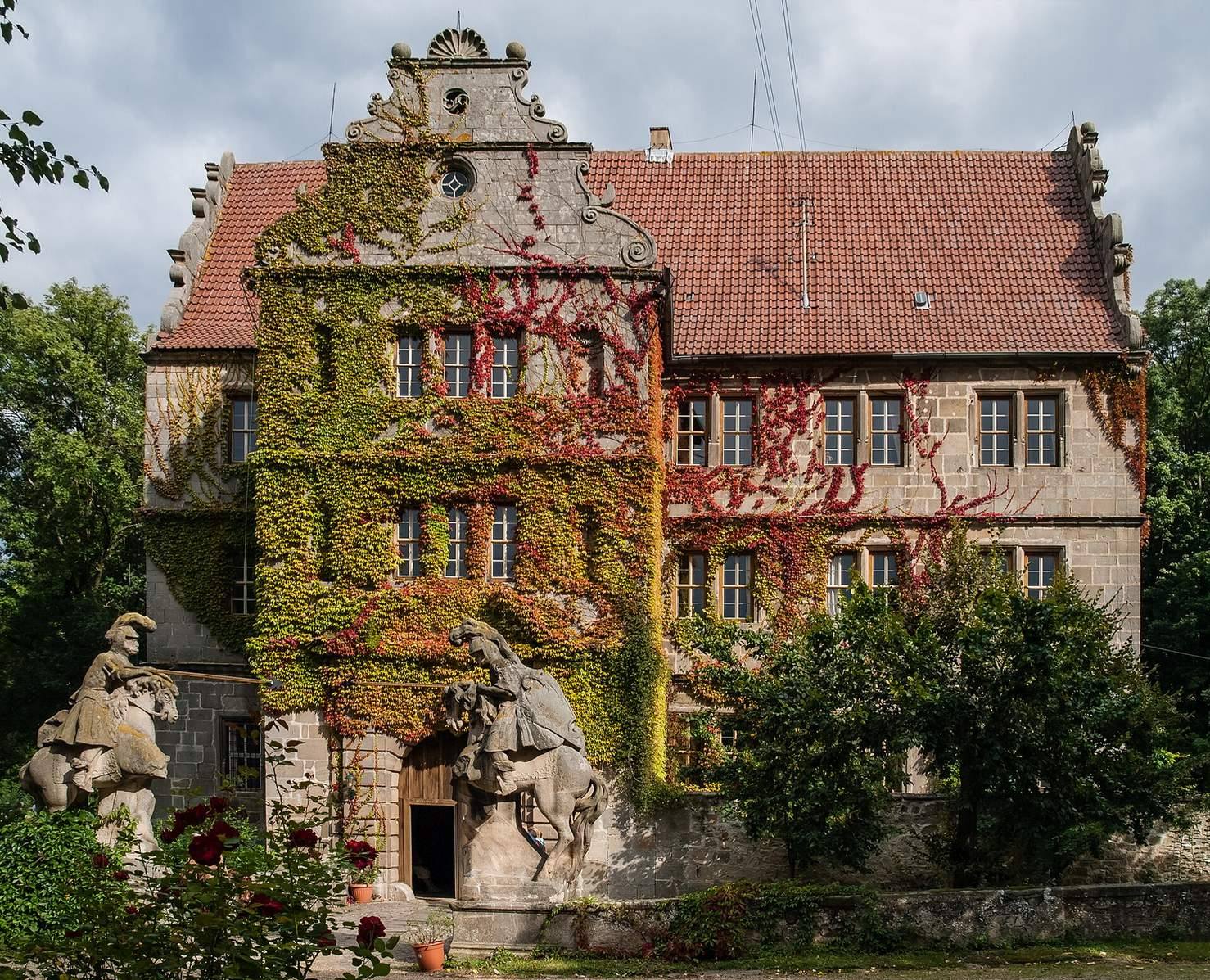
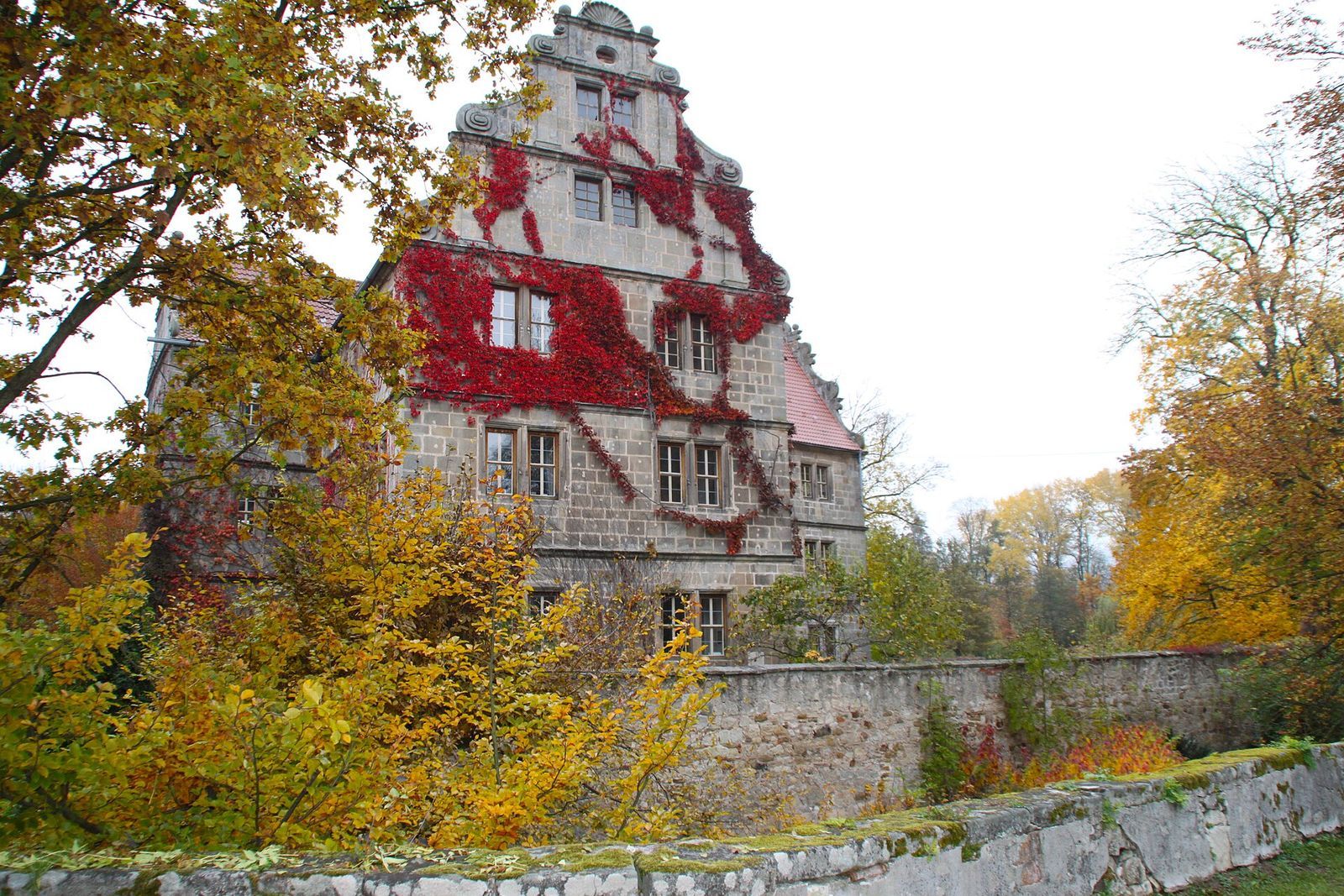
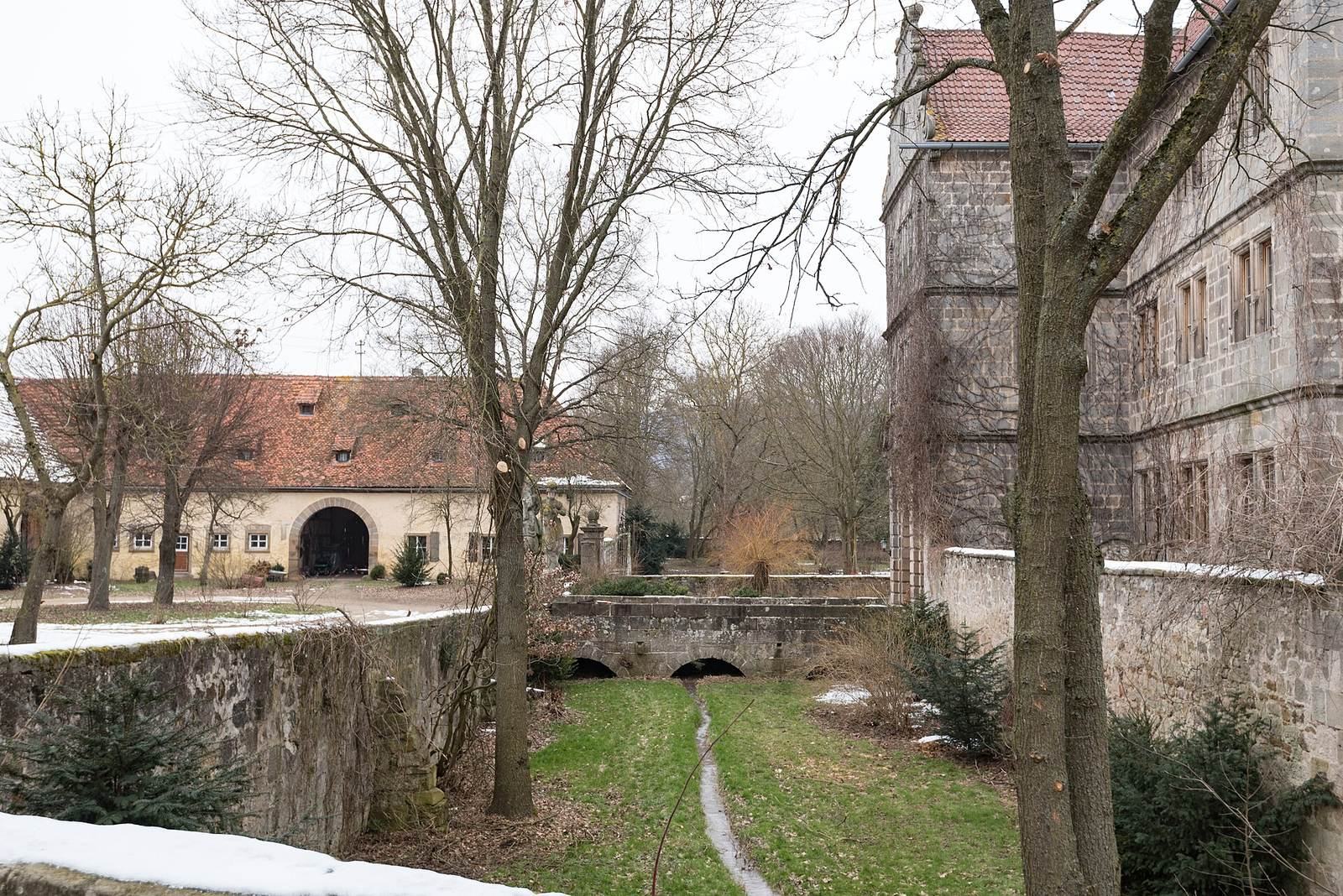
The complex brings together a Gothic castle surrounded by a moat and a Renaissance building placed over the old courtyard above it. Elaborate volute gables, decorated with scroll-shaped curves, are another feature of the castle. A separate Gothic castle once stood in the neighboring lake; the lake was filled with material from that building’s demolition.
Gateway
Added in 1735, the gateway incorporates a stone bridge. Life-size statues of tournament riders stand before its entrance, and the gateway bears the family arms of the Zobel and Dalberg families.