Saint-Yon Manor: A Residence, School, and Asylum in France
Site at a Glance
- Popularity
- Medium
- Country
- France
- Primary era
- Early Modern
- Eras represented
- Early Modern, Modern
- Civilizations
- French
- Site type
- Civic
- Remains
- School
On this page13 sections
History
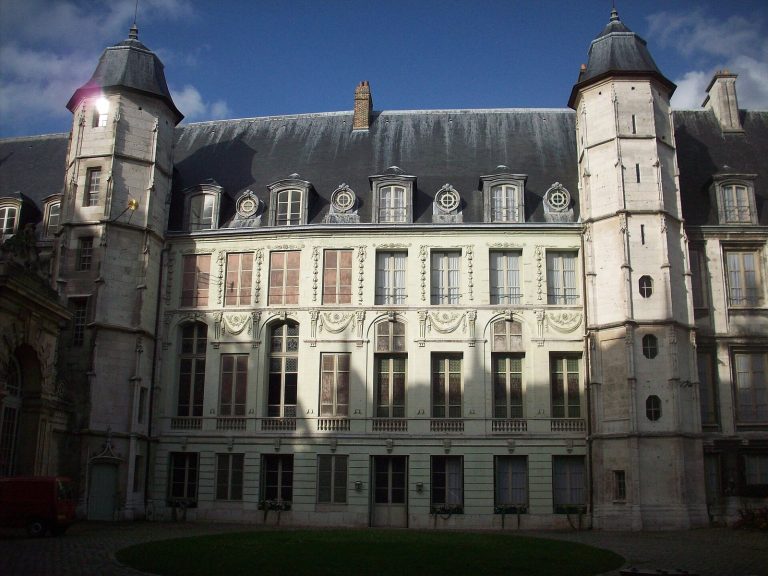
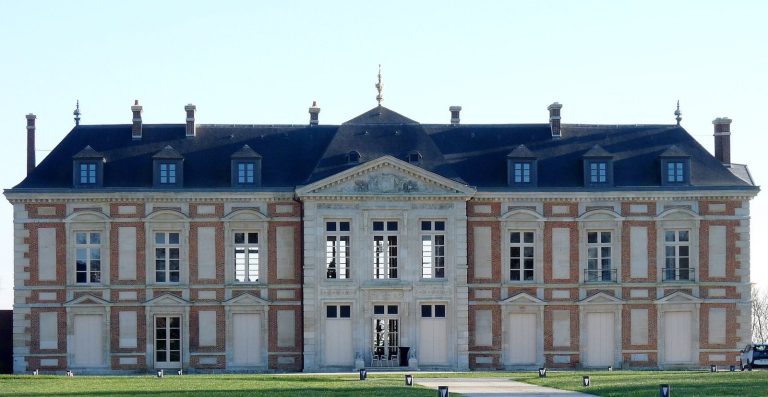
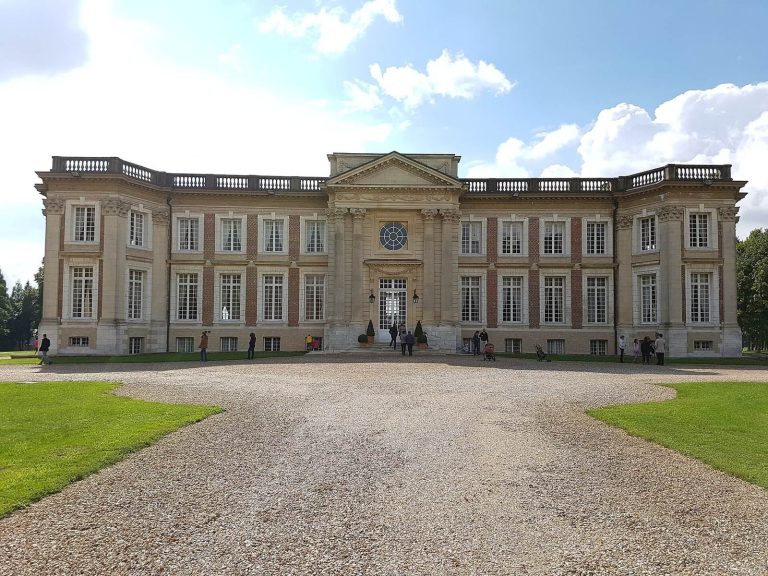
Saint-Yon Manor is a large residence built in the early seventeenth century in France. It later became the main house of the Brothers of the Christian Schools and served as a school, an asylum, and a teacher-training institution.
From Hauteville to Saint-Yon
The property was first known as Hauteville. The poet Philippe Desportes had owned it before Eustache de Saint-Yon acquired it in 1604. The manor then took the Saint-Yon name.
La Salle and the Brothers of the Christian Schools
In 1705, Rouen’s Bureau for the Able-Bodied Poor called Jean-Baptiste de La Salle to the city. A French Catholic priest and educator, La Salle founded the Institute of the Brothers of the Christian Schools, a teaching congregation. He first leased the manor, then purchased it from Anne de Souvré, Marquise de Louvois, whose husband was a minister under Louis XIV. La Salle made Saint-Yon the headquarters of his developing institute and moved its novitiate, a place for training people entering a religious order, to the estate.
With the support of Colbert, archbishop of Rouen, and Nicolas Camus de Pontcarré, president of the Parliament of Normandy, a high court under the French monarchy, La Salle opened a boarding school. Saint-Yon became the Brothers’ main house in 1714, a role it retained until the French Revolution. The community’s residence there led people to call its members the Brothers of Saint-Yon or Yontains. La Salle lived at the manor from 1705 to 1709, then returned in 1715 and remained until his death in 1719.
The school’s teaching responded to the changing needs of commerce and industry. Its subjects included mathematics and science, commerce, finance, military studies, architecture, and more traditional topics, but not Latin. Students also learned practical skills.
Between 1728 and 1734, the Brothers built a chapel dedicated to the Holy Child Jesus. La Salle was buried there. The chapel’s statues of Saint Joseph and Saint Yon, sculpted by Marin-Nicolas Jadoulle between 1763 and 1766, were destroyed during the French Revolution, the political upheaval that began in 1789 and transformed France’s monarchy and religious institutions.
Revolution and asylum use
In the second half of the eighteenth century, the establishment also functioned as a prison and an asylum for people with mental illness. After the Brothers left during the Revolution, the property was successively used as a revolutionary prison, a hospital, a barracks, and, from 1812, a place to confine beggars.
The Seine-Inférieure General Council converted Saint-Yon into an asylum. Between 1825 and 1848, the institution pioneered the collection of social and moral statistics. This work drew interest from medical and intellectual circles in Rouen and from local and national administrations. Chief physician Achille-Louis Foville was replaced by Maximien Parchappe in 1834, and Lucien de Boutteville was director in 1850.
After an asylum for men opened at Quatre-Mares in Sotteville-lès-Rouen in 1849, Saint-Yon was reserved for women. Bénédict Augustin Morel became chief physician in 1856, and the Sisters of Saint Joseph of Cluny provided care. Jean Louis Rousselin succeeded Morel on 27 April 1873. After transferring the services, Rousselin became director of the new Saint-Yon on 30 December 1878.
Teacher training and later uses
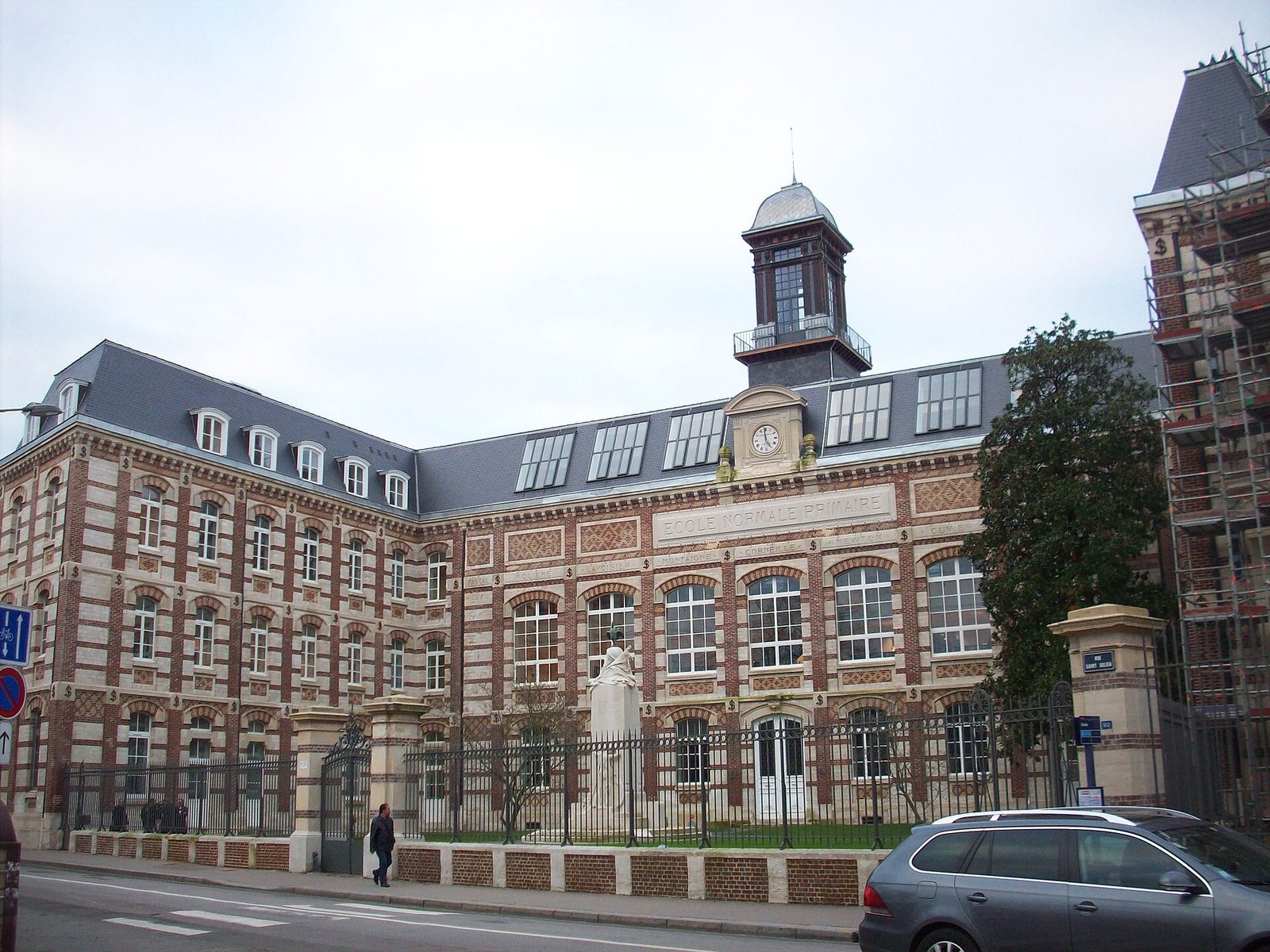
Saint-Yon later housed a teacher-training college. During the First World War, the Union of Women of France established Auxiliary Hospital No. 103 there to treat soldiers wounded at the front. On 27 July 1921, President Alexandre Millerand visited to lay a wreath at the war memorial for the primary teacher-training college.
The teacher-training college moved to Mont-Saint-Aignan in 1963. During the 1970s, the site housed first Alexis-Carrel College and then Jean-Lecanuet College. The former chapel served as the Upper Normandy Careers Centre from 2005 to 2011. The Regional Council of Upper Normandy acquired and restored the manor in the 2000s, and the buildings have housed the Regional Knowledge Hub, known as Atrium, since 2012. The chapel crypt was listed as a historic monument in 1991.
Remains
The property combined a large residence and educational grounds with later buildings for worship, asylum care, and teacher training. Its features reflect these successive uses, from school workshops and gardens to the chapel, institutional wings, and a covered courtyard.
Educational and religious complex
Workshops and gardens
The educational establishment included workshops for sculpture, locksmithing, and carpentry. Parts of the gardens were used to teach horticulture, while other areas served botanical study.
Chapel
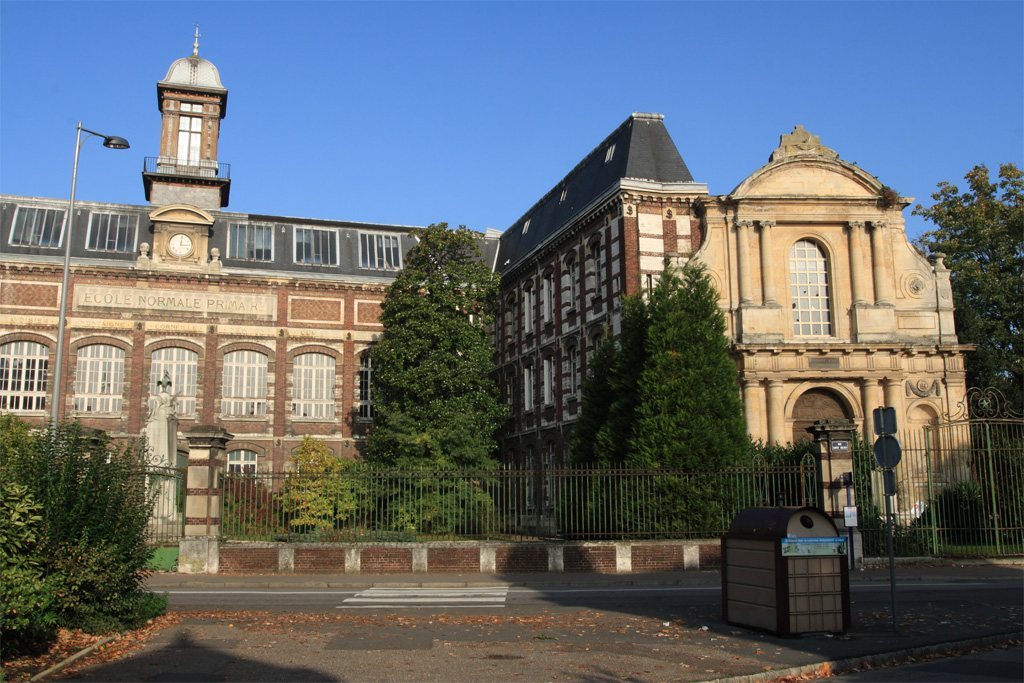
The chapel retains its classical façade and includes a crypt, an underground chamber. A concrete slab divides the interior into two parts. The chapel formerly served as the Upper Normandy Careers Centre from 2005 to 2011.
Institutional buildings and courtyard
Asylum wing
A new wing for the asylum was built between 1822 and 1830. It formed part of the expansion of Saint-Yon under the Seine-Inférieure General Council.
Teacher-training college
The teacher-training college building was erected in 1881. The war memorial for the primary teacher-training college stands in front of its façade.
Covered courtyard
A glass roof once covered the former courtyard. A large, translucent ETFE vault was later installed over it. ETFE is a lightweight, transparent material used as a building membrane.