Mandø Church: A Parish Church on the Danish Island of Mandø
Site at a Glance
- Popularity
- Low
- Country
- Denmark
- Primary era
- Early Modern
- Eras represented
- Early Modern, Modern
- Civilizations
- Danish
- Site type
- Religious
- Remains
- Church
On this page16 sections
History
Mandø Church is a parish church on the island of Mandø in Denmark. Its present building dates to 1727, after earlier church buildings were lost to flooding.
Early church and rebuilding
Mandø’s church appears among the churches of the Diocese of Ribe in a record from 1340. A storm surge in 1558 destroyed the church on Old Mandø. A replacement was built on New Mandø in 1570.
Floods and the present church
Flooding covered much of the island on 11 October 1634. No one died, but the church was destroyed. Repairs were completed in 1639. The present church dates to 1727 and underwent restoration in 1959.
Parish and funeral customs
Mandø Parish is among the smallest in Denmark. Services are conducted by the pastor of Vester Vedsted. The parish belongs to the Wadden Sea Pastorate, Ribe Deanery, and Diocese of Ribe.
A longstanding funeral custom continues on the island. A family member invites neighbors and friends, and the family brings out the coffin kept in the church loft and places the deceased in it. Family and neighbors dig an unusually wide grave together. After the church service, the family carries the coffin to the grave, where the priest conducts the committal and blessing. The family then sings two or three hymns in the church while neighbors cover and decorate the grave. Everyone returns to finish with the hymn “Christ Rose from the Dead.” The coffin is kept ready in case flooding delays passage across the low-tide causeway.
Remains
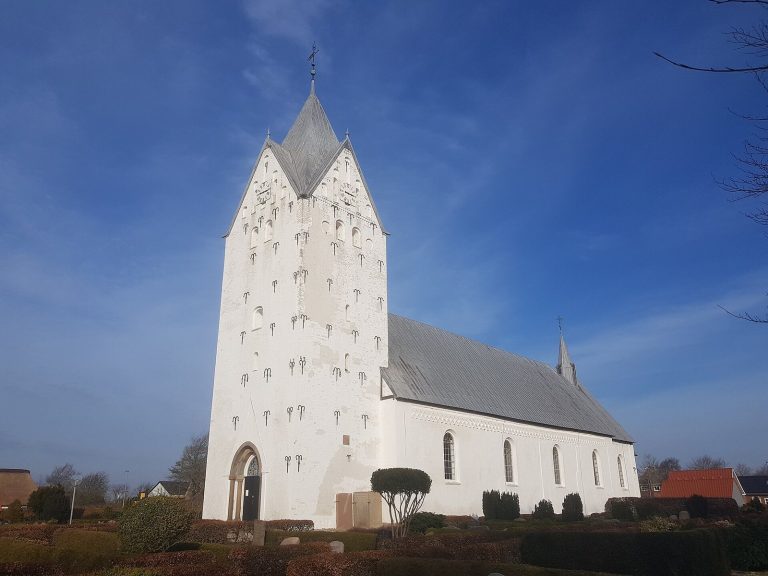
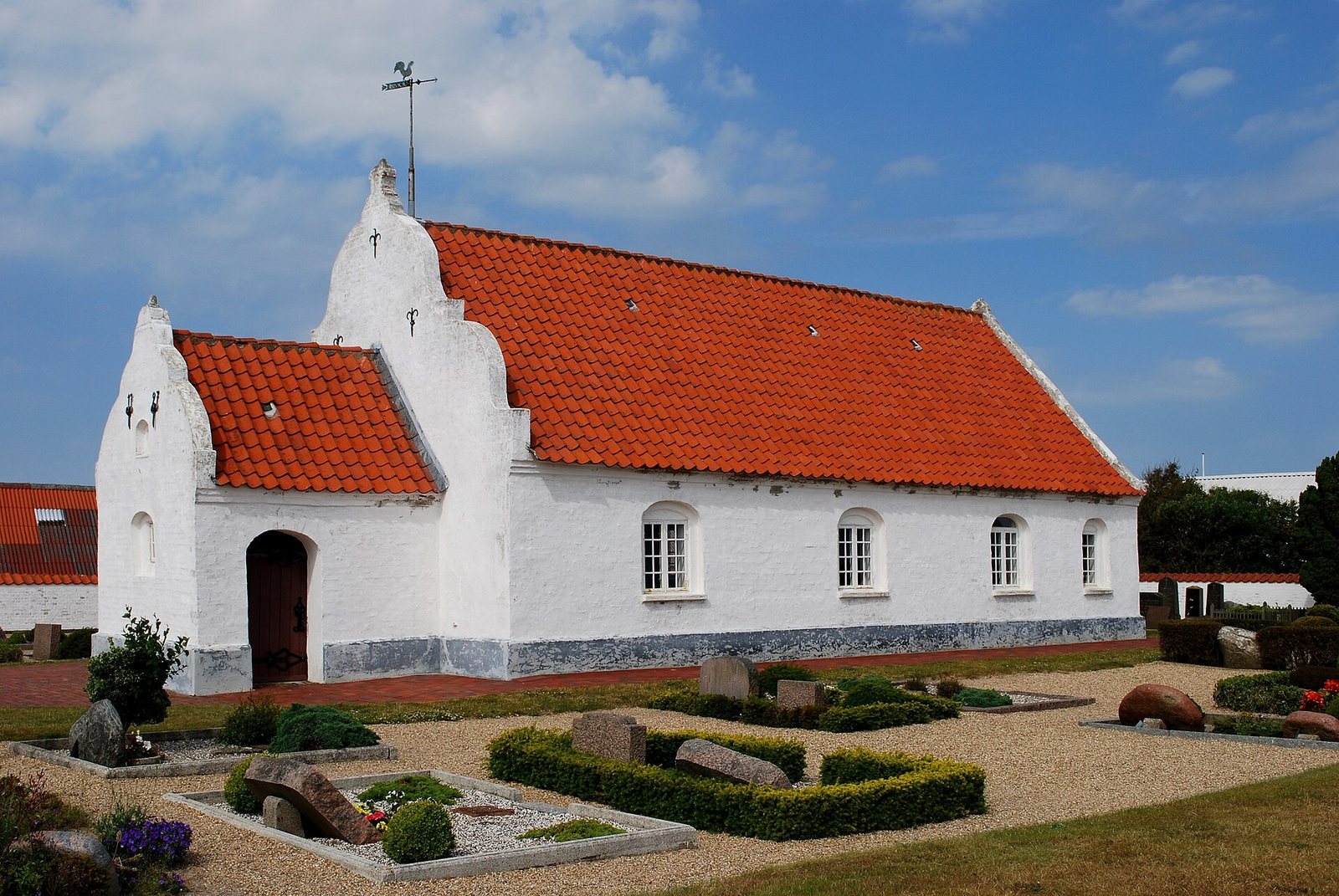
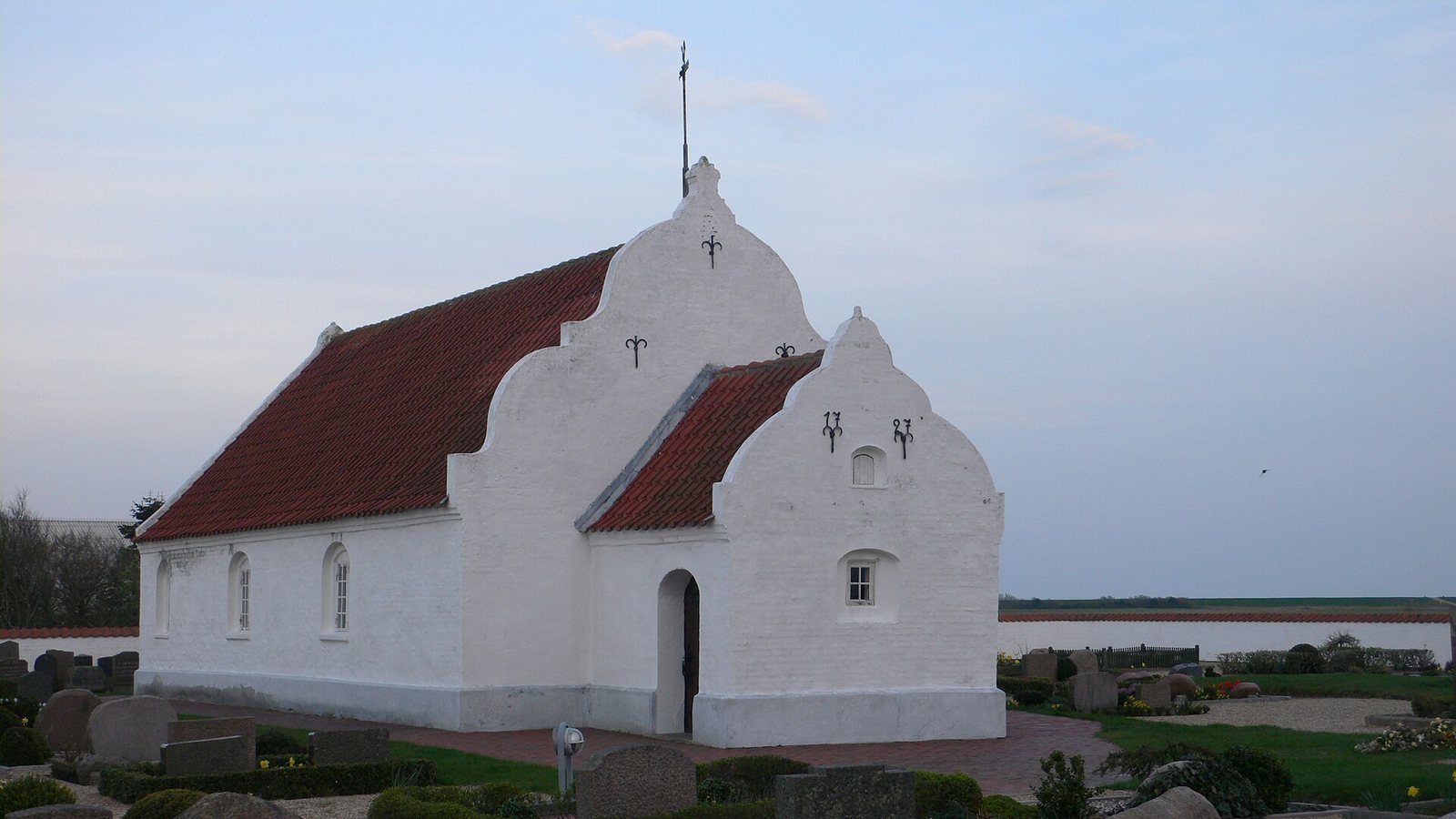
The church and its churchyard stand on a raised mound, with a compact, towerless brick longhouse at the center. A porch marks the west end, and a separate bell frame stands outside the building.
Exterior and churchyard
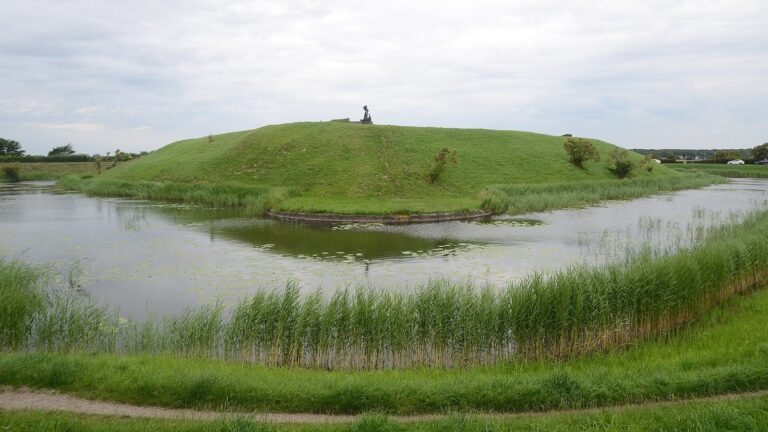
Raised churchyard
The mound raises both church and churchyard above high water. A wall around the churchyard was built in 1973. A memorial erected there in 1950 honors sailors who died abroad.
Church building
The small, towerless longhouse is built of large medieval bricks and can accommodate about 150 people. Its south wall has four original windows, while the north wall has one. Two more windows were added in 1727.
Porch and bell frame
The west porch dates to 1792 and has two main doors, with the choice of entrance depending on the wind direction. A bell frame west of the church was erected in 1939. An inscription on its bell identifies Hamburg as the place where it was cast.
Interior and furnishings
Church room
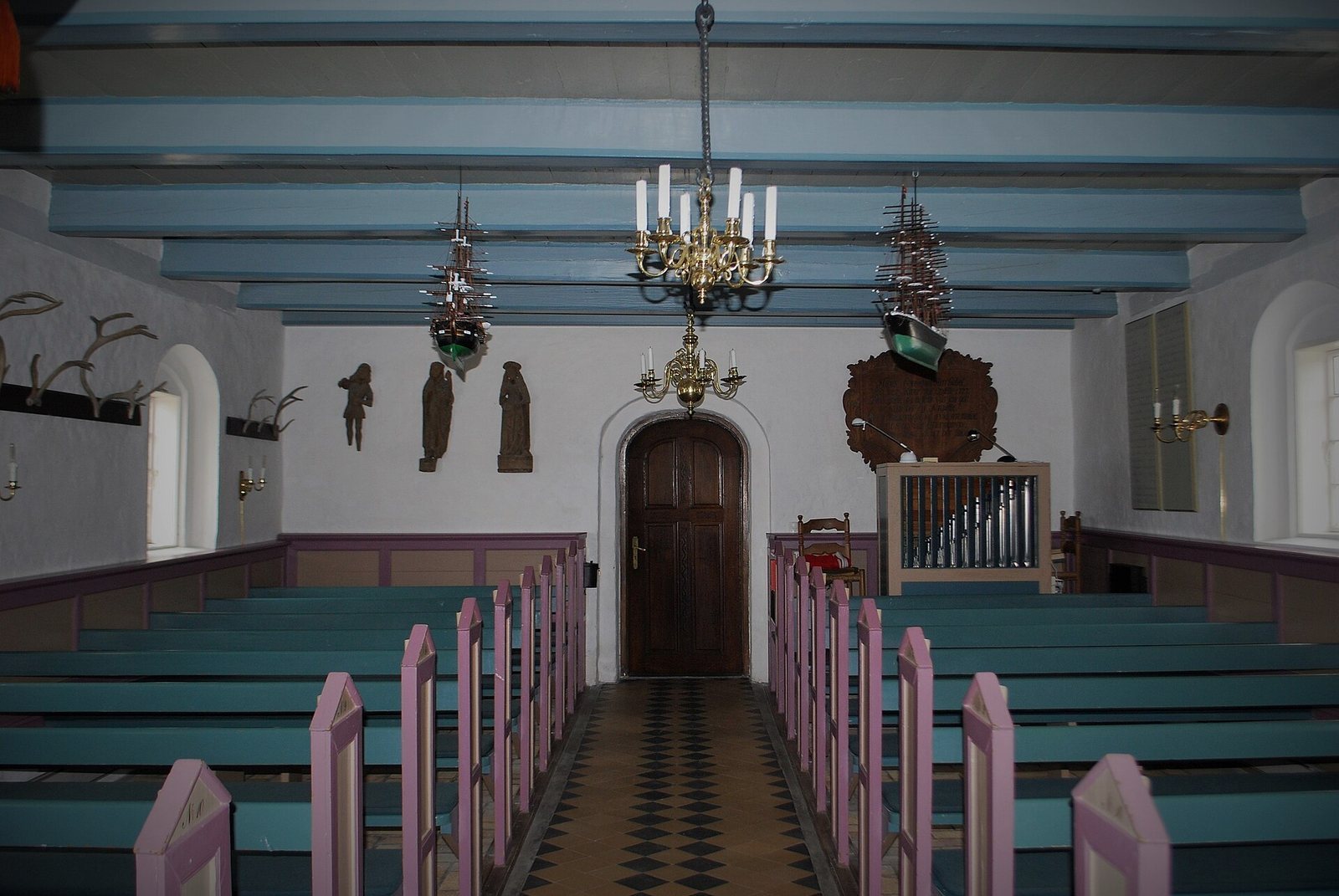
The interior is a low, undivided room with whitewashed walls and a flat wooden ceiling. Openings in the ceiling allowed vapor from gatherings to escape, a practical feature when the church was often unheated in earlier times.
Altar and communion objects
The altarpiece is an 1898 copy of Danish painter Joakim Skovgaard’s Jesus with the Robber in Paradise, painted in 1890. Moisture damaged the original after it had hung in the church for a few years; it is now in Copenhagen’s Hirschsprung Collection. The silver chalice and paten, the plate used to hold Communion bread, date to 1686, and the candlesticks to 1739. A brass dish shows the spies in Canaan, the scouts in the biblical story of the land. A communion picture near the pulpit came from Ribe Monastery.
Pulpit
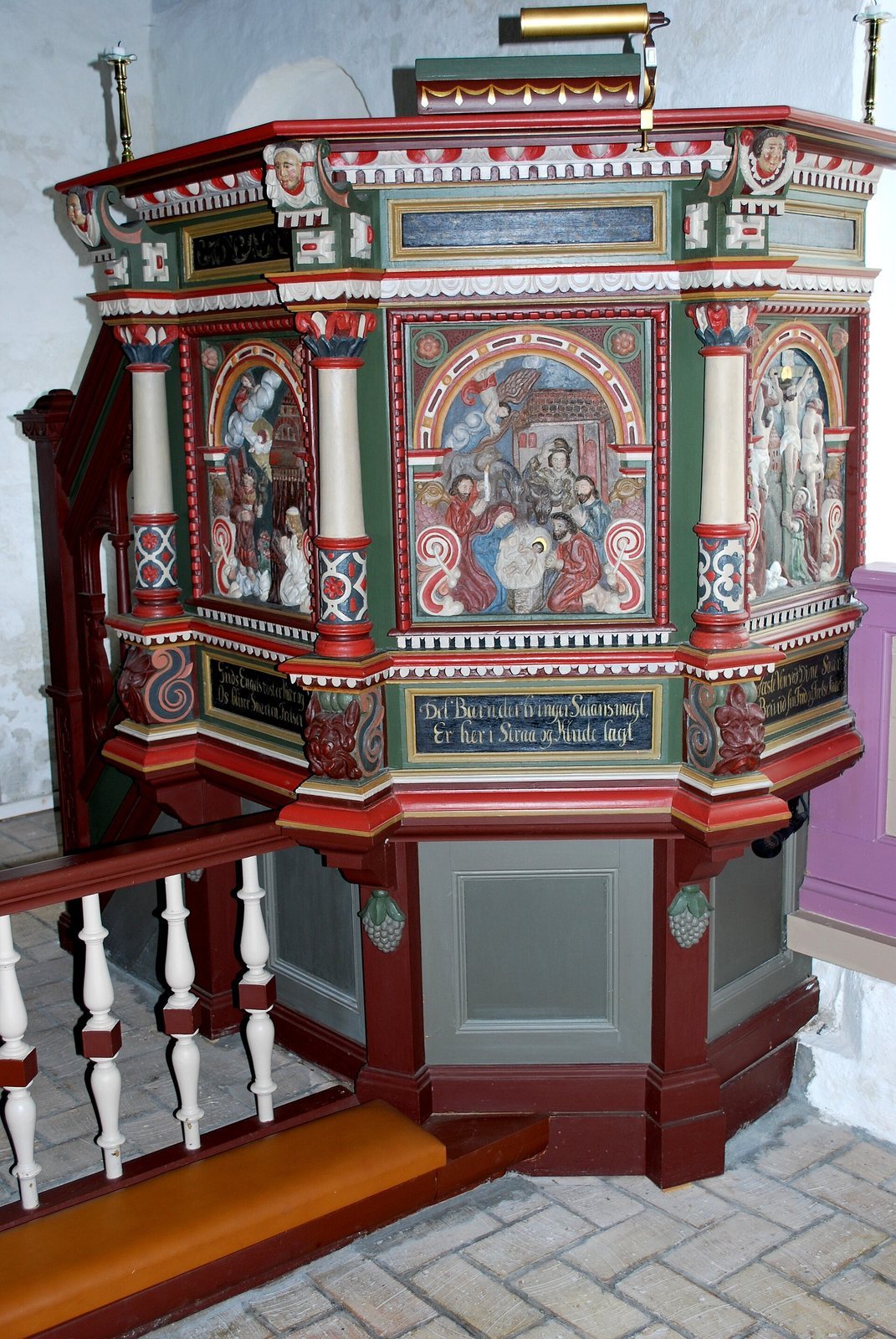
The pulpit was made in 1650 and brought from Ribe Hospital in 1826. Its scenes depict the Annunciation, the birth of Christ, and the Crucifixion.
Baptismal font
A granite font stands in the northeast corner of the nave. It is a 13th-century example of Romanesque work, a style that developed in western Europe before the Gothic period, and probably came from the former church on Old Mandø. Fourteen carved arched panels run around its sides. The baptismal basin dates to about 1738.
Wooden figures
Three old wooden figures are displayed on the rear wall. They probably came from the former church on Old Mandø and are known to have lain in salt water.
Antlers, ship models, and organ
Reindeer antlers around 10,000 years old hang on a side wall. Found west of Koresand, they point to a time when the area now beneath the North Sea was dry land. Four model ships recall the island’s former seafaring population. The warship Tre Kroner predates 1768; the other models date from the 19th century, 1939, and 1947. The church organ dates to 1976.