Ribe Katedralskole: Denmark’s Oldest Gymnasium and Cathedral School
Site at a Glance
- Popularity
- Medium
- Country
- Denmark
- Primary era
- Modern
- Eras represented
- Medieval, Modern
- Civilizations
- Danish
- Site type
- Civic
- Remains
- School
On this page10 sections
History
Ribe Katedralskole is a cathedral school, historically linked to a cathedral, in Ribe, Denmark. Today it operates as a gymnasium, a Danish upper-secondary school, and offers the Higher Preparatory Examination (HF), an upper-secondary qualification. It is Denmark’s oldest gymnasium and one of the world’s oldest schools, with a written history reaching back at least to 1145.
Medieval origins and changing locations
On 13 June 1145, Bishop Elias of Ribe transferred the school to the cathedral chapter, a body of clergy responsible for a cathedral’s governance and religious life. The transfer letter is the earliest known written mention of the school, and 13 June is now marked as its birthday. The school already existed by then, though its earlier ownership is uncertain; it must have had some form of church connection. Ribe’s bishopric, the area governed by a bishop, was established in 948 and is Denmark’s oldest. The school may date from the same period, but its foundation then is not established.
The school’s early building history is unclear, although it occupied its present grounds at some point between about 1300 and 1500. Around 1500 it moved to the Old Cathedral School on Skolegade, opposite the cathedral’s main entrance. It returned to its present site in 1856, when a new main building was erected beside Puggård.
Church oversight and school leadership
The cathedral chapter oversaw the school until 1660, when it passed into state ownership. In the sixteenth and seventeenth centuries, serving as rector often opened a path to a senior church career. Many of the school’s rectors later became priests, provosts, senior clerics who may oversee churches or clergy, or bishops.
First World War and remembrance
On 28 June 1923, the school unveiled a memorial to four former students who fell in the First World War. Andreas Laurenzius Jensen, who graduated in 1907, died during the winter of 1916. Asger Jacobsen, who finished school in 1910, went to Berlin in October 1913 for compulsory service in the German army. He was urgently recalled on 31 July 1914 while travelling home on leave. French forces captured his trench in France on the night of 30-31 October, after which no further news of him emerged.
Asmus Christensen, who passed a lower-secondary school-leaving examination in 1909, was conscripted in 1914 and died near Moislains on 1 December 1916, aged 24. Otto Bertel Krenchel finished school in 1900, trained as a farmer, and moved to Canada in 1907. When war began, he volunteered for the Allied forces and fought at Ypres. He received the Victoria Cross, a British decoration for exceptional bravery in combat, became a lieutenant in 1917, and fell on 2 September 1918.
Modern institution
The school remained state-run until 1986, when it passed to Ribe County. Following Denmark’s 2007 structural reform, it became self-governing. In January that year it took over the HF course from CVU Vest, formerly Ribe State Teachers’ College. It merged with Ribe’s commercial upper-secondary school in the 2017-18 school year.
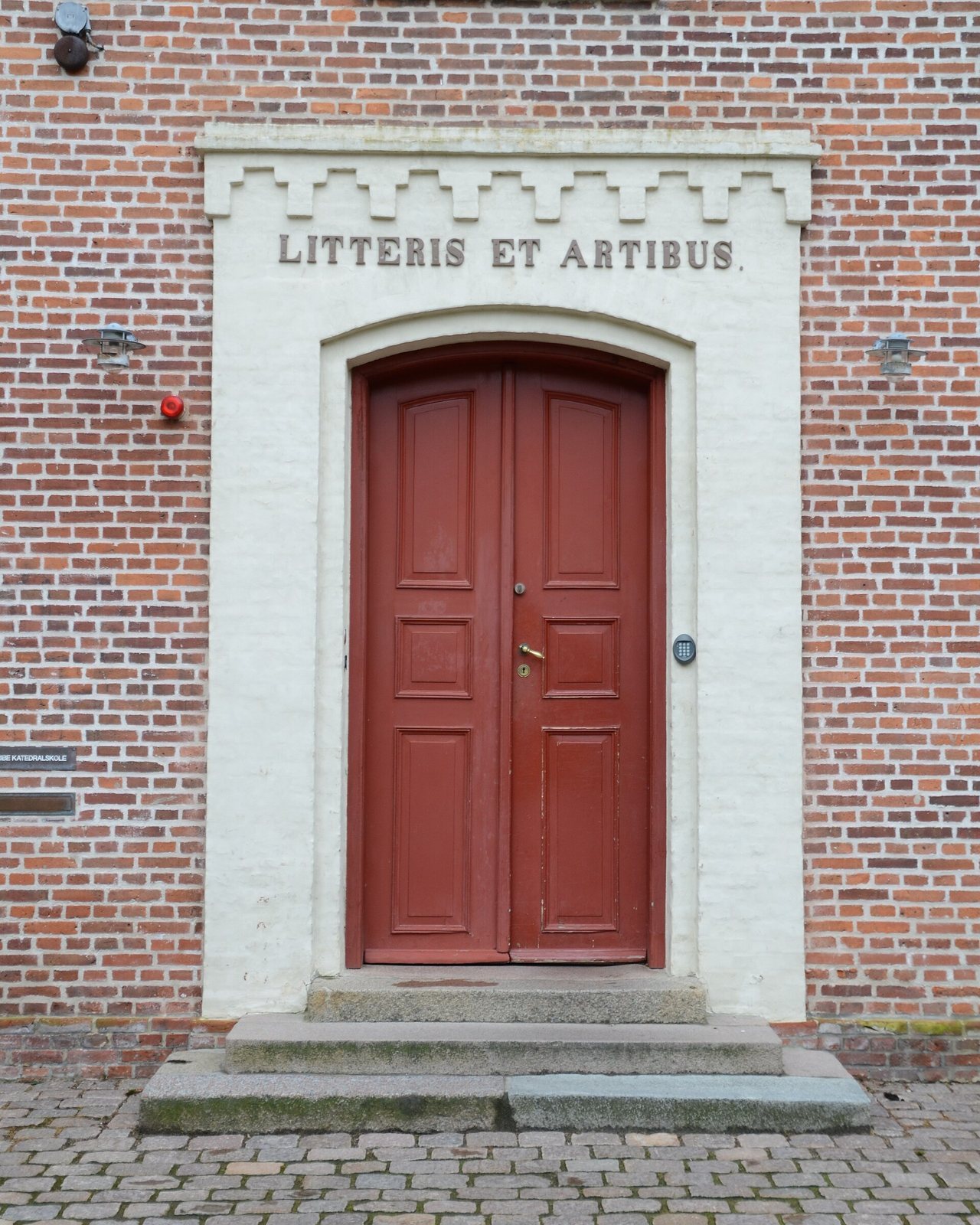
Ribe Katedralskole is affiliated with Ribe Cathedral and the Church of Denmark, the country’s Evangelical Lutheran church. Formerly called Ribe School, it uses the motto Litteris et artibus, meaning “Literature and the Arts.” Student life has included the centuries-old association Heimdal, the school newspaper Mercurius, and the student council. Its alumni association is Ripensersamfundet.
Remains
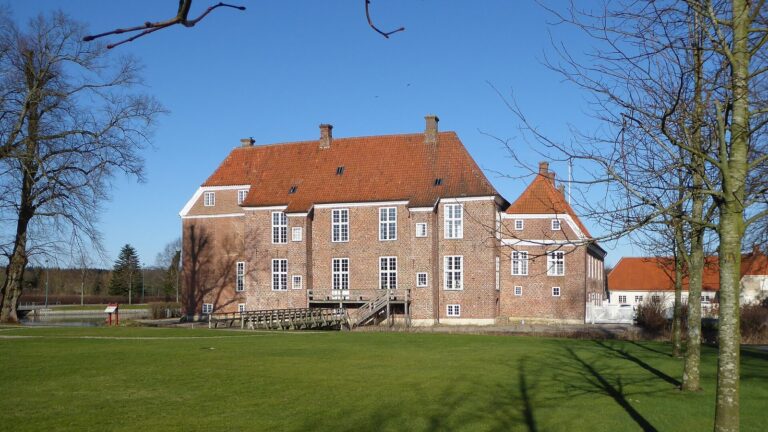
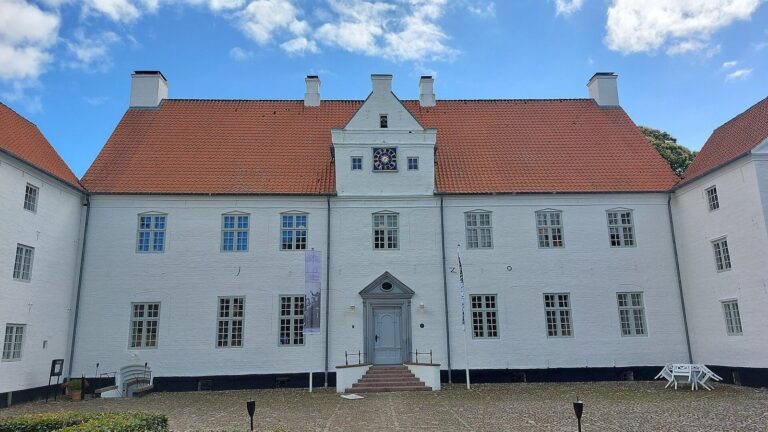
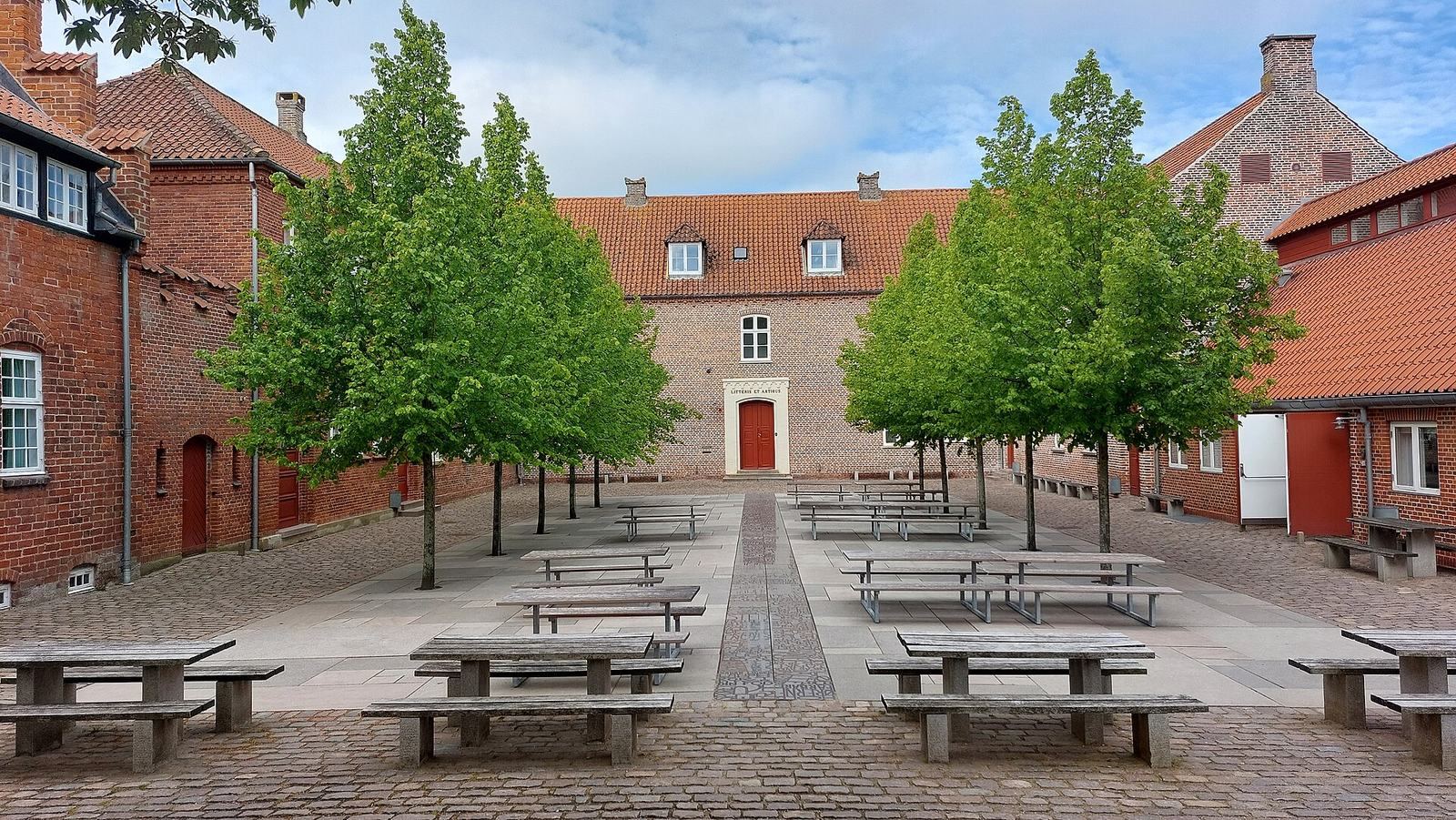
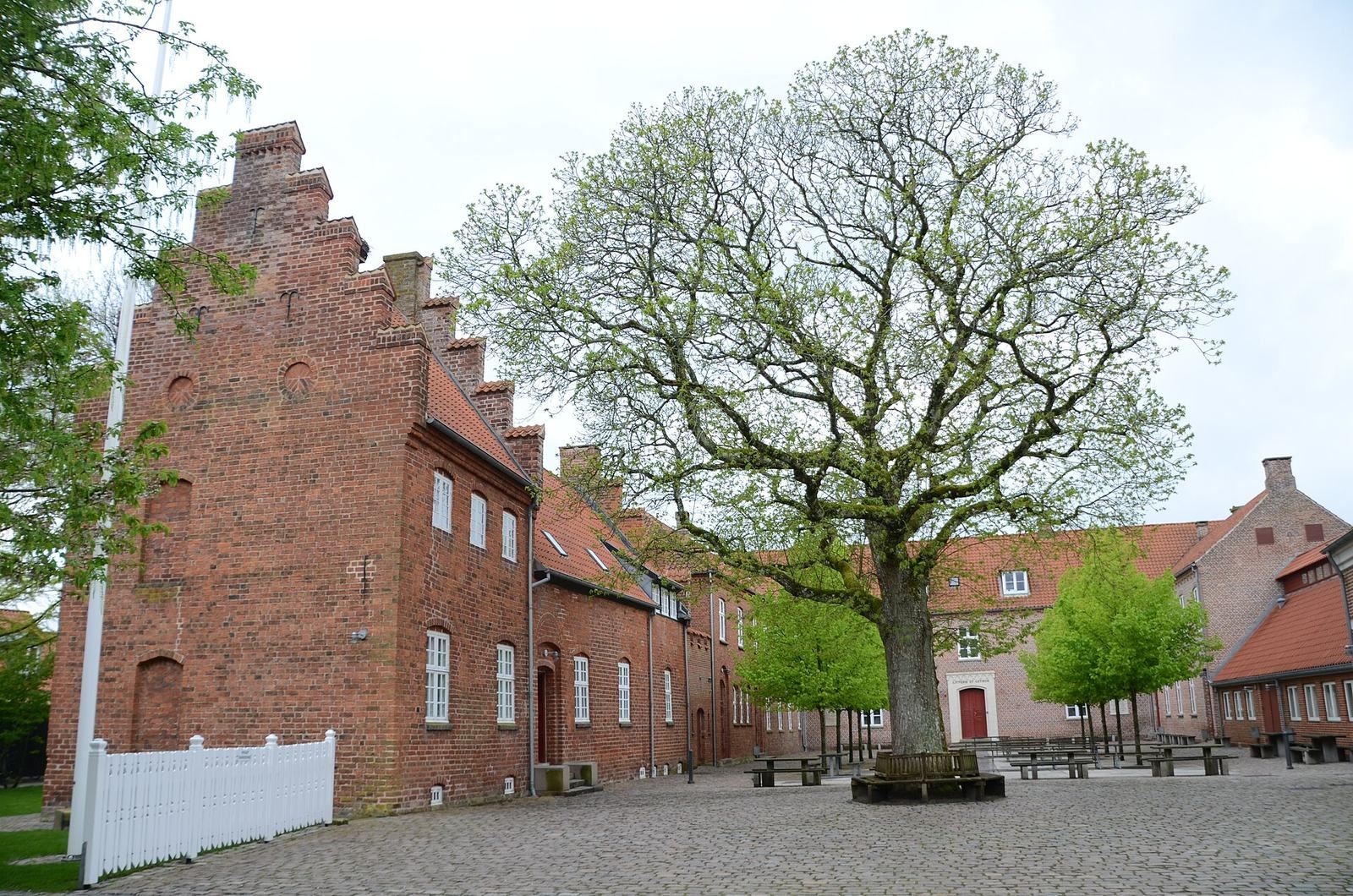
The school occupies most of the block bounded by Puggårdsgade, Gravsgade, and Sviegade, with its main entrance on Puggårdsgade. Its grounds include the main building, a schoolyard, a west wing, and the historic Puggård.
Buildings and grounds
Main building and school grounds
The present main building was erected in 1856 to designs by Ferdinand Thielemann. It has three wings and stands beside Puggård. The schoolyard and west wing are also part of the school complex.
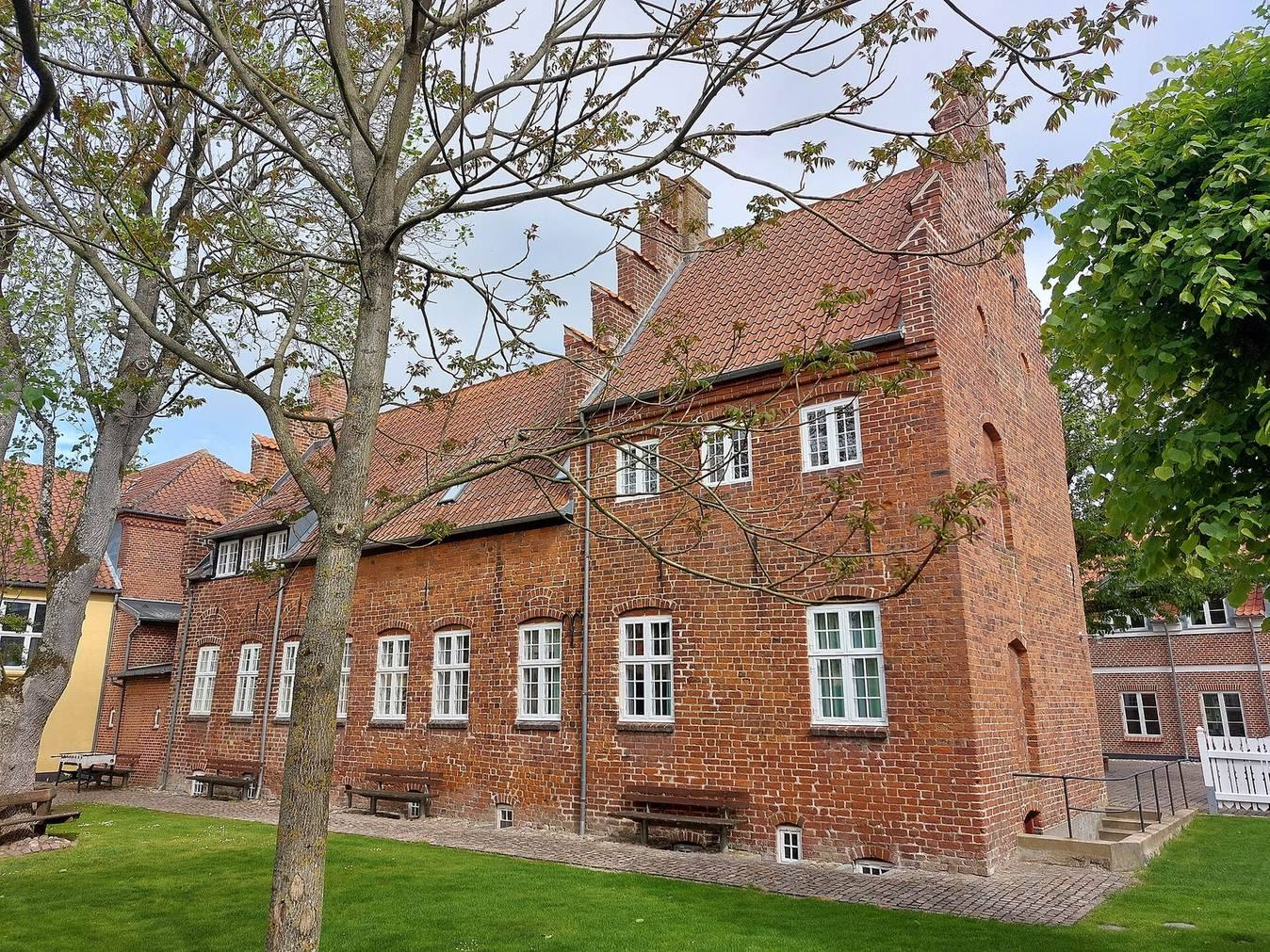
Puggård
Puggård is the oldest part of the school and is broadly dated to the late medieval period. Apart from churches, it is the oldest Scandinavian building still used for its original purpose.
Memorial plaques
A plaque commemorating the school’s First World War dead is positioned to the right of the entrance. The school also has a memorial plaque for students who fell in the Second World War.