Male Castle: A Medieval Fortress and Residence of the Counts of Flanders
Site at a Glance
- Popularity
- High
- Country
- Belgium
- Primary era
- Medieval
- Eras represented
- Medieval, Early Modern, Modern
- Civilizations
- Belgian, County of Flanders, Duchy of Burgundy, Habsburg, Habsburg Spain, Spanish
- Site type
- Military
- Remains
- Castle
On this page8 sections
History
Origins and comital residence
Male Castle is a fortress in Belgium whose origins may lie in a ninth-century defense built to protect the area around Bruges from Viking attacks. Baldwin I, a medieval Count of Flanders, is associated with establishing fortifications at strategic points in the region.
In the 12th century, Philip of Alsace replaced a wooden structure at Male with a stone fortress. He held the castle from 1168 to 1191, and it became a residence of the Counts of Flanders, rulers of a major medieval principality, as well as a center of their administration. Tradition attributes the chapel’s consecration in 1166 to Thomas Becket, the exiled Archbishop of Canterbury. Becket was murdered in 1170 and later became a Catholic saint.
In 1269, Countess Margaret II granted Damme the right to draw drinking water from Male pond. French forces later occupied the castle during conflicts with France. In 1302, Bruges retook it from its French garrison during an uprising led by the city’s political leader Pieter de Coninck and the nobleman and commander William of Jülich. Louis of Male, later Count of Flanders as Louis II, was born at the castle in the early 14th century.
Conflict and rebuilding
The castle’s lands were gradually granted to religious institutions or sold to private owners, contributing to the formation of farms. After the Battle of Beverhoutsveld, Ghent forces destroyed the castle in 1382. Rebuilding was completed in 1397.
Ghent forces plundered Male in 1453. A fire led to another rebuilding in 1473, but troops of the Count of Nassau plundered the castle in 1490. Its vulnerable position made it difficult to defend.
Lordship and modern use
Male retained importance under Burgundian rule, when the dukes of Burgundy controlled territories that included Flanders. In 1558, Philip II, King of Spain and sovereign of the Low Countries, sold the castle to the knight Juan Lopez Gallo. Gallo became Baron of Male in 1560, and the castle became the seat of a local lordship, a territory governed by a lord with local authority. Noble families lived there, and the property later passed by marriage to the Gourcy family.
In 1920, Charles Gillès de Pélichy, a senator and descendant of the family, bought Male. Its upkeep later declined, and the castle fell into disrepair. German troops occupied it during both world wars, causing severe damage. After the Second World War, it was almost entirely rebuilt and restored.
The Sint-Trudo Abbey, a community of women religious, moved into the castle in 1954 and left in 2013 for a building in Sint-Pieters-Brugge. On 29 and 30 September 1962, representatives of the Campaign for Amnesty 1961 from several countries met at Male and decided to rename the movement Amnesty International, an international human-rights organization. The new name emphasized its worldwide scope and distinguished it from campaigns focused on individual countries. Hein Deprez bought the property in 2011, and it is now owned by the Deprez family.
Remains
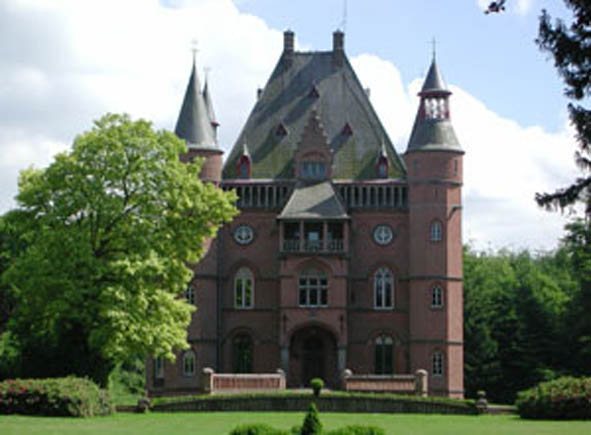
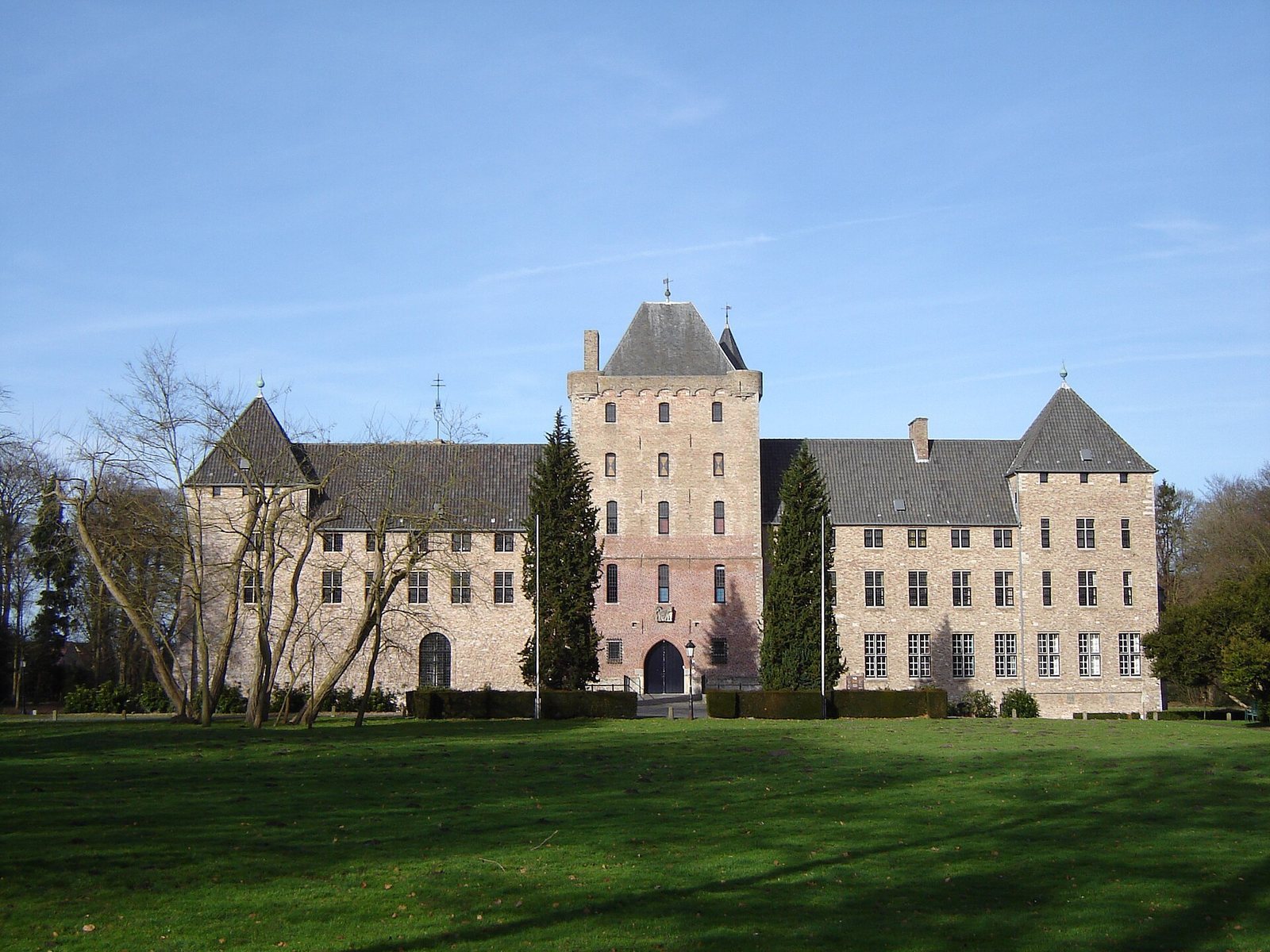
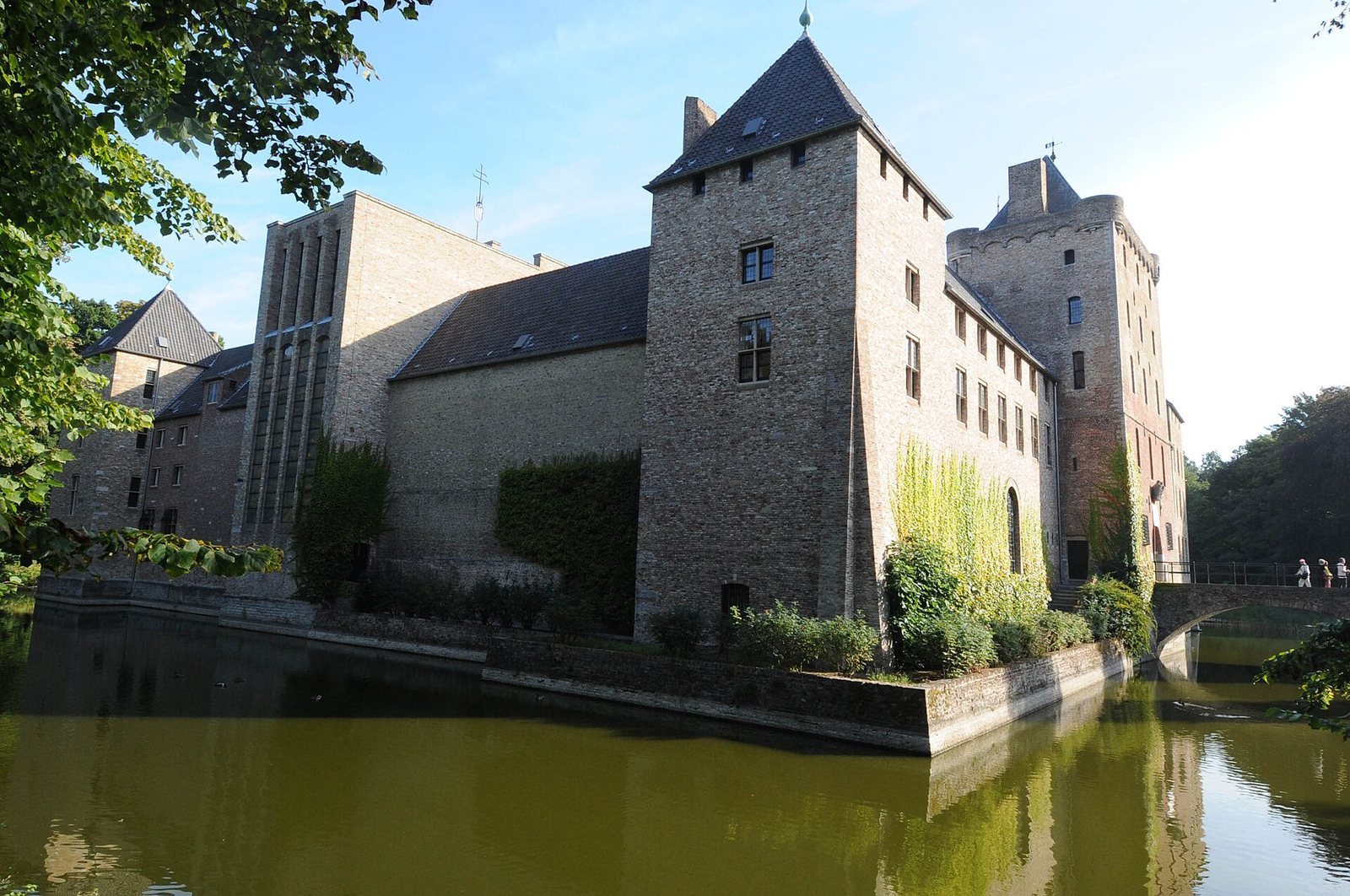
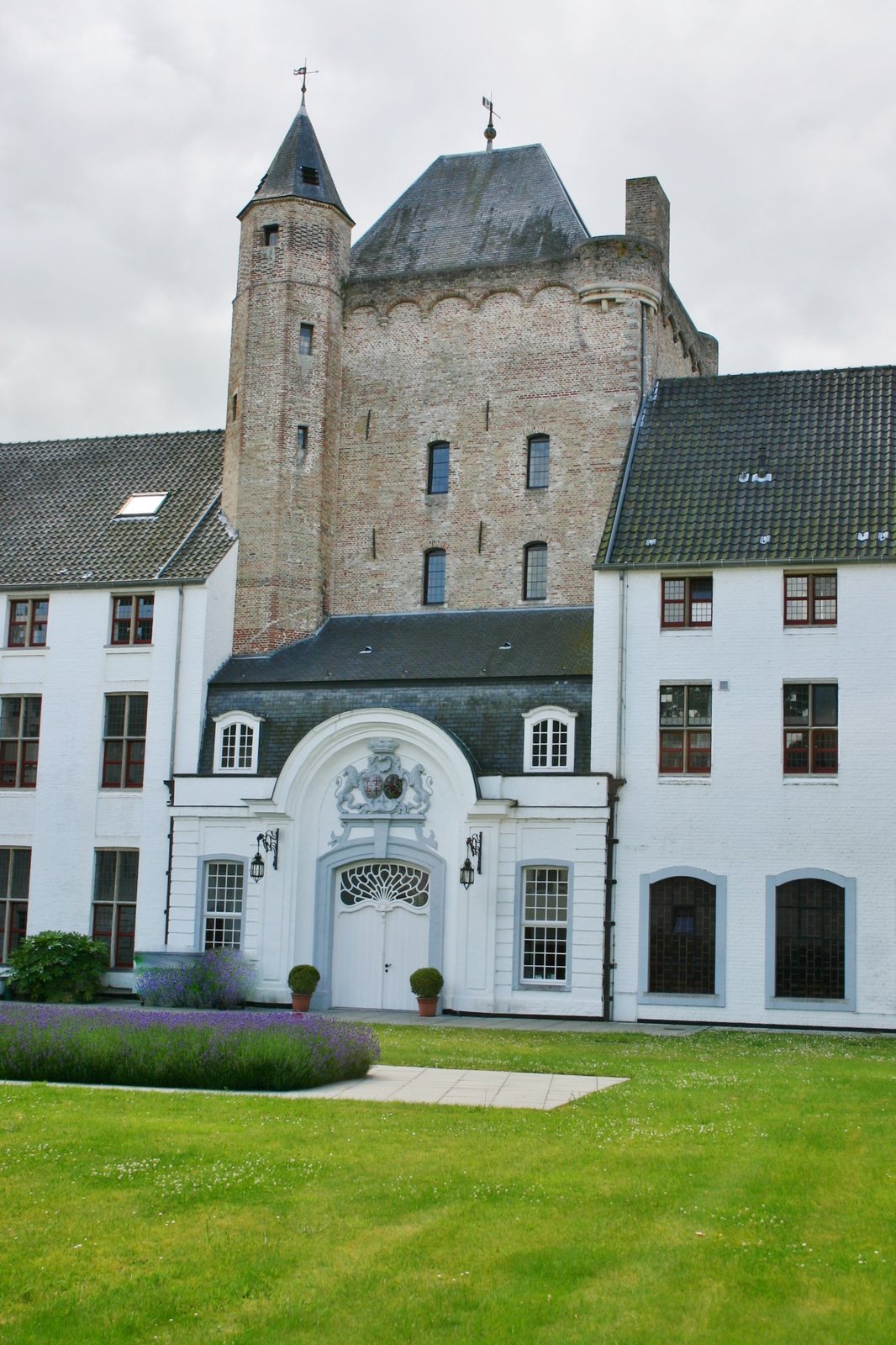
The present complex centers on a keep whose foundations stand directly in the moat, flanked by symmetrical wings. Extensive rebuilding and restoration after the Second World War shaped much of the surviving ensemble.
Keep and wings
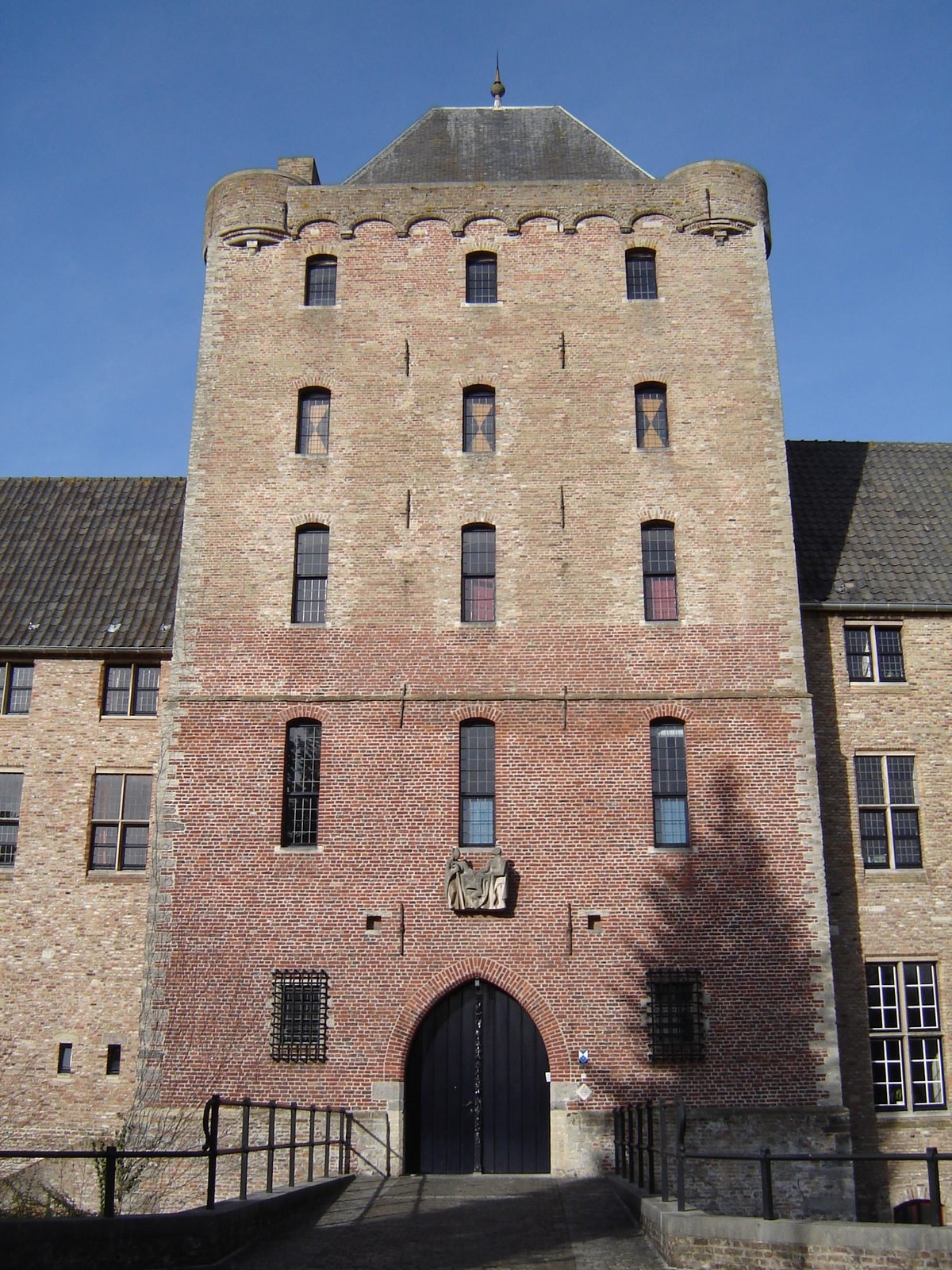
The present keep is associated with the rebuilding that followed the 1473 fire. The castle tower dates from the 16th century, and a 17th-century wing is attached to it.
Pond and watercourse
Male pond lies west of the castle. A pipe carried water from the area to Damme beneath a road 4,200 metres long, now called Pijpeweg. A remnant of the pond surrounds nearby Kasteel De Vijvers, also known as Hotel Lodewijk van Male.
Abbey buildings
Between 1954 and 1965, the complex was enlarged with a newly built knights’ hall, guesthouse, and abbey church. Architect Arthur Degeyter designed these additions.