Maiko Battery Site: A Late-Edo Coastal Fortification in Kobe
Site at a Glance
- Rating
- 3.9
- Popularity
- Low
- Country
- Japan
- Primary era
- Early Modern
- Eras represented
- Early Modern
- Civilizations
- Tokugawa
- Site type
- Military
- Remains
- Fort
History
The Maiko Battery Site is a coastal artillery fortification built by Akashi Domain in present-day Kobe, Japan, between 1863 and 1865, during the late Edo period. It guarded the Akashi Strait between Honshu and Awaji Island, then the northern sea approach to Osaka.
Concern that U.S. and other Western warships might force Japan to end its isolation or land troops led the Tokugawa shogunate, Japan’s military government, to order coastal domains to strengthen strategic positions. Defences around Edo Bay and Osaka Bay were particular priorities, since the latter protected the seaward approaches to Kyoto. In 1863, Shogun Tokugawa Iemochi, head of the military government, ordered Matsudaira Yoshinori, Akashi’s domain lord, to build the battery. Katsu Kaishū, a naval officer and government figure, designed and supervised the work with help from the nearby Kobe Naval Training Center, an institution for naval instruction. On the opposite side of the strait, Tokushima Domain built Matsuho Battery on Awaji Island to control the same passage.
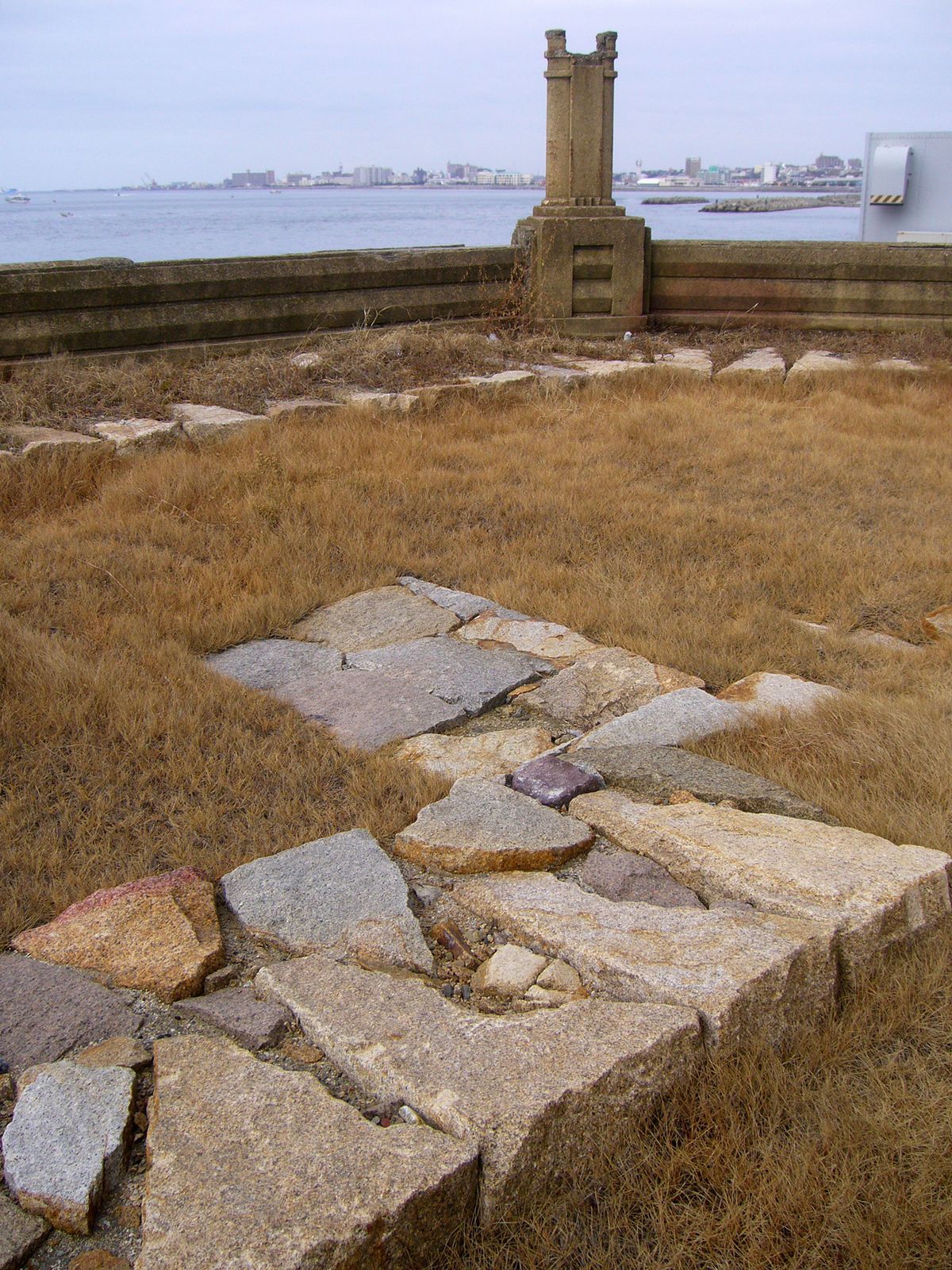
The battery was demolished in 1871. A fire near the end of the Meiji period led to the removal of the upper parts of its remaining stone walls. Excavation in 2003 found the ruins in good condition, and Japan designated the site a National Historic Site in 2007.
Remains
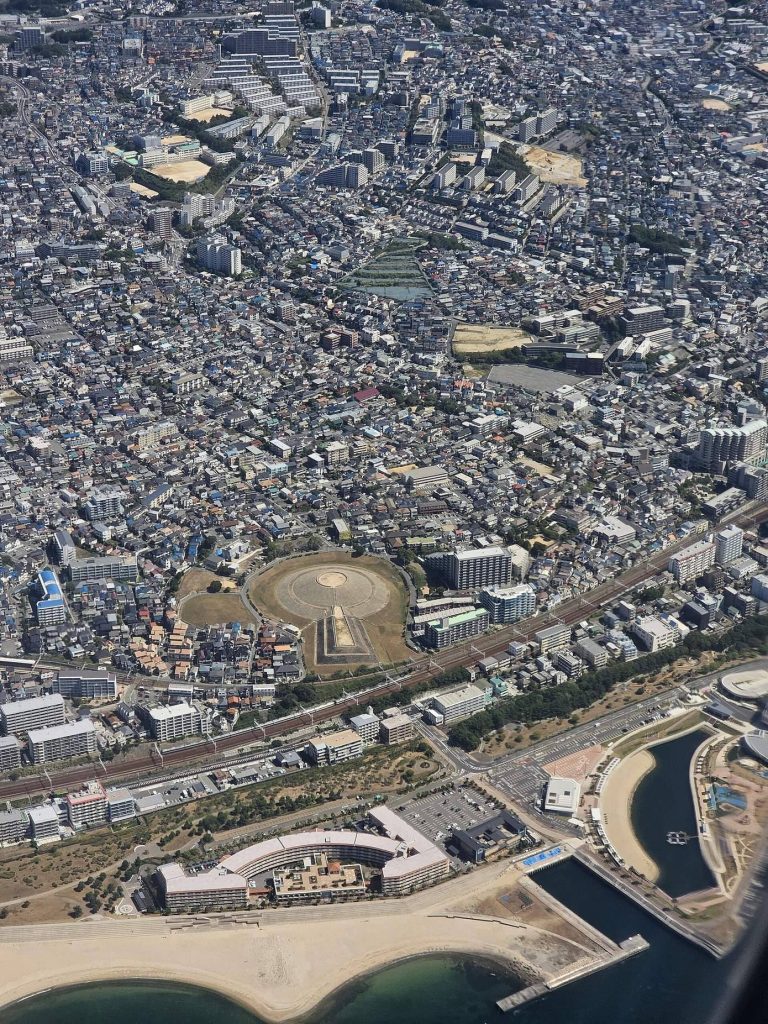
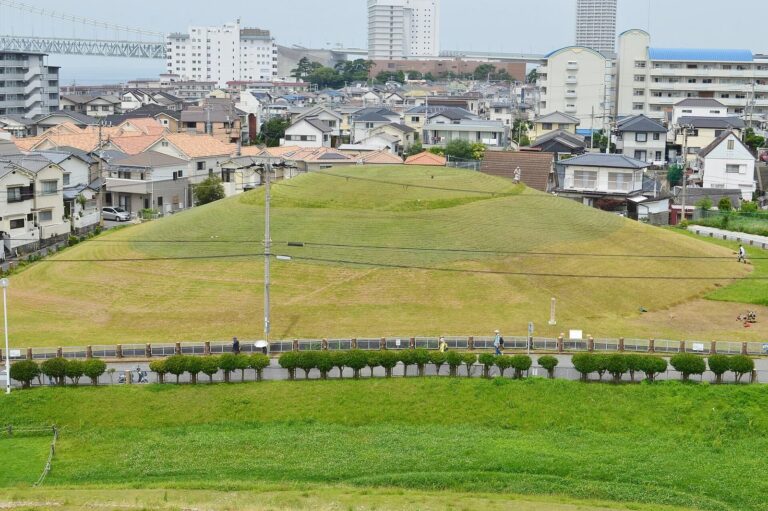
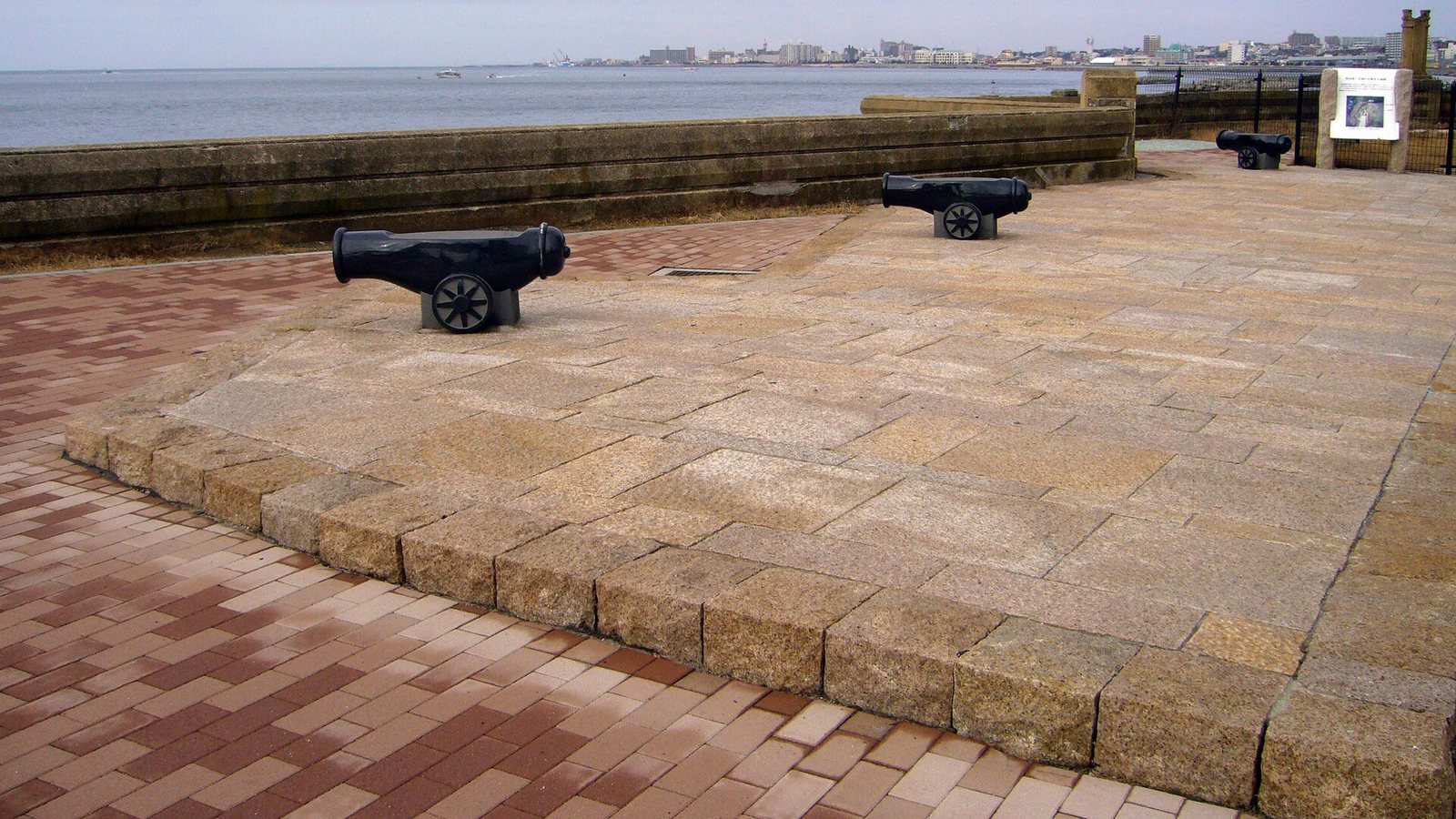
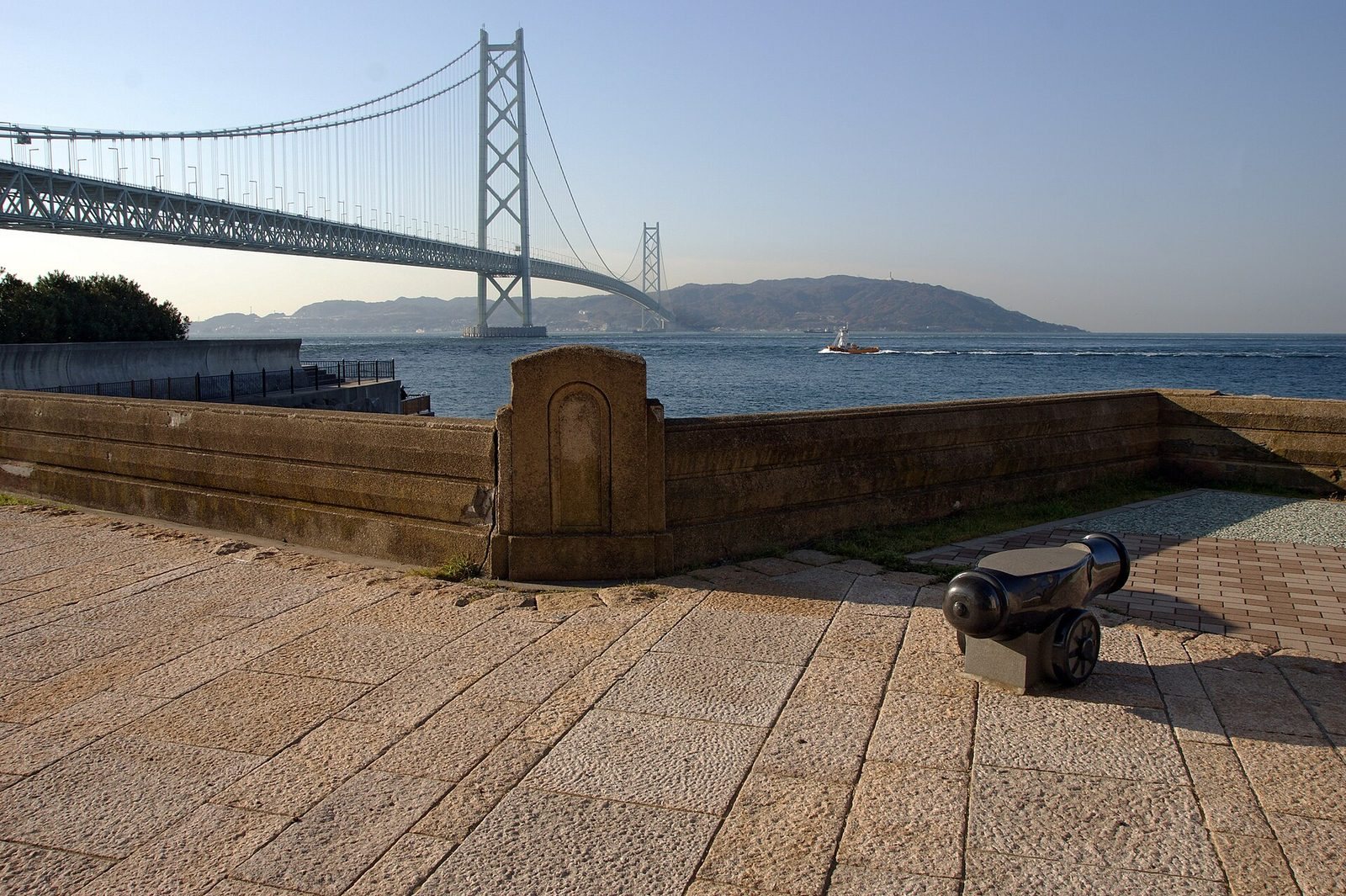
The fort stood on the Seto Inland Sea coast in present-day Tarumi-ku, Kobe, and is part of Hyōgo Prefectural Maiko Park. Its half-star plan was an incomplete star-shaped arrangement of projecting defensive works. Granite walls formed the rampart, which followed a redan, or V-shaped defensive projection. Five circular gates stood at the rear. Fifteen gun ports crossed a frontage about 70 metres wide, and the fortification stood about 10 metres high.
The surviving stone walls rise no more than six metres. Most of the site has been covered with backfill to protect the remains, leaving a small section exposed at ground level.