Madonna delle Lacrime Sanctuary: Treviglio’s Shrine to Our Lady of Tears
Site at a Glance
- Popularity
- Medium
- Country
- Italy
- Primary era
- Early Modern
- Eras represented
- Early Modern, Modern
- Civilizations
- Austrian Empire, Duchy of Milan, Habsburg, Italian, Spanish
- Site type
- Religious
- Remains
- Sanctuary
On this page14 sections
History
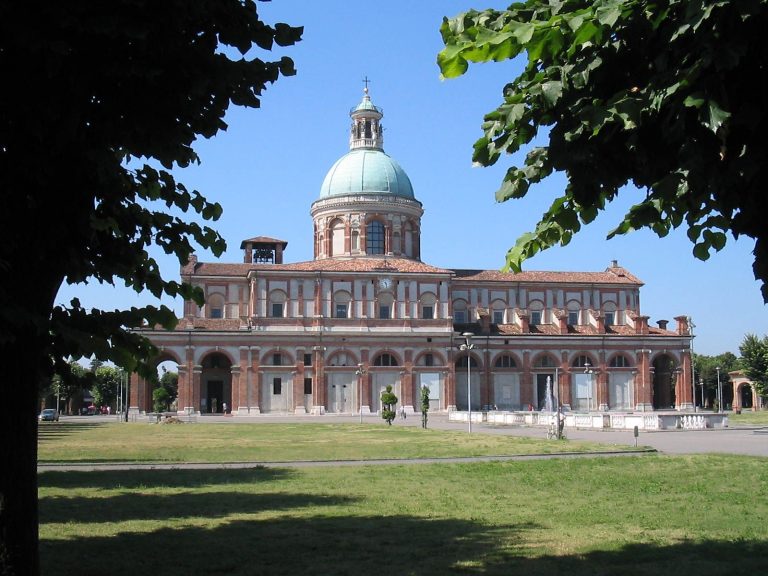
The Madonna delle Lacrime Sanctuary is a Roman Catholic shrine in Treviglio, Italy. Local residents began building it in 1594, and it was completed in 1619 to house an image of the Madonna and Child associated with a local miracle tradition.
The 1522 tradition and inquiry
According to the tradition, on 28 February 1522 French forces led by Odet de Foix threatened to destroy Treviglio after residents insulted them, apparently relying on imperial support. An image of the Madonna and Child on a wall in the Augustinian convent church was said to have begun weeping. De Foix, a French military commander devoted to Mary, spared the town and laid down his sword and helmet; his soldiers followed his example.
Cardinal and Milanese archbishop Carlo Borromeo pressed for an investigation, which began in 1583. In 1584, after seeking a delegation from the Holy See, the Catholic Church’s central governing authority, he sent his vicar Lodovico Audoeno to Treviglio. The inquiry concluded in 1591. That year the town appointed four superintendents, one for each gate: Federico Rozzone, Giovanni Zuccone, Andrea Canzola, and Giacomo Fachetto. After two died, Luca Ferrando and Lodovico Lodi replaced them in 1593.
Construction and opening
Residents laid the sanctuary’s first stone on 25 March 1594. Designed by Tolomeo Rinaldi, the building was completed in 1619. Cardinal Federico Borromeo celebrated Mass on 16 June, opening the sanctuary for worship.
Enlargement and continuing devotion
A proposed enlargement in 1854 was not carried out. A new plan followed in 1897, and Cardinal Andrea Carlo Ferrari symbolically laid its first stone on 28 February 1899. Construction began that November and was nearly complete by 1912. Ferrari consecrated the enlarged sanctuary during ceremonies held from 9 to 12 August 1902.
The sanctuary’s devotion also spread to Sansepolcro. On 14 January 1912, Ferrari ordained Pompeo Ghezzi, then a canon curate at the church, as bishop of Sansepolcro after Pope Pius X appointed him to the post. A plaster copy of the Treviglio image was kept in the Lombezzi Chapel at the city cemetery.
Conservation and church affiliation
Conservation work began in 1970. The sanctuary belongs to the Archdiocese of Milan and is associated with the Order of Saint Augustine, a Catholic religious order whose members follow the Rule of Saint Augustine. Its worship follows the Latin rite, the Western liturgical tradition of the Catholic Church.
Remains
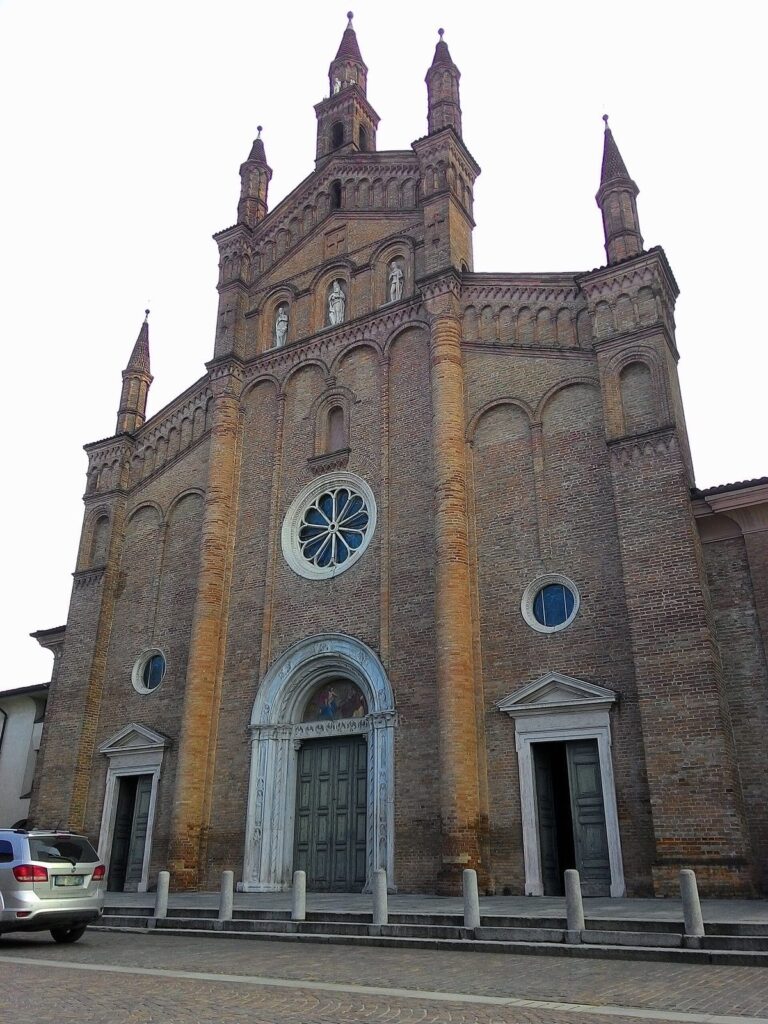
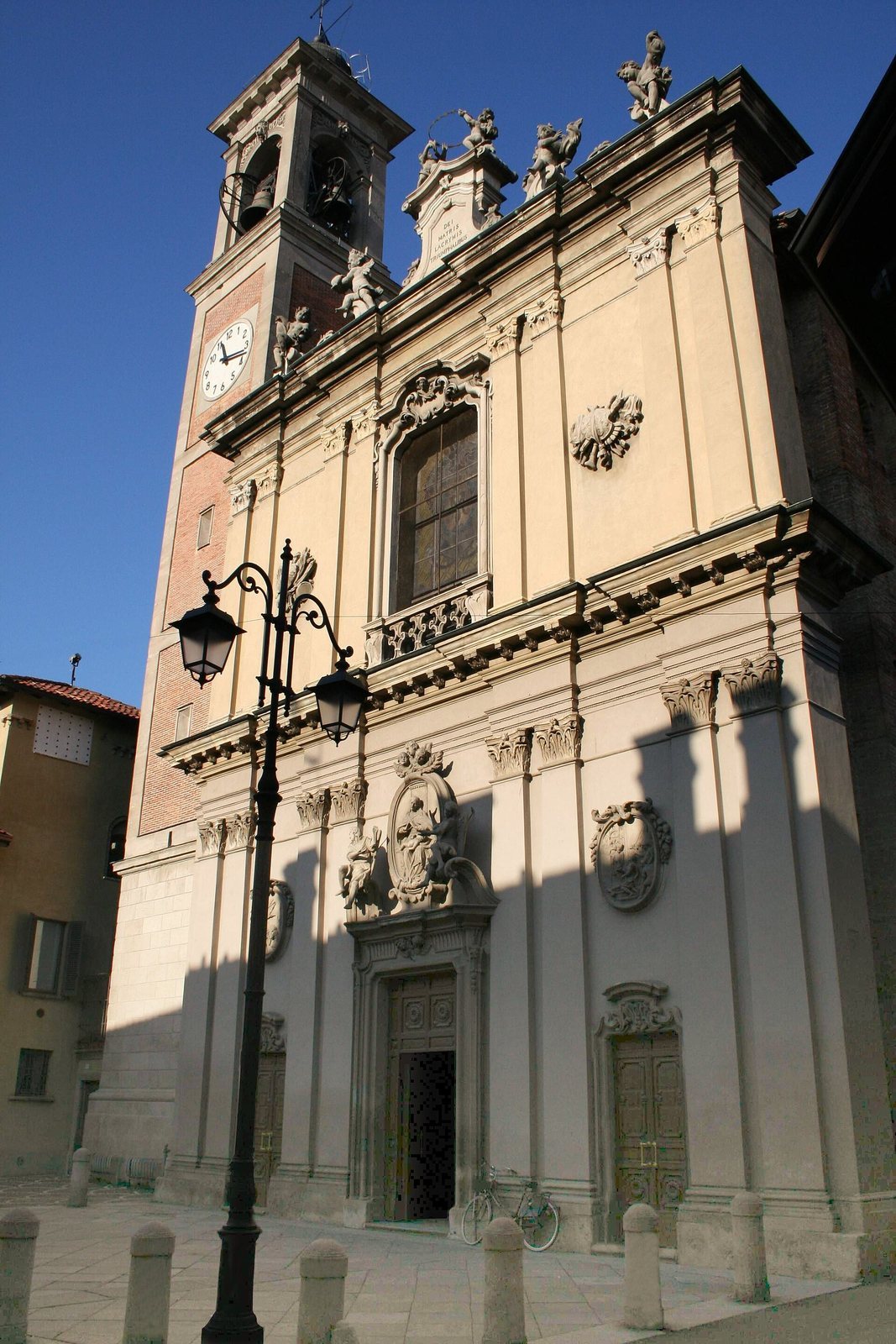
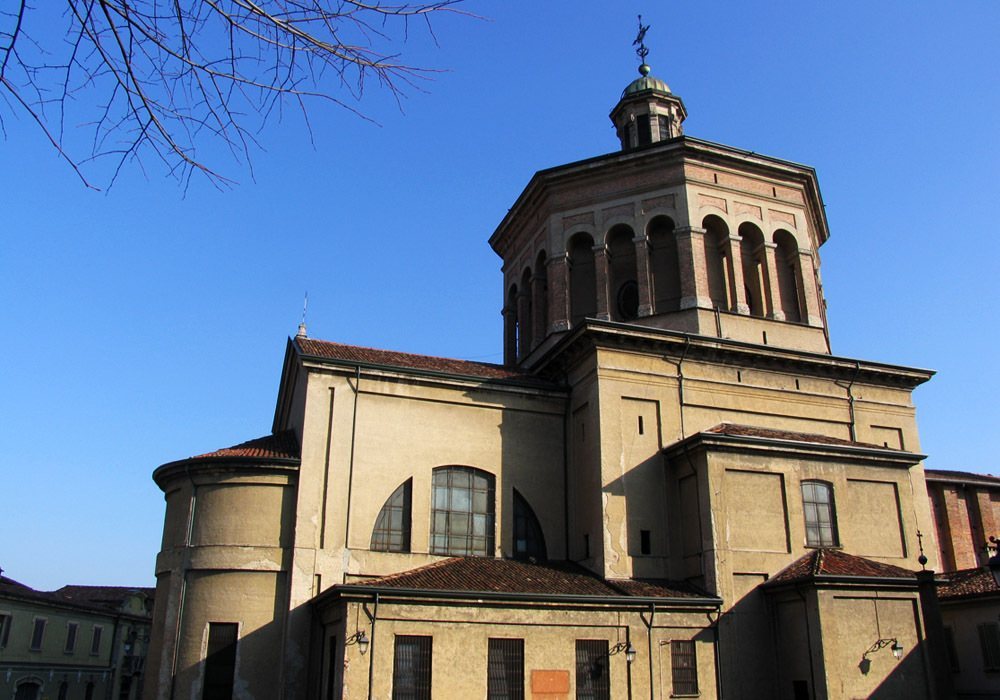
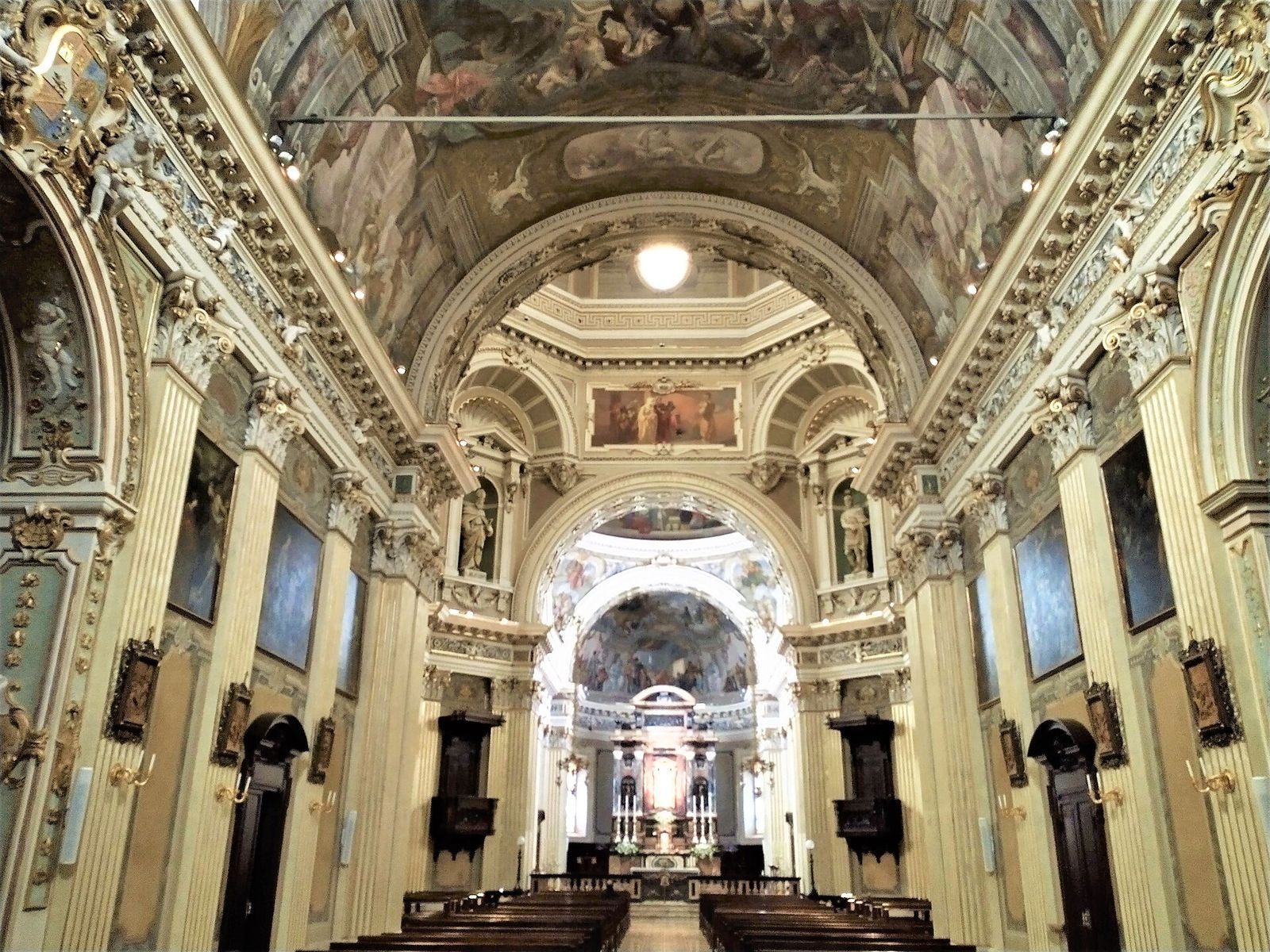
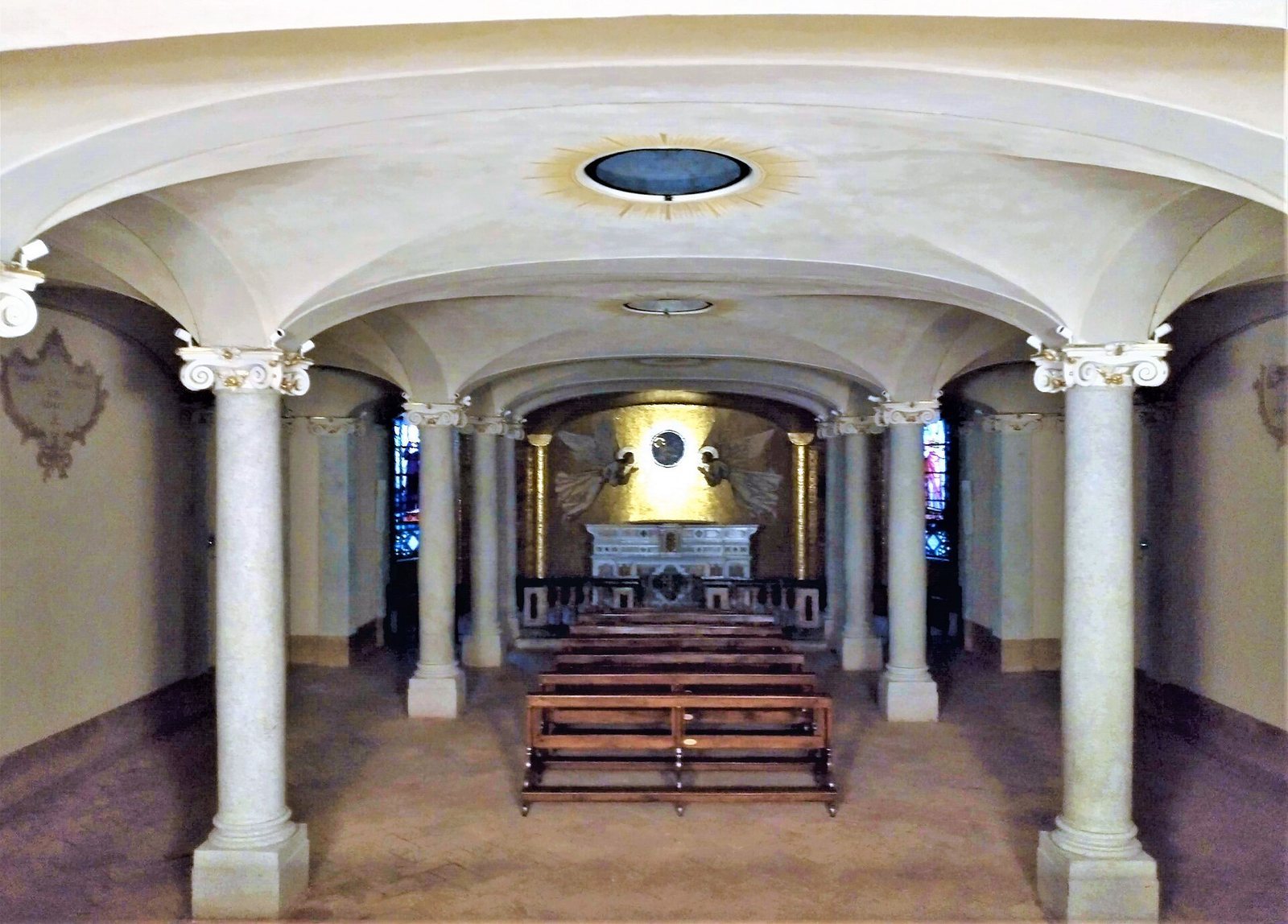
The sanctuary is built of brick and was designed by Tolomeo Rinaldi. Enlargements over time added features in different styles from the seventeenth century onward. The complex includes a façade, bell tower, main entrance, dome, presbytery (the area around the altar, typically reserved for clergy), and crypt (an underground chamber used for burial or worship).
Exterior and worship spaces
Façade and bell tower
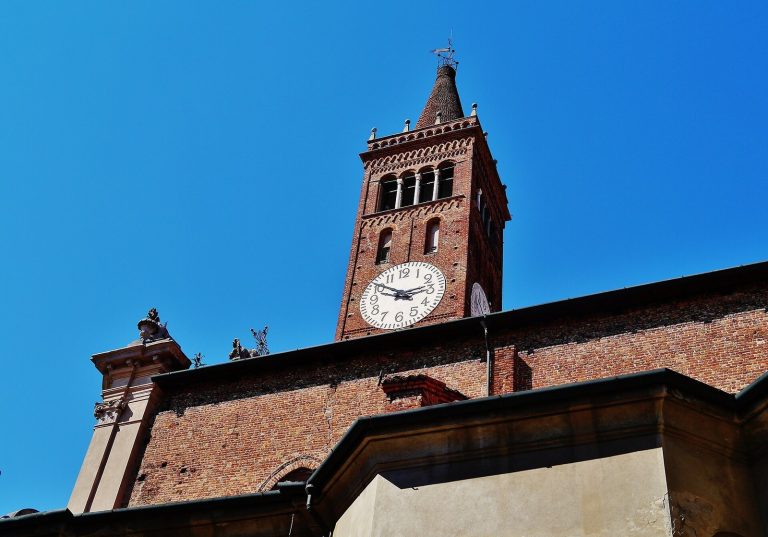
The façade was completed in 1705. The bell tower collapsed on 21 February 1658, and a replacement was built between 1835 and 1838.
Image and altars
The Madonna and Child image was originally painted on a wall in the Augustinian convent church. It was transferred to the sanctuary and installed there on 15 June 1619, then moved to a reconstructed altar in the new presbytery on 25 April 1902. A separate marble altar for the image was planned in 1668, with an intended decoration of several kinds of marble.
Interior artworks and commemorative features
Paintings and decoration
The sanctuary contains paintings on canvas and frescoes, paintings made on wet plaster, associated with the Molinari and Galliari brothers, Gaetano Cresseri, Montalti, and Bernardino Butinone. A 1719 fresco is attributed to Gianluca and Carlo Molinari. Cresseri prepared decorative sketches in 1913; after his death, Giovanni Bevilacqua continued the work from 1933 and completed the decorative program in 1941. The frescoes were finished in July 1921.
Adoration chapel
An ex-voto is an offering made to fulfill a vow or give thanks for divine assistance. In 1981, the former ex-voto room became a chapel for adoration. Paolo Furia designed the conversion and made its multicolored stained-glass window.
Foundation stone and associated objects
The first stone for the 1899 enlargement is positioned near the Gospel lectern. The sanctuary keeps the sword and helmet associated with Odet de Foix; they are displayed during the annual Week of the Miracle in late February and early March.
Restoration
The exterior was restored from 2015 to 2017, followed by interior restoration from 2018 to 2020. The interior work included restoring artworks and replacing an older warm-air system with underfloor heating panels. Dust carried by the former system had contributed to the artworks’ darkening.