Lützelhardt Castle: A Medieval Pass-Road Fortress in Germany


Site at a Glance
- Rating
- 4.5
- Popularity
- Low
- Country
- Germany
- Primary era
- Medieval
- External website
- Open
- Eras represented
- Medieval
- Civilizations
- Holy Roman Empire
- Site type
- Military
- Remains
- Castle
On this page7 sections
History
Lützelhardt Castle is a medieval castle ruin in Germany, located east of Seelbach in Baden-Württemberg. Probably built between about 1100 and 1150 under the influence of the Zähringer dynasty, it helped secure the pass road leading into the Kinzig Valley and was likely administered by a Zähringer ministerial family.
Zähringer Origins
The Zähringers were a medieval German ruling dynasty whose influence extended across southwestern Germany, including the Ortenau region. Several ministerials, administrative or military servants of rulers and powerful lords, bore the name “von Lützelhardt” during the twelfth century. One branch of the family, or of a shared lordship, entered imperial ministerial service around the middle of that century.
The castle’s name derives from the Old High German term lucilinhart, meaning “small forest.” Written evidence about the site itself remains limited, but the Lützelhardt family appears more clearly in the wider political history of the period. Konrad von Lützelhardt became a prominent official in the Hohenstaufen administration in Italy, held the title of Margrave of Molise, and played a central military role in Henry VI’s conquest of the Kingdom of Sicily.
Destruction and Later Memory
Conflict between the Hohenstaufen dynasty and the bishops of Strasbourg shaped the castle’s later history. The Hohenstaufen produced several kings and emperors, including Frederick II, while the bishops of Strasbourg were major ecclesiastical rulers with their own political interests. The neighboring lords of Geroldseck supported the episcopal side and probably destroyed Lützelhardt Castle around 1245. Hohengeroldseck Castle, built afterward, took over the protection of the pass road.
Konrad’s descendants, recorded under the name de Lucinardo, appear in records into the thirteenth century and later opposed Emperor Frederick II. Their history fades from the record toward the end of that century. Lützelhardt Castle is also connected with the Grüselhorn legend. According to the story, a Geroldseck lord was abducted to Lützelhardt, recognized the sound of a horn that disclosed his location, and escaped. The castle was supposedly destroyed afterward, linking the ruin’s fate to a tale of captivity and rescue.
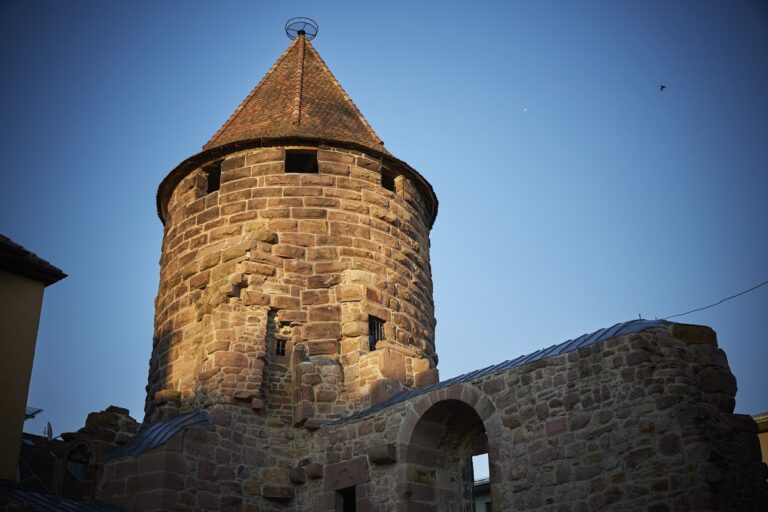
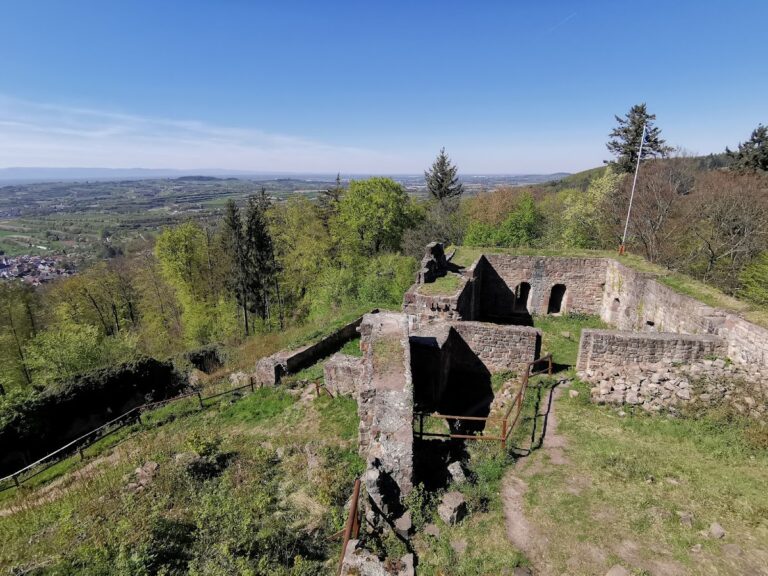
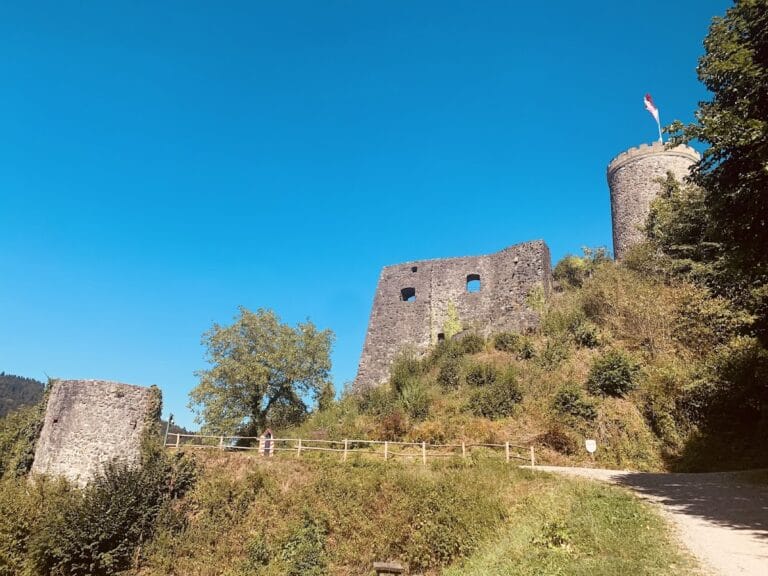
Most of the standing masonry visible today resulted from excavations and reconstructions carried out between 1926 and 1929. Archaeological finds from the castle have been presented since 2022 in the “Mirror of the Past” exhibition at Seelbach Town Hall.
Remains
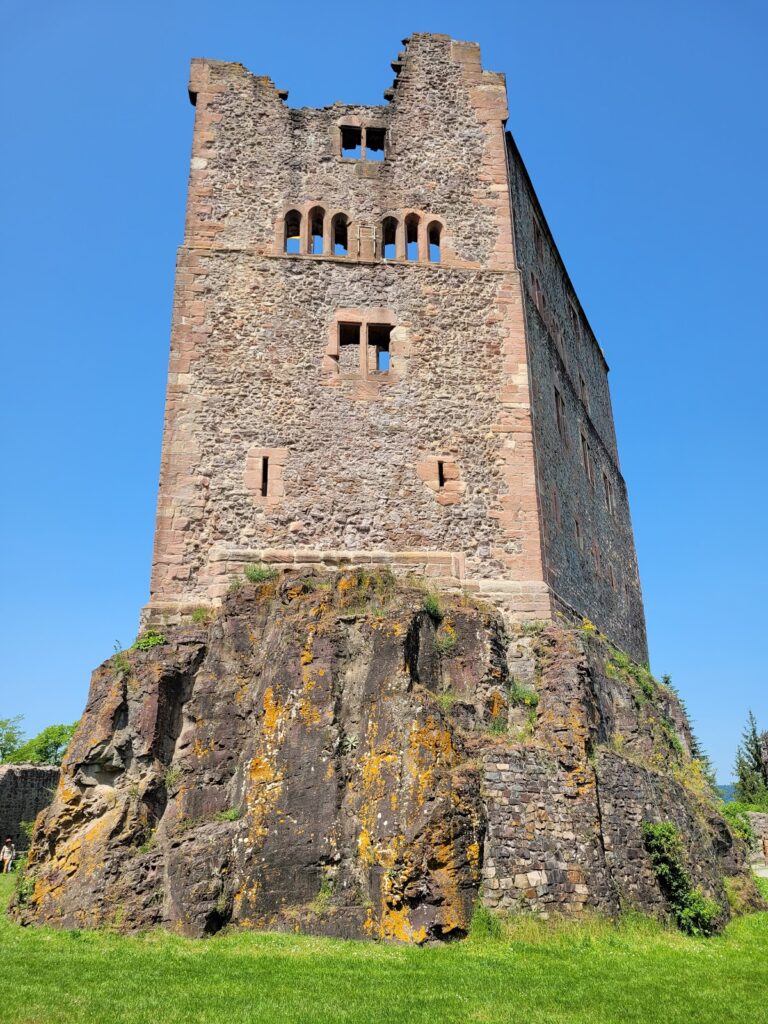
Lützelhardt Castle is a hilltop rock castle ruin at approximately 460 metres above sea level. Its complex occupies three rocks of different sizes, rising as high as 10 metres. The three sections were probably linked originally by a palisade, creating a connected defensive arrangement across the rocky summit.
Castle Buildings and Interior Features
Main Building
The most prominent surviving masonry belongs to the main building, the castle’s principal residential or representative structure. Its remains include Romanesque windows, belonging to a medieval architectural style known for rounded arches, heavy forms, and substantial masonry. A dragon relief is also preserved among the features associated with the building.
Water and Drainage Features
Inside the main castle are a medieval cistern and a Schüttstein, a stone installation used to pour or drain liquids. Together, these features form part of the surviving evidence for how the castle’s interior was arranged and supplied.
Nearby sites