Lutheran Church in Mańki: A Historic Parish Church Now Used for Catholic Worship
Site at a Glance
- Popularity
- Very Low
- Country
- Poland
- Primary era
- Early Modern
- Eras represented
- Early Modern, Modern
- Civilizations
- Duchy of Prussia, Kingdom of Prussia, Polish–Lithuanian Commonwealth
- Site type
- Religious
- Remains
- Church
On this page8 sections
History
The Lutheran church in Mańki, Poland, was established in 1340. An early church building dates to around the turn of the 14th and 15th centuries; an earlier structure was replaced in 1594, although the construction date of the present church is uncertain. The church was enlarged and remodeled in 1770 and consecrated that year. It served a Lutheran congregation for centuries and now functions as a Catholic branch church dedicated to St Nicholas of Myra.
Medieval foundation and parish development
The Reformation brought Lutheranism, a Protestant tradition that emerged during the Reformation, to East Prussia in 1525, and the Mańki congregation adopted the Lutheran confession. In the late 16th century, the church at Wittigwalde became part of the Mańki parish; it regained independence in 1708.
Until 1945, the parish belonged to the Osterode church district and, most recently, the Hohenstein superintendent district. It was part of the East Prussian ecclesiastical province of the Church of the Old Prussian Union, a Protestant union that included Lutheran and Reformed congregations. In 1925, the parish served more than twenty settlements with a combined 1,965 parishioners.
Postwar change and Catholic use
The church remained the central place of worship for its evangelical parish until 1947. Many evangelical residents left for Germany after the Second World War, and most of the community had resettled in western Germany by 1955. Operation Vistula, the 1947 forced relocation of Ukrainians within postwar Poland, displaced Ukrainian Greek Catholic believers from the Bieszczady region. Members of this Eastern Catholic church used the Mańki building during the 1970s.
From 1948, the parish house served as an orphanage with Swiss support. Its director, Elisabeth Frauenfelder, arranged for food to be sent from Switzerland by rail. After Polish authorities refused her visa in 1950, she had to leave Mańki. The orphanage continued for a time under Polish state administration, then closed; the parish house became a youth meeting place with a cinema and youth activities.
The Roman Catholic Church took over the church in 1991, and renovation work in 1991–92 adapted its appearance for Catholic worship. It became a branch church associated with the parish at Biesal and now belongs to the Archdiocese of Warmia. The church entered the register of historic monuments in 1968.
Remains
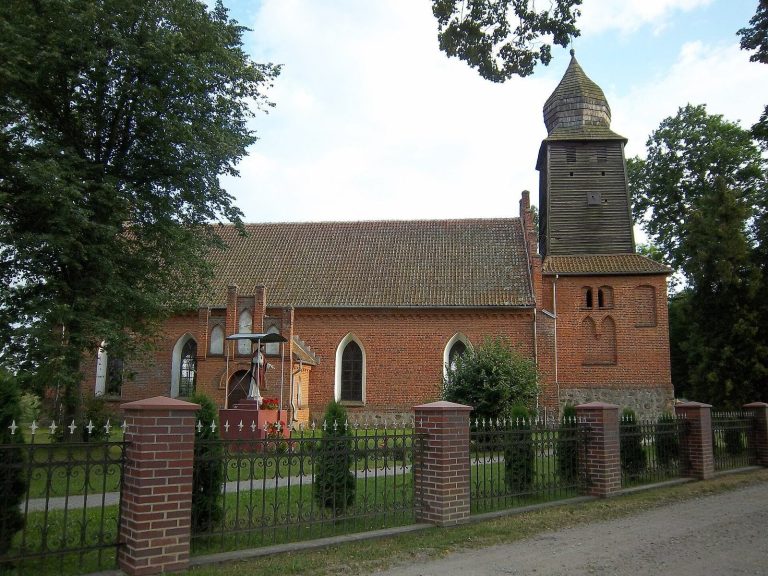
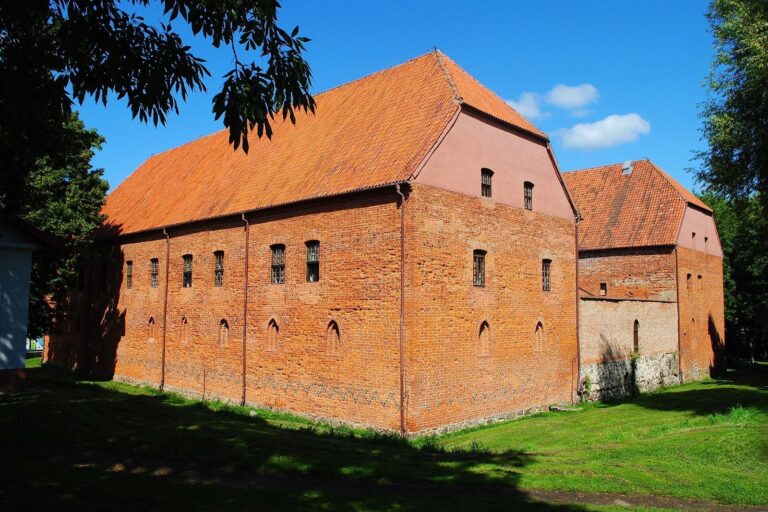
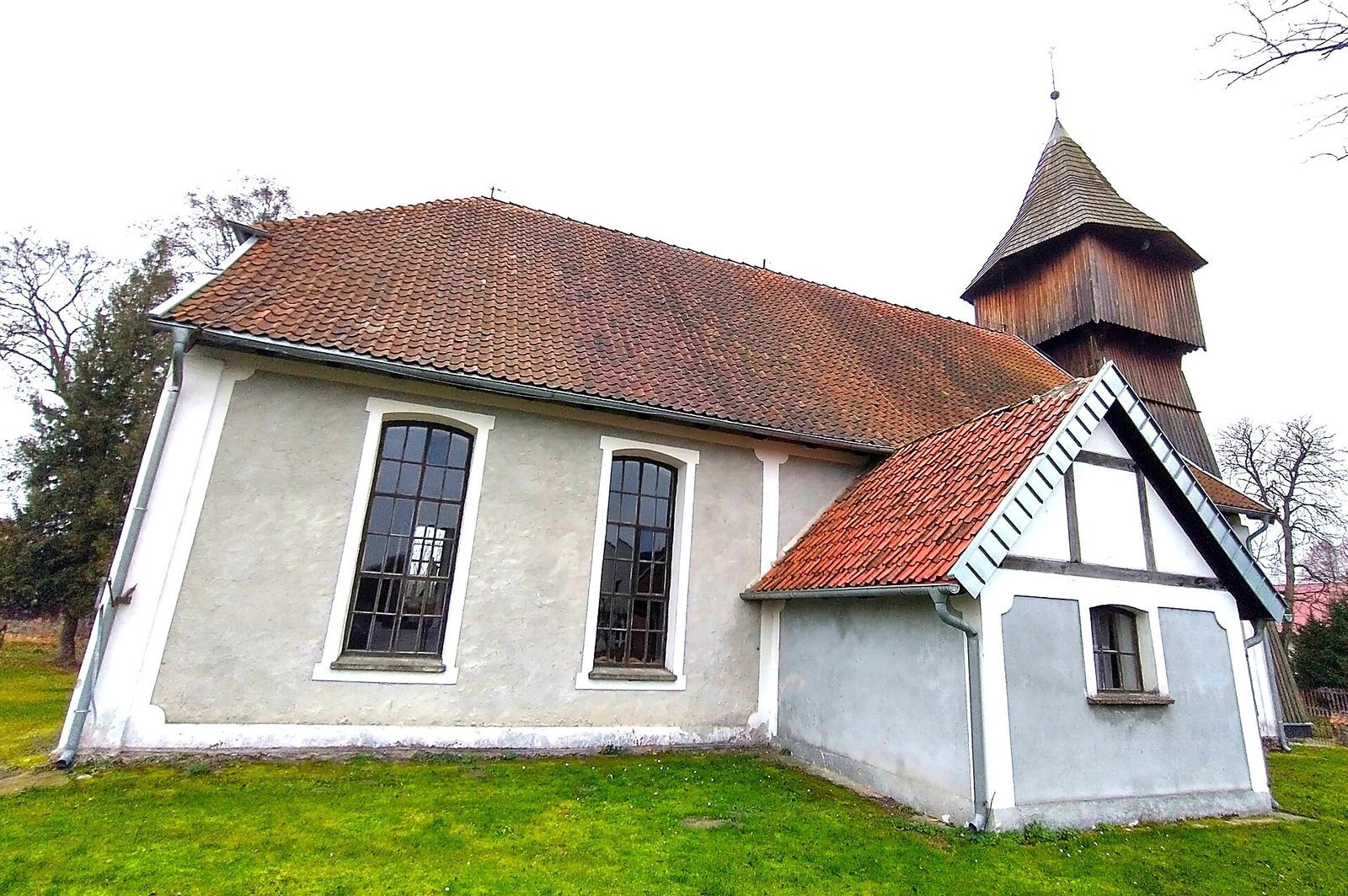
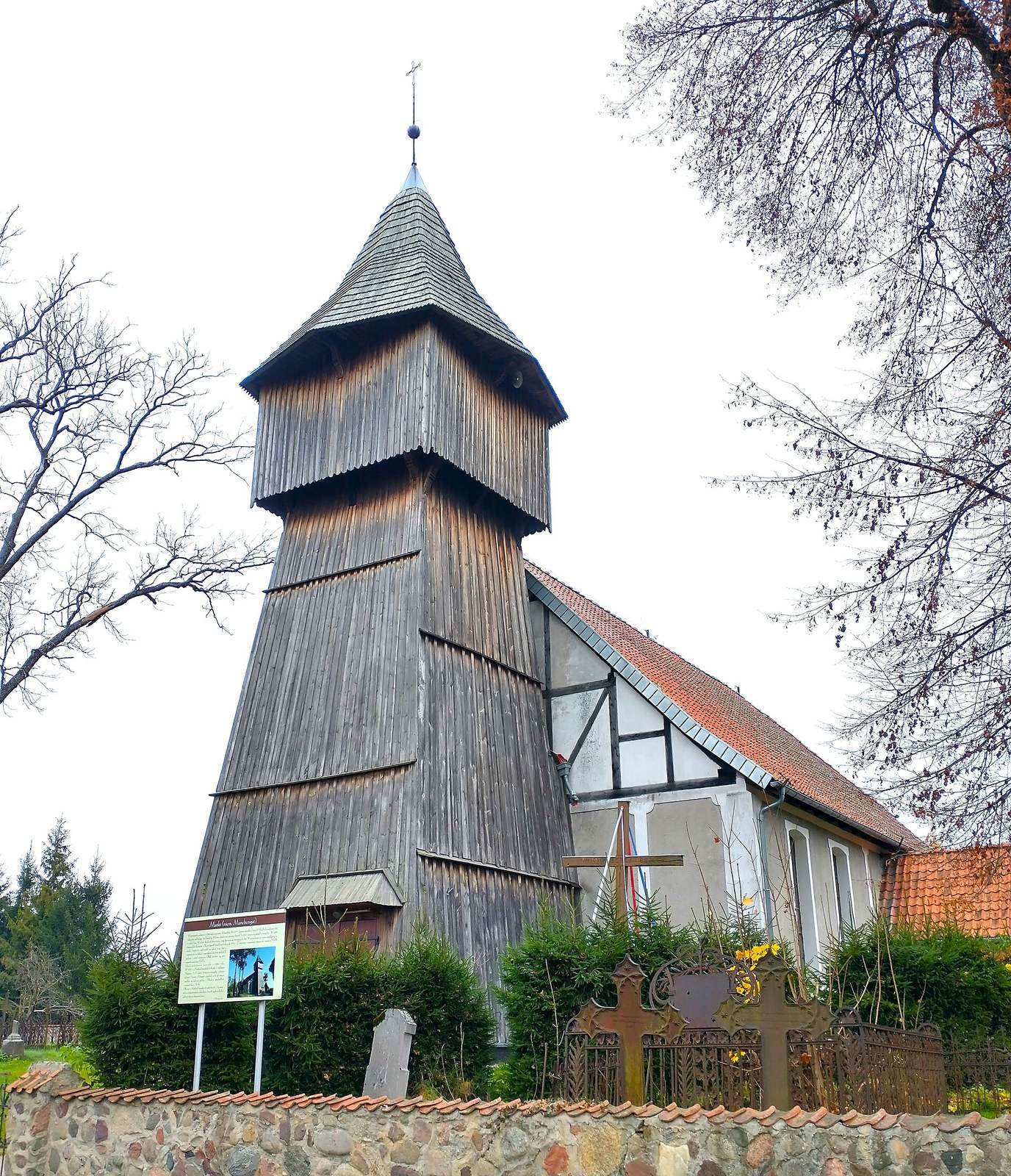
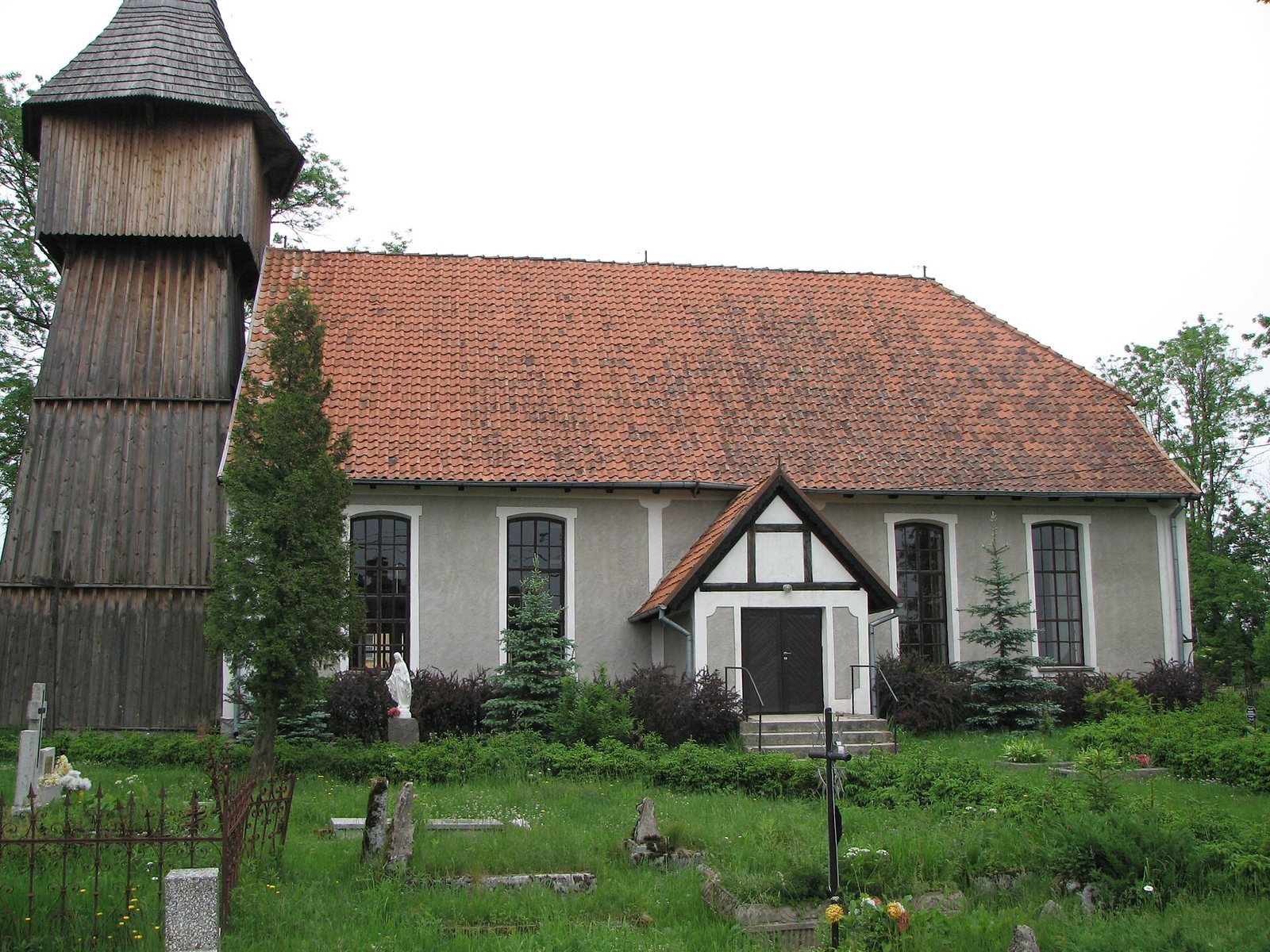
The church is a plastered fieldstone building, with timber and brick also among its materials. A single timber tower marks its west end, while the interior retains a flat, ornamented ceiling and furnishings from several periods. The building stands inside an enclosure on the site of an old cemetery.
Church building
Tower and exterior
The timber tower dates to 1685 and was built by master carpenter Hans Weichert. Its timber-frame structure is clad with boards and battens and topped by an octagonal roof covered in shingles. A faithful copy, with a reed-thatched roof instead of shingles, stands at the Folk Architecture Museum in Olsztynek beside the church from Rychnowo.
Interior and furnishings
The simple interior has a flat ceiling painted with ornament, and most of its furnishings date from the late 18th century. The pulpit altar, which combines an altar with a pulpit, is dated to 1780. Its components were separated after 1945; the ensemble included a crucifix and a devotional image of the Madonna and Child from the first half of the 15th century.
Other furnishings include a brass baptismal dish from the first half of the 17th century, a granite holy-water basin dated to the 14th or 15th century, and an organ from 1748. The basin may have come from the earliest church building. One of the two bells dates to the period of the Teutonic Order, a medieval religious and military order that ruled Prussian territories; the other is dated to 1845. Memorial plaques at the choir stalls and inscriptions on the choir-gallery balustrade commemorate parishioners who died in the First World War.
Churchyard and parish house
The cemetery contains graves of old Masurian families and of Polish settlers who arrived after 1945. A First World War memorial was re-erected there in 1994, bearing the inscription, “Brothers, you died for us.” The parish house also survives, though it now serves a different purpose.