Luffang Gallery Grave: A Neolithic Tomb in Brittany
Site at a Glance
- Popularity
- Very Low
- Country
- France
- Primary era
- Stone Age
- Eras represented
- Stone Age
- Civilizations
- Unclassified
- Site type
- Burial
- Remains
- Tomb
On this page7 sections
History
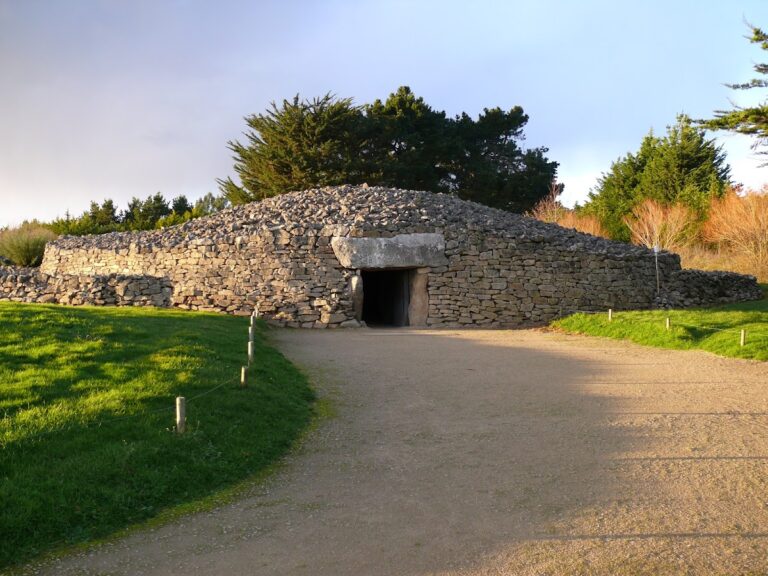
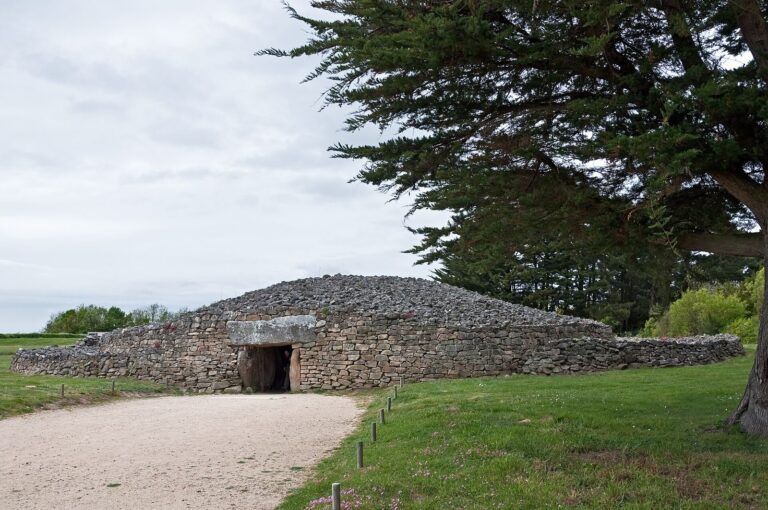
The Luffang gallery grave is a Neolithic burial monument near the hamlet of Luffang in Crach, Morbihan, France. It was built about 3000 BC, during the Neolithic, the later part of the Stone Age. The tomb was reused in either the Copper Age, associated with copper use, or the Bronze Age, associated with bronze.
Vicars from Ploemel and Crach excavated the burial mound around 1868. Miln mentioned the monument in 1883. In January 1898, Zacharie Le Rouzic excavated the mound and exposed the gallery fully; further excavations in 1937 recovered grave goods.
In the last quarter of the nineteenth century, two menhirs stood about 50 m southwest of the mound. One, nearly 4 m high, was called Er soudard-cam, meaning the lame soldier, while the smaller stone was regarded as his wife. Both menhirs and some of the gallery stones were cut up and taken to Belle-Île for use in building a lighthouse. The tomb was classified as a French historic monument on 10 October 1938.
Remains
The gallery tomb
Layout
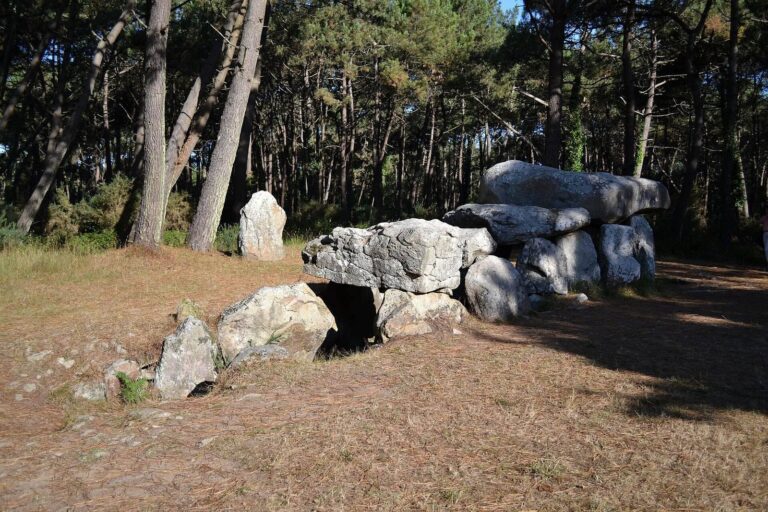
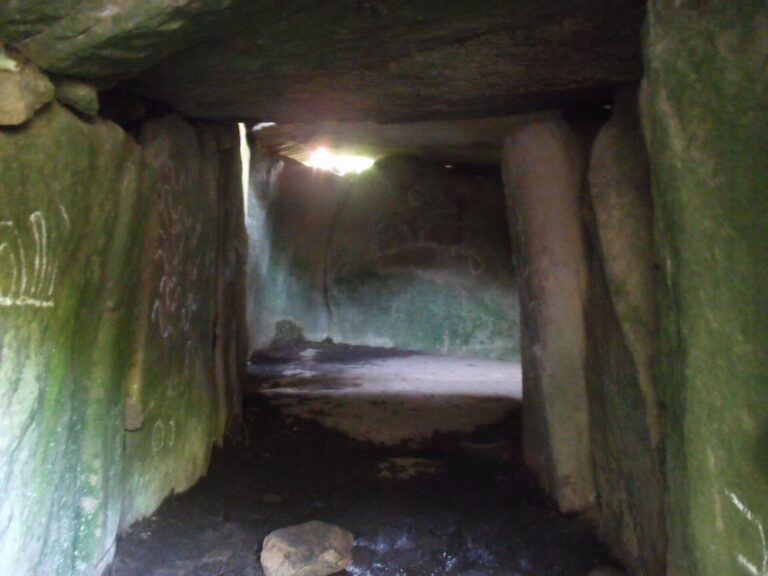
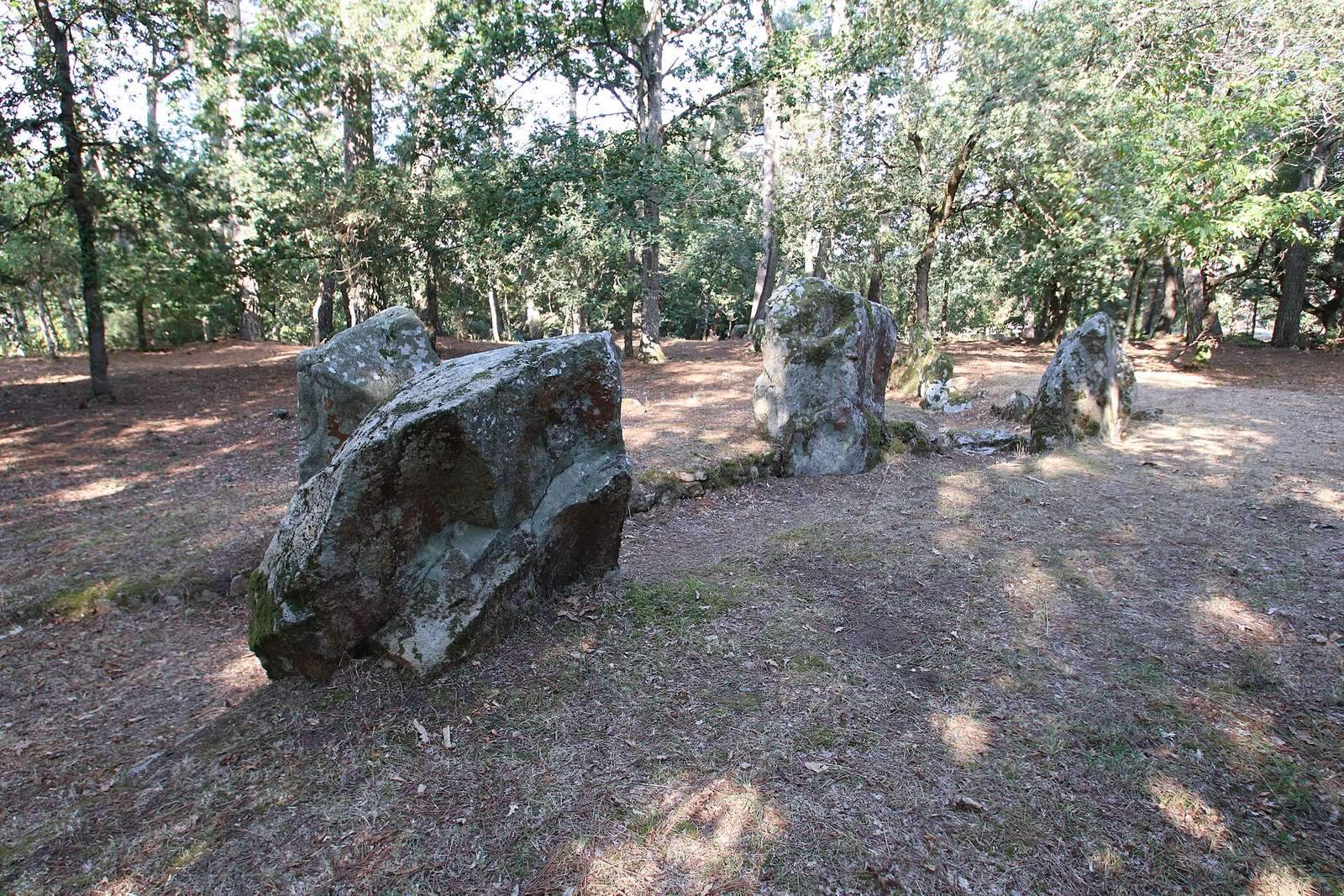
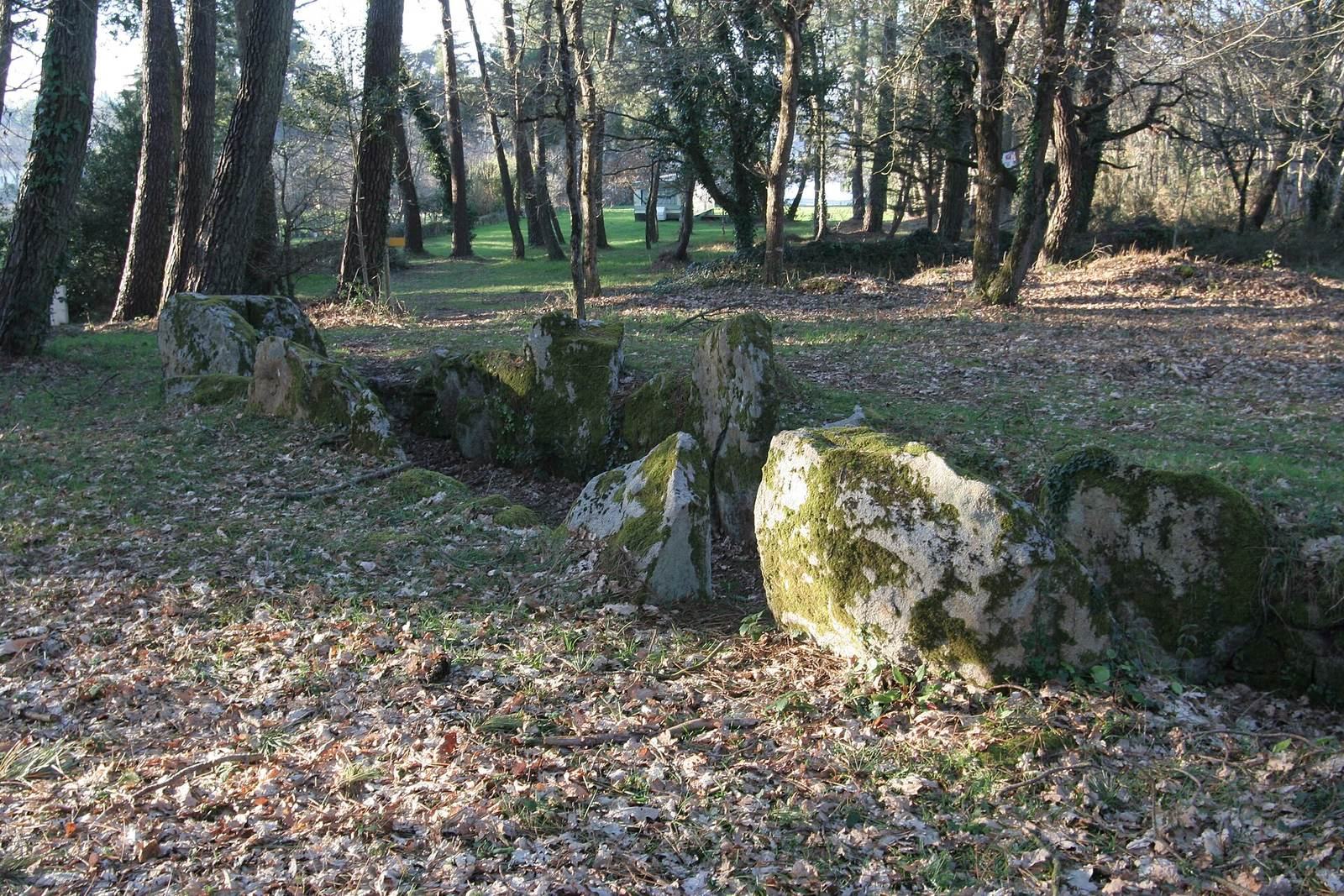
In a wooded area, the surviving tomb is a long, stone-lined burial gallery. It was originally covered by a circular mound about 46 m in diameter, which has since disappeared. The gallery is approximately 20–22 m long and 1.10–1.20 m wide overall. Its entrance is on the south side. A passage runs about 7 m northwest before the structure bends westward; the rear chamber is about 12 m long, less than 1 m wide, and just over 1 m high.
Stone supports and condition
Nineteen upright stones remain: eleven on the left, seven on the right, and one at the end. The supports range from 1 to 1.9 m high, and all of the roof stones are gone. Several supports bear marks from attempted quarrying, which also deeply disturbed the interior. During an 1883 examination, part of the floor was paved.
Engravings
Three supports bear engravings: the ninth and tenth on the left, and the third left-hand support at the bend. The best-known carving, on the third support, depicts an anthropomorphic, octopus-like figure about 0.95 by 0.45 m. It is generally interpreted as a Mother Goddess, or female deity. The engraved slab is now in the Carnac Museum of Prehistory, and some other carvings are difficult to recognize.
Excavated finds
Material recovered from the disturbed layer included abundant charcoal, pottery fragments, and flint flakes. Le Rouzic collected about 45 vessels, some decorated, along with five flint arrowheads with barbs and tangs, a polished axe, a quartz hammerstone, fragments of yew-wood bracelets, and a metal spiral ornament. A flint blade was also found. The Carnac museum holds 103 objects from the tomb.