Lotus Mahal Pavilion: A Royal Building in Hampi
Site at a Glance
- Popularity
- High
- Country
- India
- Primary era
- Medieval
- Eras represented
- Medieval
- Civilizations
- Vijayanagara
- Site type
- Domestic
- Remains
- Elite Residence
On this page6 sections
History
The Lotus Mahal Pavilion is a royal building in Hampi, India, built for the Vijayanagara Empire, a South Indian empire that flourished from the fourteenth to the sixteenth century. It stood in the Zenana enclosure, the royal household’s women’s quarters, and was reserved for royal women. It is believed to have been built especially for the empire’s Muslim royal women. The pavilion also provided a place for the royal family to relax.
Krishnadevaraya, a Vijayanagara ruler in the early sixteenth century, used the pavilion as a council chamber for meetings with his ministers.
The pavilion was among the few structures at Hampi to avoid major damage during the invasion. Its later ruin is associated with repeated invasions by the Deccan Sultanates, Muslim-ruled states in the Deccan, and inadequate maintenance.
Remains
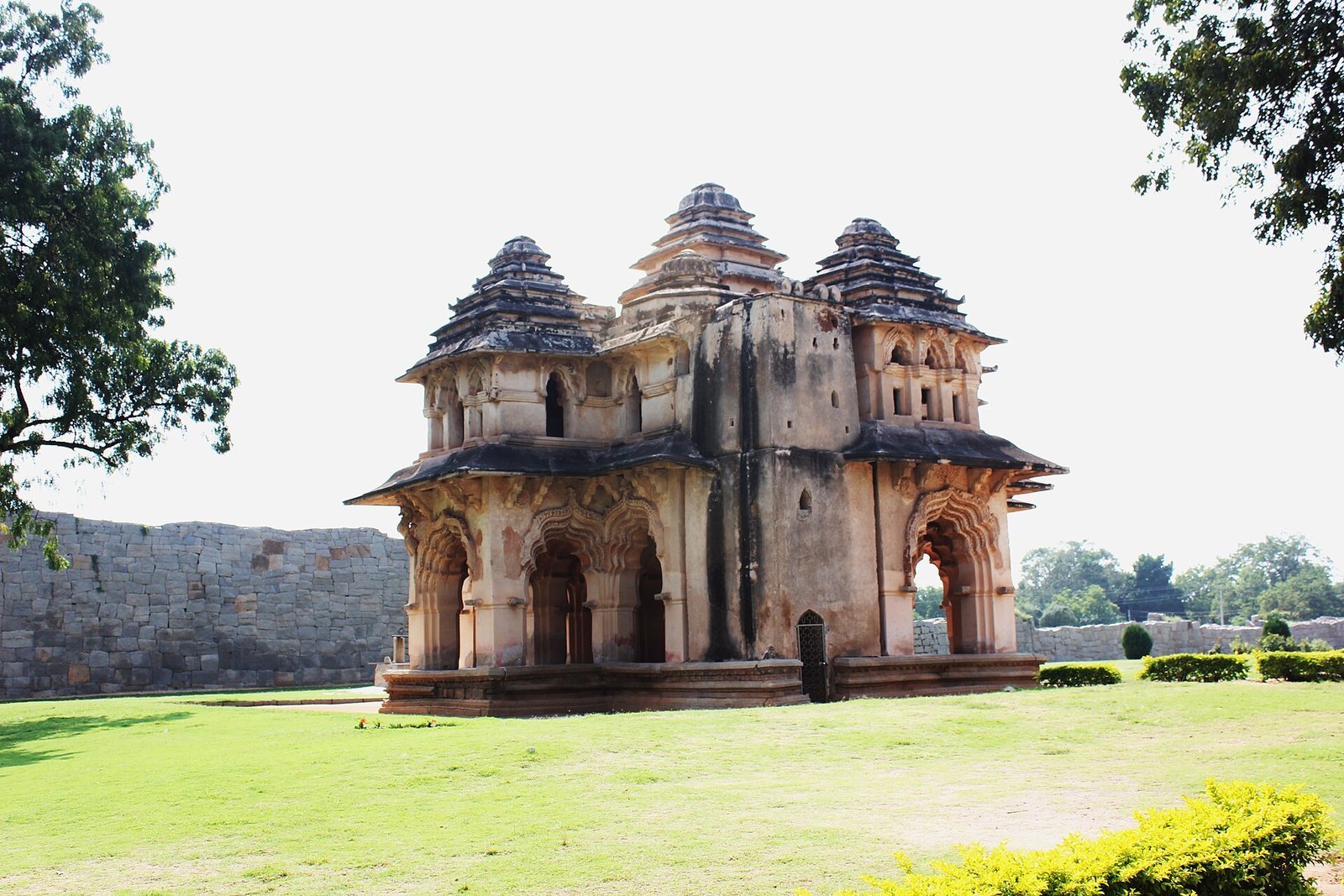
The Lotus Mahal stands in the Zenana enclosure, near the Royal Centre, within a walled compound. Its name means “Palace of the Lotus.” The two-storey pavilion combines Vijayanagara and Indo-Islamic architecture. It is described as built of brick and mortar, with rubble masonry and a fine plaster finish.
Pavilion architecture
Base and plan
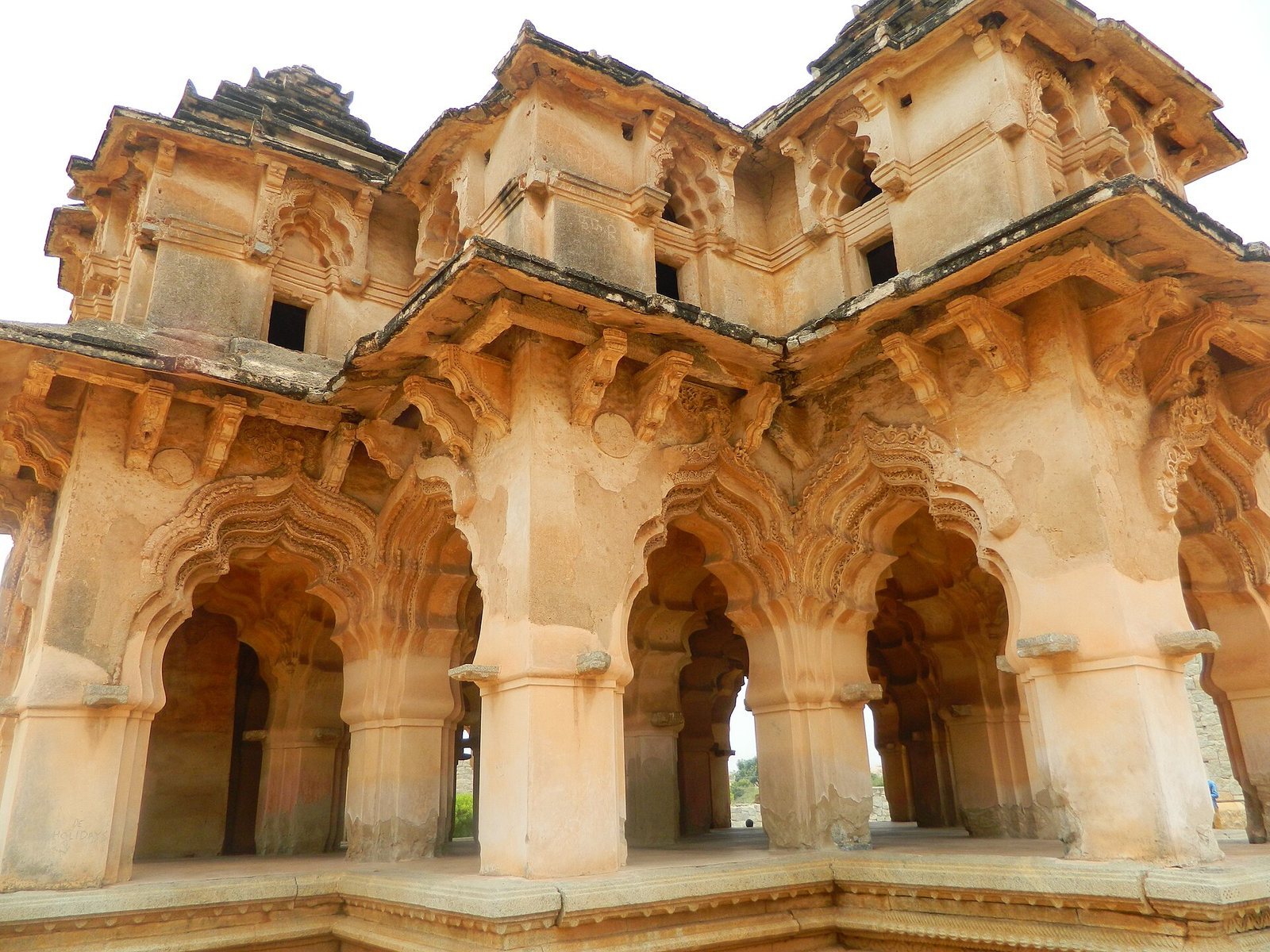
The building rises from a high ornamental stone basement with doubled recessed angles. Its plan is symmetrical, with an equal projection on each of its four sides. Curved forms influenced by Islamic architecture also help protect the structure from harsh weather.
Arches and towers
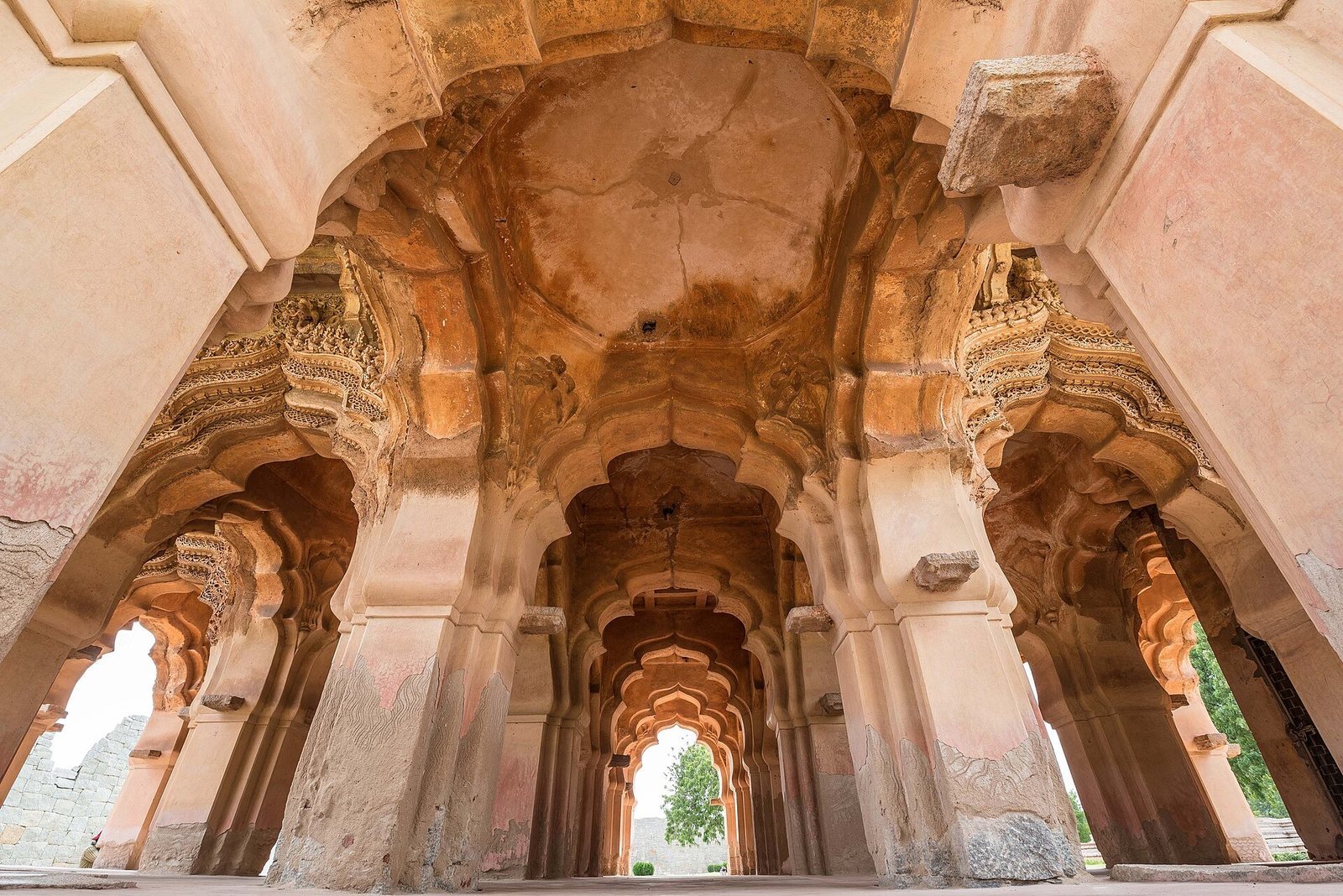
Both storeys have arched openings set across multiple planes and framed by elaborate plaster designs. A dome evokes an open lotus bud. Eight pyramidal towers rise over the corners, while a larger tower crowns the centre. The pyramidal forms reflect Indian architectural influence.
Pillars and carved decoration
Twenty-four pillars support the pavilion. Their stone carvings depict aquatic animals, plants, and other motifs. Restoration work led to the loss of most of the building’s carved decoration.