Hirebenkal: A Megalithic Burial Ground in Karnataka
Site at a Glance
- Popularity
- High
- Country
- India
- Primary era
- Iron Age
- Eras represented
- Iron Age
- Civilizations
- Unclassified
- Site type
- Burial
- Remains
- Necropolis
On this page12 sections
History
Hirebenkal is a megalithic funerary site, built with large stones, in Karnataka, India. Its burial ground, or necropolis, may be the largest among roughly 2,000 megalithic sites in South India, most of them in Karnataka. Many monuments date to 800–200 BCE, and the funerary tradition is assigned broadly to the transition between the Neolithic, the later Stone Age associated with farming and settled communities, and the Iron Age, when iron tools and objects were in use. In this part of India, the Iron Age is estimated to have lasted from about 1200 BCE to 200 CE.
Research and archaeological study
Philip Meadows Taylor published the first reports on Hirebenkal in 1835 while serving the Nizam, the ruler of Hyderabad State. Systematic study did not follow for more than a century. Sir Mortimer Wheeler excavated the site between 1944 and 1948. Adiga Sundara continued this work and published his study in 1975, cataloguing 300 burial chambers in an area then surrounded by dense forest.
Later investigations by Andrew Bauer identified about 1,000 antiquities across approximately 20 hectares, including human-shaped funerary structures, large upright stones, and circular stone fences. The Archaeological Survey of India, India’s national agency for archaeological research and monument protection, has managed Hirebenkal since 1955. On 19 May 2021, the site was proposed for UNESCO World Heritage status. This was a proposal, not an inscription on the World Heritage List.
Local traditions and site pressures
People have looted the dolmens over centuries in searches for treasure, while livestock grazing has contributed to their frequent collapse. A local belief holds that a deity walks from hill to hill during the annual festival; during that time, people avoid grazing cattle near the site.
Remains
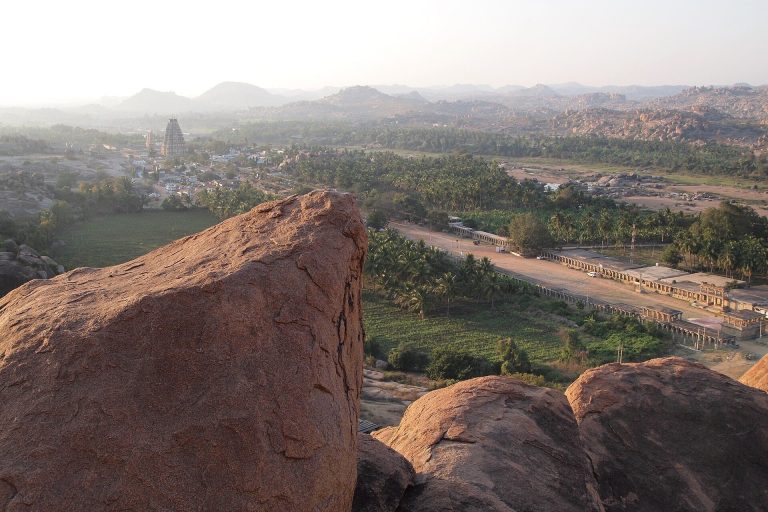
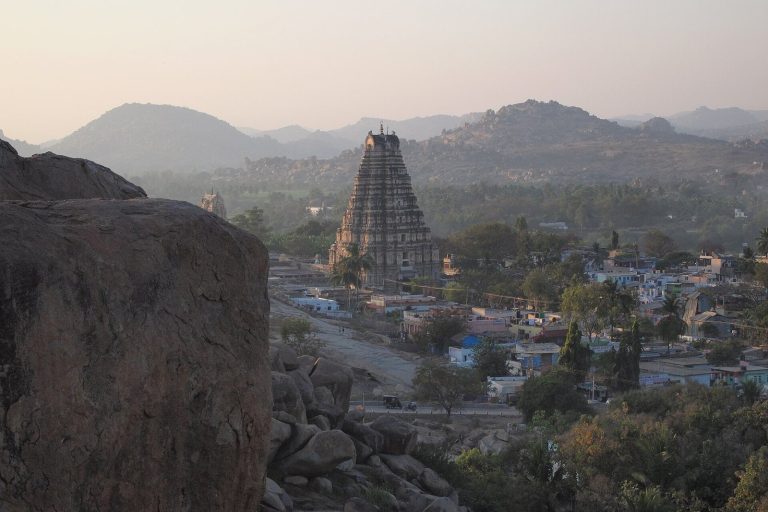
The funerary monuments occupy a rocky range of seven hills on the left bank of the Tungabhadra River. Thorn scrub and scattered boulders cover the area, and a lake provides water throughout the year. A nearby old quarry may have supplied stone for the monuments. The range is locally called Eḷu Guḍḍagaḷu, or “Seven Hills,” while the particular hill is known as Moryar Guḍḍa, meaning “hill of the Moryas.”
Burial monuments
Dolmens
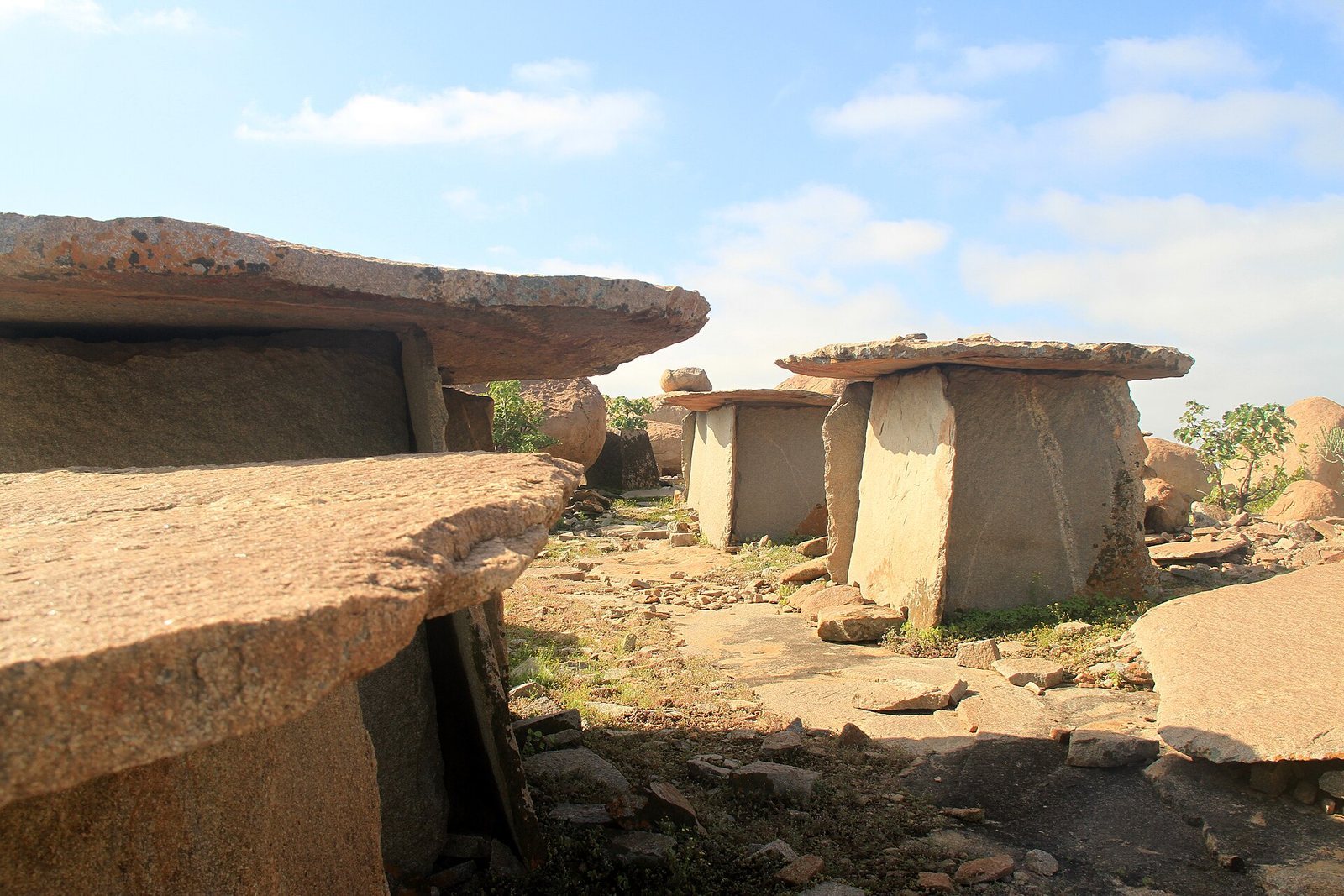
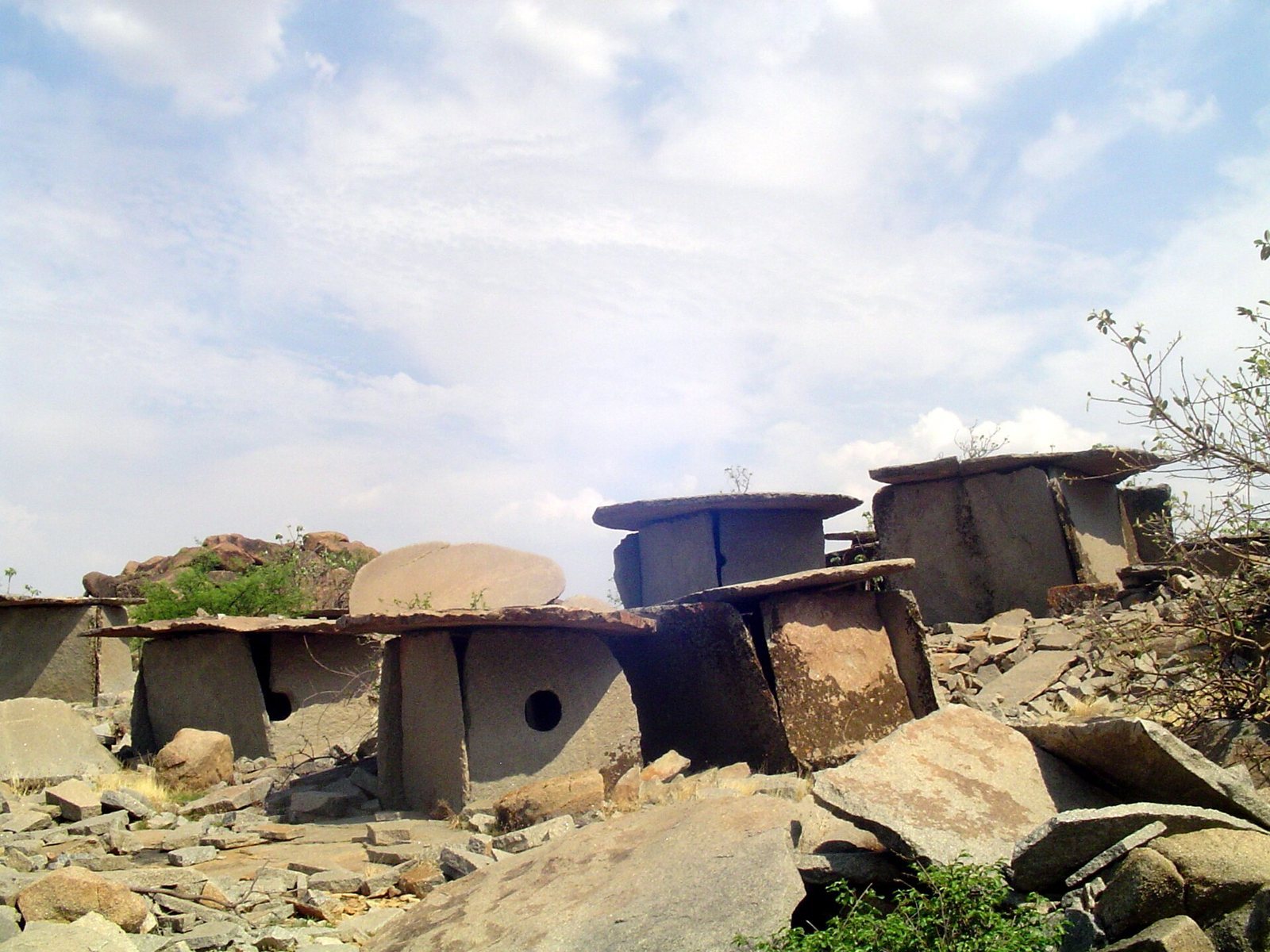
Dolmens, chambers made from upright stones and a covering slab, occur in clusters. They vary in size: smaller examples measure about 50–100 cm, while larger ones reach 3 m in height. Some are formed from stone slabs set without mortar.
Cists and circular arrangements
Buried or partly buried dolmens are classified as cists, which are stone-lined burial chambers, and dolmenoid cists, which are cist-like megalithic structures. They are arranged in circular layouts, and most have collapsed. The dolmenoid cists vary in shape and size; oblong examples may have been made by packing rubble stones at ground level.
Port-holed chambers and other forms
Round port-holed dolmens have openings cut through their stone slabs. Although their form resembles windowed dwellings, they are funerary structures and stand on both sides of what was once the main street. A port-holed chamber in the western group has been compared with examples at Rajankolur. Other forms include pit circles, oblong chambers with gabled stone roofs, a circular enclosure, human-shaped funerary structures, and circular stone fences. A pit containing layers of earth surrounds the structures.
Rock art and finds
Cave paintings
Caves or rock shelters contain paintings of people dancing, hunting, and carrying weapons. Other images depict geometric and mystical designs, as well as deer, peacocks, antelope including blackbuck, humped bulls, horses, and cows. The paintings use red ochre. The caves may have served as dwellings or places of worship.
Archaeological finds
Finds include pottery assigned to the Neolithic, megalithic, and early historical periods; implements from before the megalithic period; and iron implements from the megalithic period. Iron slag, the waste left by iron smelting, has also been found.
Sound-producing stone
An unusual stone kettledrum is associated with a boulder. Striking the boulder with a wooden hammer may produce sounds audible as far as 1 km away.