Lost Gardens of Heligan: A Restored Historic Garden Estate in Cornwall


Site at a Glance
- Rating
- 4.6
- Popularity
- High
- Country
- United Kingdom
- Primary era
- Modern
- External website
- Open
- Eras represented
- Early Modern, Modern
- Civilizations
- British
- Site type
- Domestic
- Remains
- Park
On this page17 sections
History
The Lost Gardens of Heligan are a historic garden estate in the United Kingdom, near Mevagissey in Cornwall, developed by successive members of the Tremayne family from the mid-eighteenth century to the early twentieth century. The gardens combine an English landscape park with Gardenesque, Italian, New Zealand-influenced, productive, and subtropical designs. They formed part of the Heligan estate, which covered approximately 400 hectares, or 1,000 acres, and whose written history reaches back to the twelfth century.
The Tremayne Estate
The Tremayne family’s ownership of Heligan is traced to the sixteenth century, and William Tremayne was associated with the estate in 1603. The gardens were shaped over several generations, particularly by Reverend Henry Hawkins Tremayne, his son John Hearle Tremayne, John Tremayne, and John Claude Lewis Tremayne, known as Jack.
Between about 1780 and 1790, Henry Hawkins Tremayne transformed the grounds. Estate plans from 1777 and before 1810 show the change from predominantly parkland to a more varied designed estate containing shelter belts, the Northern Gardens, the Mellon Yard, and the Flower Garden. John Hearle Tremayne created the Long Drive linking Heligan with Pentewan. It may originally have been intended for horses carrying coal from St Austell, and he was probably responsible for introducing subtropical plants and establishing what became The Jungle.
Nineteenth-Century Development
Heligan reached its height as a garden estate during the nineteenth century. Ornamental planting extended along the Long Drive, rhododendrons were hybridised and planted around Flora’s Green, and the Italian Garden was created. The gardens required 22 gardeners before the First World War, reflecting the labour needed to maintain their extensive ornamental and productive areas.
The Victorian period, the reign of Queen Victoria from 1837 to 1901, brought strong interest in subtropical horticulture. At Heligan this interest shaped the planting of the deeply cut valley later known as The Jungle, while the productive gardens continued to demonstrate intensive nineteenth-century cultivation methods.
War and Decline
The First World War began Heligan’s decline. Sixteen of the 22 gardeners died in the war, and by 1916 only eight men remained to care for the grounds. That year the estate was requisitioned by the War Department. Jack Tremayne made Heligan House available to the British Army as an officers’ convalescent home.
After the war, the Tremaynes could no longer, or no longer wished to, employ the staff needed to maintain the gardens. Heligan House was leased to tenants who did not preserve the grounds, and the gardens gradually became overgrown. Jack Tremayne moved permanently to Italy during the 1920s and acquired Boccanegra, an estate at Ventimiglia, in 1923. After his childless death, Heligan passed into a trust benefiting members of the extended Tremayne family. The house was sold without the gardens in the 1970s and was later converted into flats, while the wider estate remained with the family.
During the Second World War, the estate was used by the United States Army, including for exercises connected with the Normandy landings. The gardens remained neglected until the late twentieth century, when the surviving estate entered a new phase of ownership and restoration.
Rediscovery and Restoration
In 1990, the Tremayne descendant John Willis inherited Heligan with his sister and introduced the archaeologist and record producer Tim Smit to the gardens. From 1991, Smit, John Nelson, horticultural specialists, and volunteers began restoring the neglected grounds, with the aim of recovering their Victorian character. The gardens opened to the public in 1992, and the work became the largest garden-restoration project undertaken in Europe.
The restoration returned the gardens to cultivation and contributed to employment and economic activity in a relatively disadvantaged region. Heligan was named Britain’s Garden of the Year in 1999 and received the European Garden Award in 2014 for the best further development of a historic park or garden. It is listed at Grade II on Historic England’s Register of Parks and Gardens. Historic England is the public body responsible for protecting England’s historic environment, and Grade II registration identifies a park or garden of special historic interest.
Heligan is leased and operated by a company associated with the restorers and continues as a public garden and garden-history attraction. Its educational approach includes demonstrations of Victorian cultivation through the production of more than 300 varieties of fruit and vegetables. Modern management uses ecological farming and gardening rather than the highly toxic sprays formerly used by the estate.
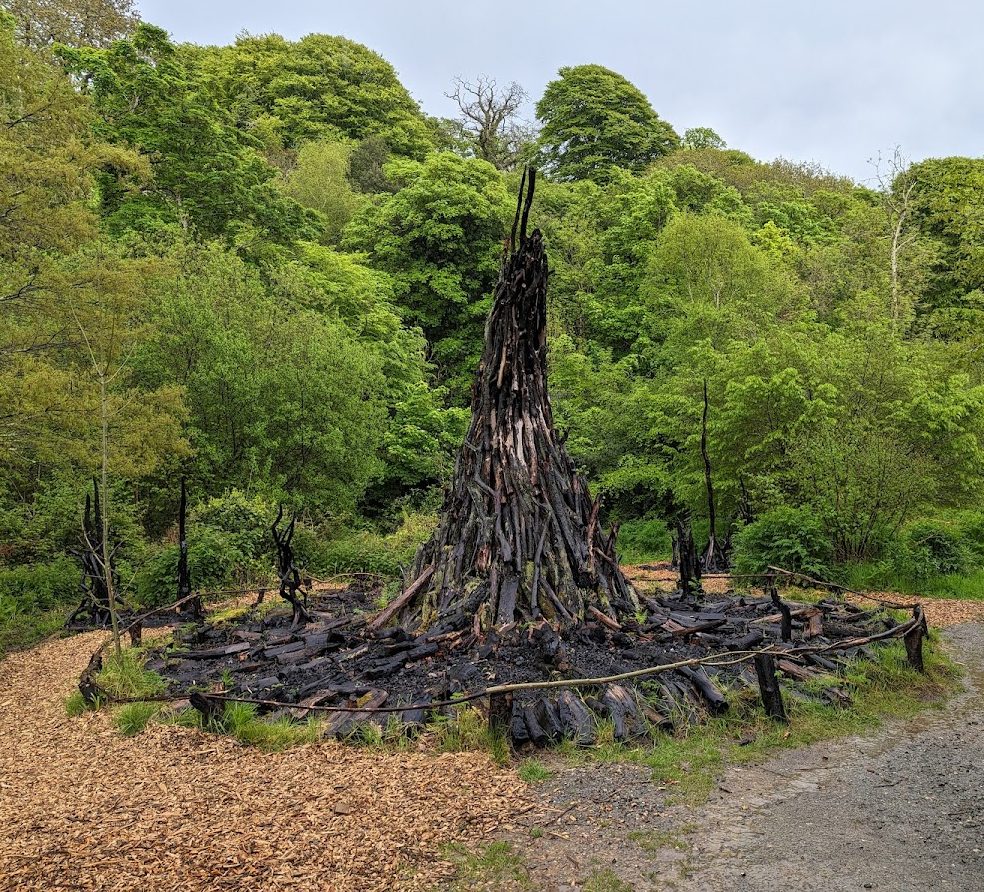
The restored Lost Valley includes carefully managed woodland and traditional charcoal production. Timber extraction is carried out with horses, and neighbouring farmers help manage the extensively grazed land because the current operators do not claim specialist farming experience. An official weather station was established in 1995 and maintained by Colin Howlett. From 2002, remotely controlled cameras in a hut enabled visitors to observe local wildlife and nesting birds. By the late 1990s, the gardens received more than 300,000 visitors annually and were described as England’s most visited garden from 1998.
Remains
The gardens occupy approximately 80 acres around Heligan House and its private gardens. They lie about 2.4 kilometres north-west of Mevagissey and approximately 76 metres above it. The principal ornamental and productive gardens slope gently towards the house, while the western, southern, and eastern areas descend steeply into valleys draining towards the sea at Mevagissey. The surviving layout brings together the Pleasure Grounds, Italian Garden, Productive Gardens, The Jungle, and The Lost Valley.
Ornamental and Productive Gardens
Pleasure Grounds
The Pleasure Grounds are more than 200 years old and were reopened in 1997. A pleasure ground is an ornamental garden intended for leisure and display, often combining lawns, paths, planting, water features, structures, and scenic viewpoints. At Heligan, hedges and walls divide the grounds, which contain a crystal grotto, wishing well, pavilions, ponds, and a rocky gorge approximately 30 metres long.
Flora’s Green
Flora’s Green is a central lawn surrounded by rhododendrons. Joseph Dalton Hooker, a nineteenth-century British botanist and plant collector, brought the plants from Sikkim in the Himalayas between 1847 and 1849. The resulting specimens reach approximately 60 metres in diameter and are described as among the largest of their kind in the world.
Productive Gardens
The Productive Gardens are an open-air demonstration of nineteenth-century horticulture. More than 300 varieties of fruit and vegetables are cultivated using Victorian techniques, alongside restored greenhouses, citrus and peach trees, and grapevines. The area also contains a wine greenhouse described as the only surviving greenhouse built to designs by Joseph Paxton, the nineteenth-century gardener, architect, and designer associated with innovative glasshouse construction.
Brick-lined trenches heated by horse manure were used to grow pineapples in the productive area. These pineapple pits, heated growing trenches in which decomposing organic material generates warmth, are described as the last surviving installations of their type from the Georgian period and as Europe’s only remaining pineapple pit. The Georgian period generally refers to Britain under the first four Hanoverian kings named George, from 1714 to 1830.
Italian Garden
The Italian Garden was the first major feature completed during the modern restoration. It was originally designed to capture the midday sun and was therefore initially called The Suntrap.
Valleys and Woodland
The Jungle
The Jungle occupies a deeply cut valley approximately 300 metres long, or about 22 acres in area. It was created during the Victorian period, when interest in subtropical plants was strong. Four ponds linked by a stream were constructed in the valley, and paths wind along its slopes through bamboo, giant Australian tree ferns, gunneras, agaves, hemp palms, and rhododendrons. In horticulture, a jungle is a densely planted garden area designed to evoke subtropical vegetation, rather than necessarily a natural tropical forest.
The Lost Valley
The Lost Valley adjoins The Jungle and covers approximately 30 acres, continuing into areas used for extensive grazing. Its avenues of oak and beech, chestnut groves, and charcoal kilns record its former woodland use. Some kilns operate again as part of low-impact woodland management. The fields are enclosed by hedges, a characteristic landscape feature of Cornwall and England.
During restoration, numerous trees were felled and removed to recreate a landscape park. Heavy horses reduced damage to the soil, while an excavator removed silt from the ponds. Sticklebacks, rudd, and carp were introduced into the restored water bodies. The ponds and woodland support kingfishers, moorhens, herons, cormorants, Canada geese, mallards, dragonflies, damselflies, crane flies, and six species of bat. Butterflies recorded in the area include brimstones, holly blues, small tortoiseshells, wall browns, speckled woods, painted ladies, gatekeepers, meadow browns, cabbage whites, green-veined whites, peacocks, and ringlets.
Earth Sculptures and Planting
The Mud Maid and The Giant’s Head
Near the garden entrance are two overgrown earth sculptures, The Mud Maid and The Giant’s Head. Made from rocks and plants, they are attributed to the artist Susan Hill and have been associated with Cornish mythology.
Plant Collections
The gardens contain a wide range of plants connected with their ornamental and productive history. These include pineapples, bamboo, giant Australian tree ferns, palms, camellias, rhododendrons, agaves, gunneras, tree ferns, hemp palms, citrus, peaches, and grapevines.