Lincluden Collegiate Church: A Medieval Religious Foundation in Scotland
Site at a Glance
- Rating
- 4.3
- Popularity
- Medium
- Country
- United Kingdom
- Primary era
- Medieval
- Eras represented
- Medieval, Early Modern
- Civilizations
- Kingdom of Scotland
- Site type
- Religious
- Remains
- Church
On this page9 sections
History
Lincluden Collegiate Church is a medieval religious complex near Dumfries, Scotland, in the United Kingdom. Its stone church was built in the late Gothic period from about 1389 into the early 15th century. Uchtred of Galloway founded a convent here around 1160, the first nunnery in the Lordship of Galloway, a medieval territory in southwestern Scotland.
A convent and a collegiate church
A raised defensive mound, known as a motte, stood on the site before the convent was established. The house followed Benedictine rule, while its first sisters were probably Cluniac nuns, members of a reform movement within Benedictine monasticism, who came from France or England. Local novices later joined them. Uchtred, who governed Galloway jointly with his brother Gille Brigte, died in 1174 at his brother’s hand. Lincluden was the only monastic house Uchtred founded.
After the convent declined, it was dissolved in 1389. Archibald the Grim, Lord of Galloway and later 3rd Earl of Douglas, dismissed the nuns following allegations of unchaste conduct that were unsupported by proof. He established a collegiate church, served by a community of secular clergy rather than monks or nuns. A provost led the community, which included twelve canons, clergy who served the church. Archibald and his successors spent heavily on its ornamentation.
A separate figure, Archibald Douglas, 4th Earl of Douglas, was captured at the battles of Homildon Hill and Shrewsbury and later held by Henry IV of England. On 20 April 1408, Henry instructed commanders of his northern castles not to harm the college’s people or property if they entered Scotland for military purposes, for a period of three years.
Disuse and later reuse
The buildings survived the Reformation in 1560. Lord Maxwell arranged for the last Mass to be celebrated on Christmas Day 1585. The last provost, Robert Douglas, left around 1590, and ownership passed to the Catholic Maxwells of Terregles. The church fell out of use, but the domestic buildings remained occupied for longer and were adapted as a tower house, a fortified residence. They were abandoned by the late 17th century, and the complex had been abandoned around 1700.
During the 17th century, local people reused stone from Lincluden in other regional buildings. In 1772, treasure seekers broke into Princess Margaret’s tomb, and her bones were said to have been scattered. Robert Burns visited Lincluden and found inspiration there for The Minstrel of Lincluden (1794) and Ca’ the Yowes to the Knowes.
Care and conservation
In 1882, Captain Maxwell of Terregles had the ruins cleared and fenced, and a caretaker was installed. The site was scheduled as a monument in 1920 and entered state care in 1922. It held Scotland’s highest listed-building category from 1981 until that status was removed in 2018; its scheduled-monument protection continues. In 1999, after used engine oil was reportedly poured over Princess Margaret’s effigy, the effigy was removed for conservation and protection and replaced by a fibreglass replica.
Remains
Layout and setting
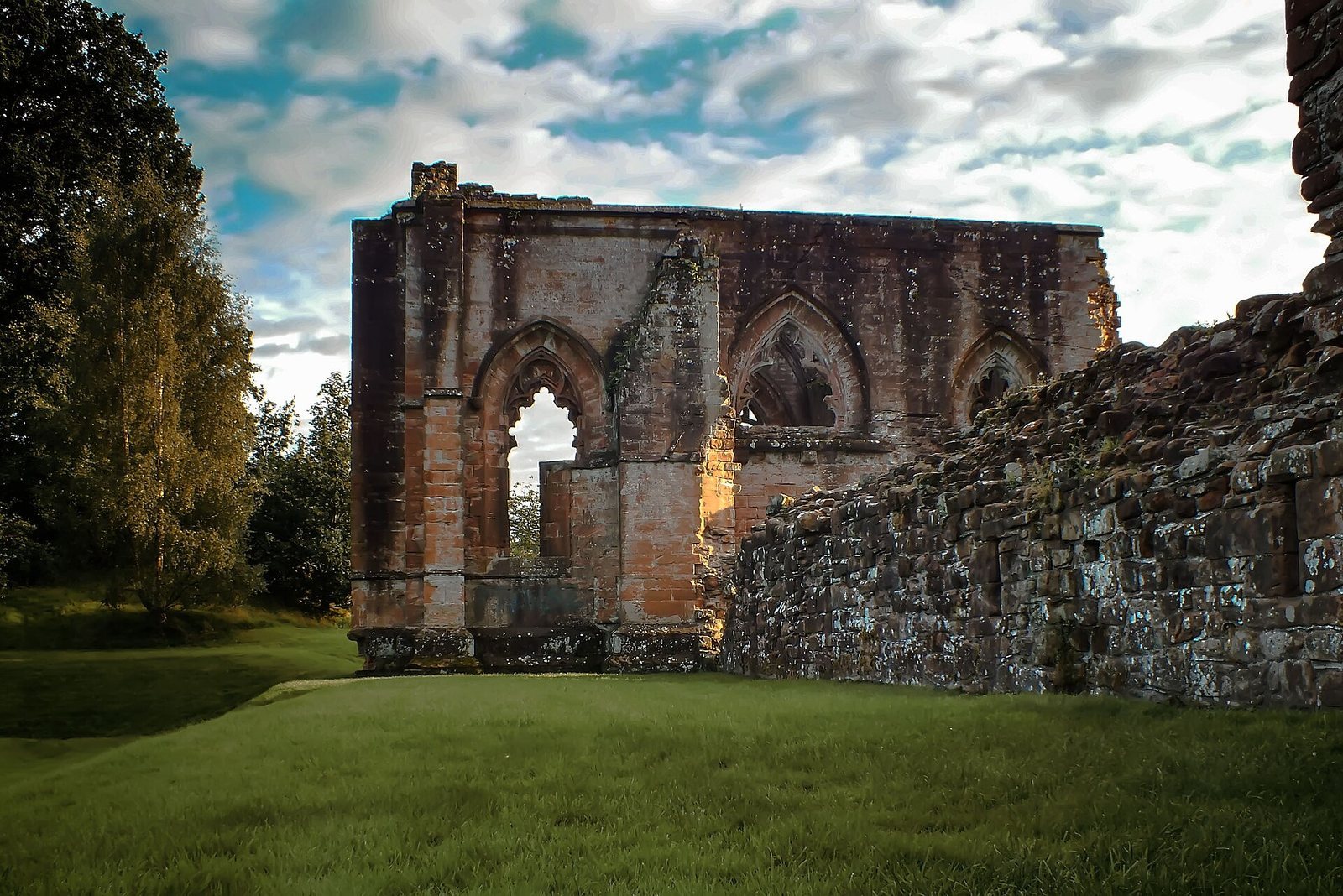
The ruined complex stands in a bend of Cluden Water near its meeting with the River Nith, north of Dumfries. It occupies the bailey, the enclosed area associated with a motte, of an early Lincluden Castle. The remains of a later Lincluden Tower are also associated with the site. The church was a stone, late-Gothic building laid out in the form of a cross.
Church and memorials
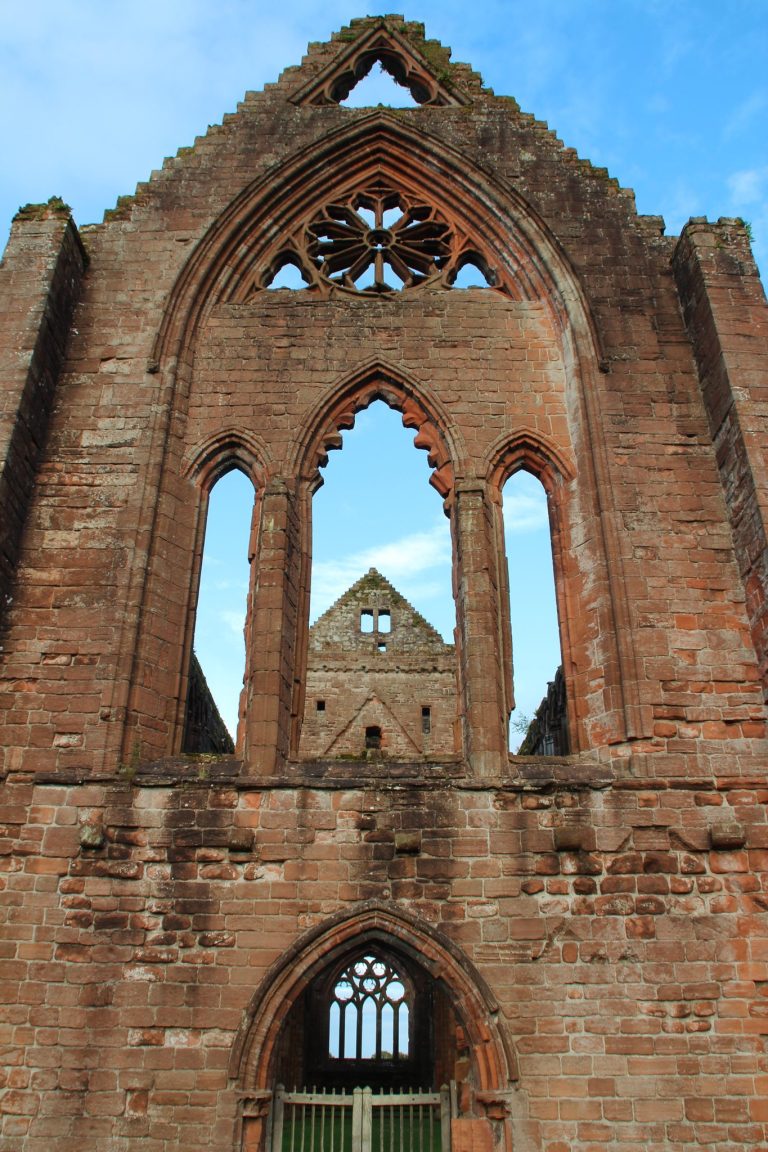
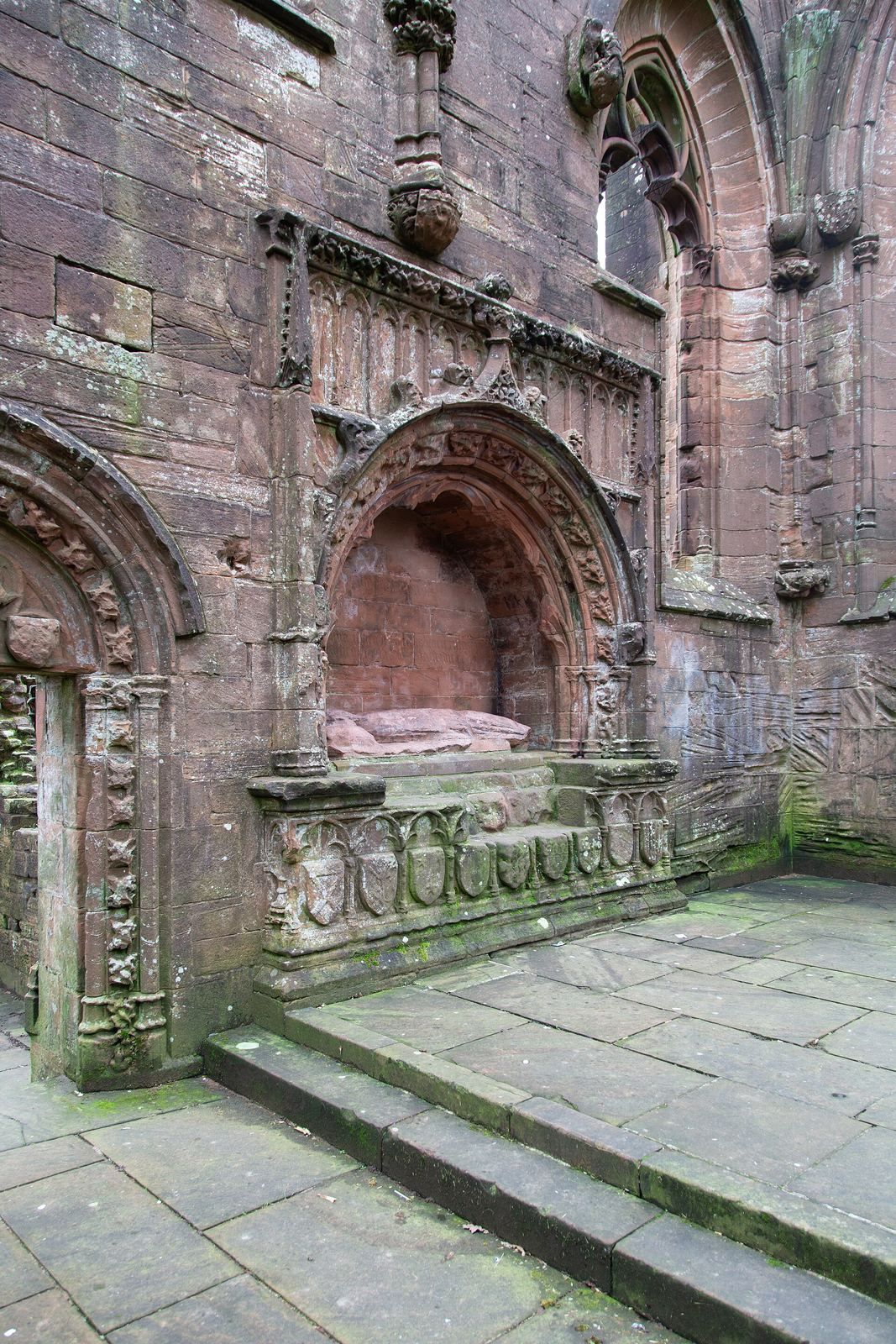
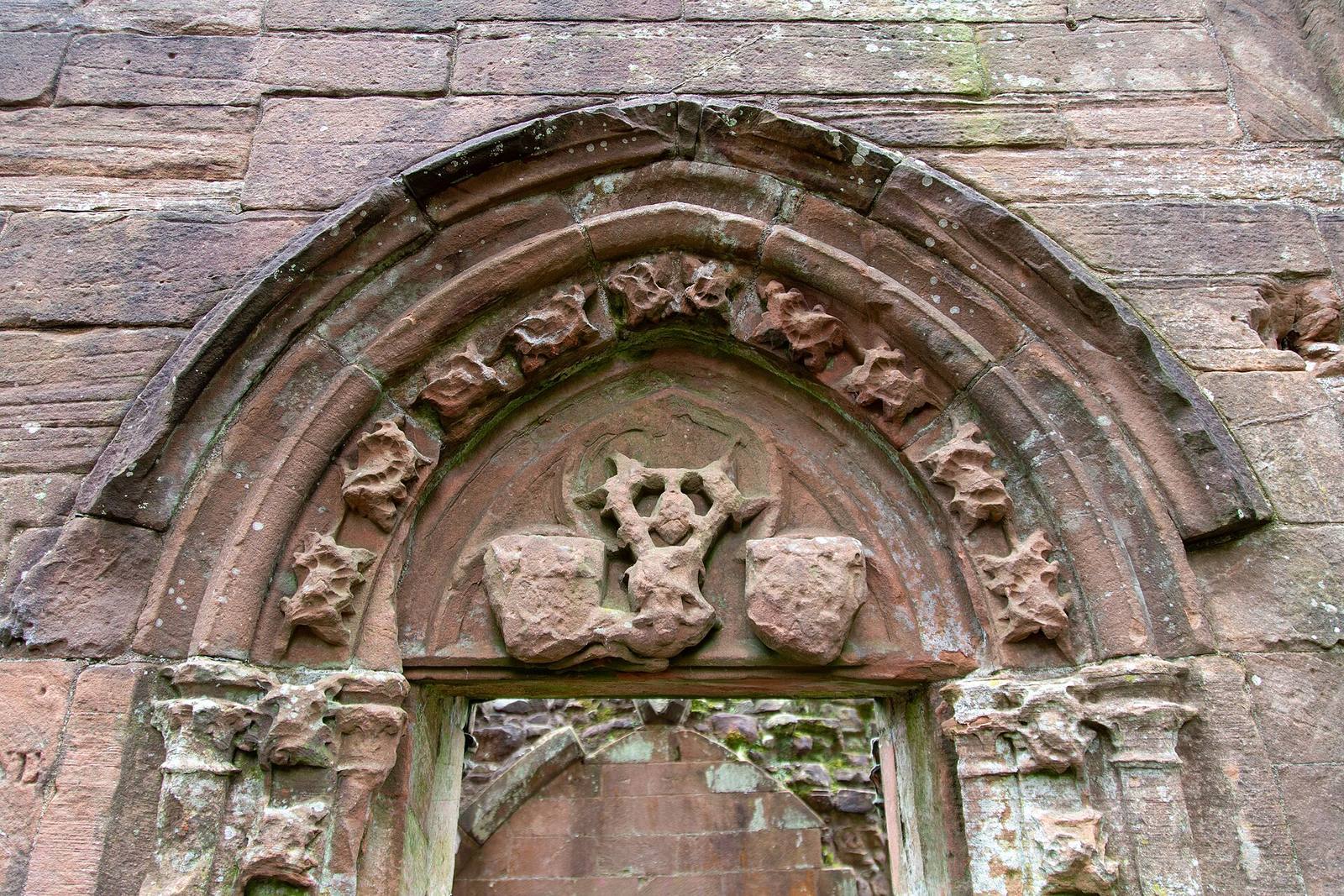
Parts of the nave, the eastern choir and the south side of the transept survive. The windows resemble those designed by the French medieval architect and mason John Morrow at Paisley Abbey and Melrose Abbey; he may also have designed Lincluden’s church. An ornamented doorway opens into the sacristy, and carved coats of arms remain among the ruins. Princess Margaret’s tomb lies in the choir. Alexander Carnys, the second provost, served from 1408 to 1413 and died in 1422; he was buried in the chapel in the south transept. His grave slab bears a Latin inscription naming him and asking for prayers. Other burials associated with the church include Uchtred of Galloway, Archibald the Grim and the mason Alexander Couper, whose entry is dated 1588.
Residential buildings
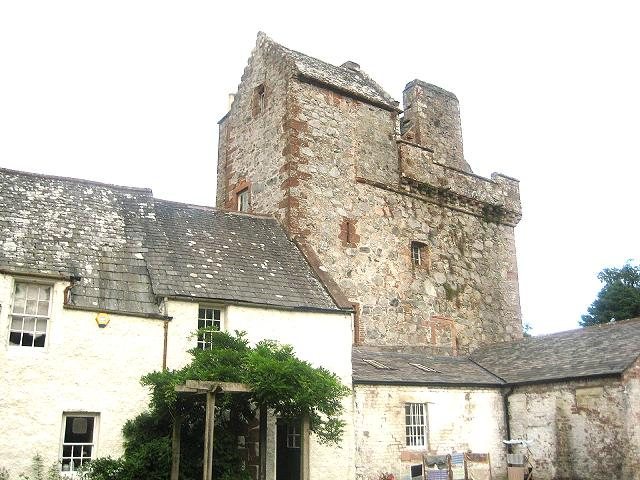
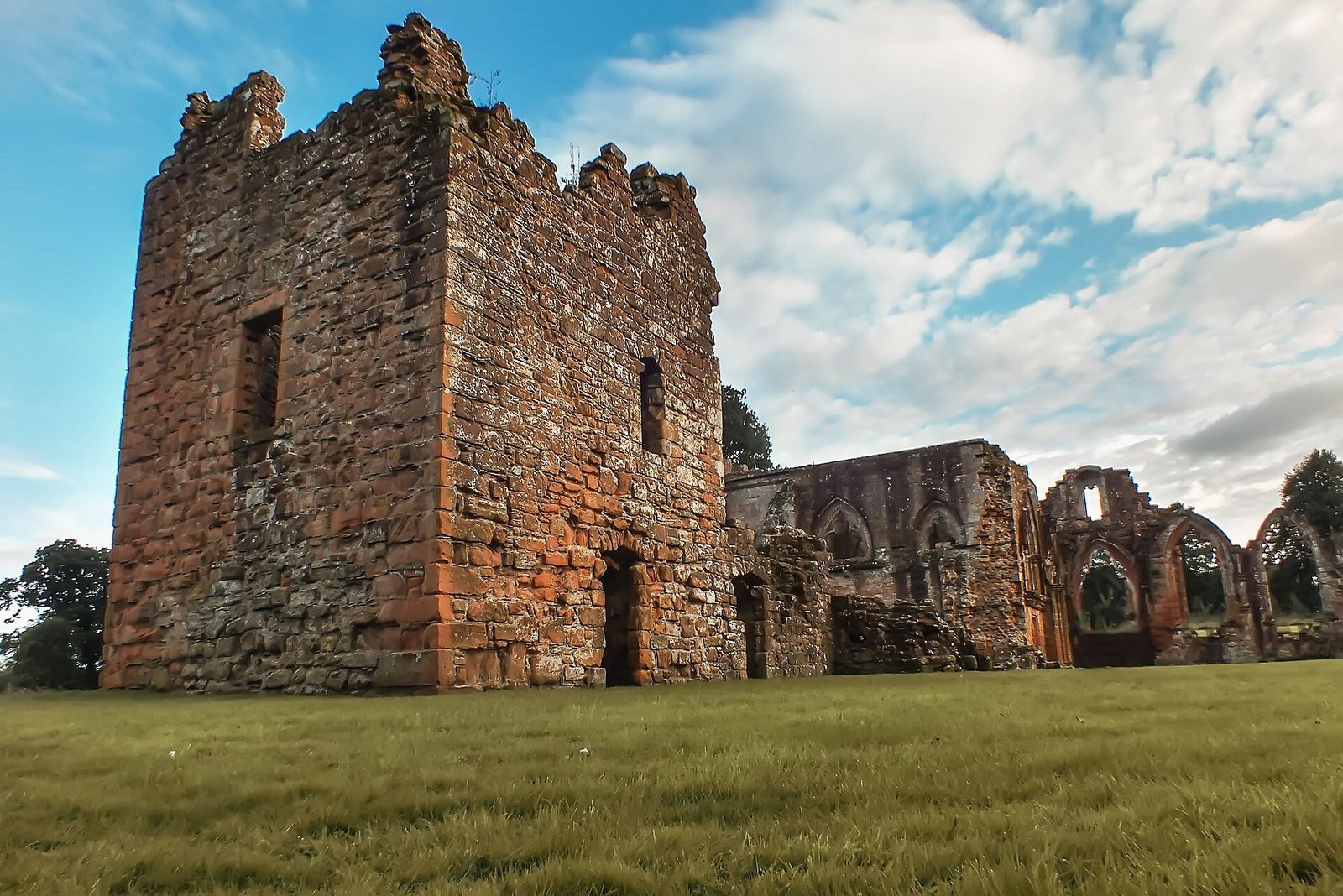
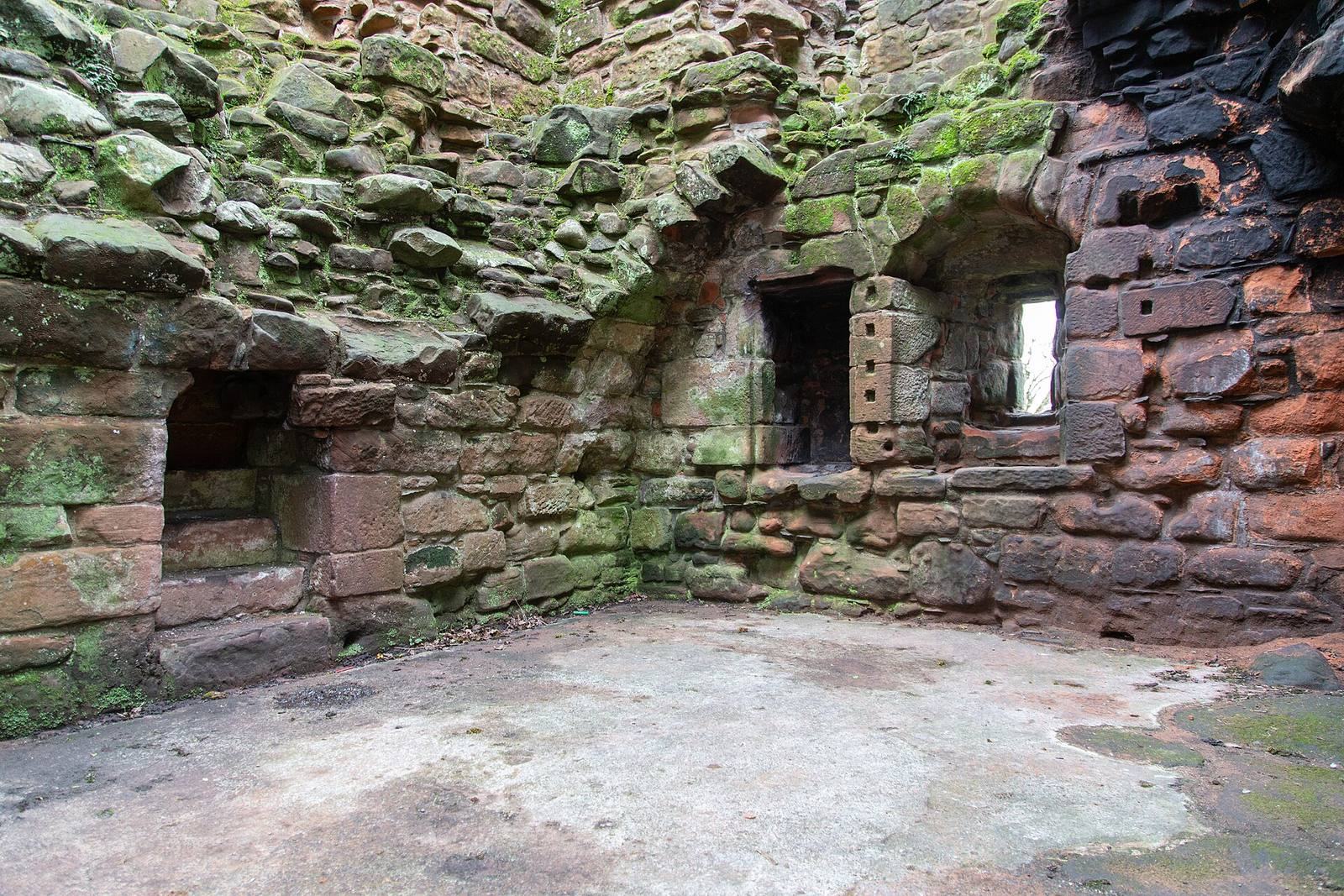
A row of adjoining buildings stands north of the choir, ending in a residential tower at its northern end. On the south side, the former provost’s residence adjoins the church. It was probably built for William Stewart, provost from 1529 to 1536, and may have been among the buildings extended around 1530. The rubble-stone residence, with details in dressed stone, originally had three storeys and a four-storey stair tower.
Garden and earlier fortification
East of the buildings, visible levels in the landscape mark a 16th-century ornamental garden. The original motte lies southeast of the church.