Liechtenstein Palace in Malostranské náměstí, Prague: A Baroque Urban Palace
Site at a Glance
- Popularity
- Medium
- Country
- Czechia
- Primary era
- Early Modern
- Eras represented
- Medieval, Early Modern, Modern
- Civilizations
- Austrian Empire, Habsburg, Habsburg Austria, Holy Roman Empire, Kingdom of Bohemia
- Site type
- Domestic
- Remains
- Elite Residence
On this page7 sections
History
Liechtenstein Palace in Malostranské náměstí, Prague, is a Baroque urban palace in Czechia, founded in 1623. Five houses had stood on the site by the early fifteenth century. In 1622/23, they belonged to Karl I, Prince of Liechtenstein, who gradually brought them together as a palace.
Foundation and Liechtenstein ownership
After the Habsburg victory at the Battle of White Mountain in 1620, which defeated the Bohemian Estates Revolt against Habsburg rule, Ferdinand II appointed Karl governor of Bohemia. He tasked Karl with investigating and punishing the revolt’s leaders. The Liechtenstein family continued to live in the palace after Karl’s death in 1627. In the 1670s, architect Johann Georg Achbauer the Elder remodeled the building.
Changes in ownership and use
From 1742 to 1791, the family leased the palace to the First State Post Office. In 1791, for Leopold II’s coronation as King of Bohemia, Alois I Joseph of Liechtenstein decided to remodel it. Prince Johann I Joseph decided to sell the property in November 1808 to August Count Ledebour-Wicheln, but its status as a trust meant the registration of the new owner did not become valid until 1825.
The Czech priest and scholar Josef Dobrovský lived in the palace from 1811 to 1826. The property then passed to the Ledebour family. Industrial exhibitions took place there in 1829, 1831, and 1836. Prince Alfred I of Windisch-Graetz took over the palace in 1848.
Military, political, and academic uses
The palace housed the headquarters of the Austro-Hungarian VIII Corps, a large military formation, until 1918. After Czechoslovakia was established, a Czechoslovak Army command was based there. During the Second World War, the building served as German military headquarters.
After 1960, the palace became the seat of the Political College of the Communist Party of Czechoslovakia, then the country’s ruling communist party. A renovation for the music faculty of the Academy of Performing Arts in Prague was decided on in the late 1980s, and work began in late May 1991. The restored palace now houses the academy’s music faculty.
Remains
Palace complex and exterior
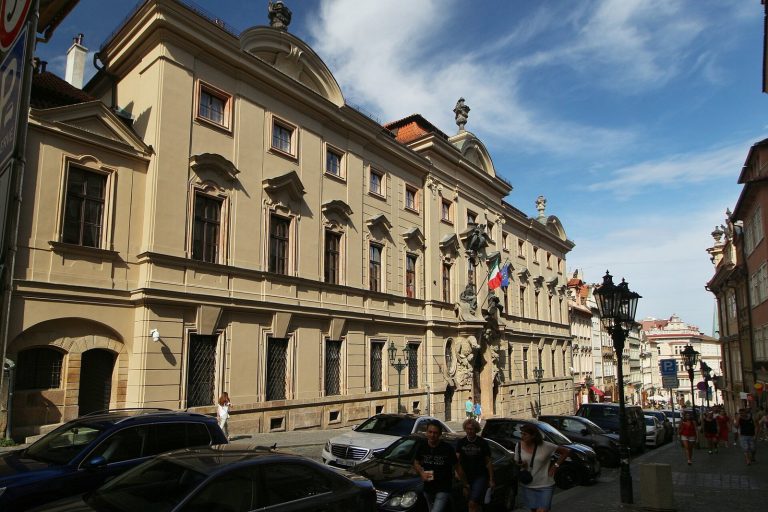
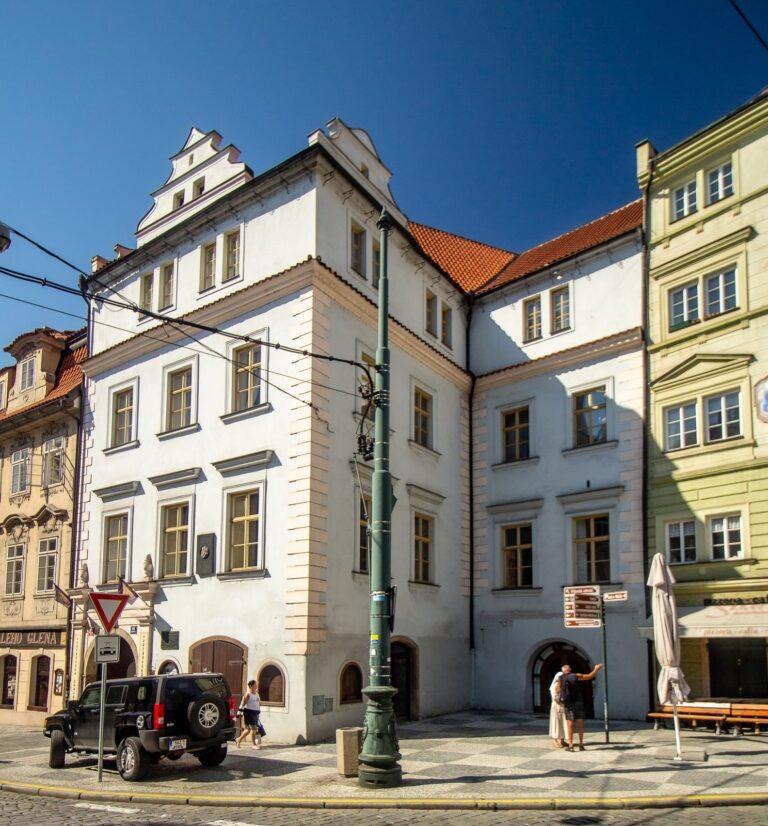
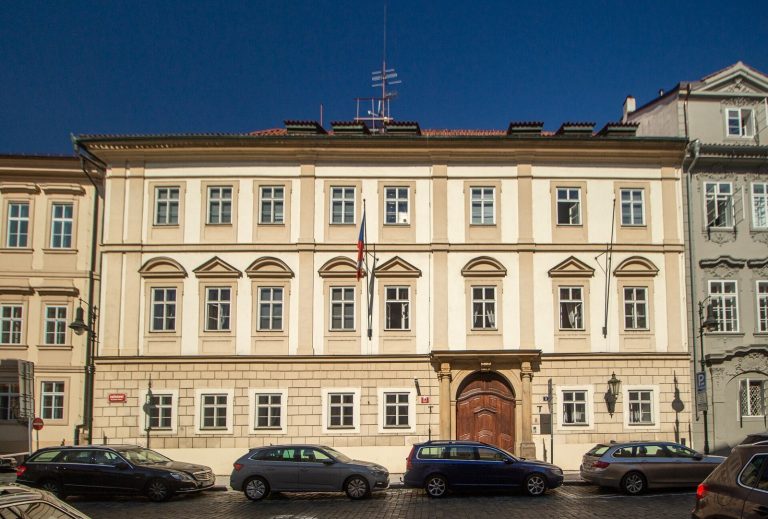
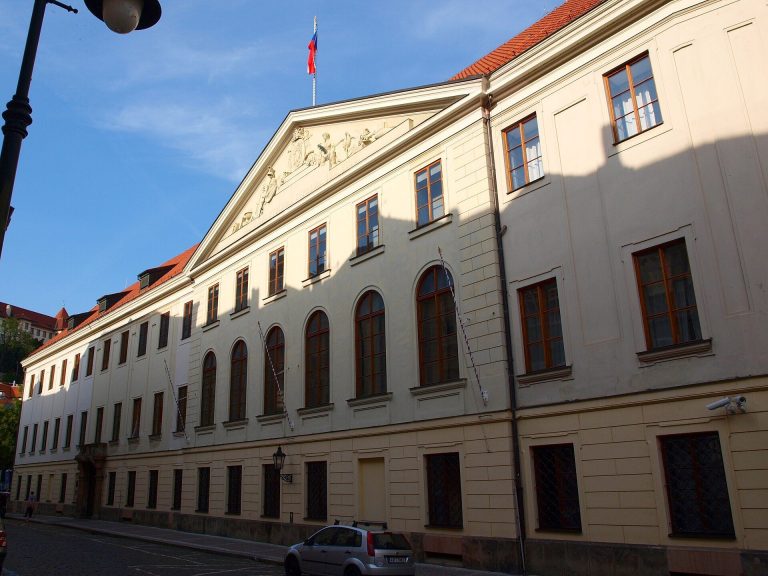
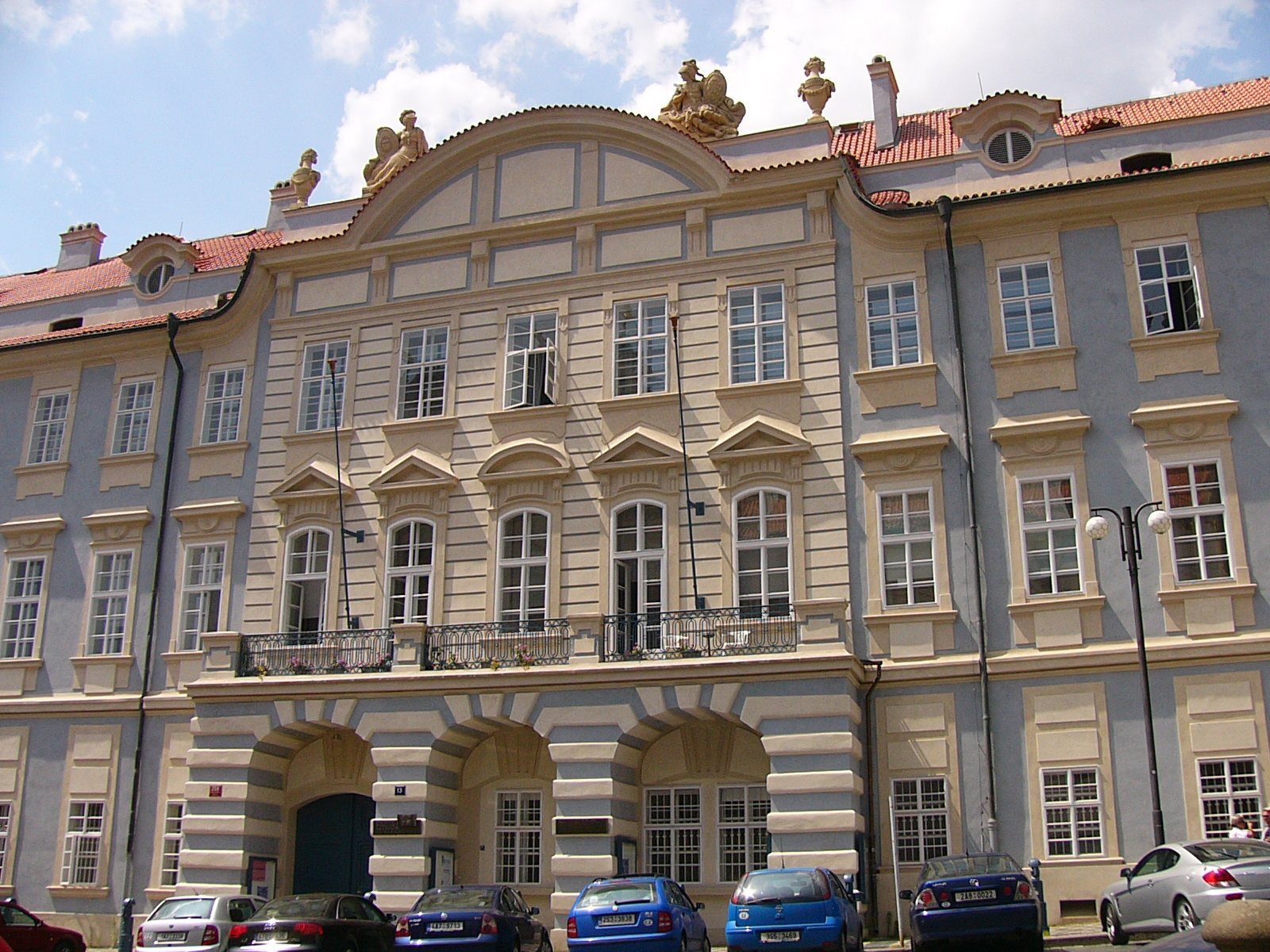
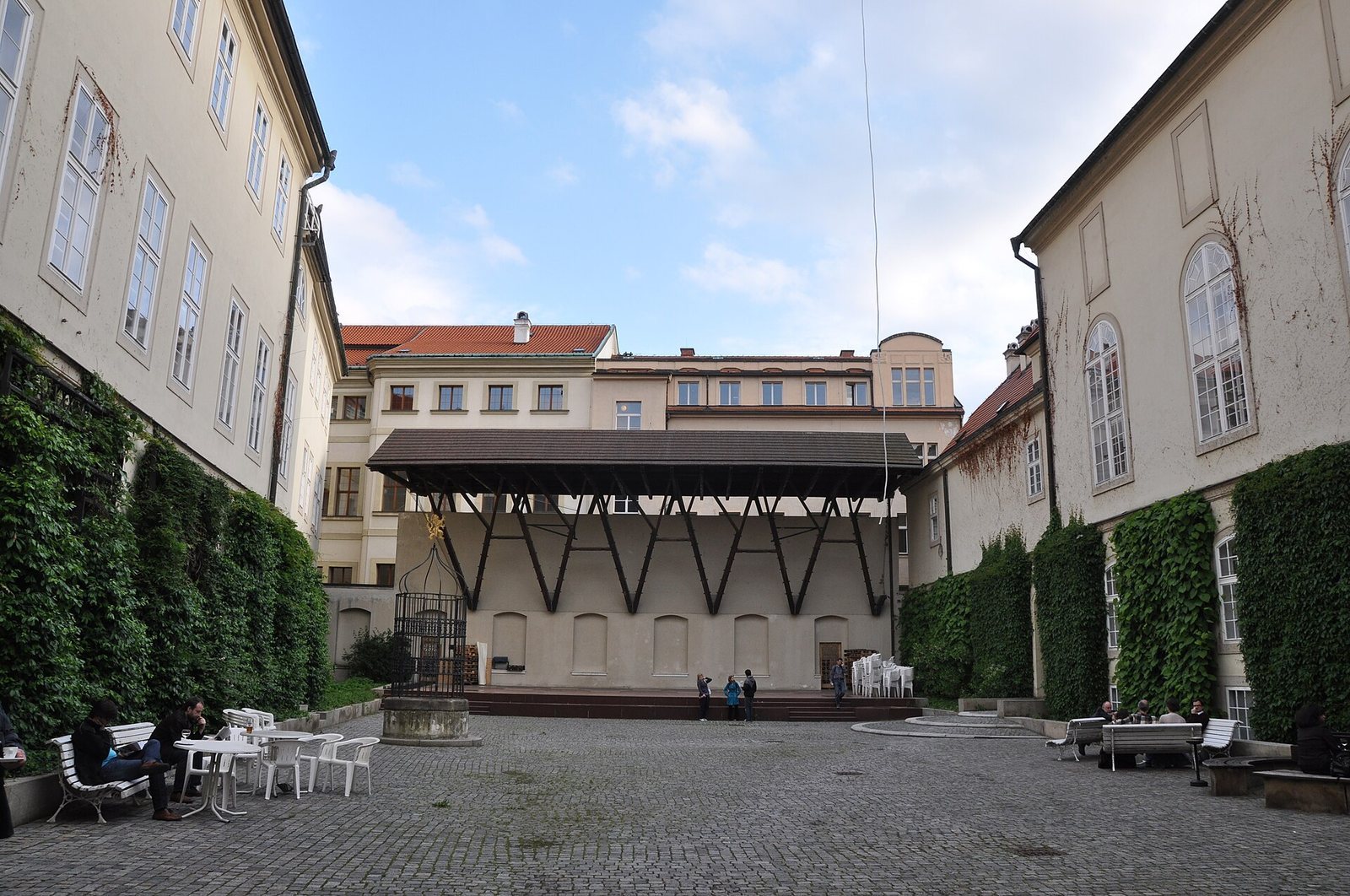
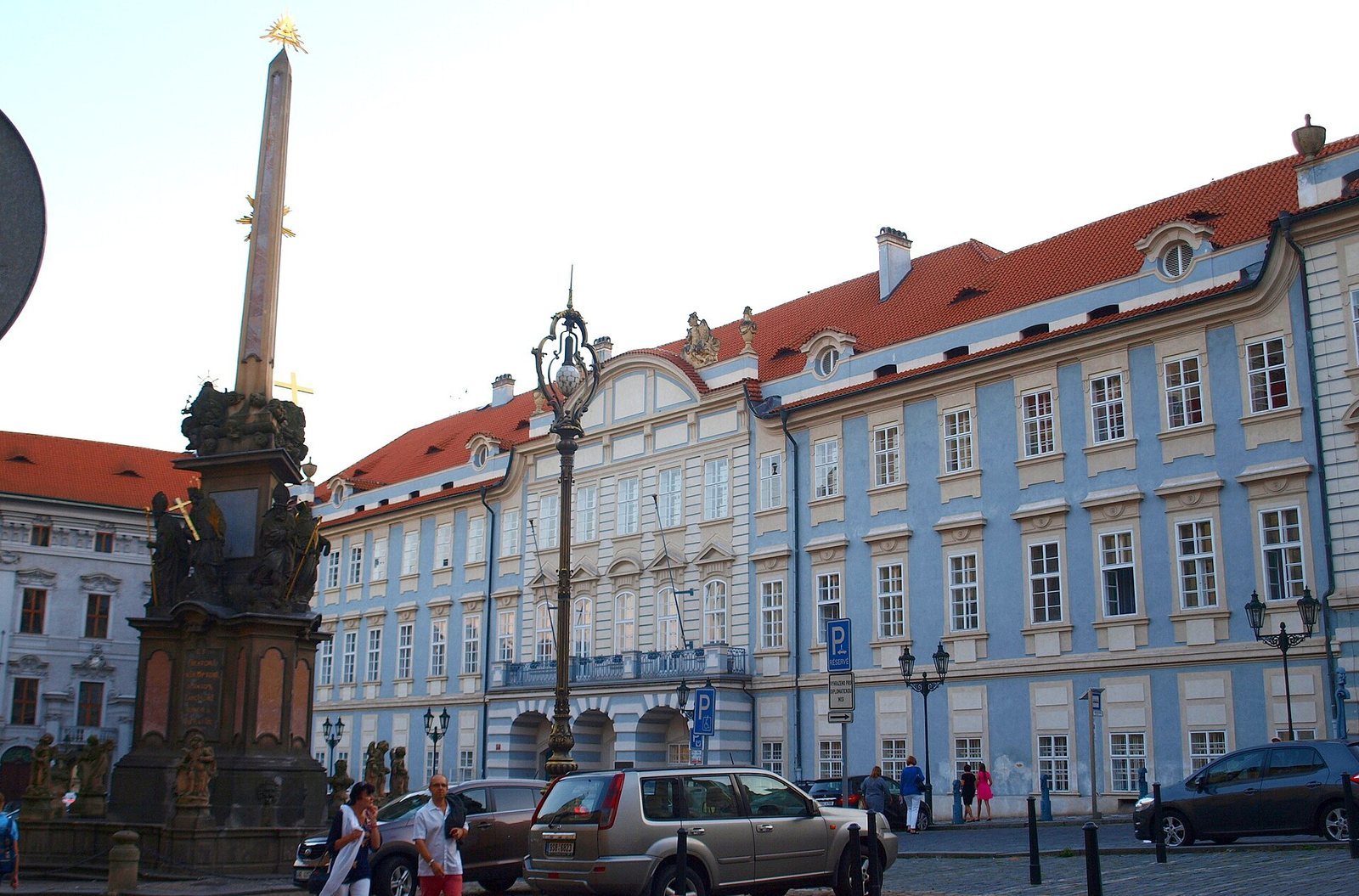
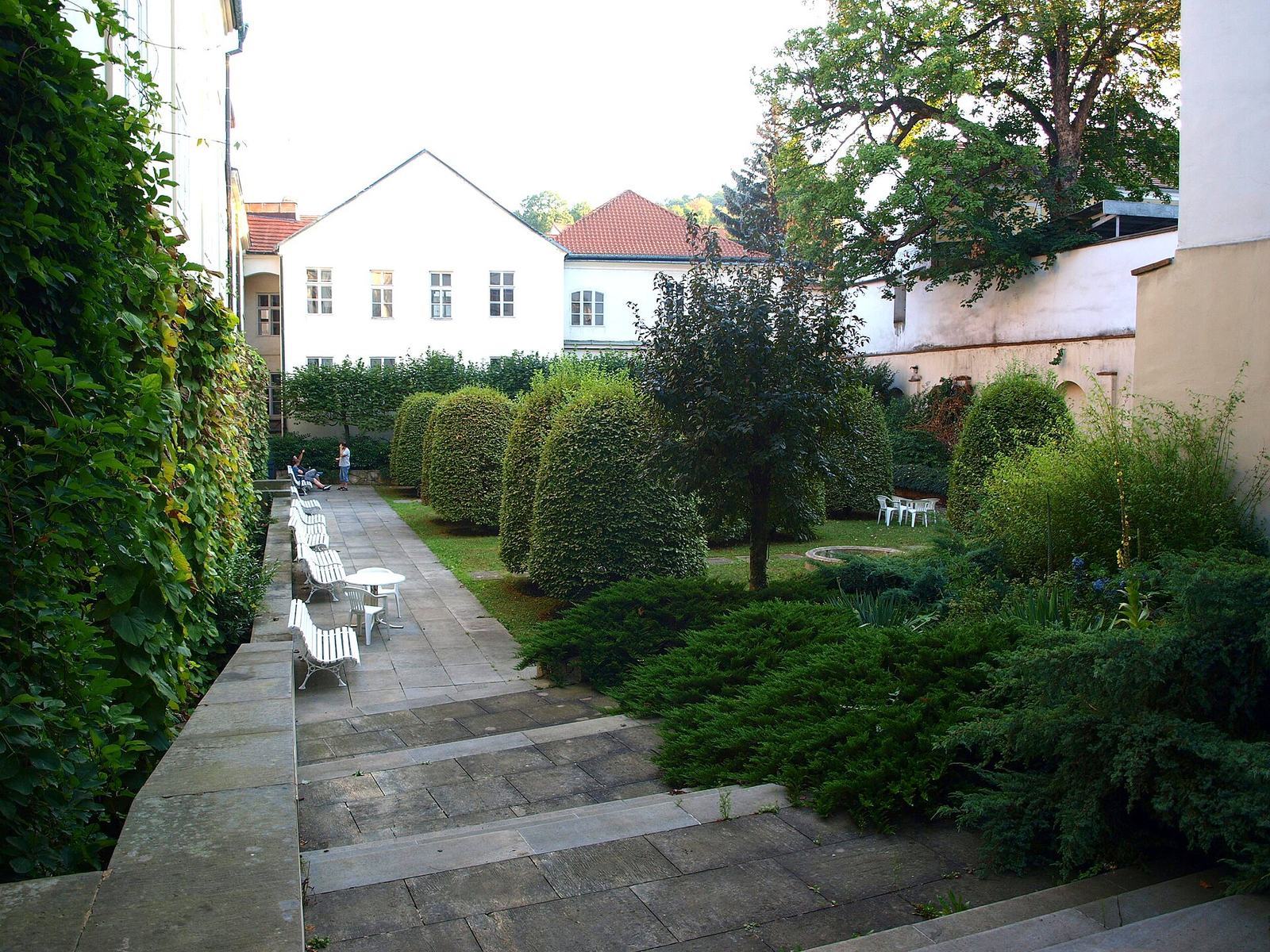
The palace stands at the upper end of Malostranské náměstí. Its component houses were joined into a complex with an inner courtyard and garden. The palace’s Baroque origins remain part of its form, while the remodeling of 1791 gave it its present Neoclassical façade, designed by Matyáš Hummel. The Ledebour family later had the corner section remodeled by builder Kašpar Předák.
Staircase and halls
The 1791 works also added a monumental staircase and a large hall with Neoclassical decoration. During the palace’s use by the Communist Party’s Political College, this hall served as a dining room and received a built-in food vending machine. A large concert hall on the first floor is named the Bohuslav Martinů Hall, after the Czech composer.