Liechtenstein Palace in Feldkirch: A Baroque Administrative Palace
Site at a Glance
- Popularity
- Medium
- Country
- Austria
- Primary era
- Early Modern
- Eras represented
- Early Modern
- Civilizations
- Habsburg, Habsburg Austria, Holy Roman Empire
- Site type
- Civic
- Remains
- Palace
On this page8 sections
History
Liechtenstein Palace in Feldkirch is a Baroque palace in Austria, commissioned by Prince Johann Adam Andreas of Liechtenstein after the town fire of 1697. The prince belonged to the House of Liechtenstein, a princely dynasty of the Holy Roman Empire. The palace became an administrative seat for territories that later formed the Principality of Liechtenstein.
Revenue office and Liechtenstein administration
From 1658 to 1697, a building on the site housed an archducal revenue office, which administered and collected income for the ruler. The fire of 1697 destroyed it. Prince Johann Adam Andreas then commissioned a Baroque palace, built by Gallus Apeller, a court master builder, or senior building professional serving a ruler’s court. The new building served as an administrative office for the House of Liechtenstein.
In 1719, the palace became the administrative seat for the Lordship of Schellenberg and the County of Vaduz. The House of Liechtenstein had acquired the two territories in 1699 and 1712; their union formed the Principality of Liechtenstein in 1719.
Private ownership and changing uses
On 14 October 1774, the princes of Liechtenstein sold the palace to churchwarden Längle. He bequeathed it to his sister, M. A. Meusburger. In 1808, it was auctioned to Josef Anton Häusle. Later, the building housed a brewery and an inn called “The Crown.” Christian Getzner operated a spinning mill there, and a reading society, an association for shared reading and discussion, used it as a meeting place.
Civic ownership
In 1848, Andreas Ritter von Tschavoll, Feldkirch’s mayor and a manufacturer, acquired the palace. Mayor Anton Gohm later inherited it. The City of Feldkirch took ownership in 1967, and the building now houses the city archive and library and hosts exhibitions. A renovation carried out from April 2017 to January 2018 was connected with the city’s 800th anniversary in 2018.
Remains
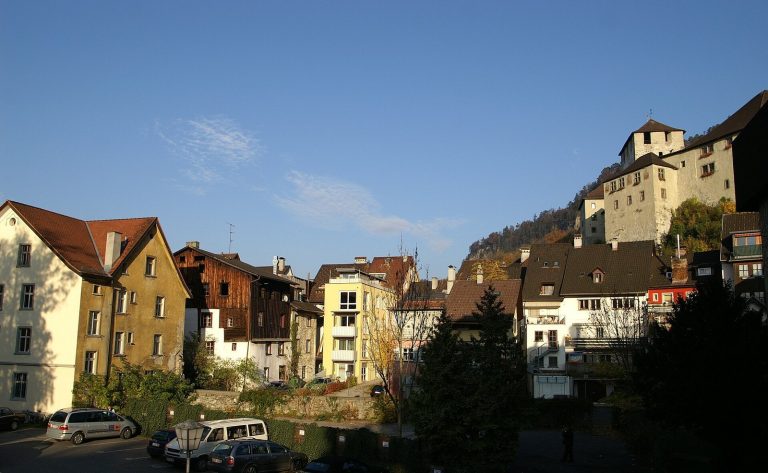
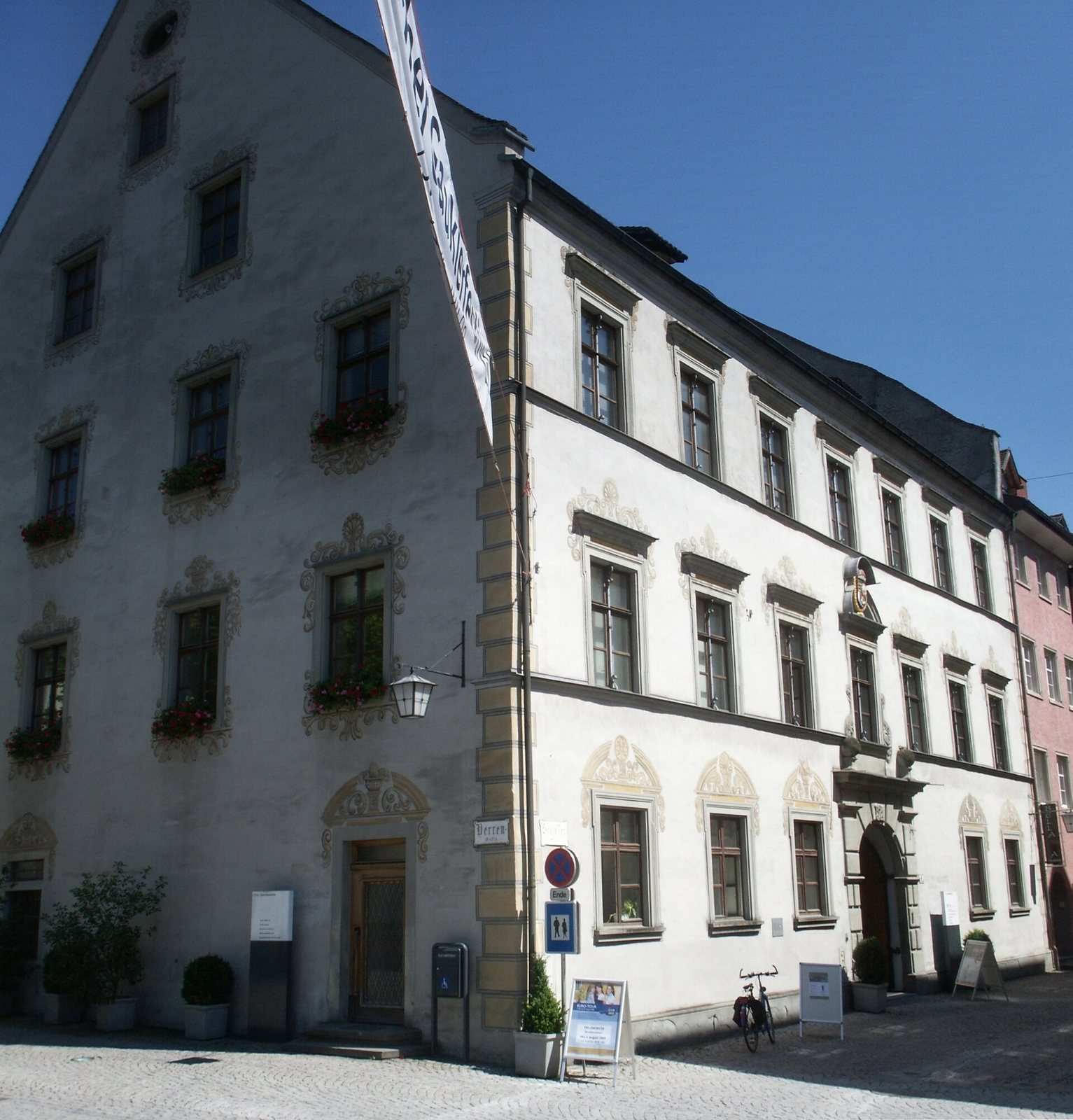
The palace has a gabled roof with its eaves facing the street. Its exterior includes a sandstone entrance and a decorated facade, while the first floor contains a wooden ceiling divided into recessed panels.
Exterior and interior features
Street-facing facade
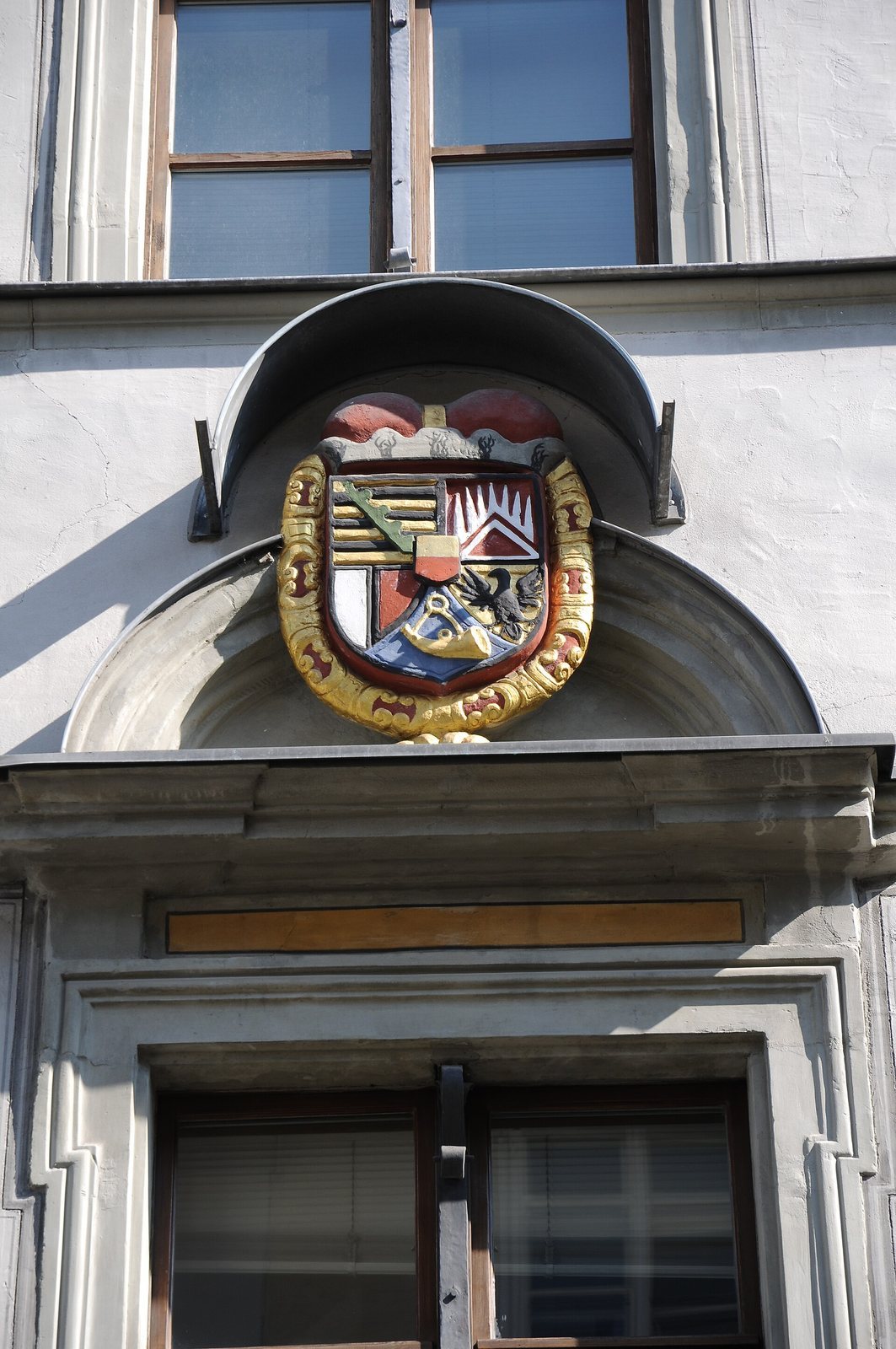
The sandstone entrance has a projecting hood with a horizontal, lintel-like form. Shallow curved hoods sit above the central windows on the main floor. The facade is decorated with sgraffito, designs made by scratching through layers of plaster, and frescoes, or wall paintings. It also bears the coat of arms of the Prince of Liechtenstein.
First-floor ceiling
The first floor contains a notable wooden coffered ceiling, formed from recessed panels arranged across the ceiling’s surface.