Kovilje Monastery: A Serbian Orthodox Religious and Educational Center
Site at a Glance
- Popularity
- Medium
- Country
- Serbia
- Primary era
- Medieval
- Eras represented
- Medieval, Early Modern, Modern
- Civilizations
- Ottoman, Serbian
- Site type
- Religious
- Remains
- Monastery
On this page8 sections
History
Kovilje Monastery is a Serbian Orthodox monastery beneath Mount Javor in Serbia, probably founded in the 12th or 13th century. Its exact foundation date is unknown, and its founding has been attributed to an endowment by Stefan the First-Crowned, Serbia’s first crowned king. Affiliated with the Diocese of Žiča, the monastery held an important spiritual, national, and political place in the life of the surrounding population.
Early history and seventeenth-century restoration
The monastery was probably destroyed by Ottoman forces in the 15th century. Its earliest written mention dates to 1606 in the Kruševo Memorial Book, a register of names for liturgical remembrance. The reference appears in a handwritten Four Gospels manuscript that Serbian Patriarch Gavrilo donated to the monastery.
In 1644, Metropolitan Gavrilo Rajić, a senior Orthodox bishop, found the monastery neglected and in poor condition. He restored it and stayed there for a time. In 1651, he returned land to the monastery. The Church of St Nicholas was then in use as a restored place of worship.
Religious and educational roles
In 1711, Bishop Jefrem Banjanin ordained the priest Veselin Borisavljević at the monastery. A record from 1733 names Filip as a spiritual guide who taught people preparing for the priesthood. In 1776, worshippers gave the monastery stills for making brandy from its fruit.
The monastery began serving regularly as a parish school in 1813. A school described as one of the oldest in Serbia opened there in 1867, alongside a school for future priests. The monastery school was operating before the Serbian-Ottoman War of 1876.
Parish status and renewal
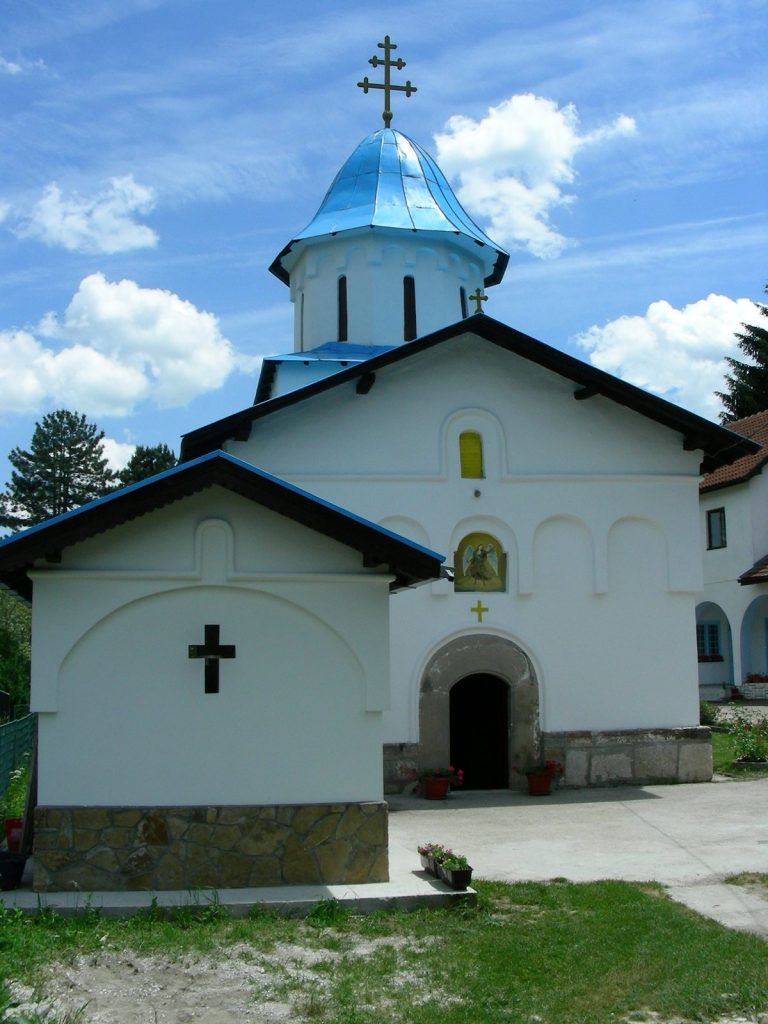
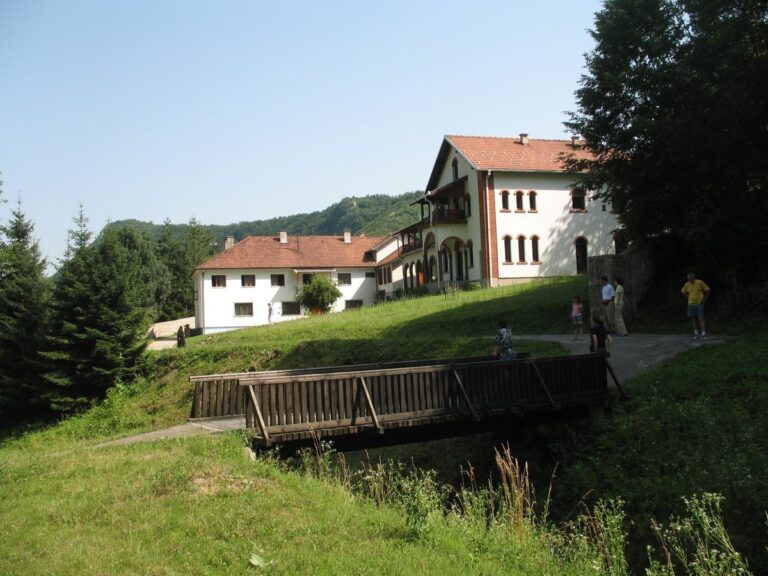
In 1904, Kovilje was a parish church in the Diocese of Žiča. Restoration in 2005 marked the resumption of monastic life, and a monastery building was constructed between 2007 and 2009. Kovilje is protected as a Monument of Culture of Great Importance, a Serbian cultural-heritage designation.
Remains
The church complex
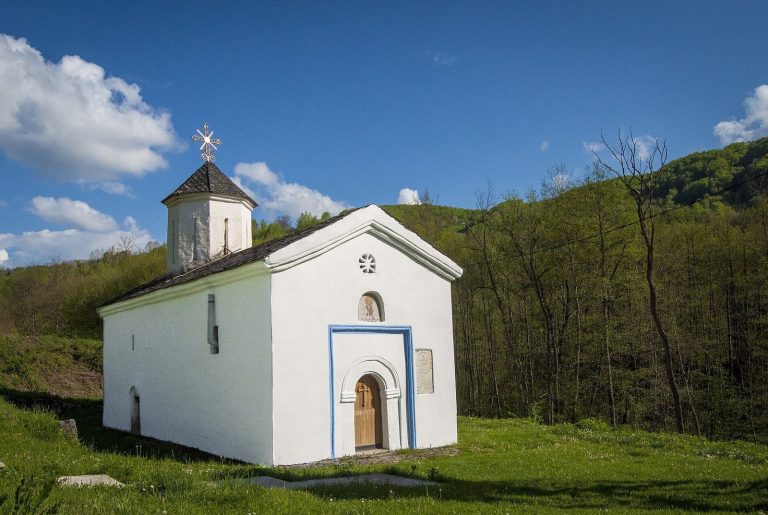
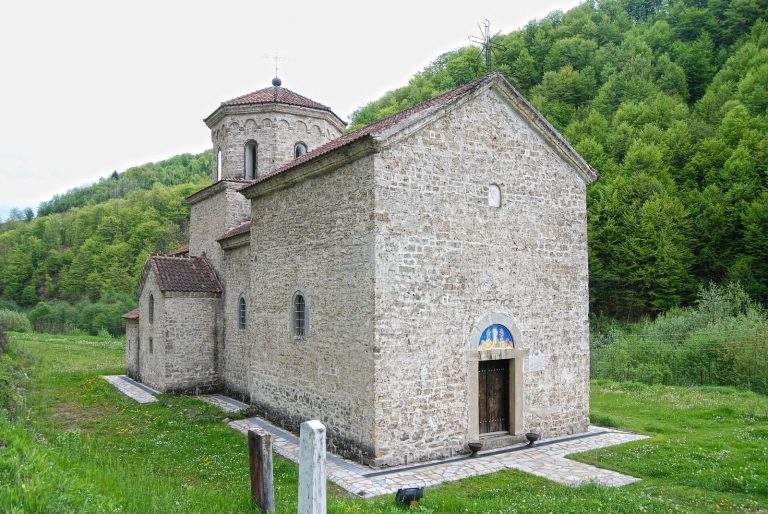
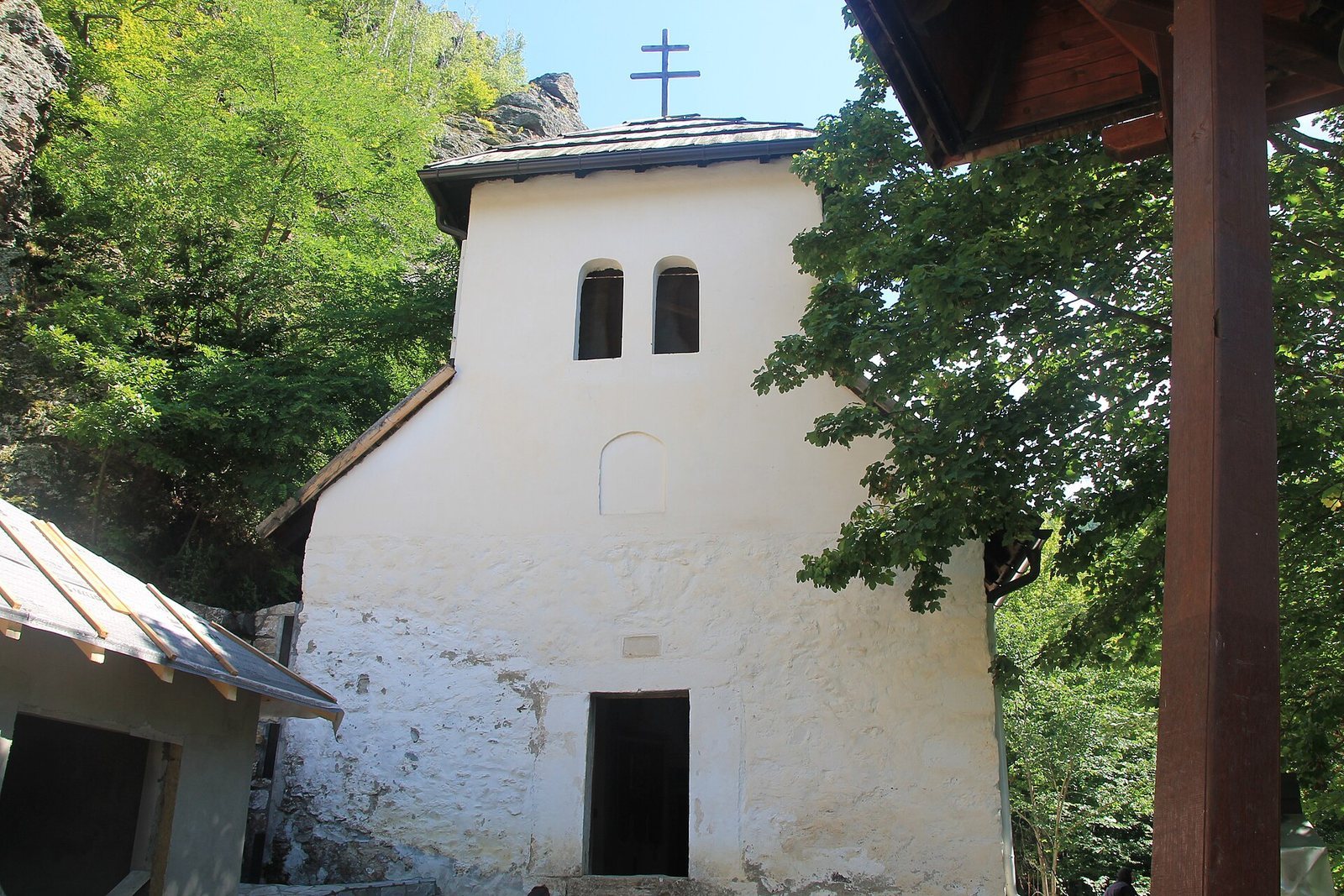
The monastery lies on the right bank of the Nošnica River, beneath Mount Javor between the Golija and Javor mountains. Its two churches belong to different phases of the complex. The older Church of the Holy Archangels Michael and Gabriel is partly built into rock, while the later Church of St Nicholas is larger.
Church of the Holy Archangels Michael and Gabriel
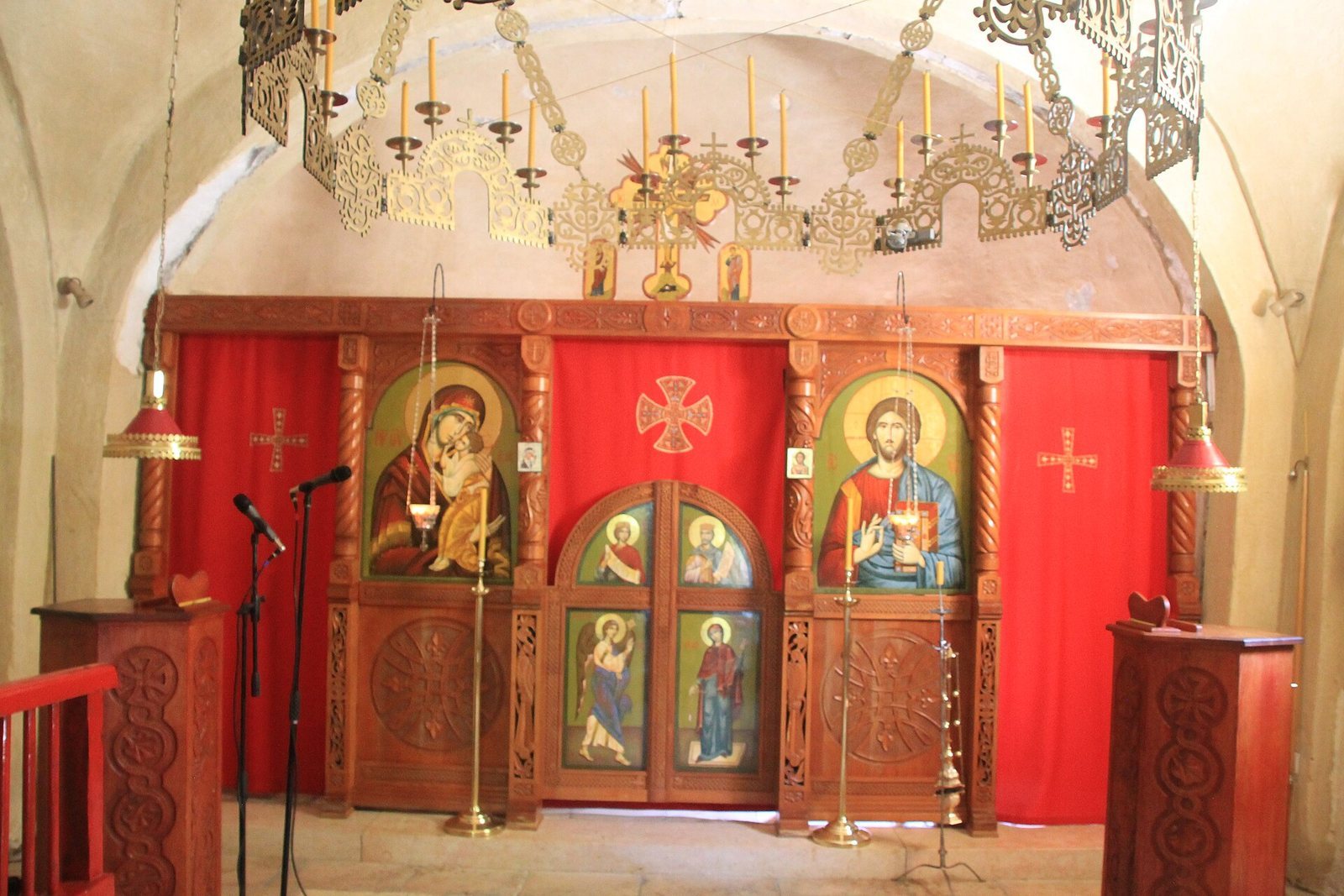
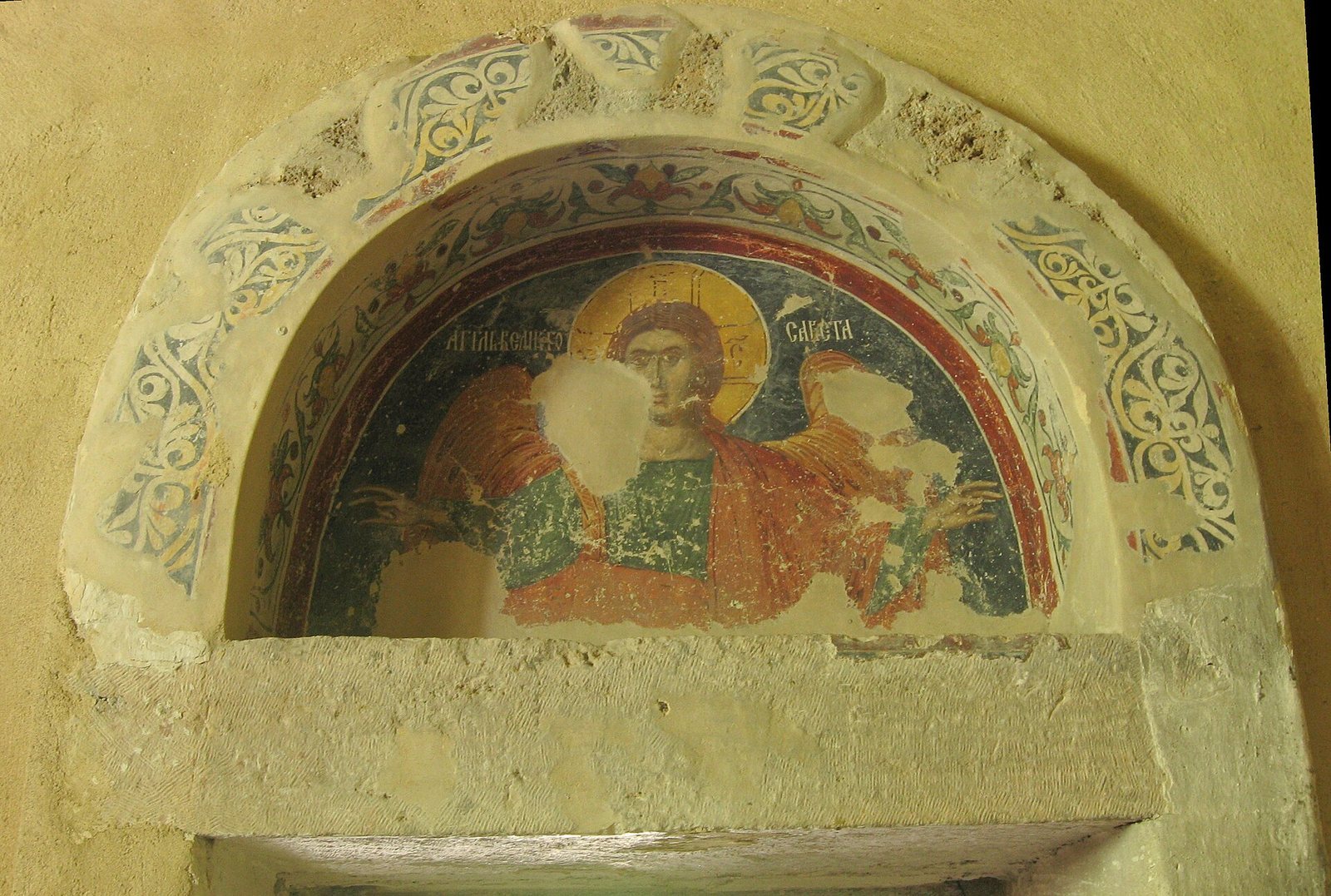
The older church has the character of a hermit’s cave church. Its date is difficult to determine, though it may belong to the monastery’s earliest phase. The building has one main hall, arches attached to its walls, and a semicircular apse, the projecting sanctuary end. Its south wall and barrel-shaped ceiling, which includes a small blind dome (a dome without an opening at its crown), were rebuilt during the expansion associated with the addition of St Nicholas. Frescoes survive inside, with their style dated either to the 13th or 16th century. A Christ icon is associated with this church.
Church of St Nicholas
St Nicholas has one main hall and a five-sided apse as wide as the hall. Its blind dome and entrance area, or narthex, with a crosswise vaulted ceiling are also distinctive features. Fragmentary 13th-century frescoes include relatively well-preserved figures of saints; further frescoes from the 17th century are attributed to the Serbian painter Andrej Raičević. The church contains a monumental ambon, a raised platform for readings. A metal-bound, decorated Gospel donated by Gavrilo Rajić in 1651 served the church’s liturgical needs.