Schloss Blatten: A Medieval Hill Castle Ruin in Switzerland


Site at a Glance
- Rating
- 4.5
- Popularity
- Low
- Country
- Switzerland
- Primary era
- Medieval
- External website
- Open
- Eras represented
- Medieval
- Civilizations
- Holy Roman Empire
- Site type
- Military
- Remains
- Castle
On this page10 sections
History
Schloss Blatten is a hill castle ruin in Oberriet, Switzerland, built as a medieval fortification on a rocky outcrop near the Rhine. Its construction is generally dated to the 11th century, although the chronicler Christian Kuchimeister placed its building shortly before 1270. The castle formed part of the Reichshof of Kriessern, a settlement or territorial unit directly associated with the medieval German king or emperor.
The Blatten Family and the Ramschwag Lords
The Blatten family appears in the historical record in 1170 through Burkardus de Blattûn and again in 1229 through Ulricus de Blattenn. According to Christian Kuchimeister, Abbot Berchtold von Falkenstein of St. Gallen built the castle to protect the area against the Counts of Montfort-Werdenberg. In 1277, he granted the castle to Ulrich von Ramschwag.
The following year, the Reichshof of Kriessern, together with the bailiwick over Thurgau and Zurichgau, was granted to Heinrich Walter von Ramschwag. A bailiwick was an administrative or protective jurisdiction governed by a bailiff. The grant rewarded assistance given to King Rudolf in the Battle of Marchfeld, his 1278 victory over King Ottokar II of Bohemia.
Changes of Ownership and Administration
The Ramschwag family later became involved in the Appenzell War, a late-medieval conflict in which Appenzell and its allies challenged the authority of the abbots of St. Gallen and their supporters. Because of this involvement, the castle and its lordship were temporarily withdrawn as a fief. In 1458, Walter Heinrich and Ulrich von Ramschwag sold the property to Jakob Mangold, a citizen of Constance. Abbot Ulrich Rösch of St. Gallen bought it back in 1486.
Between 1637 and 1640, Abbot Pius Reher ordered alterations to the complex. Schloss Blatten then served as the administrative seat of the bailiffs of Kriessern until 1798. The castle was destroyed in 1799 during the French War. Around 1911, parts of the complex were used as a stone quarry.
Repair and Heritage Status
The canton of St. Gallen carried out the first repairs to the tower. Further restoration followed in 1977, when work focused on the tower, and in 1985, when the perimeter walls and the remains of the castle gate were treated. The former castle complex is listed as a class B Swiss cultural property of regional significance and is classified as an archaeological castle ruin.
Remains
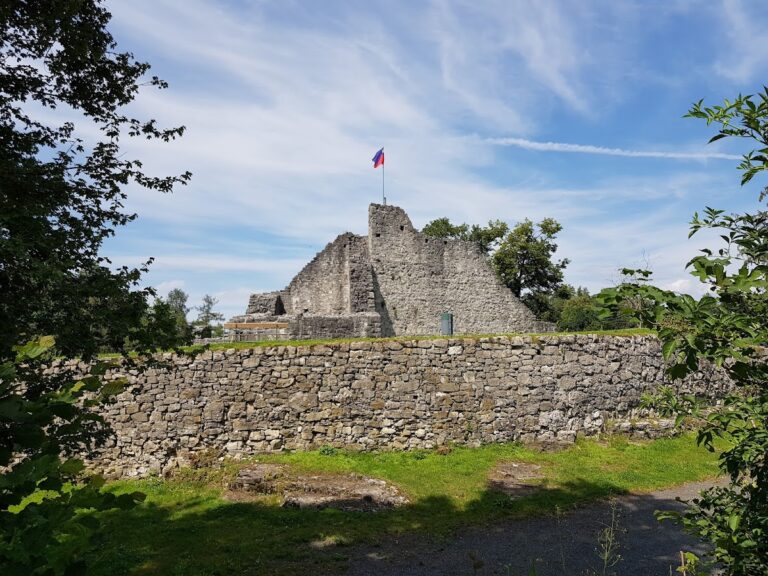
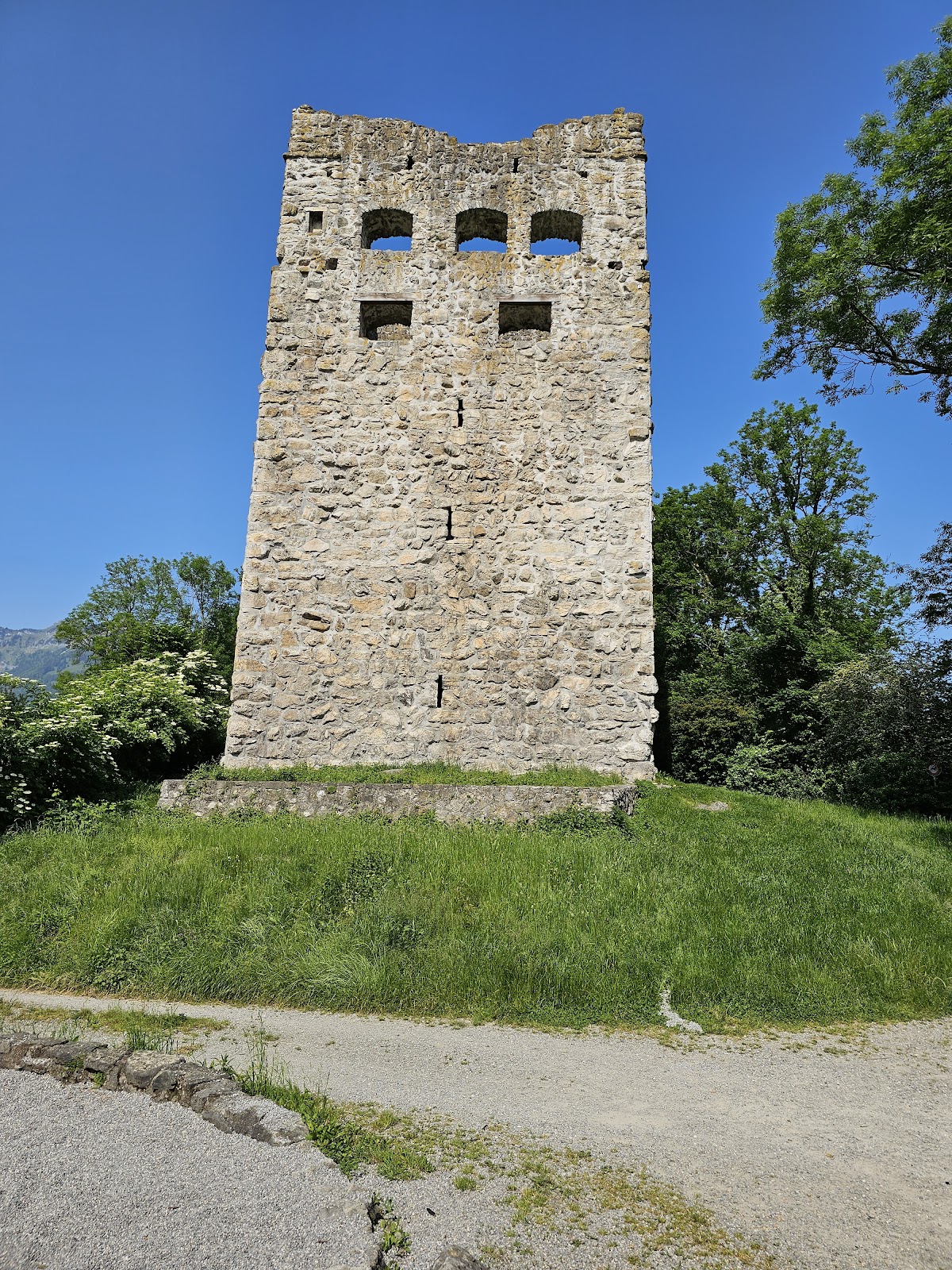
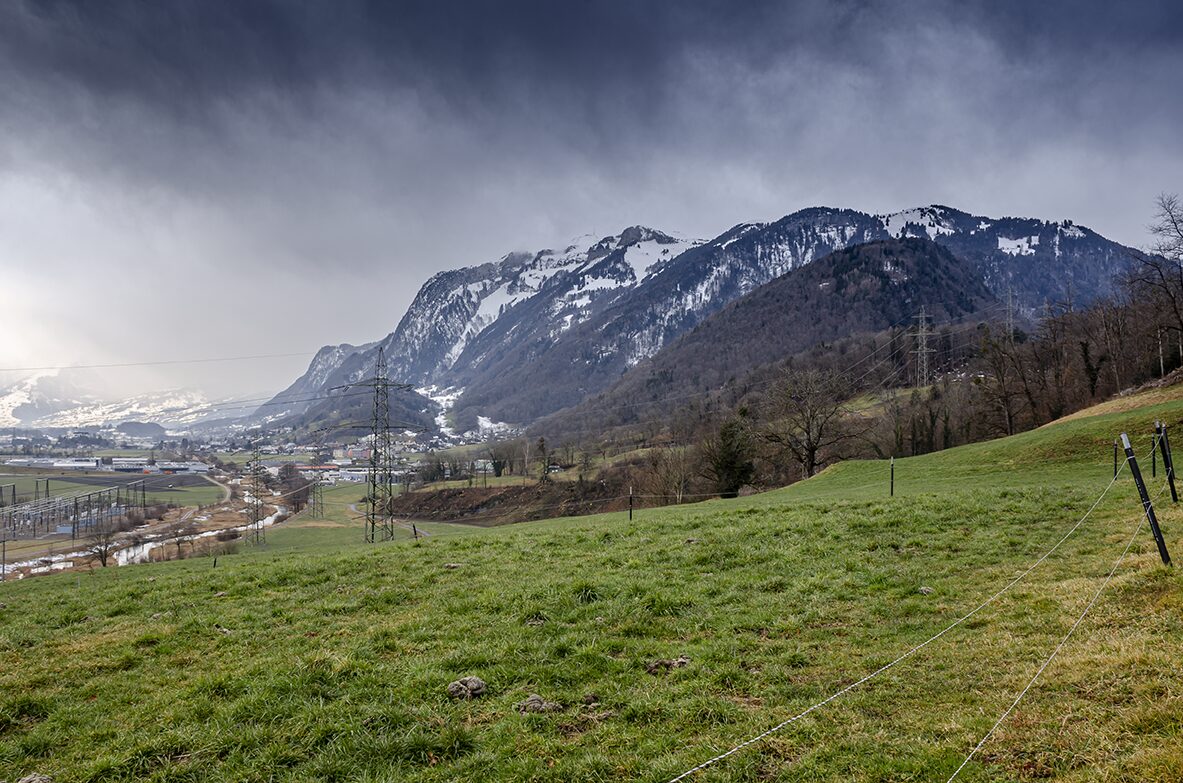
The ruins occupy the former castle grounds on a rocky hilltop at about 450 metres above sea level, south of Oberriet and near the Rhine. The surviving layout combines a square fortified tower with fragments of the enclosing walls, the castle gate, and a vaulted cellar. A vaulted cellar is a basement space covered by a curved masonry vault.
Fortified Tower and Enclosure
Square Keep
The principal surviving structure is a square keep, the castle’s main fortified tower. It stands as a ruin, with its external masonry preserved while no floors remain inside. Repairs in 1977 addressed the tower and form part of the modern conservation of the surviving castle fabric.
Perimeter Walls and Gate
Parts of the perimeter walls remain around the former complex, together with the remains of the castle gate. Restoration in 1985 focused on these enclosing features and helped preserve the surviving evidence of the castle’s boundary and entrance.
Cellar and Later Building
Vaulted Cellar
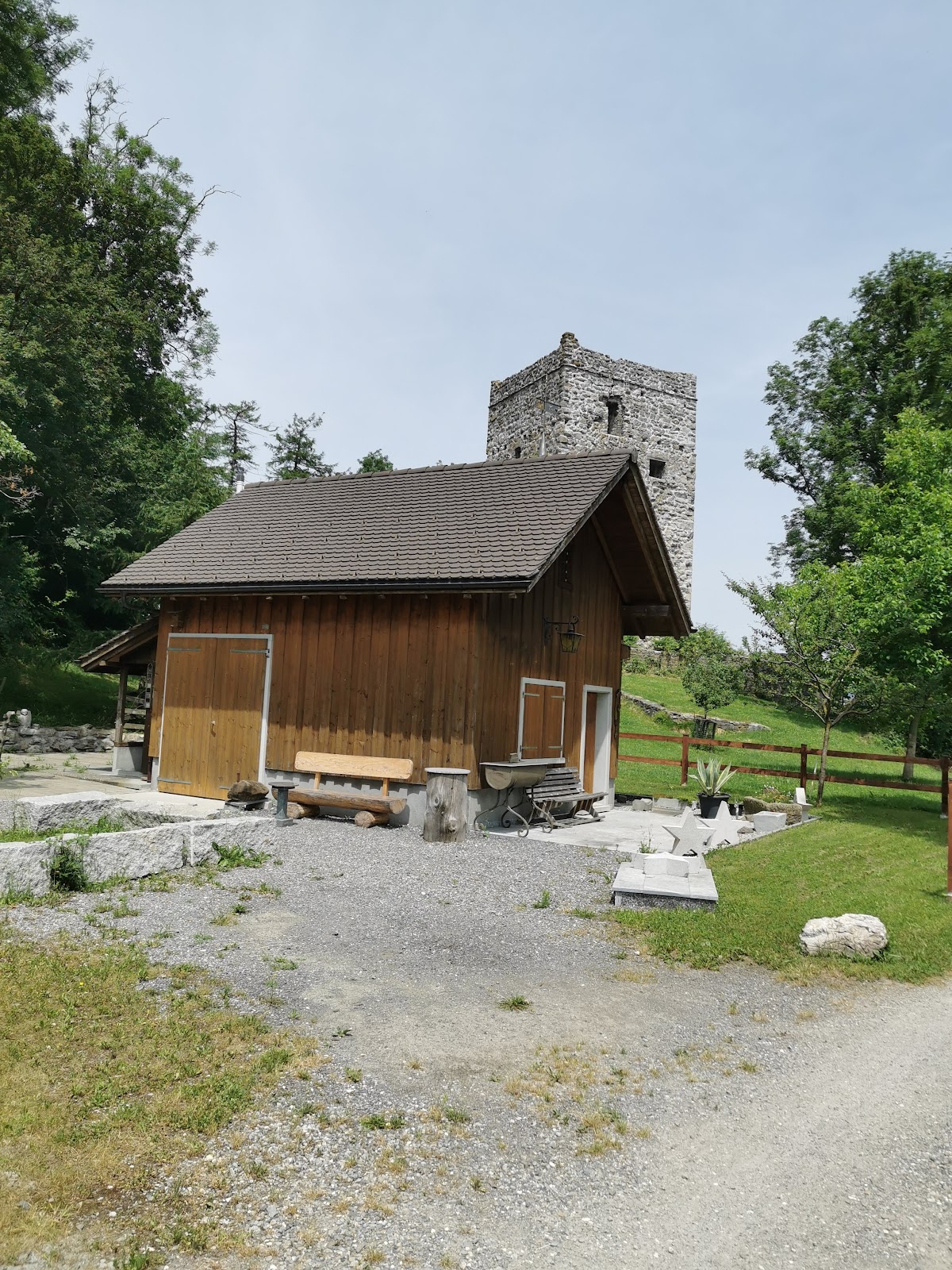
A vaulted cellar survives within the castle grounds. A timber building erected at a later date stands above it, preserving a physical relationship between the masonry basement and the subsequent structure.