Rubik Monastery Church: A Medieval Benedictine Church in Albania


Site at a Glance
- Rating
- 4.8
- Popularity
- Very Low
- Country
- Albania
- Primary era
- Medieval
- Eras represented
- Medieval
- Civilizations
- Unclassified
- Site type
- Religious
- Remains
- Church
On this page6 sections
History
Rubik Monastery Church is a medieval Benedictine monastery church in Albania, situated above the town of Rubik at a bend of the Fan River. It is dated to 1166, although another dating places its construction broadly in the eleventh or twelfth century. The Benedictines were a Western Christian monastic order governed by the Rule of Saint Benedict. The monastery was one of four Benedictine monasteries in the Mirdita region, and historical accounts distinguish its abbey from a parish church with the same name.
A strategic Benedictine foundation
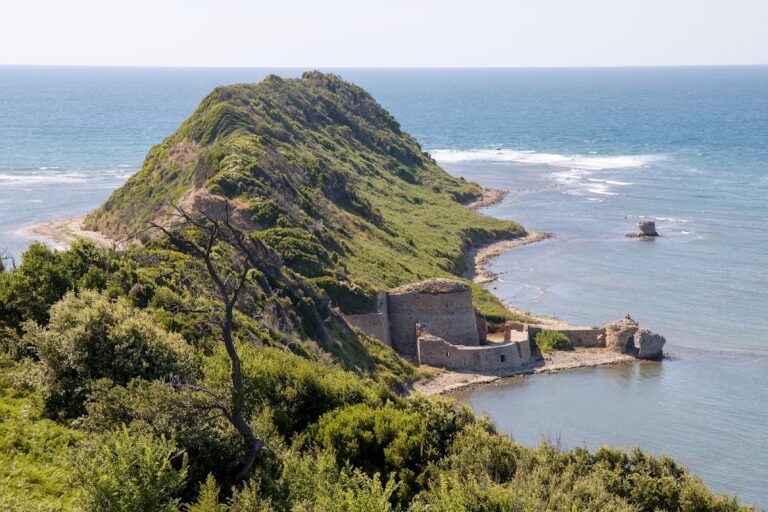
The monastery occupied a prominent rocky projection above Rubik. From this position, it could control the river route linking the coast with Arbanon, a medieval Albanian region or political territory, and the heights of Oroshi. It also stood beside the overland route known as l’Itinerarium Lissus-Naissus, which connected Lissus with Naissus. The church was historically associated with the Franciscans, members of a mendicant order founded by Francis of Assisi, and belonged to the Diocese of Lezhë, an ecclesiastical territory administered by a bishop. It is now within the Diocese of Rrëshen.
Medieval records and later changes
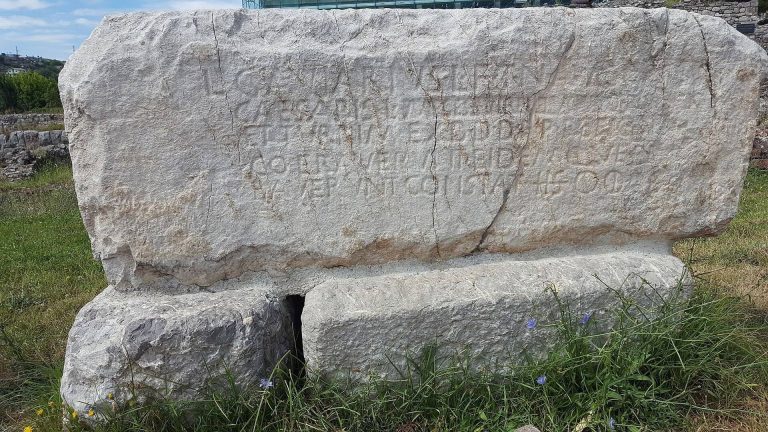
The Church of Redemption, another name for Rubik Monastery Church, appears in records 34 times between 1166 and 1972. In 1629, Benedetto Orsini, Bishop of Lezhë, reported an inscription on the church door dated 1267. This reference preserves evidence of a medieval phase that was still visible during his visitation.
From the late nineteenth century through the early twenty-first century, repeated rebuilding and restoration radically changed the church’s original appearance. These interventions also allowed the few surviving medieval elements to be identified and incorporated into the later building. The church is listed as a Cultural Monument of Albania under designations dated 17 March 1948 and 23 September 1971, with the later designation specifically declaring the monastery a cultural monument. Restoration has also taken place through the EU4Culture programme.
Remains
Plan and surviving structure
The present Church of the Saviour stands on the conspicuous rocky site above the Fan River. It is a single-nave building arranged on a cross-shaped plan, with a maximum height of 13.86 metres. Several radical rebuilding and restoration phases produced the current structure, which incorporates the few surviving medieval elements within later construction.
Eastern facade and medieval painting
The surviving eastern facade dates to 1272 and carries an inscription. The church’s surviving interior frescoes are concentrated in this medieval section. A painted inscription in the apsidal area links a fresco phase to Abbot Innocenti and gives the date as 1272. The decoration includes a Deesis, a Christian devotional composition showing Christ in glory with intercessory figures such as the Virgin Mary and Saint John the Baptist. The 1267 inscription once recorded on the church door is also preserved through the account of the 1629 visitation.