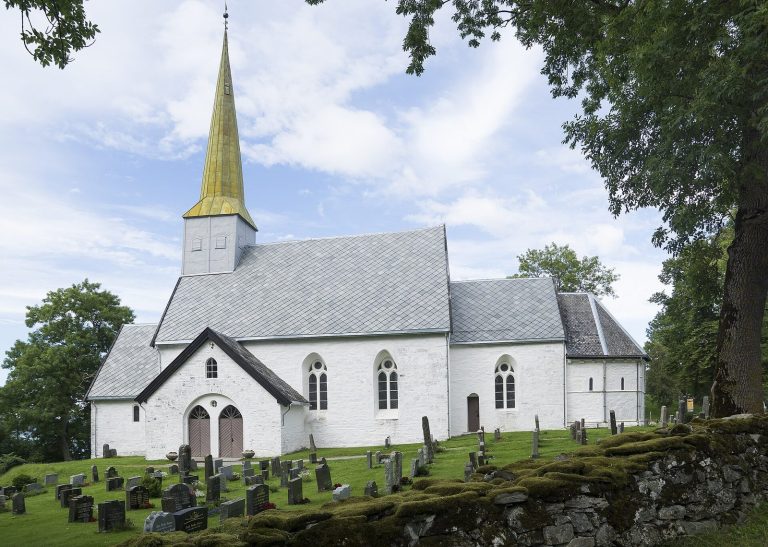
Leksvik Church: A Wooden Long Church in Norway
Site at a Glance
- Popularity
- Very Low
- Country
- Norway
- Primary era
- Early Modern
- Eras represented
- Early Modern
- Civilizations
- Denmark–Norway
- Site type
- Religious
- Remains
- Church
On this page8 sections
History
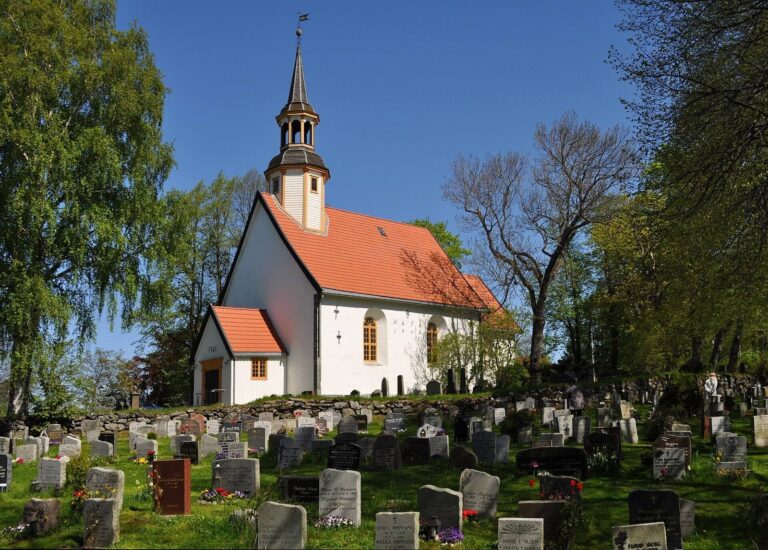
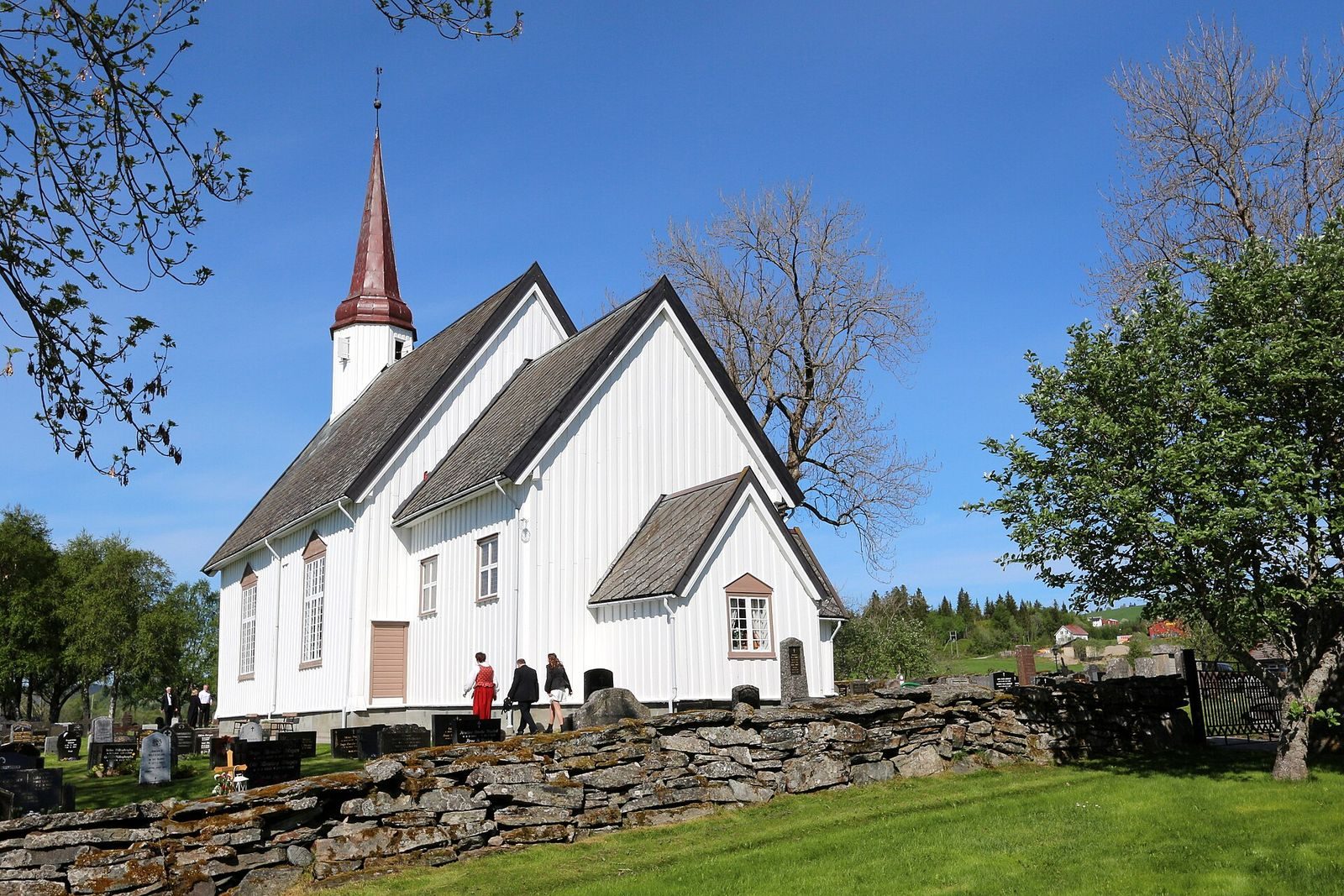
Leksvik Church, near the Røstad farms in Leksvik, Norway, is a white wooden long church, with its nave (main area for the congregation) and choir (area containing the altar) arranged lengthwise. It was largely rebuilt in 1667, with the work completed and the church consecrated around 1670, on a site where a church was probably built in the 12th century.
Early church and seventeenth-century rebuilding
The earliest surviving records of the church date to 1533. It stood on Røstad farm and was also known as Røstad Church. Around 1648, it received a new roof and tower. Builders added a new choir and a sacristy, a room for clergy vestments and church furnishings, on the north side of the older building in 1652–1654.
In 1667, most of the church was demolished, while the recently built choir and sacristy were retained. A new nave was constructed on the same site, and the choir roof was raised. The rebuilding was complete by 1670. The church was designed by Ole Jonsen Hindrum and Nils Olufsen.
Parish life and later restoration
In 1814, Leksvik Church served as an election church during Norway’s first national elections. Each parish chose electors, who met at county level to select representatives for the assembly that drafted the Norwegian Constitution. The church belongs to the Church of Norway, an Evangelical Lutheran church, and serves Leksvik parish in the Fosen deanery, a subdivision of the Diocese of Nidaros, the regional church jurisdiction.
Interior restoration and alterations in the 1850s and 1860s led to the removal or destruction of older furnishings and other materials, which were then little valued. Ole Tronstad urged villagers to return fittings they had taken home, warning that keeping them would bring illness and misfortune. Many were collected and stored in the church attic. Workers also found old logs, including some marked 1624; the timber was judged to be older than that date and to have come from an earlier church.
Restoration in the 1950s and 1960s returned church belongings that had been stored for about 80 years, including much of the 17th-century furniture. New seating was installed in the mid-1990s. Leksvik Church is registered as a Norwegian cultural heritage site and is automatically protected.
Remains
The church stands beside a cemetery, near the Røstad farms. Its principal spaces follow a lengthwise plan, and it can seat about 300 people. A parsonage also stands beside the church. Built in 1890, it was designed and financed by the priest Lars Johansen Wormdahl. An earlier parsonage on the plot burned in 1686 and was promptly replaced; the building that preceded the 1890 house had stood there since the 1680s.
Church fabric and furnishings
Plan and timber construction
The nave is timber-framed, using pine cut at Vinnalien and Syllstokkene in Leksvik. Before the 1667 rebuilding, the church measured about 12 by 5 metres, while its choir measured about 3 by 5 metres.
Interior fittings and details
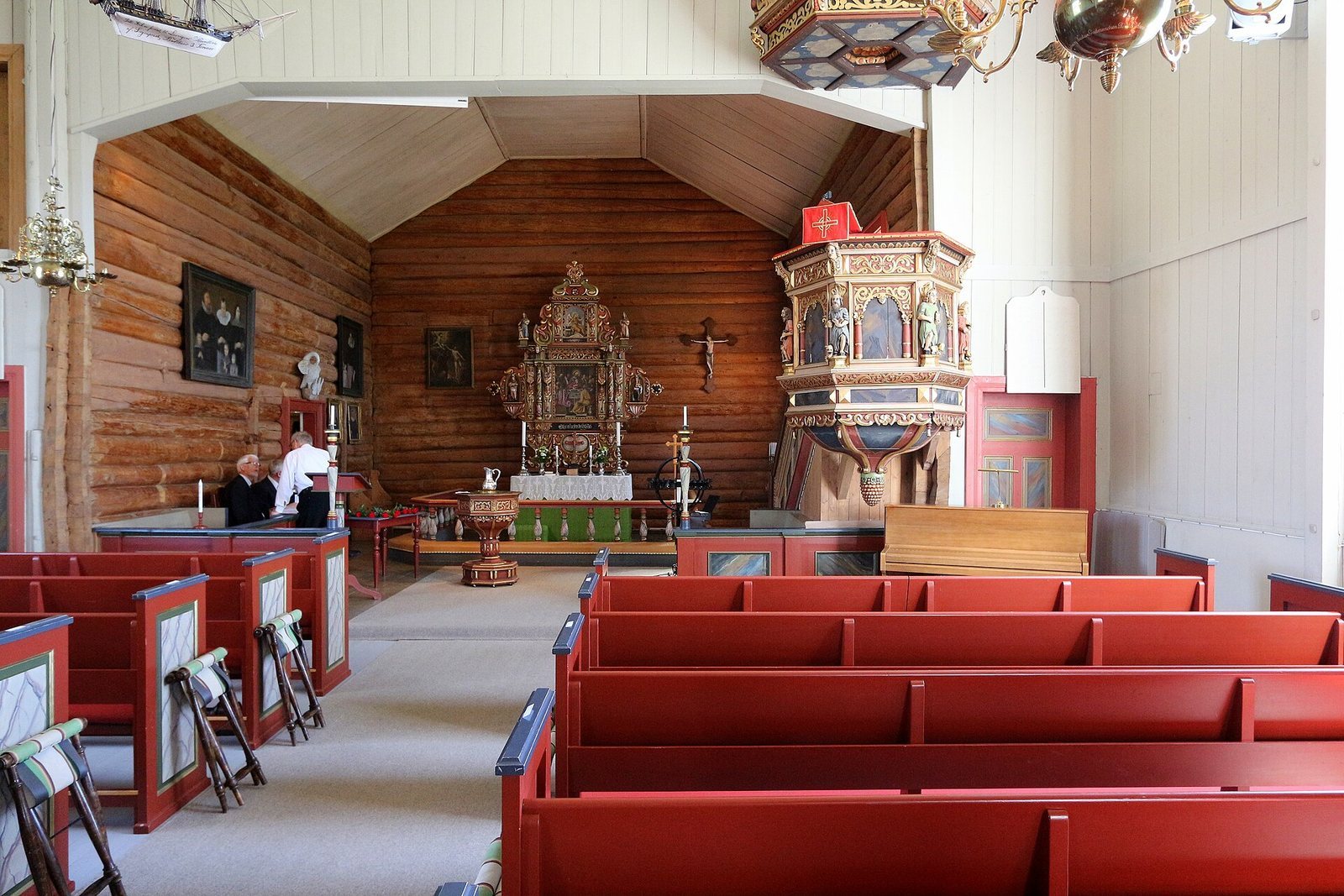
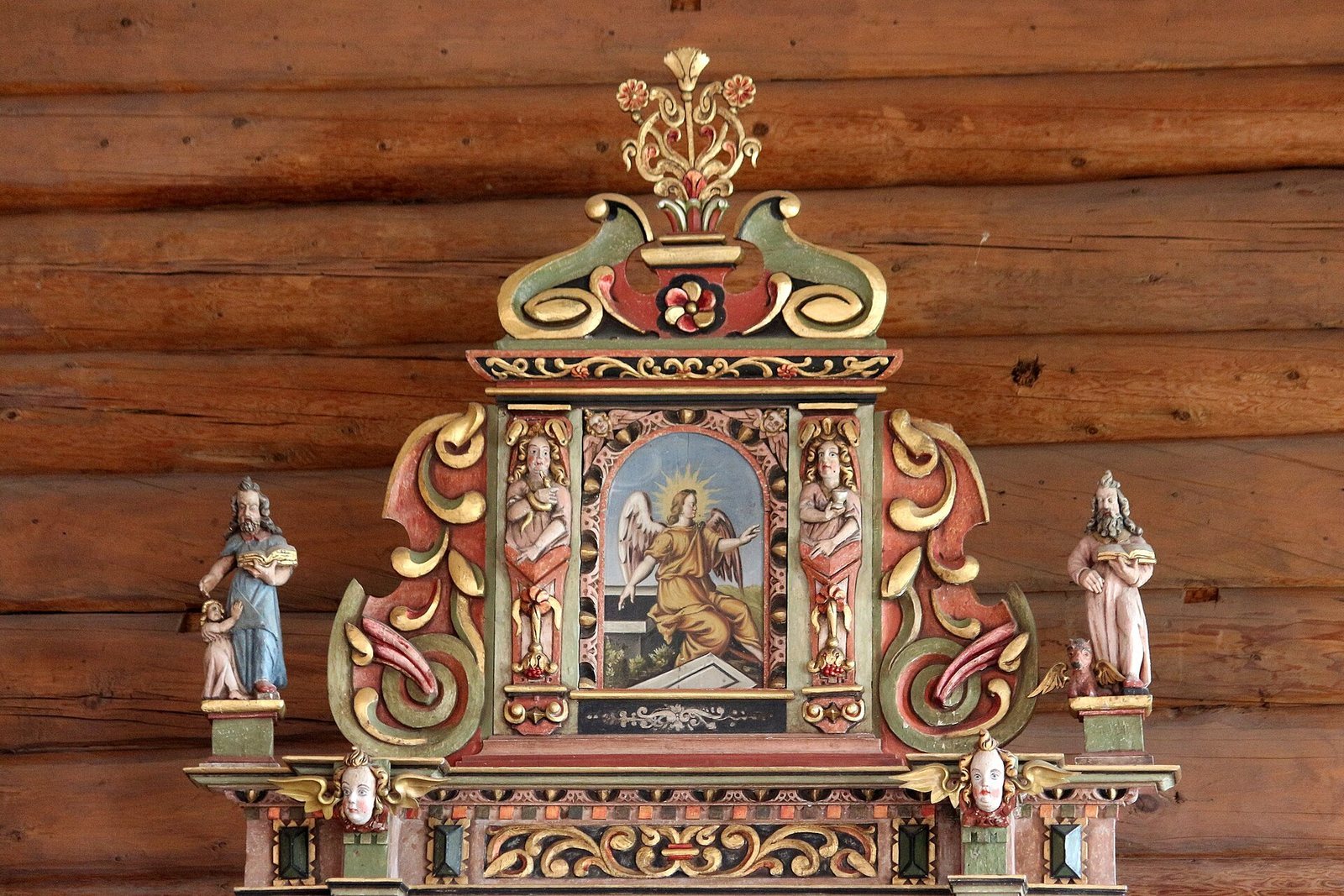
The interior includes an altarpiece and a pulpit. A ceiling detail above the pulpit bears the monogram of Christian V, a Danish-Norwegian king, and a bird sculpture is among the church’s features. The church also has a finely worked artistic lock and a bell dated 1772.
Crucifix and sword
The church holds a rare medieval Limoges crucifix, part of a religious metalwork tradition associated with the French city of Limoges. It is one of very few in Norway. A sword kept in the church is linked by local legend to Anders Solli, said to have died in a wolf encounter in the woods near Leksvik in 1612. Whether he used the sword in that encounter is uncertain.