Lavriv Monastery of Saint Onuphrius: A Religious and Educational Center in Ukraine
Site at a Glance
- Rating
- 4.8
- Popularity
- Medium
- Country
- Ukraine
- Primary era
- Medieval
- Eras represented
- Medieval, Early Modern, Modern
- Civilizations
- Austria-Hungary, Habsburg, Kingdom of Poland, Polish–Lithuanian Commonwealth
- Site type
- Religious
- Remains
- Monastery
On this page11 sections
History
The Lavriv Monastery of Saint Onuphrius is a men’s monastery in Lavriv, Ukraine, founded in the mid-13th century. Dedicated to Onuphrius the Anchorite, a Christian saint associated with solitary religious life, it became an important religious, cultural, and educational center of the Boyko region and is Ukraine’s oldest monastery dedicated to Onuphrius. It belongs to the Ukrainian Greek Catholic Church, an Eastern Catholic church in communion with Rome, and the Basilian Order of Saint Basil the Great of Saint Josaphat, an Eastern Christian monastic order. The monastery is also associated with the Sambir-Drohobych eparchy, an Eastern Christian diocese.
Foundation and medieval religious life
A foundation tradition names Prince Lavr as the monastery’s founder. Historian Ihor Mytsko identified Lavr as the monastic name of Vojshelk, also known as Vaišvilkas, a Lithuanian grand duke who was a monk at the monasteries of Spas and Lavriv between 1255 and 1257. Vojshelk was the godfather of Lev Danilovich, prince of Galicia-Volhynia. A charter said to have been issued by Lev in 1292 claimed that Lavr sold the monastery to Antony, Bishop of Peremyshl. The document, once held in the monastery library, was forged in the early 16th century, although it may preserve an older tradition. The monastery’s first documented mention dates to 1407.
Lavriv helped spread the veneration of Onuphrius eastward from Galicia, where it also gained adherents in Lviv, Pidhirtsi, and Dobromyl. A portion of the saint’s relics, meaning physical remains or objects associated with him and honored by believers, was kept at the monastery from the 13th to the 15th century. Lavriv was the only place in Eastern Europe where his relics were held; other portions were kept in Constantinople, Rome, and Braunschweig. The relics at Lavriv were lost during raids in the 16th century.
Burial, education, and cultural life
The monastery drew devotees of Onuphrius who chose burial there rather than in their own cathedral churches. A fire in 1767 destroyed the wooden buildings. A story published by historian Denis Zubrytsky in 1845 says that coffins attributed to Lev Danilovich and Lavr were found in a masonry chapel that survived the fire. According to the story, the coffins were covered in thick silver sheets, one bearing Lev’s name, and the silver was secretly melted and sold to pay for rebuilding. The account is likely legendary: Lev died as a monk and would normally have been expected to be buried in a wooden coffin.
Lavriv’s educational and musical work extended across several centuries. Two liturgical chant books were produced there in the 17th century, one by Joseph Kreinitsky and another by unidentified writers. They reflect a local tradition of choral singing, composition, and the making and copying of musical books. The monastery’s German-language Main District School operated from 1788 to 1911. A Basilian lyceum continued its educational tradition during the 1920s and 1930s.
In the early 20th century, the monastery established a church museum with a collection of icons from the 15th to 18th centuries, including the wonder-working Bilyn icon. Its archive and library held charters, manuscripts written in gold, printed books from the 16th and 17th centuries, and German- and Polish-language periodicals. The library was among the richest in Galicia.
Reconstruction and research
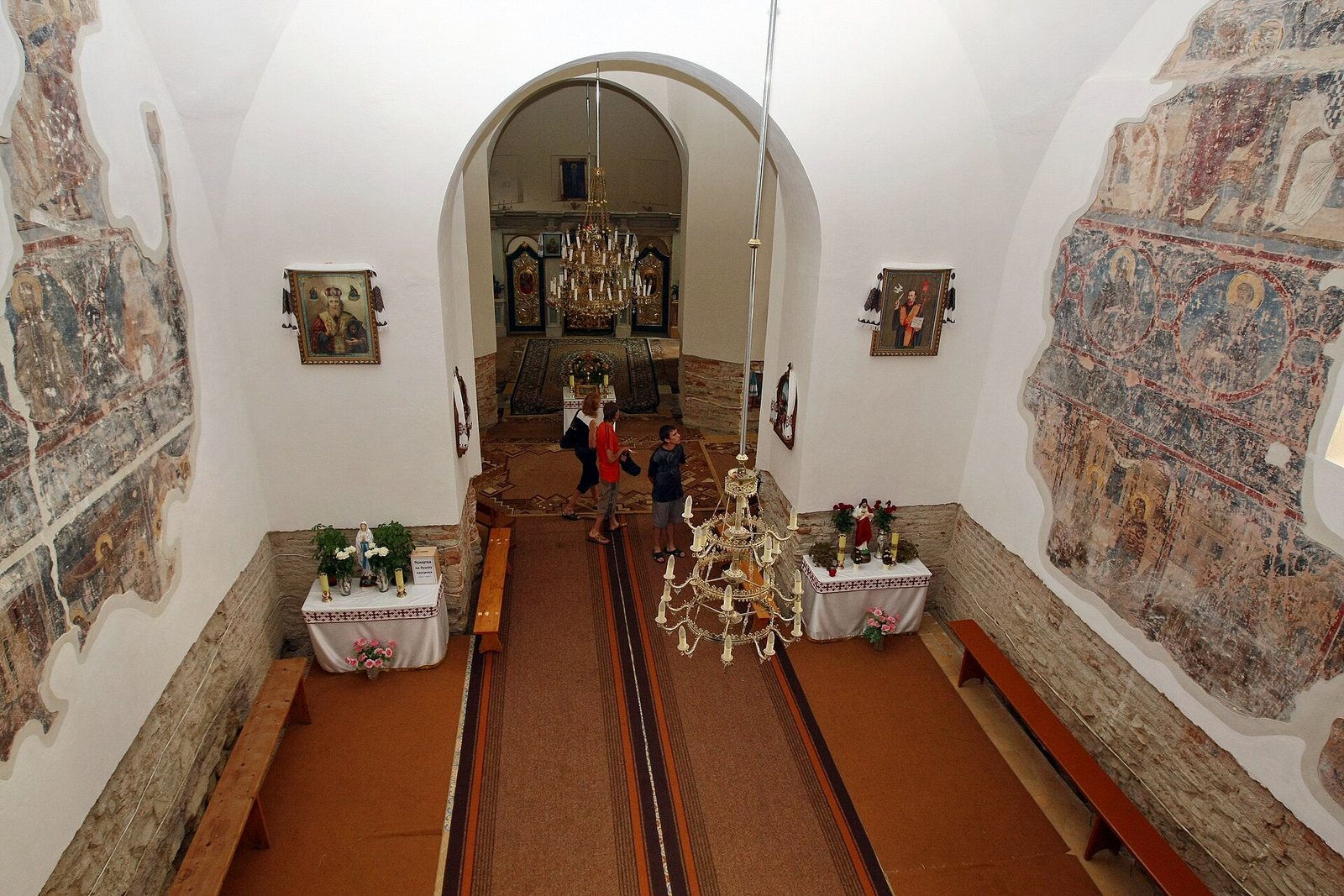
The church was rebuilt from 1910 to 1914. During the work, earlier paintings were investigated beneath Martin Yablonsky’s oil paintings of 1872. The investigation in 1911 was directed by architect and priest Kazimierz Mrozowski; conservator K. M. Osinsky later supported his assessment of the paintings’ date. They were regarded as an important artistic monument in the Polish lands under Austrian rule. Andrey Sheptytsky, a Ukrainian Greek Catholic metropolitan and church leader, also took part in research on the paintings in 1926.
War and twentieth-century change
In 1939, Soviet People’s Commissariat for Internal Affairs personnel, known as the NKVD, took the monastery’s archive and library to nearby Strilky and burned them. Local residents hid some of the icons, which later entered museums. In June 1941, a Soviet garrison used the monastery as barracks. Most outbuildings were destroyed, and water was drained from the ponds.
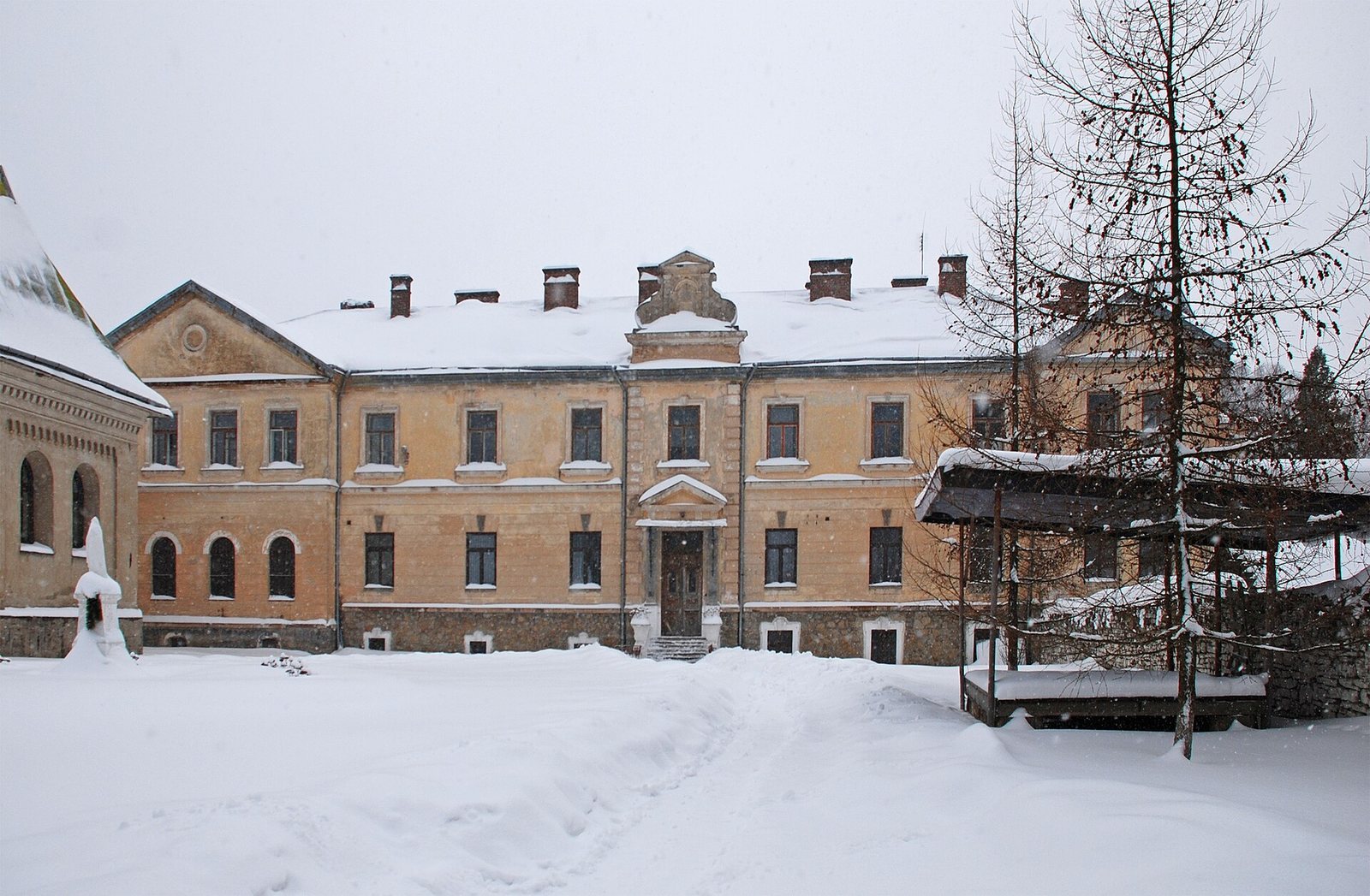
After the Second World War, the buildings housed a boarding school for children with disabilities until 1994. The church served as a storehouse and the bell tower as a coal store, while other rooms were used for a village school, library, and club. The church passed to local parishioners in 1990, and the monastery was restored in 1994. On 25 June 2011, relics of Onuphrius were returned to the monastery through the mediation of Bishop Irenei Bilyk and the efforts of its abbot, Mykola Kovalyshyn. The monastery is included in Ukraine’s National Register of Monuments.
Remains
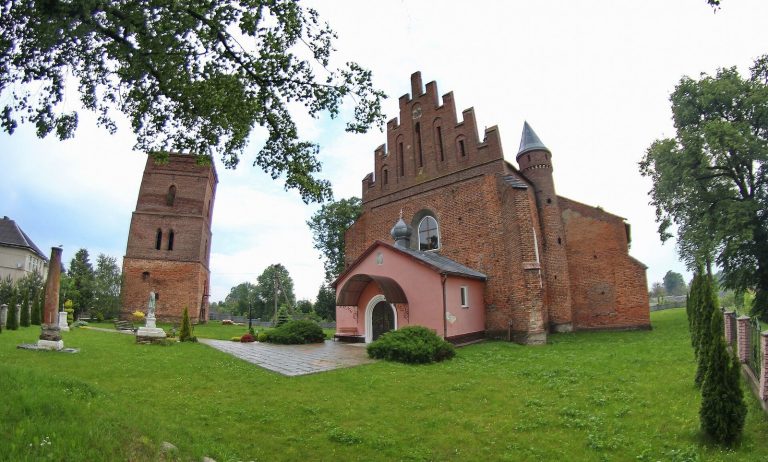
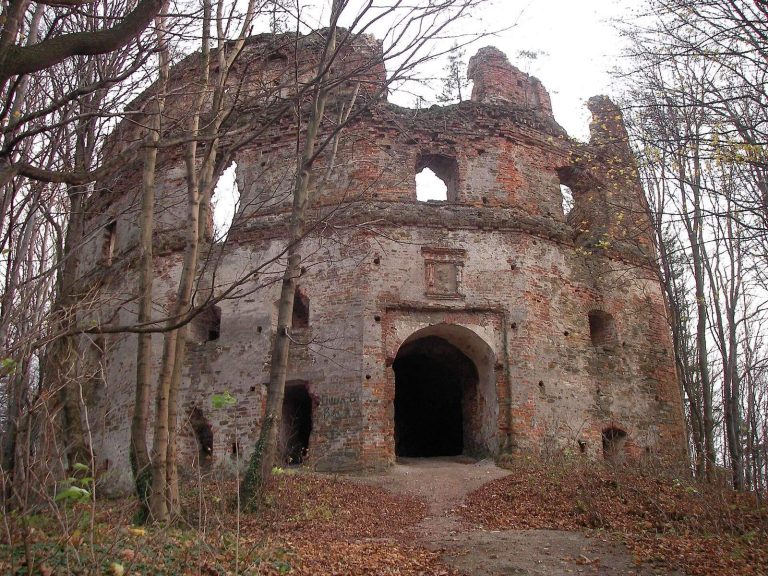
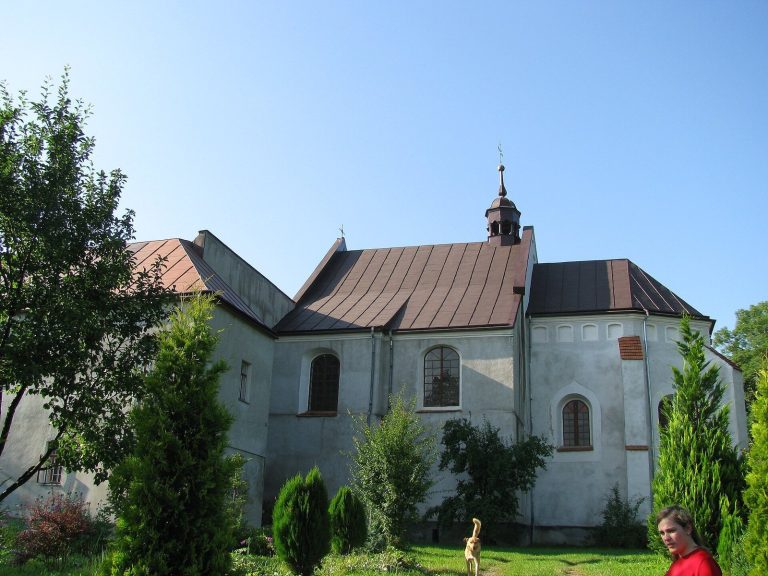
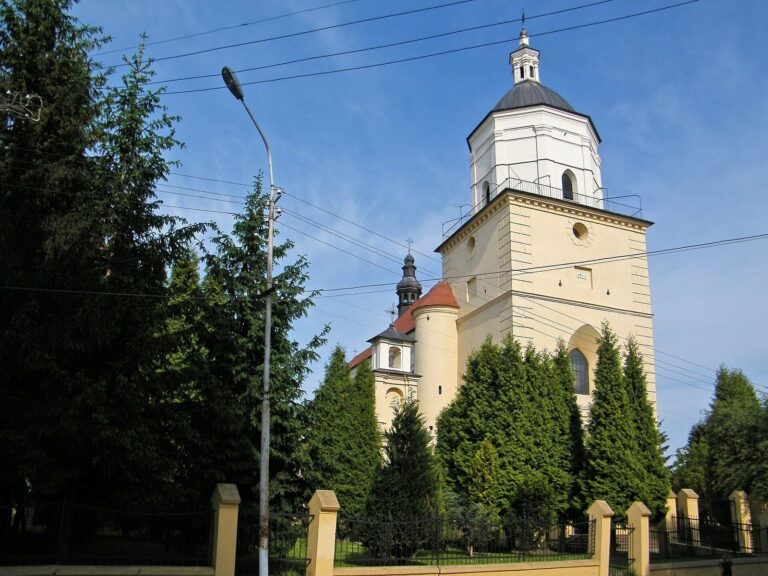
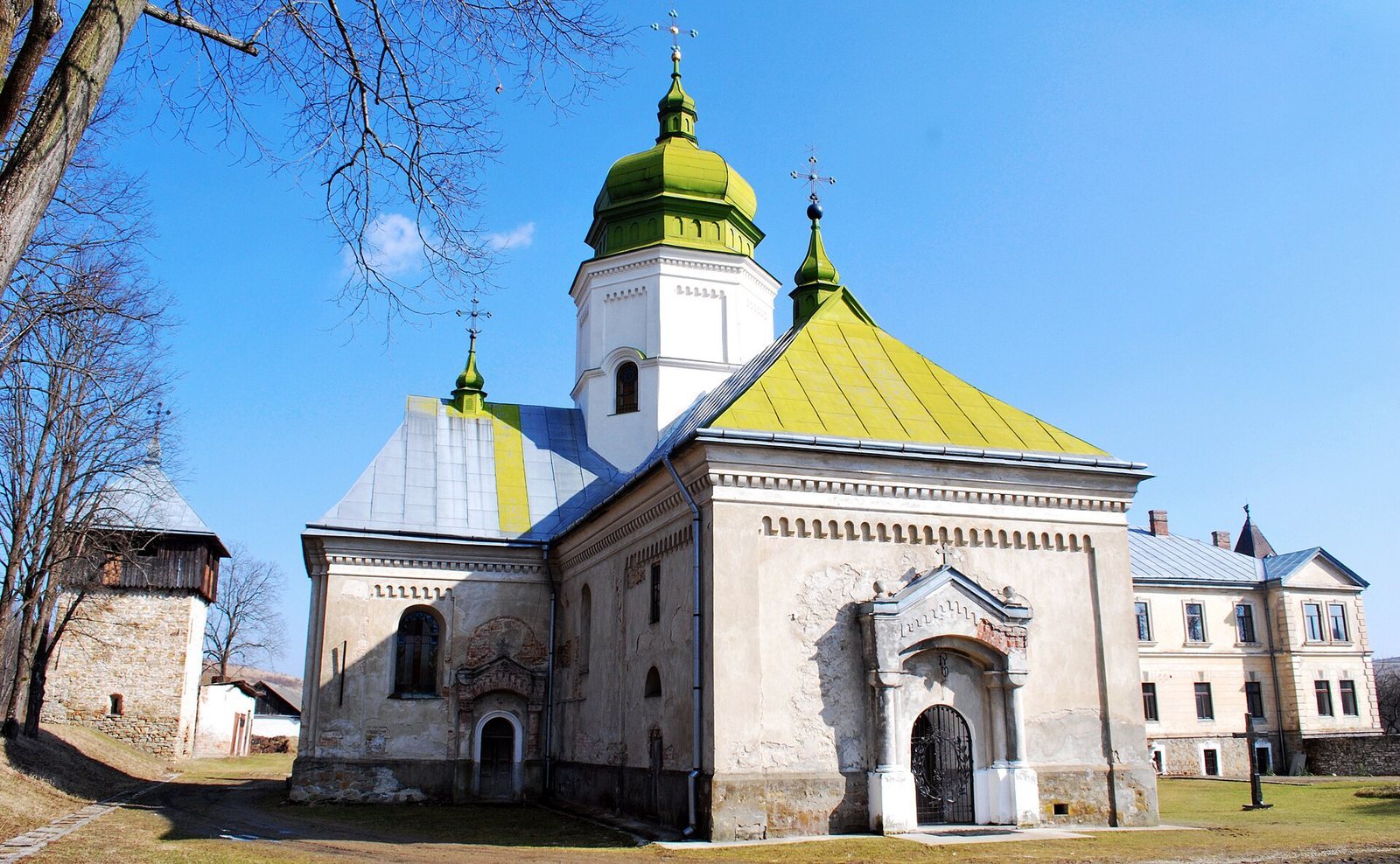
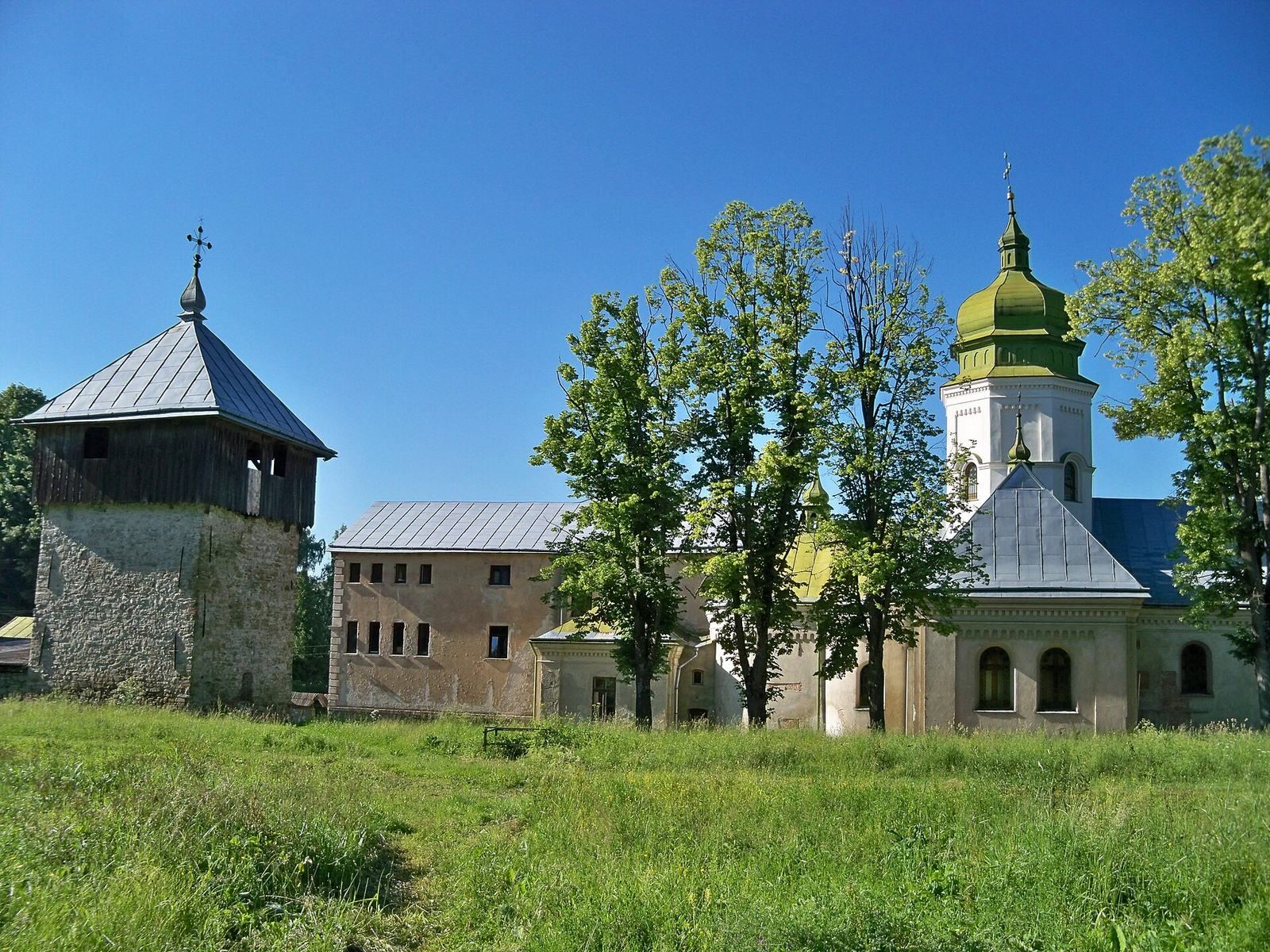
The principal architectural feature is the Church of St. Onuphrius, a domed, cross-shaped building. The wider monastery also comprised a masonry chapel, outbuildings, a bell tower, and ponds. The church brings together Romanesque, Gothic, Renaissance, Baroque, and Classical features.
Church and monastery structures
Church plan and construction
The church is centrally planned, with its dome positioned at the plan’s “golden ratio” point. Its altar end has three rounded projections arranged around the sanctuary, a form known as a triconch. The sanctuary and the space beneath the dome date to the 13th century, and the building was among Ukraine’s earliest churches of this type. Its plan and construction suggest the work of craftsmen trained in Byzantine traditions, with Ukrainian participation. The design also reflects domed and undomed three-projection churches in the Principality of Moldavia, a historical principality in southeastern Europe, as well as models associated with the monastic tradition of Mount Athos.
Painted decoration
Earlier paintings made with tempera, pigment bound in an emulsion, lie beneath Yablonsky’s 1872 oil paintings. They depict scenes from the life of Christ and are dated broadly to the 15th and 16th centuries; Mrozowski placed them in the 15th to early 16th century. Their Byzantine manner has been compared with the paintings in the Jagiellonian, or Ruthenian, Chapel at Wawel, which date to 1470.
Burial spaces
The church’s underground burial spaces developed from a cemetery that existed before the church was built. Crypts were formed after side wings were added in the second half of the 17th century, including the Vynnytskyi crypt in the south wing. Burials associated with the monastery include Moldavian princes Stephen Petriceicu, buried in 1675, and Constantin Șerban Basarab, buried in 1681, as well as Macarius Ligarides, Patriarch of Jerusalem, who died in 1681. The crypts also include Kyiv metropolitans Anthony and Yurii Vynnytskyi, Greek Catholic bishops Innocent Vynnytskyi and Jerome Ustrytskyi, and nobles such as Pavlo Komarnytskyi, a Stryi district official with military duties and a monastery donor.
In the church’s altar area, archaeologists found an arcosolium in 1986. An arcosolium is an arched recess often used as a tomb. The feature is of particular importance to the princely period and may have held relics of Onuphrius or Lev Danilovich’s coffin.
Chapel and grounds
A masonry chapel associated with the traditional grave of Lev Danilovich dates to the 17th or 18th century. The 1767 fire narrative identifies it as the chapel that survived the destruction of the monastery’s wooden buildings. Outbuildings, a bell tower, and ponds also formed part of the monastery complex.