Late Minoan Cemetery at Armeni: A Minoan Burial Ground on Crete
Site at a Glance
- Popularity
- Medium
- Country
- Greece
- Primary era
- Bronze Age
- Eras represented
- Bronze Age
- Civilizations
- Minoan
- Site type
- Burial
- Remains
- Necropolis
On this page16 sections
History
The Late Minoan cemetery at Armeni is a Minoan burial ground at Prinokefalo, near Armeni in southern Crete, Greece. Most of its tombs belong to Late Minoan II–III, broadly the fourteenth to twelfth centuries BC, including the post-palatial Late Minoan IIIA–IIIB phase, when palace centres had lost their earlier prominence. One tomb is earlier, dating to Late Minoan IB, around 1625–1470 BC. The cemetery was used for roughly two centuries.
Use in the Late Minoan period
The burial ground appears to have served a substantial nearby settlement, but the town itself has not been found. Archaeologists have proposed a location near modern Kastellos, where surveys and trial excavations revealed Late Minoan III occupation. Investigations have continued in search of the settlement.
Burials and grave goods suggest that families used the cemetery across several generations. Most tombs remained undisturbed until excavation; only four had been looted by the end of the Minoan period.
Discovery and later history
The cemetery came to attention after two Minoan vessels were found in the area. Systematic excavations began in 1969 under archaeologist Yiannis Tzedakis and have continued since. In 1989, several burial places were identified beyond the cemetery’s fenced boundary.
During the Second World War, construction of a German Army fortification caused minor damage to the site. Badgers also used some tombs as dens.
Remains
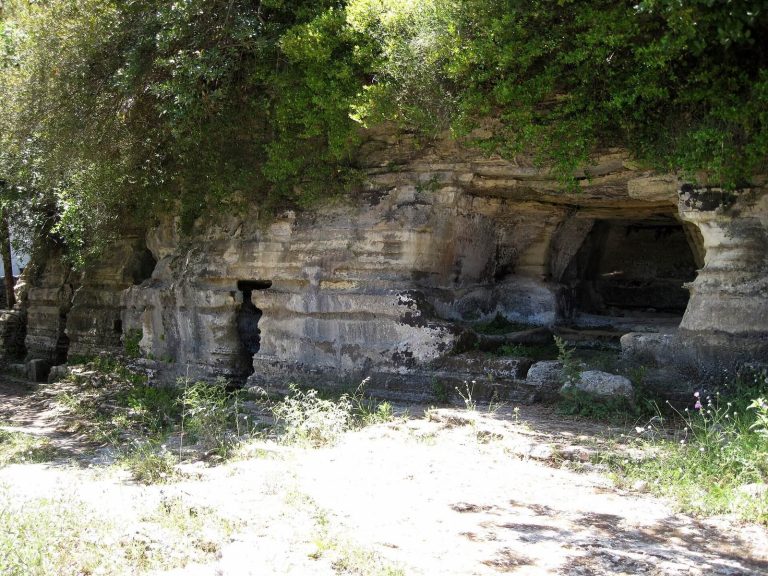
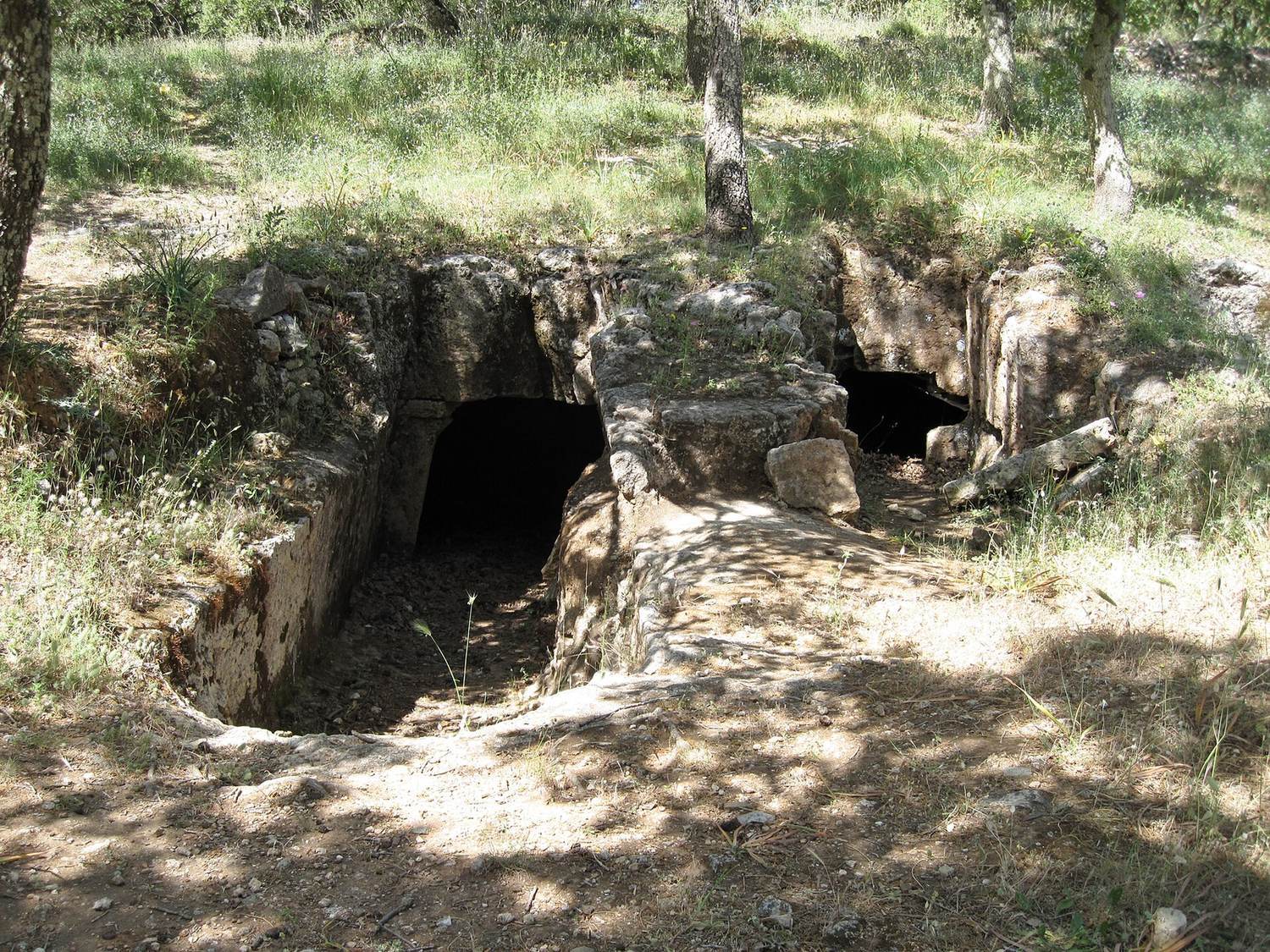
The cemetery covers about 35 acres within an oak woodland. Paths and levelled areas divide the burial ground into three zones, A, B, and C. More than 220 tombs have been identified, including 232 chamber tombs and one tholos (circular, domed tomb). Most chamber tombs were cut into soft limestone, and the cemetery’s tombs are predominantly aligned east–west.
Tomb architecture
Chamber tombs
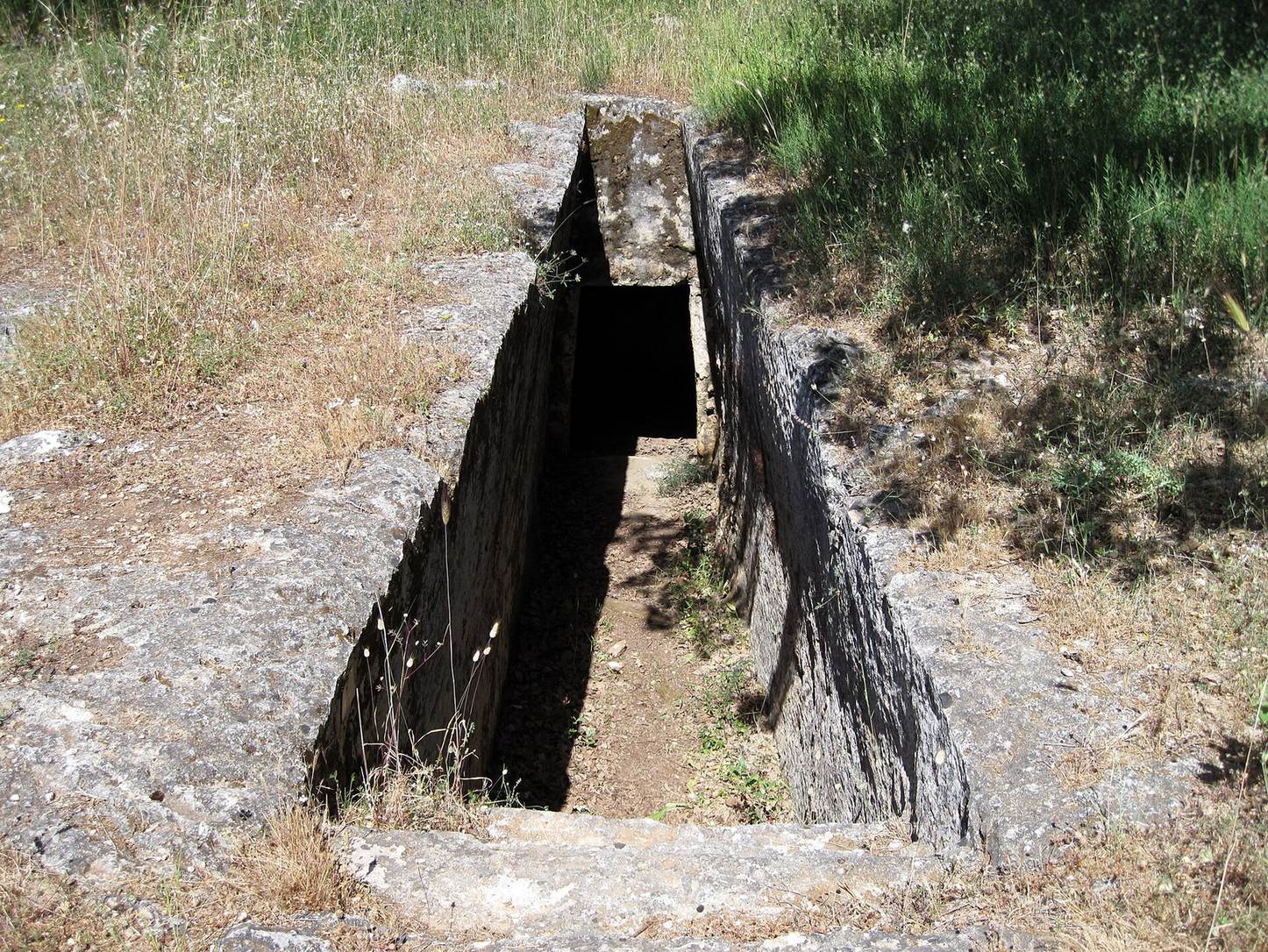
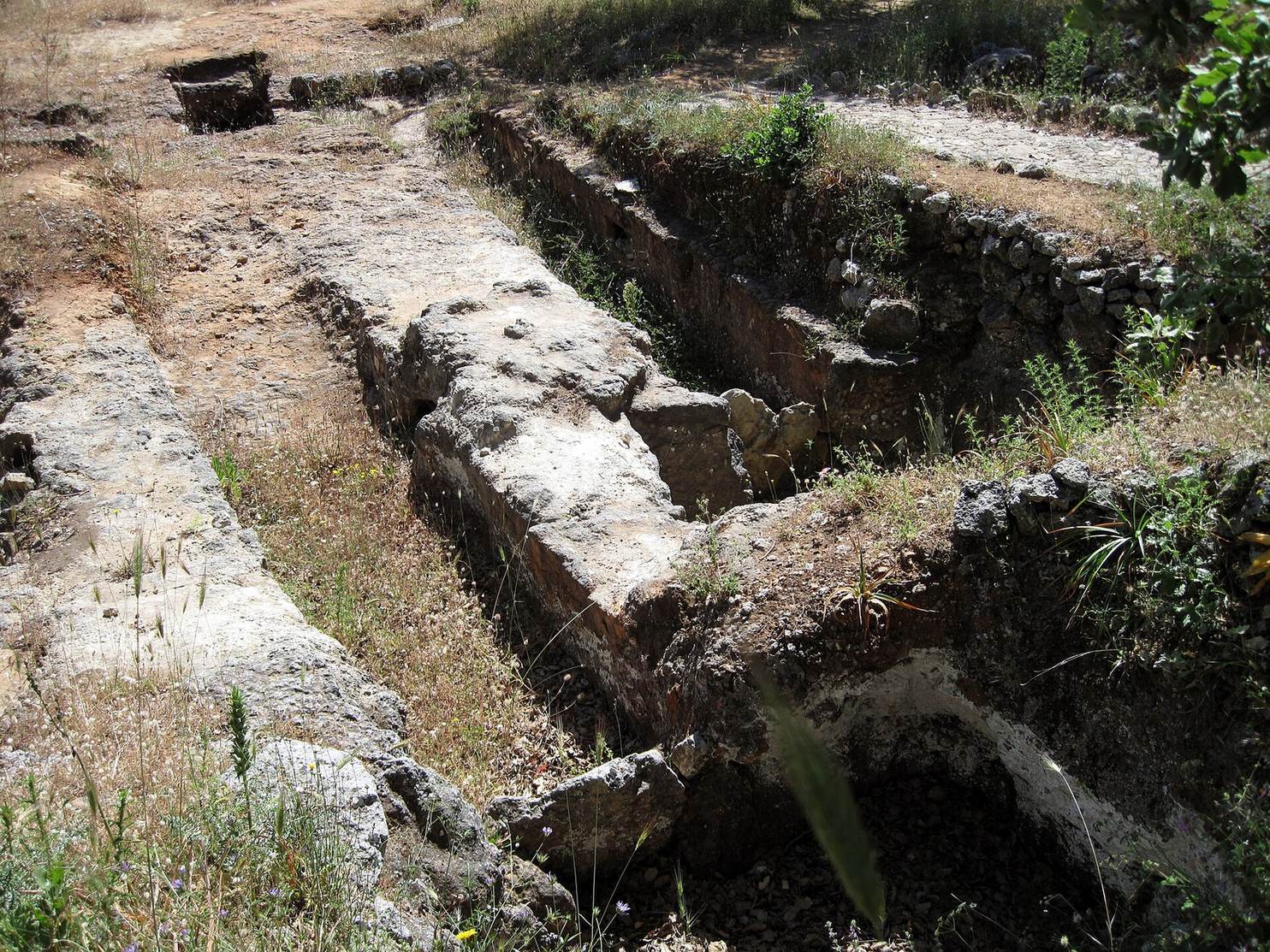
A chamber tomb has an entrance passage, or dromos (passage leading into a tomb), that opens into a burial chamber. Passages usually have steps or a ramp, and stone slabs closed the chamber entrances. Many are 1.5–2.5 metres wide and 3.5–7 metres long, though one reaches 16 metres. Chamber entrances generally face east. Passage directions range from 52.5 to 133 degrees and are oriented toward the peak sanctuary at Vrysinas, a religious site on elevated ground.
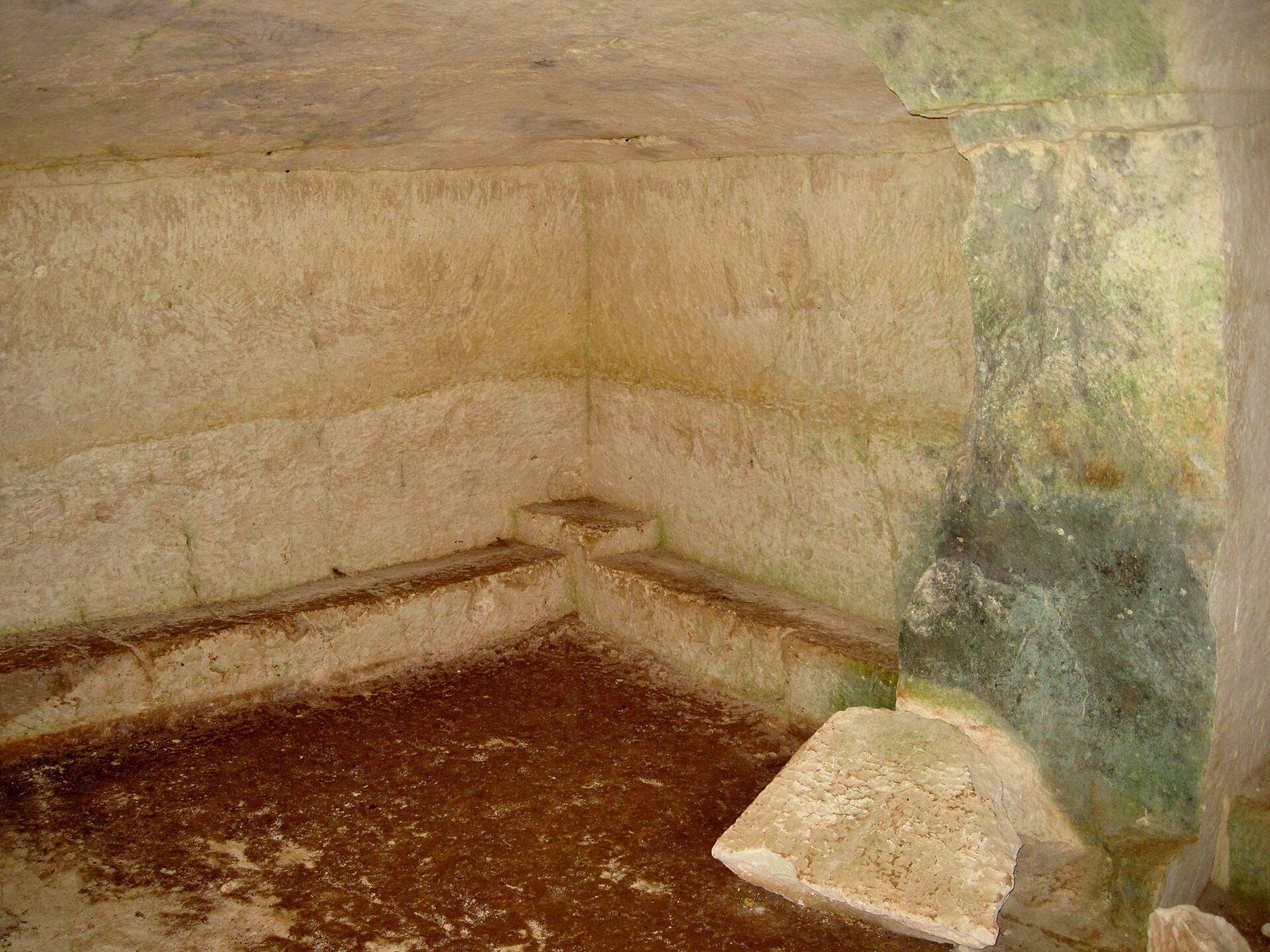
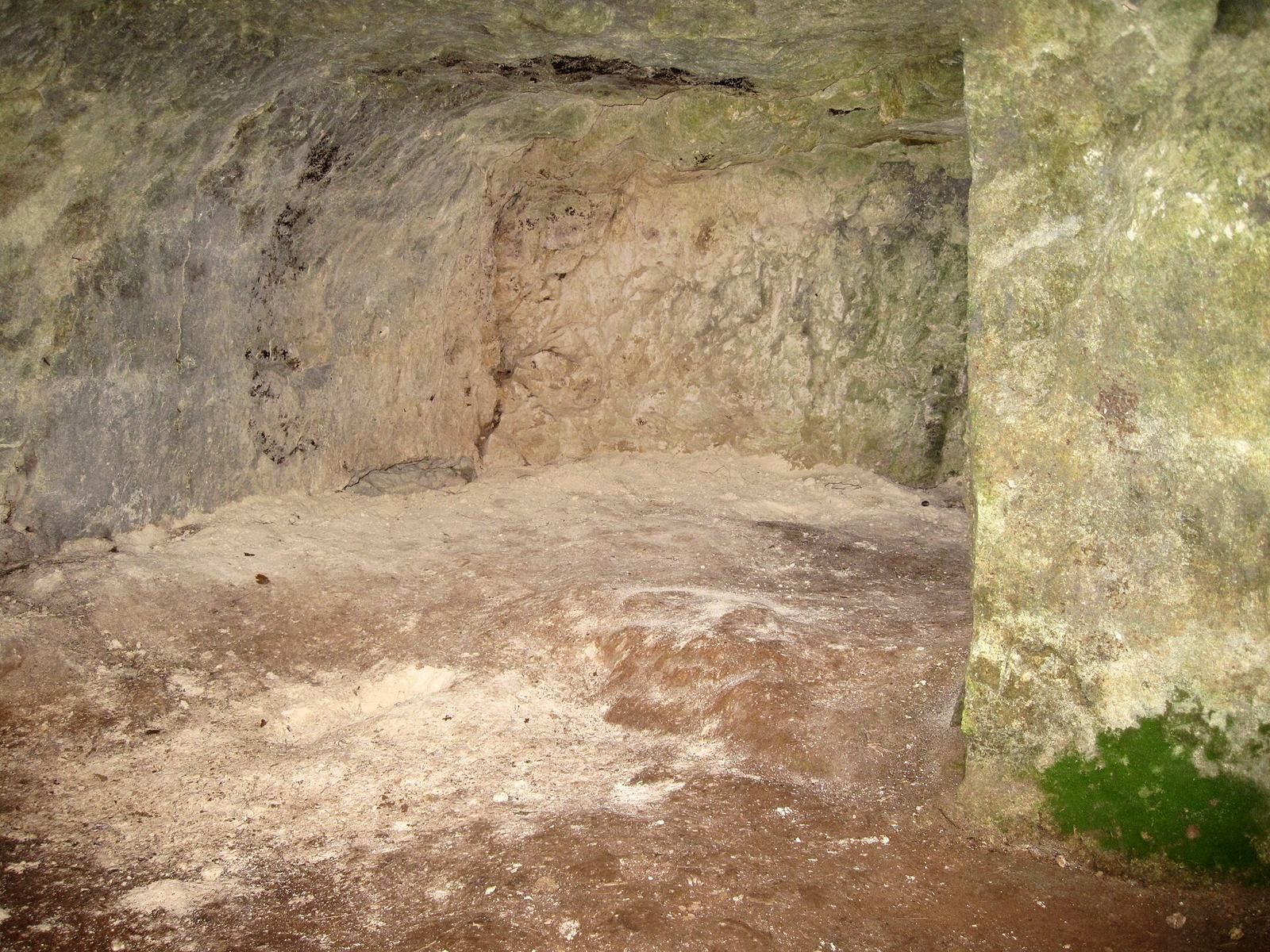
Some passages have benches, pillars, wall recesses, or small compartments in their floors. Compartments sometimes held offerings or traces of human bones. Bedrock pillars support the ceilings of the two largest chambers: one has a central pillar, while the other has two pillars set against its walls. Unfinished tombs reveal places where work stopped because the limestone was too hard to cut.
Tomb 200
Tomb 200 is the cemetery’s only constructed tholos. Its entrance passage measures 4.55 by 1.32 metres and begins with steps. A covering slab closed the entrance to the circular chamber.
The largest tomb and Tomb 159
The largest tomb lies at the south end of the fenced area. Its passage is 16 metres long, and its square chamber measures five metres on each side. A continuous stone bench is cut around the chamber. Tomb 159 has a 15.5-metre passage with 25 steps at its entrance. Remains of a wooden stretcher found there date to 1420/1400–1200 BC.
Burials and grave goods
Burial practices
People were buried in clay coffins, painted wooden coffins, inverted pithoi (large storage jars), or directly on the chamber floor. Bodies were wrapped in linen and placed in a curled posture likened to sleeping or the fetal position. Some clay coffins, or larnakes (small coffins usually made of clay), held one skeleton. One tomb contained 17 skeletons.
Painted coffins
Painted coffins carry scenes of animals, geometric patterns, and religious symbols. One shows four dogs, two stags, and a Cretan wild goat. Other examples depict octopuses, deer, birds, and horns of consecration, stylized horn-shaped symbols associated with Minoan religious practice. Coffins from larger chambers also feature double axes, octopuses, horns of consecration, and hunting scenes.
Objects placed in the tombs
Grave goods include pottery such as jugs, small lidded containers, mixing vessels, oil containers, storage jars, incense burners, drinking cups, and stirrup jars. Other finds include figurines, weapons, tools, jewellery, beads, spindle whorls, bone pins, and an ivory comb thought to have come from Egypt or Syria. Bronze objects include rings, daggers, spearheads, swords, tools, and vases. A few gold beads and silver rings were also recovered. Pottery helped establish close dates for individual tombs.
Residues in some drinking cups were identified as an alcoholic beverage made from grains, honey, herbs, and fruit, sometimes with grape wine. Its use in funerary ritual has been proposed. The cemetery also yielded a boar’s-tusk helmet and soft-stone seals in the style known as the Cretan Popular Group. Other seals were made of rock crystal, serpentine, sardium, faience, or glass paste, and cylinder seals were found as well.
Inscribed finds
Tomb 200 contained a stone pendant bearing two Linear A ideograms, written signs that represent ideas or objects rather than sounds. Linear A remains undeciphered. Another tomb held a stirrup jar inscribed with “wi-na-jo” in Linear B, a script used to write an early form of Greek. The same inscription appears on a jar from Dendra, while a jar from Knossos was written by the same scribe. The inscribed vessel points to contact with Mycenaean culture, a Bronze Age Greek civilization centred on mainland Greece. Finds from the excavated tombs are exhibited in the archaeological museums of Rethymno and Chania.
Human remains
Population and health
The burials represent more than 1,000 people, including about 200 primary burials and 800 secondary burials, in which remains were moved after an earlier interment and placed together. An examination covered about 500 recovered skeletons. A study of some remains identified 250 adults and 106 children; among those whose sex was assessed, 143 were male and 107 female. Estimated average age at death was 30–35 years overall, about 30 for men and 23 for women.
Isotope and genetic analyses indicate that four people buried here came from outside the local area. A tooth from Tomb 230 yielded mitochondrial haplogroup H59, a maternal genetic lineage common in the region. Lesions on skeletons were interpreted as 15 possible cases of tuberculosis and two possible cases of brucellosis. Facial reconstructions were made for two people from Tomb 132.
An individual with severe injuries
One person, estimated to have been about 25 years old, was tall and robust and had roughly ten cut marks on an arm, a thigh, and the lower legs. The wounds were probably made by a heavy, sharp implement such as an axe, and the right hand had been severed at mid-forearm. A duel or murder has been proposed as the cause of death, though execution or torture cannot be ruled out.