Langenau Castle: A Medieval Fortress and Later Residence in Germany
Site at a Glance
- Rating
- 3
- Popularity
- Very Low
- Country
- Germany
- Primary era
- Medieval
- Eras represented
- Medieval, Early Modern
- Civilizations
- Holy Roman Empire
- Site type
- Military
- Remains
- Castle
On this page11 sections
History
Langenau Castle stands at the confluence of the Gelbach and Lahn rivers in Obernhof, Germany. First recorded in 1243, it was bequeathed by Countess Mechthild of Sayn to the Archbishopric of Cologne. The archbishop soon granted it to the Langenau family. They may already have held the castle before the bequest, and may have built it in the first half of the thirteenth century under Hildger von Langenau.
The Langenau family and medieval conflict
The Langenau family descended from the counts of Laurenburg and the early House of Nassau, a German noble dynasty with medieval origins. The families were generally allies, and the Langenau held the castle for centuries through joint inheritance among co-heirs, an arrangement known as a Ganerbschaft.
By the middle of the fourteenth century, the castle had probably shifted from serving chiefly as a noble residence to managing the surrounding estate. Around this time, the family tried to establish nearby New Langenau as its principal residence. The Electorate of Trier, ruled by archbishops who also held the title of prince-elector, regarded the construction as a threat and seized the site. A settlement in 1359 required the unfinished castle and the intervening fortification of Trutzlangenau to be demolished.
A divided lordship
From the fifteenth century, marriages, inheritances, and sales divided shares in the castle and lordship among the Langenau, Romilian von Kobern, Fuchs von Rüdesheim, Eltz, Specht von Bubenheim, Einenberg zu Landskron, Sickingen, and Greiffenclau zu Vollraths families. In 1409, Hilger von Langenau and his wife Hille sold their share to their sons-in-law, Johann Romilian von Kobern, husband of Agnes von Langenau, and Johann von Einenberg. Agnes, an heiress of the Romilian von Kobern family, later married Johann von Eltz, who died in 1480.
The House of Langenau ended in 1613. Kaspar and Melchior von Eltz then bought the other families’ shares, consolidating ownership under the Eltz zu Langenau. Great-great-grandsons of Johann von Eltz and Agnes Romilian von Kobern, the brothers held prominent positions in the electorates of Trier and Mainz, and Melchior also served as a colonel in French service. Neither had children, so the inheritance passed to the Eltz-Rübenach line.
Marioth ownership and later use
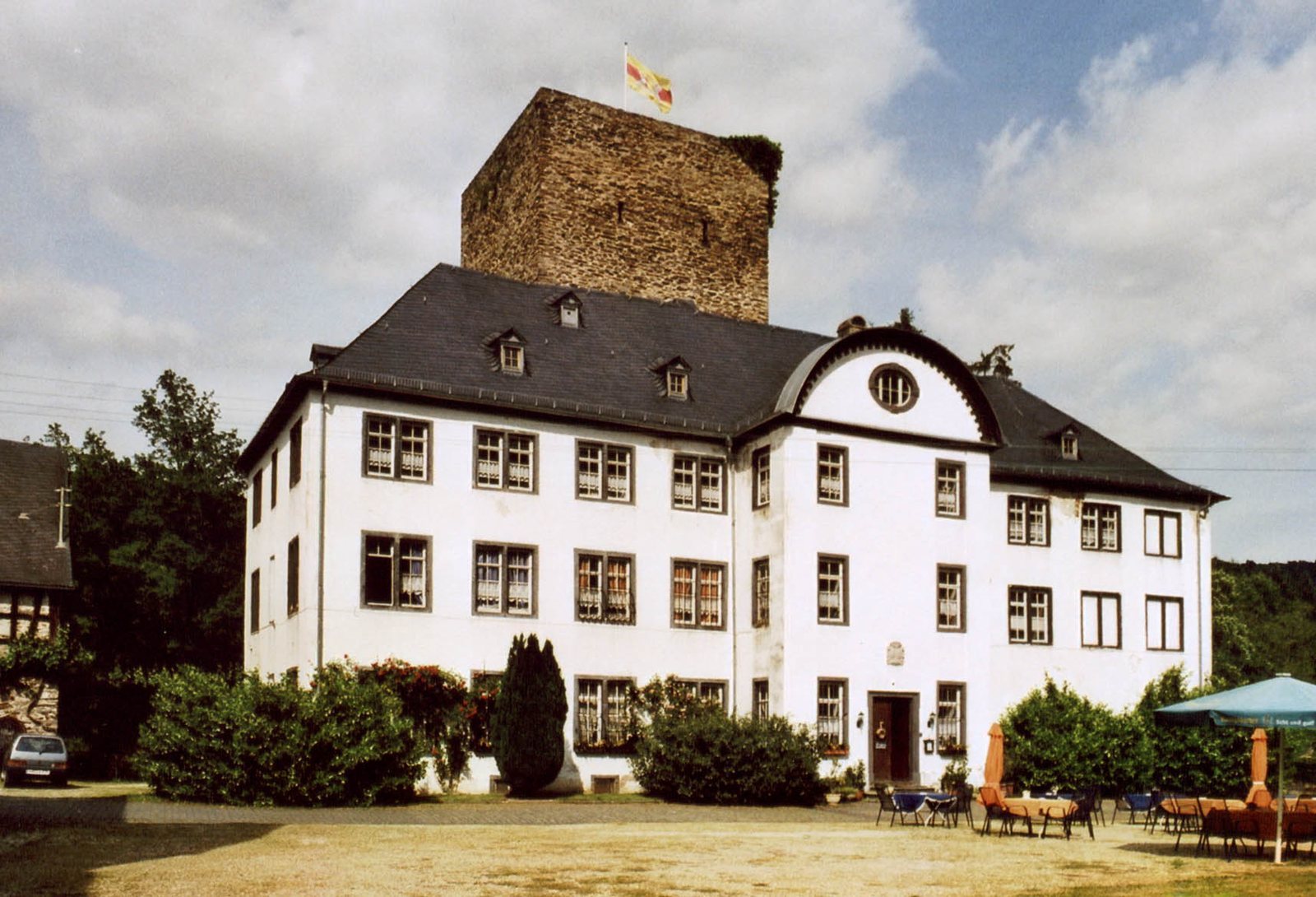
The next generation of the Eltz family sold Langenau in 1635 to Baron Johann Adolf Wolff Metternich zur Gracht, a Cologne court official, envoy, and privy councillor. In 1696, the Wolff-Metternich family sold the estate to the Marioths, merchants and industrialists from Liège who were active in ironworking around the Lahn. They used the castle as a residence and had it converted into a stately home by 1698.
By the fourteenth century, the Langenau family had established the surrounding estate as an imperial-knightly lordship, a territory directly under the emperor rather than an intervening ruler. In 1803, mediatization transferred its authority to a larger state, and the lordship became part of the Principality of Nassau-Usingen. On 25 October, the princely government prohibited payment of the knight’s tax to the Burgraviate of Friedberg, a territorial jurisdiction associated with Friedberg’s imperial castle. An edict gave von Marioth the privilege of having cases heard in a designated court, but he lost sovereign powers, including the landholder’s authority to administer justice. Nassau sought to acquire the lordship to prevent conflict, but von Marioth refused to sell. Administrative and judicial functions nevertheless passed to Nassau.
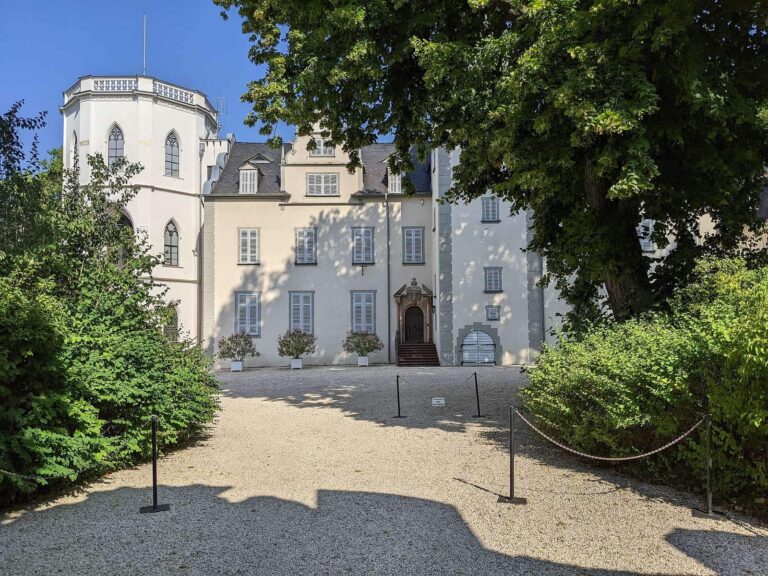
The Marioth family ended with Franz Joseph Ferdinand von Marioth in 1847. Countess Henriette von Giech, daughter of Prussian reform minister Heinrich Friedrich Karl vom und zum Stein, acquired the castle from the estate and converted it in 1851 into a hospital and a rescue home for neglected children. Architect and castle researcher Bodo Ebhardt restored the castle in 1912–1913.
Remains
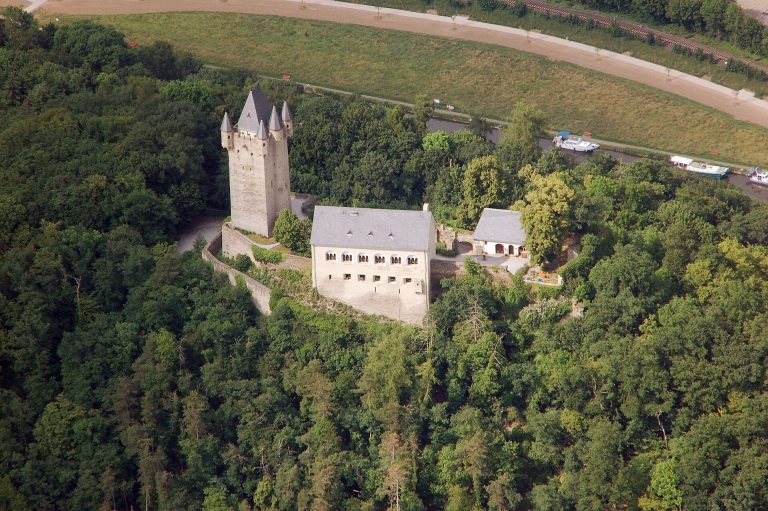
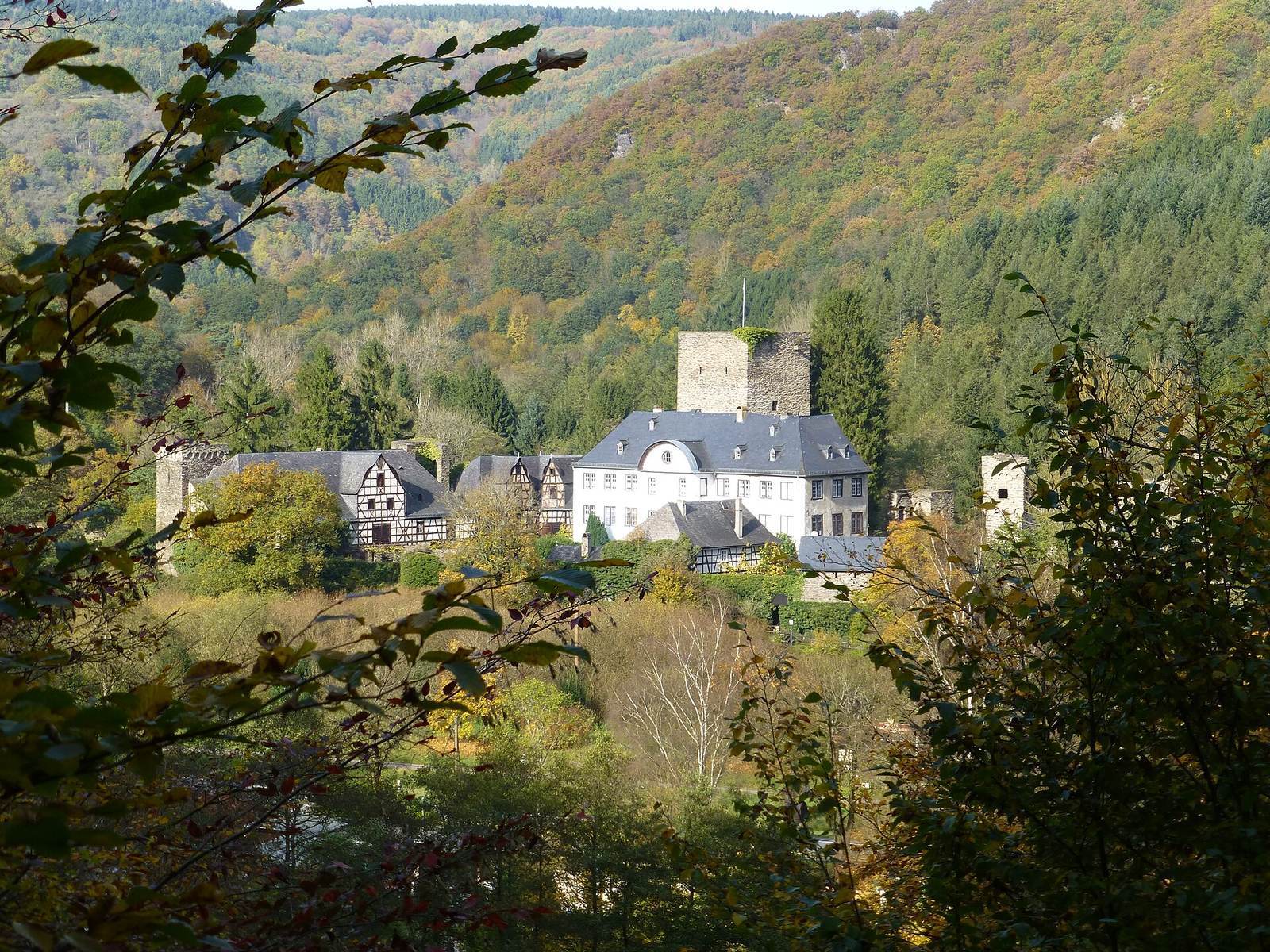
Langenau is a lowland fortress, a design unusual for the region, set at the meeting of the Gelbach and Lahn rivers. A dam could convert the original fortress into a water castle. Its surviving features include a square tower, later defensive walls, a large timber-framed domestic building, and a gate tower.
Fortifications
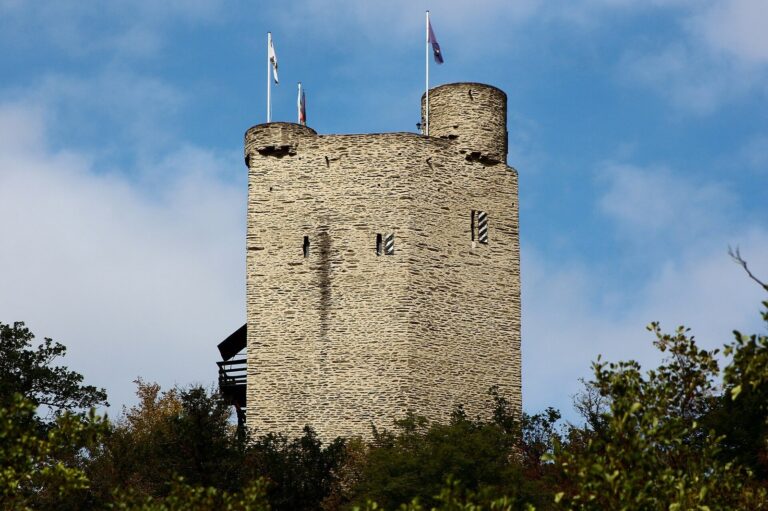
Square defensive tower
The square tower is the surviving element of the thirteenth-century fortification. It is built in the Romanesque style and served as the castle’s principal defensive tower.
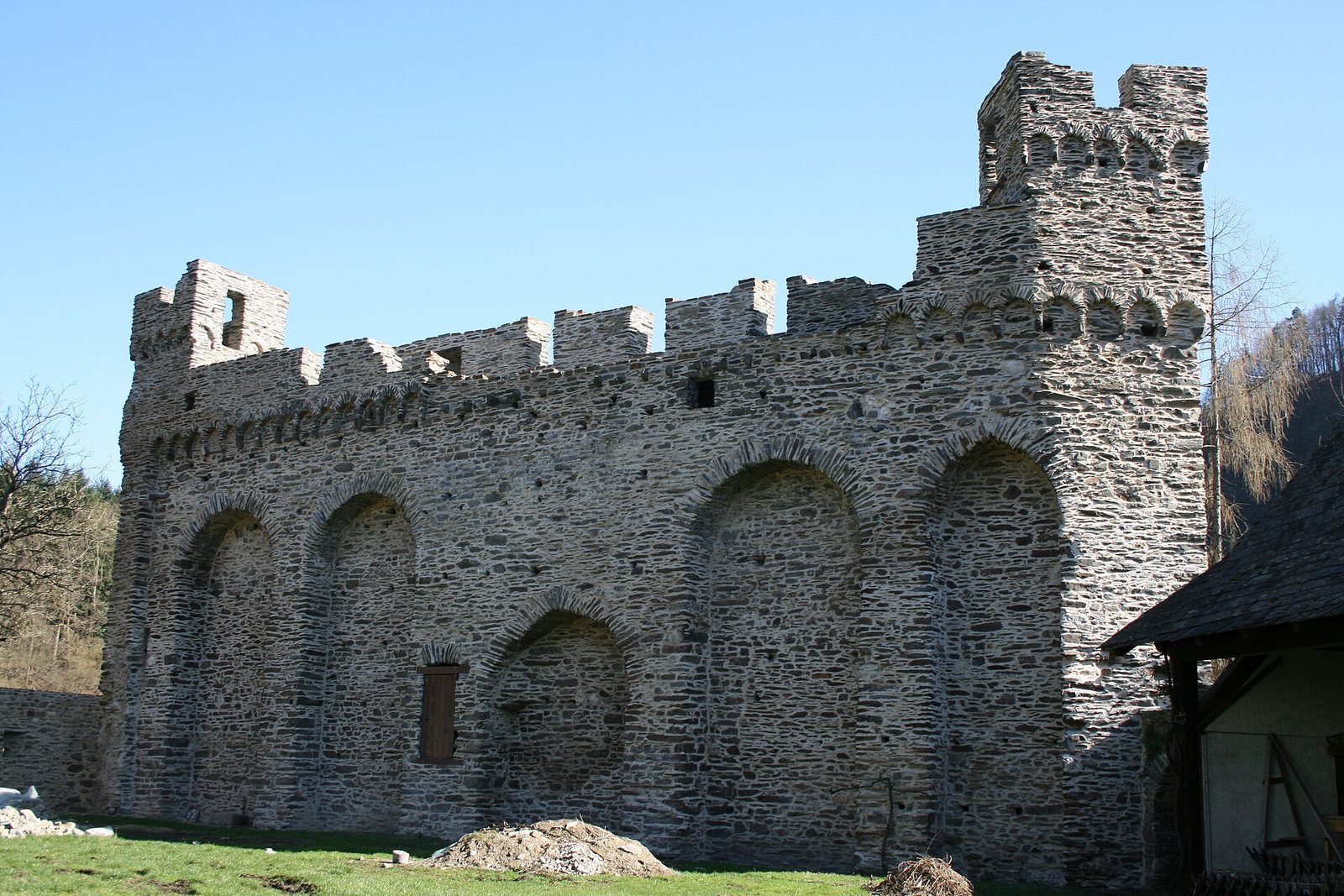
Ring wall and shield wall
The later defenses include a ring wall and an eight-metre-high shield wall, a particularly strong barrier designed to protect the castle’s main stronghold. Two towers flank the shield wall. These fortifications incorporate Gothic elements and date to the fourteenth or fifteenth century.
Domestic and entrance structures
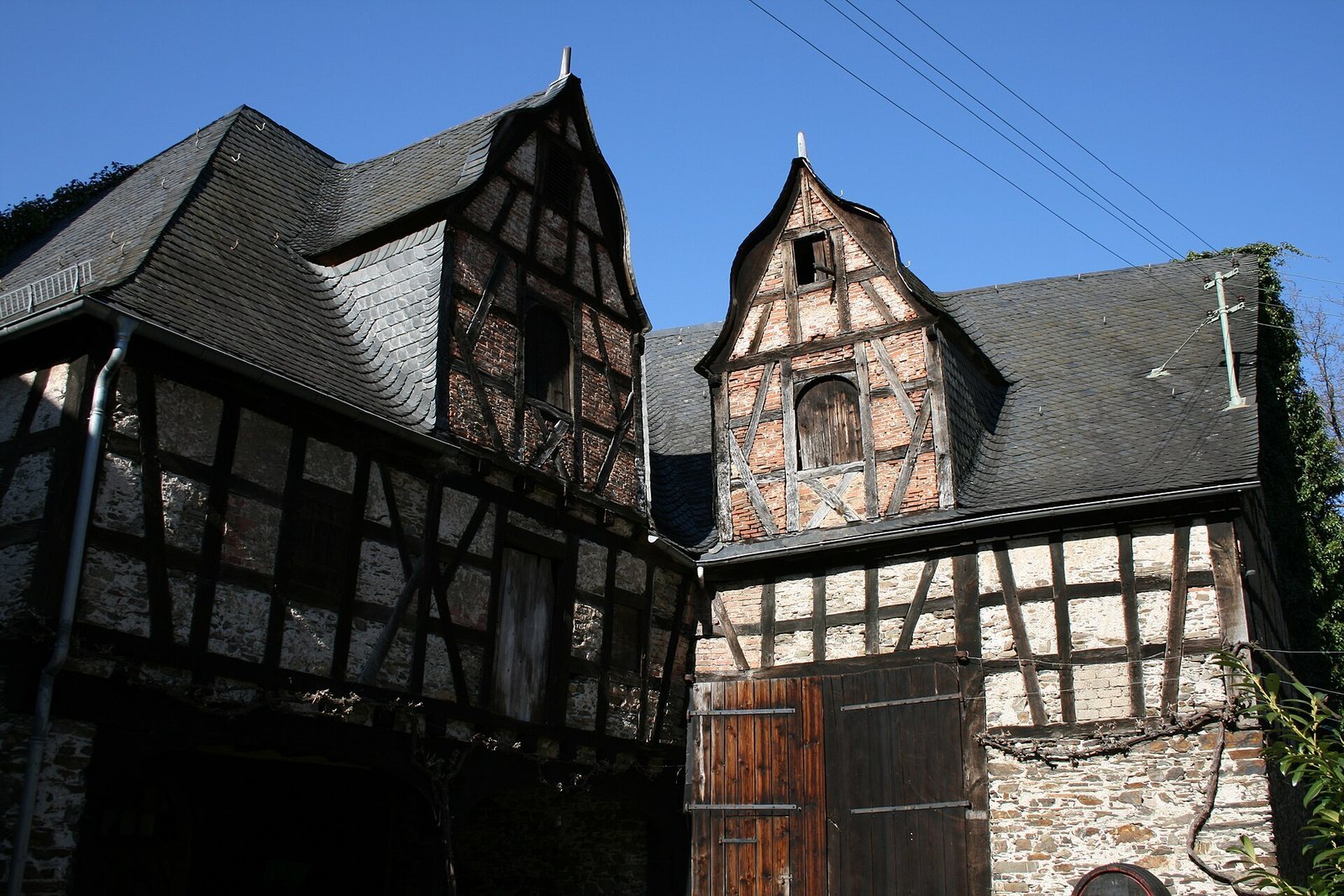
Timber-framed building
A large timber-framed domestic building was constructed within the castle in the seventeenth century.
Gate tower
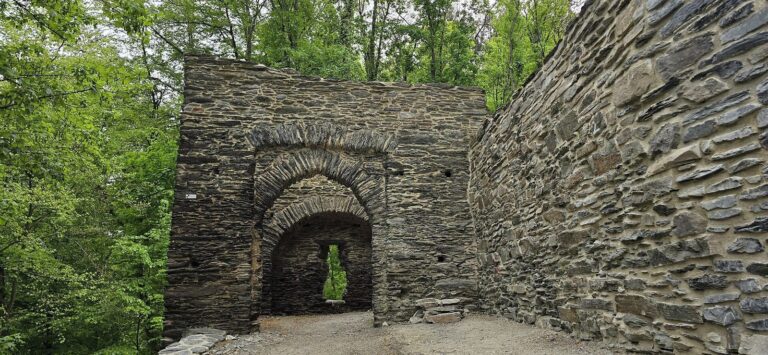
The castle also includes a gate tower, with its inner side identified as part of the structure.