Steinsche Burg: Ancestral Seat and Outlying Fortification near Nassau
Site at a Glance
- Rating
- 4.5
- Popularity
- Low
- Country
- Germany
- Primary era
- Unclassified
- Eras represented
- Unclassified
- Civilizations
- Holy Roman Empire
- Site type
- Military
- Remains
- Castle
On this page7 sections
History
Family seat
Steinsche Burg is a ruined hilltop castle near Nassau, Germany. It was the ancestral seat of the Imperial Barons vom und zum Stein, a baronial family within the Holy Roman Empire. The family is first recorded in 1158, although the castle’s construction date is unknown. Held under the authority of the Counts of Nassau, the castle was intended as an outlying fortification to protect Nassau Castle. The family’s best-known member was Heinrich Friedrich Karl vom und zum Stein, a Prussian statesman and reformer of the early nineteenth century.
Relocation and destruction
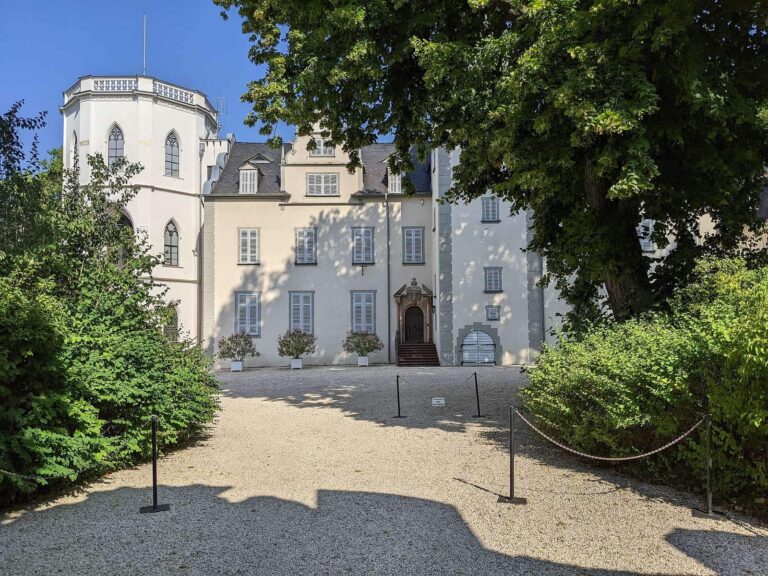
During the early phase of the Thirty Years’ War, a European conflict fought from 1618 to 1648, the family moved its residence to a former estate in central Nassau. Tithes were collected there, and the property was developed into Steinsches Schloss. The old castle was apparently still in good condition in 1636. Near the end of the Second World War, fought from 1939 to 1945, its remains were largely destroyed.
Remains
Castle layout
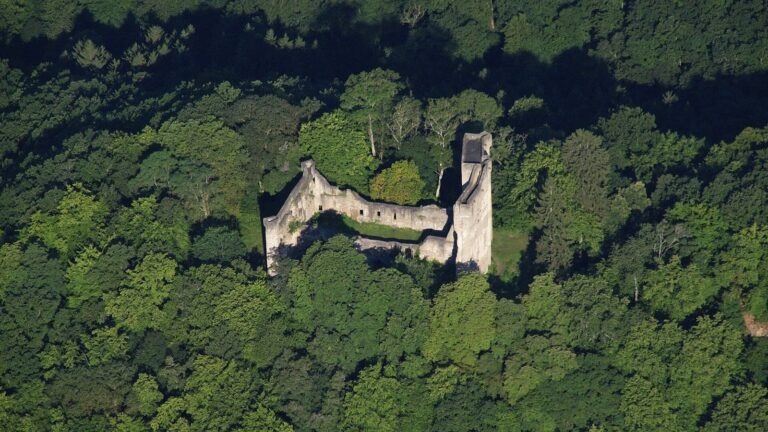
The ruin stands below Nassau Castle, between the valleys of the Lahn and the Mühlbach. Surviving walls suggest a roughly rectangular outer enclosure, with a tower near the center and the principal residential building, or palas, in the northern corner.
Outer walls and central tower
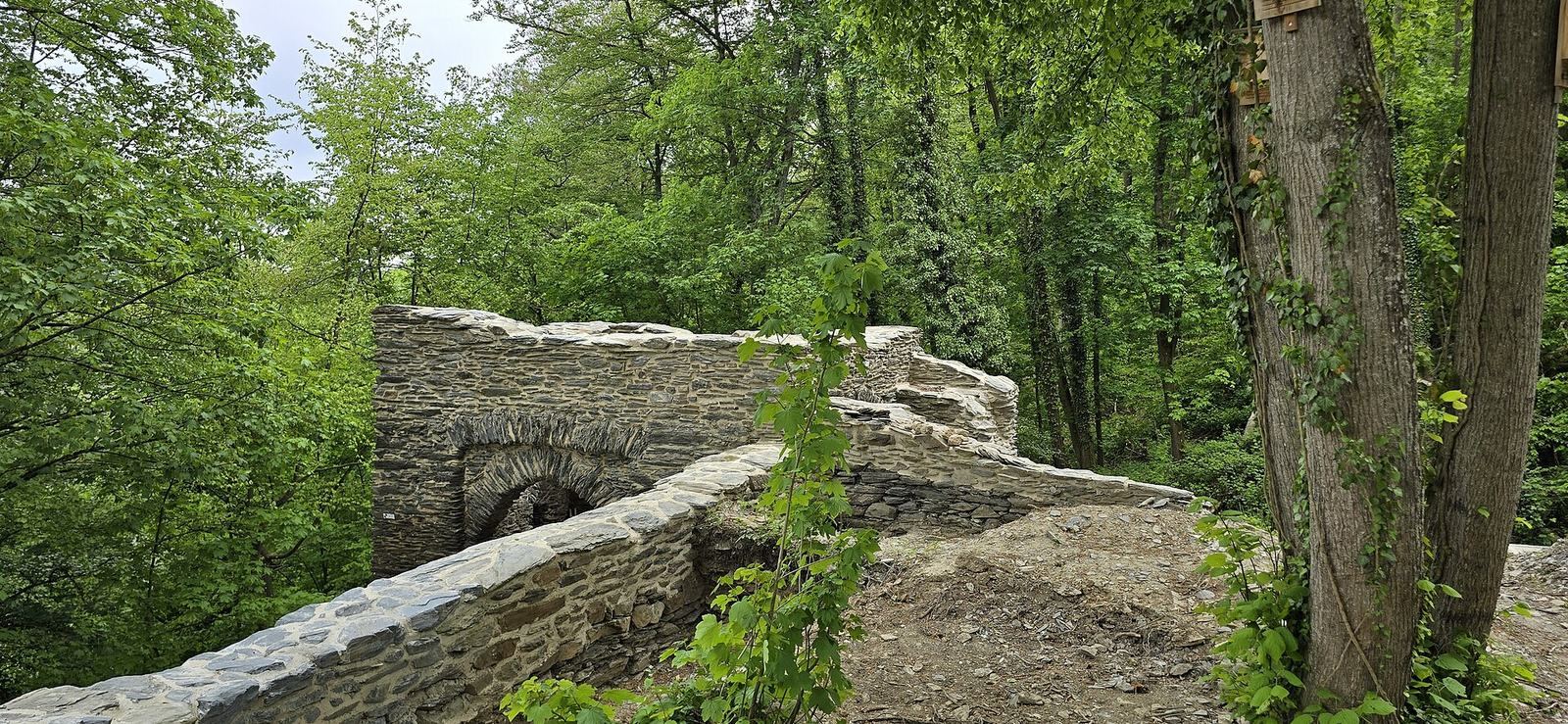
Sections of the outer wall remain and give an outline of the castle’s roughly rectangular plan. The surviving walls also indicate the position of a tower near the center of the enclosure.
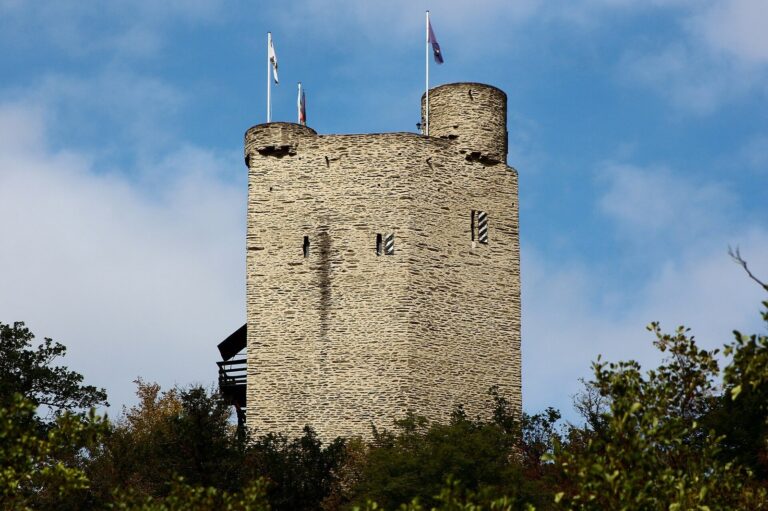
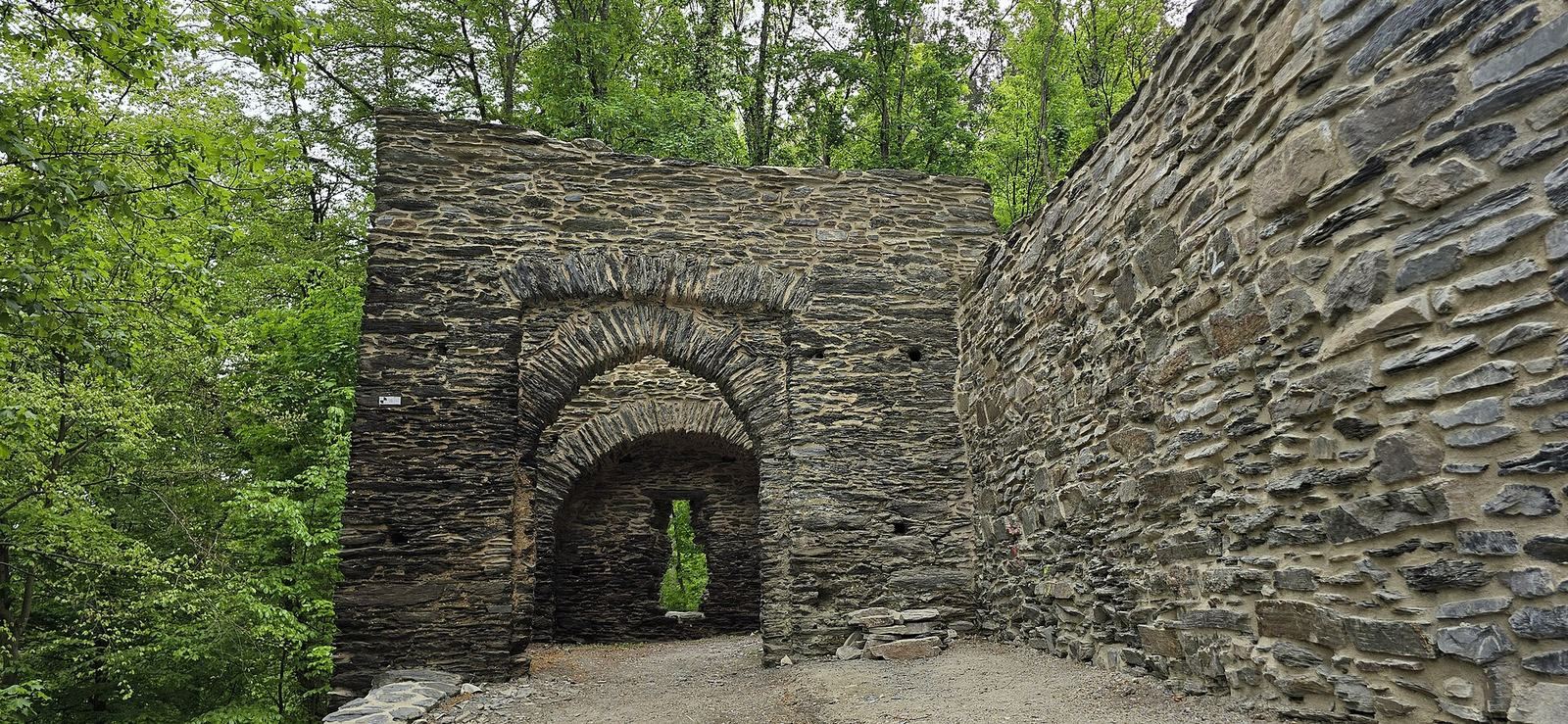
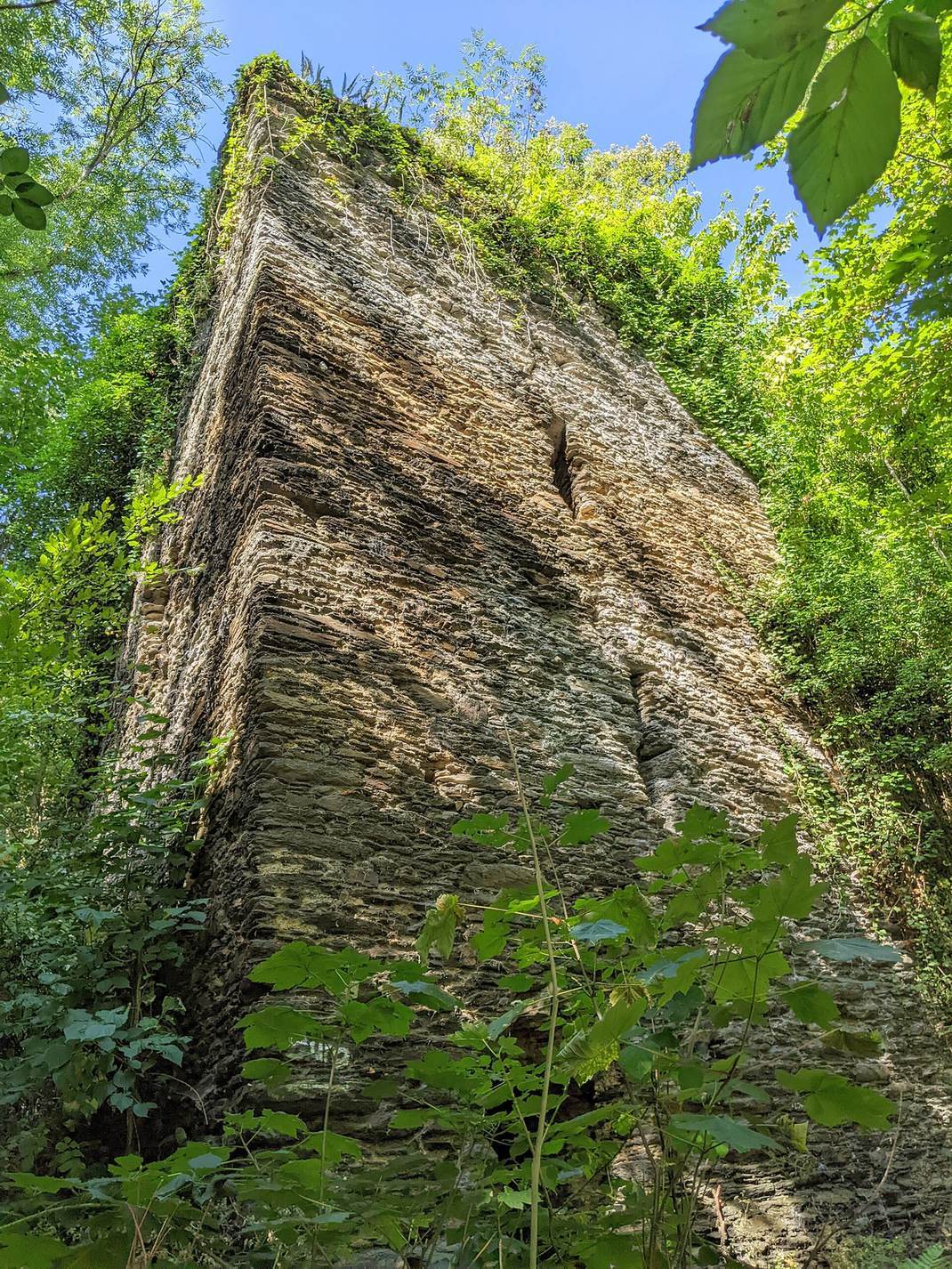
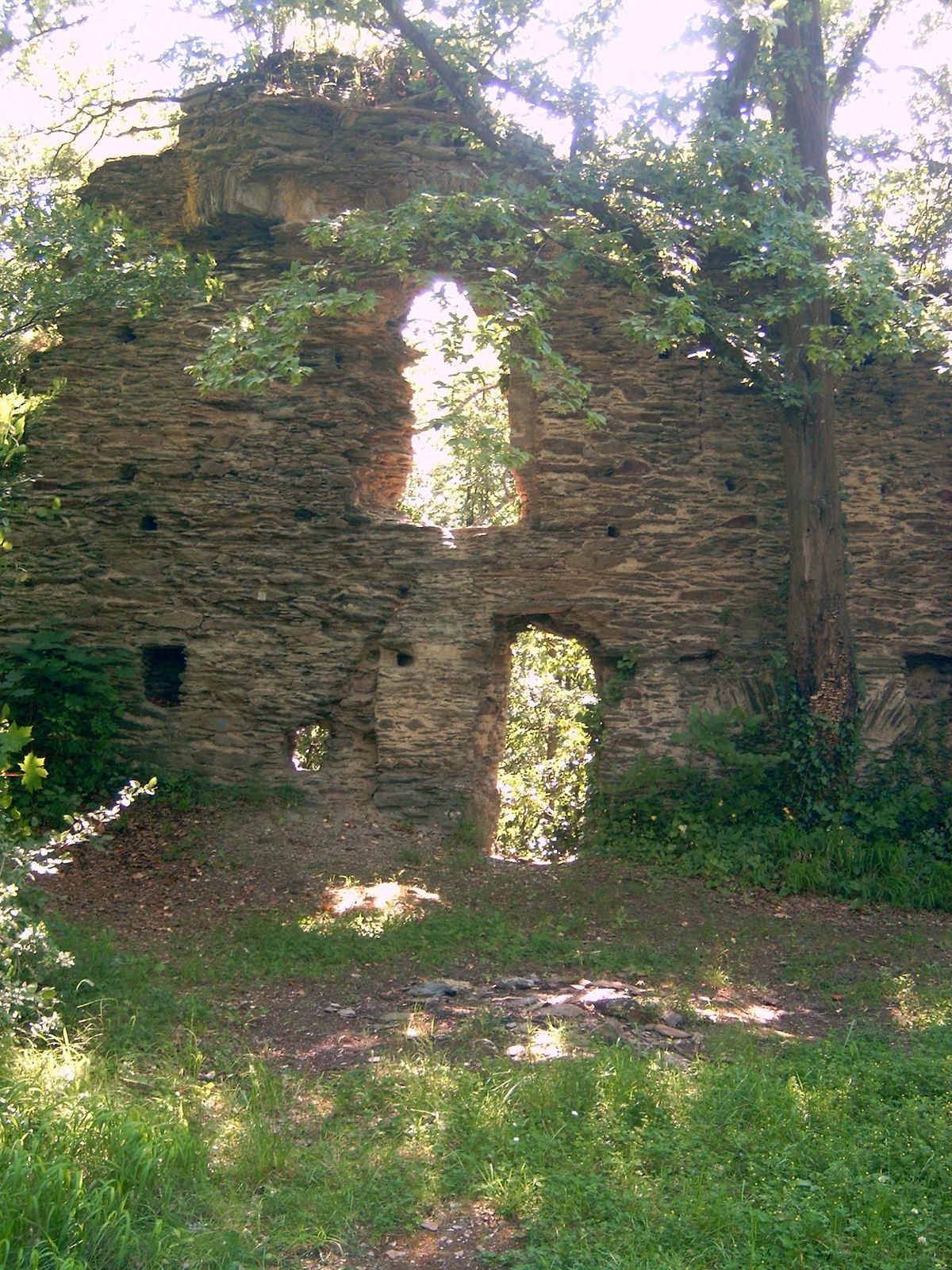
Gate tower and palas
A gate tower survives among the ruins, with an entrance leading to its cellar. The site also includes a gate complex and the remains of the palas in the northern corner.