Arnstein Abbey: A Medieval Premonstratensian Monastery in Germany
Site at a Glance
- Rating
- 4.5
- Popularity
- Low
- Country
- Germany
- Primary era
- Medieval
- External website
- Open
- Eras represented
- Medieval, Early Modern, Modern
- Civilizations
- Holy Roman Empire
- Site type
- Religious
- Remains
- Monastery
On this page12 sections
History
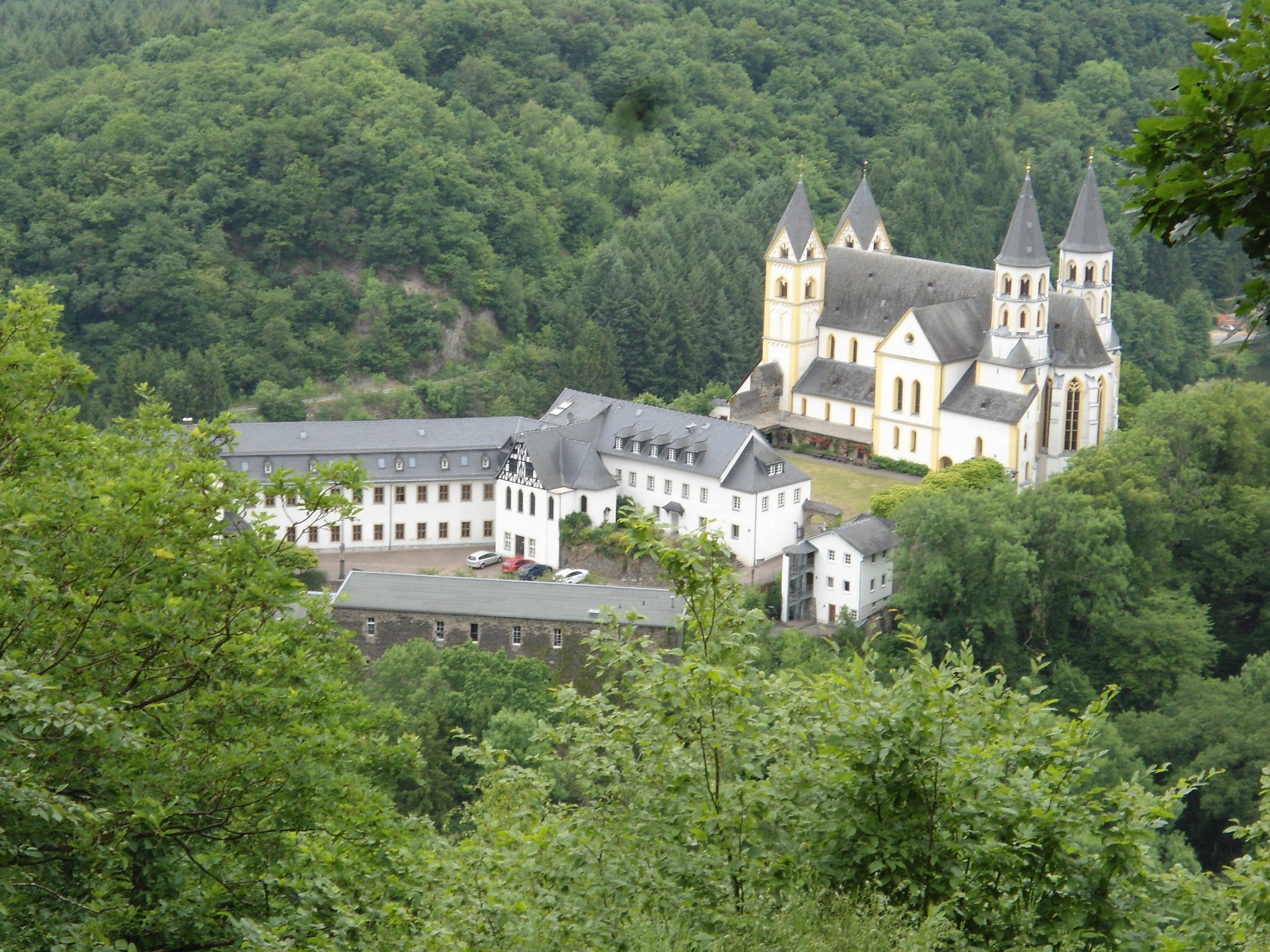
Arnstein Abbey is a former medieval monastery in Germany, at Obernhof on the Lahn, whose church combines Romanesque and Gothic architecture. The site began as Arnstein Castle, first recorded in 1052 as the seat of the Counts of Arnstein, and became a Premonstratensian monastery in 1139. The abbey’s church was begun in 1132 and consecrated in 1208, placing its principal development within the medieval period.
From castle to Premonstratensian monastery
Arnstein Castle was the earliest castle on the Lahn mentioned in the surviving record. In 1139, Ludwig III, the last Count of Arnstein, converted it into a monastery and entered the Premonstratensian order himself. The Premonstratensians were a Catholic religious order founded in the twelfth century whose members combined communal religious life with pastoral and clerical work. Partial demolition of the castle began that same year. Ludwig’s wife lived as a hermit near the monastery until her death.
King Conrad III confirmed Arnstein’s direct subjection to the Empire in 1145. The abbey also developed a network of dependent religious institutions and possessions. From 1236, it maintained a daughter monastery at Keppel near Hilchenbach under the patronage of the House of Nassau. Arnstein held the Palatine village of Bubenheim from 1140 to 1478, and in 1163 its cleric Gottfried of Beselich built the village Church of Saint Peter, regarded as the oldest Romanesque village church in the Palatinate. Around 1170, Arnstein founded the Premonstratensian nuns’ monastery of Beselich on the Beselicher Kopf.
Confessional and political changes
After the princes of Nassau adopted Protestantism in the sixteenth century, Arnstein placed itself under the protection of the Archbishopric of Trier during the abbacy of Petrus Marmagen, who died in 1604. Long disputes with the House of Nassau-Hadamar followed. A foundation deed dated 3 October 1652 transferred the property of Beselich Abbey to the Jesuits of Hadamar.
Secularization, the transfer or suppression of ecclesiastical property and institutions by a secular government, dissolved Arnstein Abbey in 1803. Its secular authority passed to the Duchy of Nassau, while ecclesiastical jurisdiction later passed to the Diocese of Limburg, founded in 1827. In 1817, the Nassau government sold the church and monastery for demolition on the condition that the buildings would not be used for ecclesiastical purposes.
Renewed religious communities
A Benedictine priory of Beuron Abbey operated at Arnstein from 1869 to 1871 under Placidus Wolter. It closed because too few new members joined and the complex was in a dilapidated condition.
In 1919, the Congregation of the Sacred Hearts of Jesus and Mary established its first German community at Arnstein. This Catholic congregation had a particular devotion to the Sacred Hearts of Jesus and Mary, and its members at Arnstein became known as the Arnsteiner Fathers. They maintained the monastery until the end of 2018. A Sacred Heart pilgrimage began at Arnstein in 1924 and attracted numerous pilgrims each year, with traditional pilgrimages continuing after the community later changed.
The superior and vice-provincial Father Alfons Spix was sentenced by the National Socialist authorities in 1942 because he repeatedly allowed Polish forced laborers to attend worship and gave them food. He died at Dachau concentration camp. Father Chrysostomus Lauenroth had previously been sentenced to imprisonment in 1936 for alleged foreign-currency offenses.
In October 2015, the Arnsteiner Fathers announced that they would leave because of limited personnel and financial resources. Their departure took place on 31 December 2018, following a farewell service on 16 December. A Greek Orthodox sisterhood moved into the monastery on 1 June 2019. It has since been known as the Holy Monastery of Dionysios Trikkis and Stagon. The community is associated with the spiritual guidance of the Greek elder Dionysios, an experienced Orthodox spiritual guide, and Mother Diodora is identified as its abbess. Its canonical affiliation, meaning its formal relationship to an ecclesiastical authority, was described as unclear in 2023. The monastery is registered at the Montabaur local court as an association promoting Orthodox monasticism in Germany.
Remains
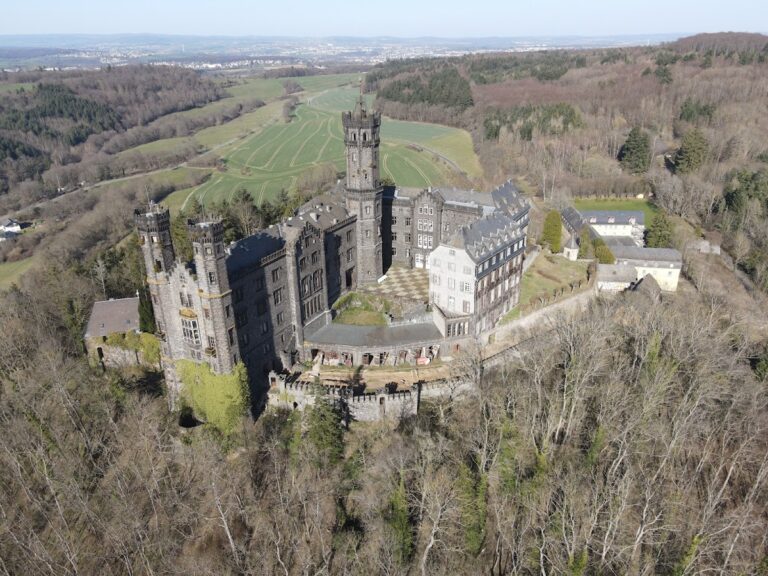
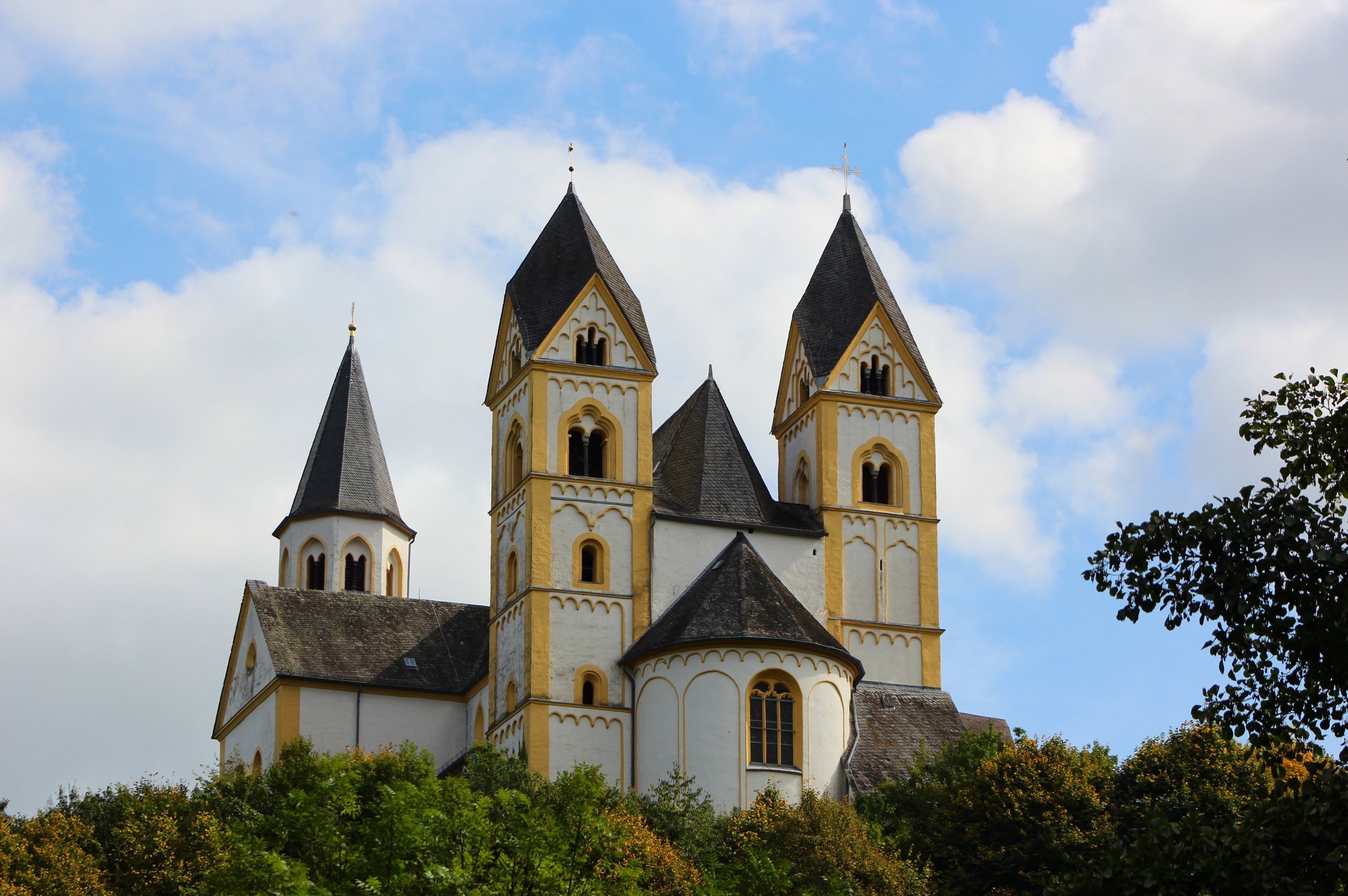
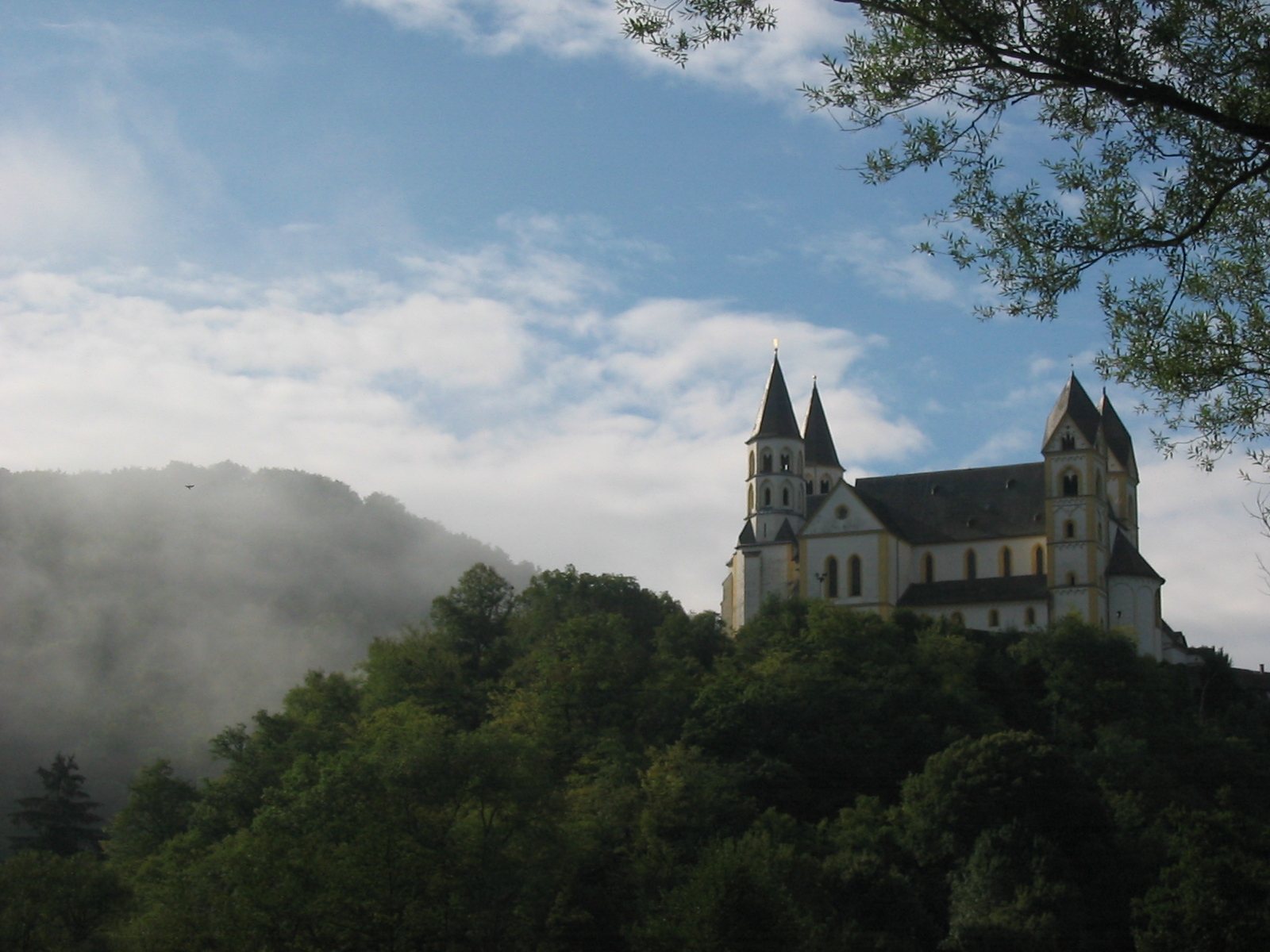
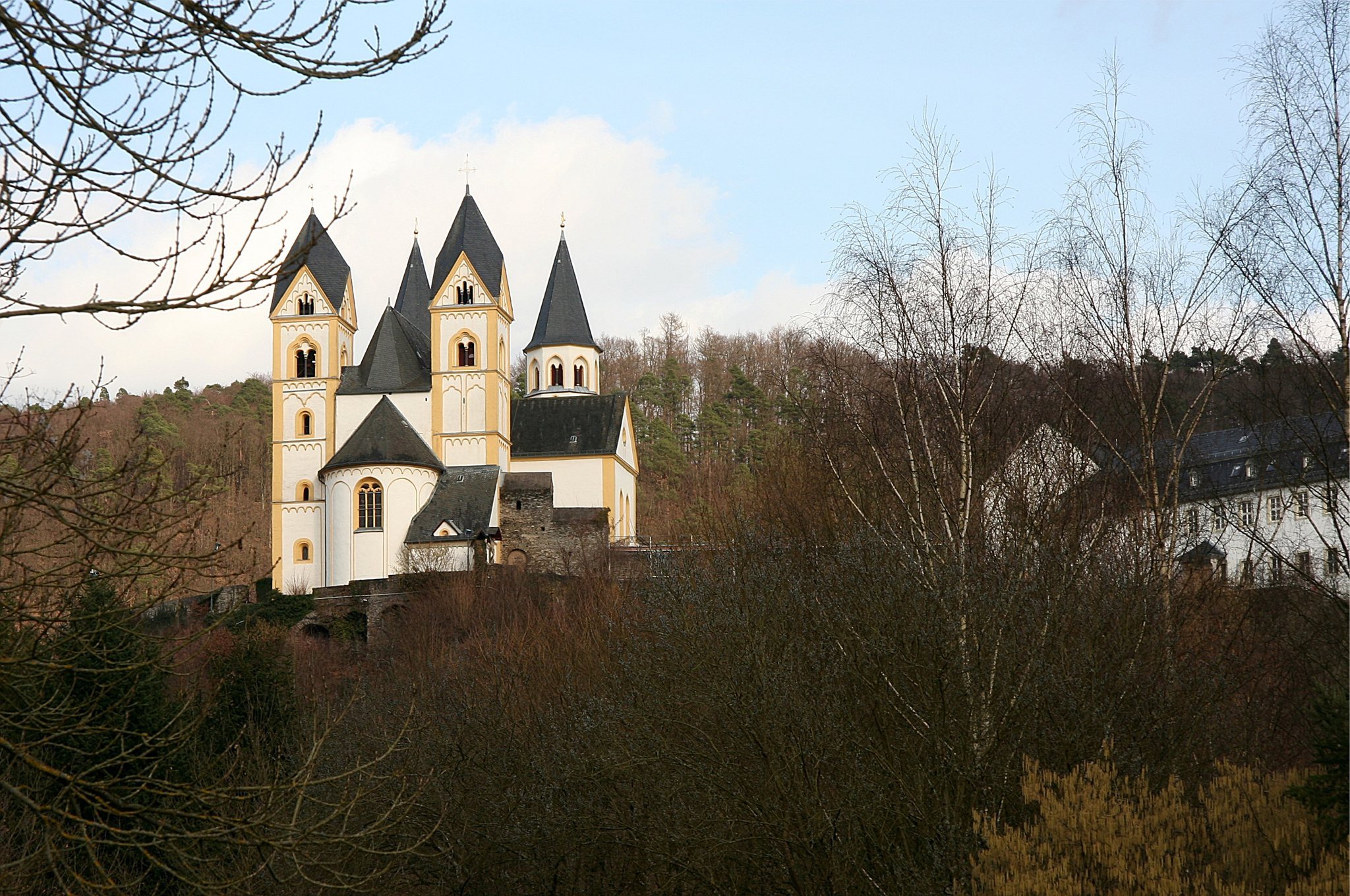
Arnstein’s surviving remains combine fragmentary elements of the former castle with a substantial medieval abbey church. The church stands as a three-aisled basilica with a transept, a large eastern choir with smaller attached apses, and a western choir. Its western towers are Romanesque, while its octagonal eastern towers are Gothic, reflecting the long period between the beginning of construction and consecration.
Castle remains
Defensive wall and Magdalene Chapel
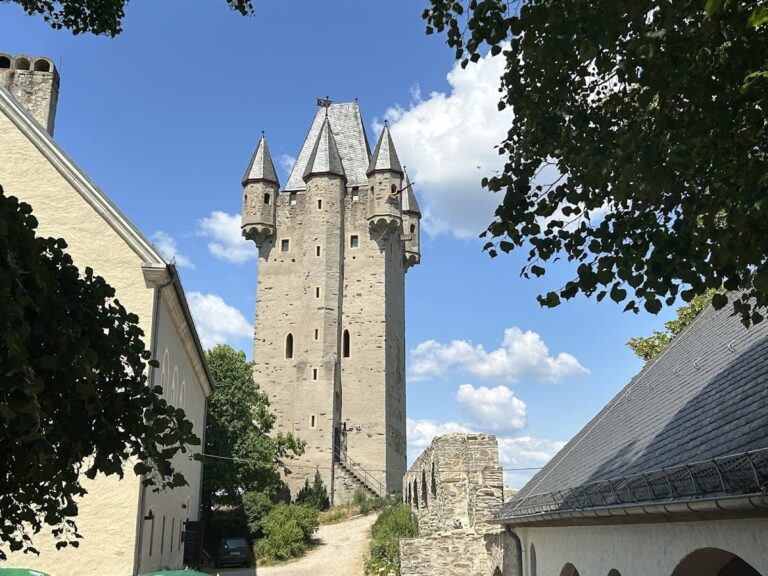
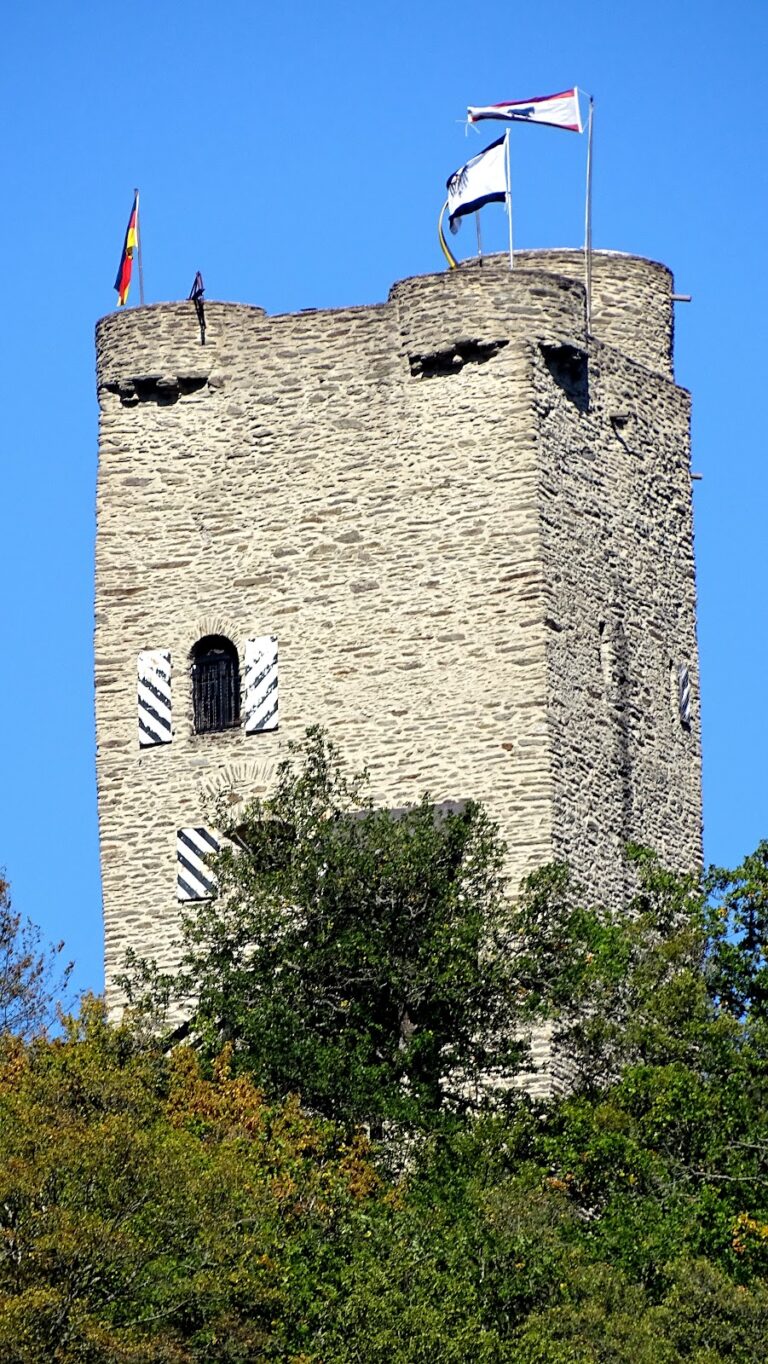
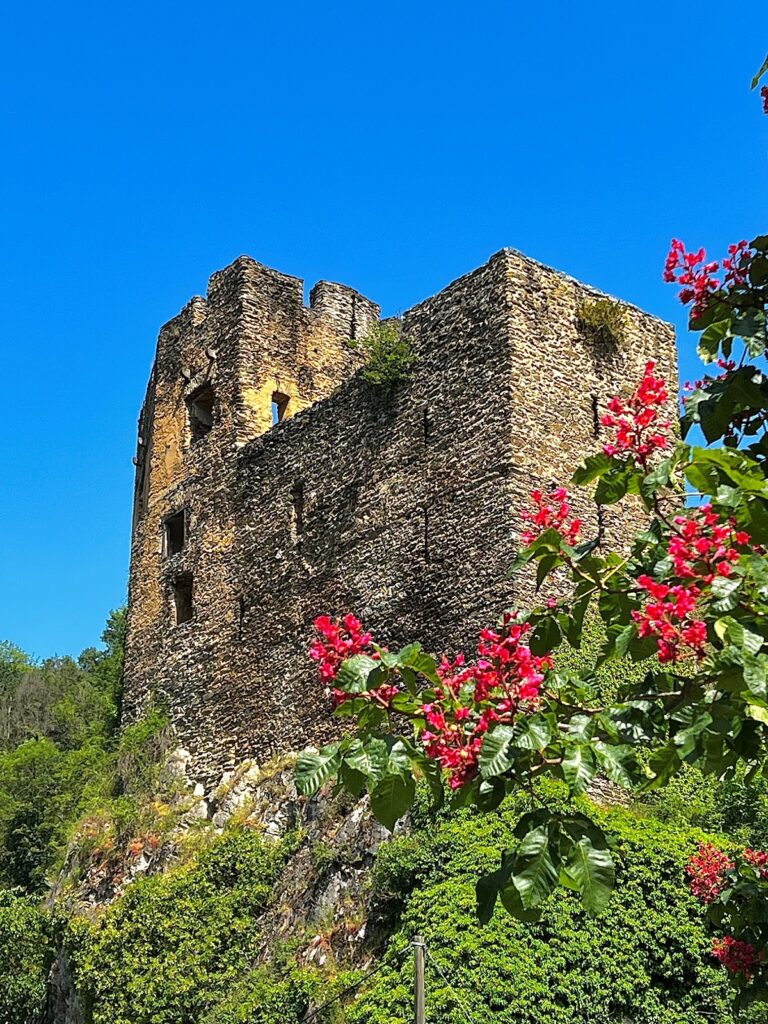
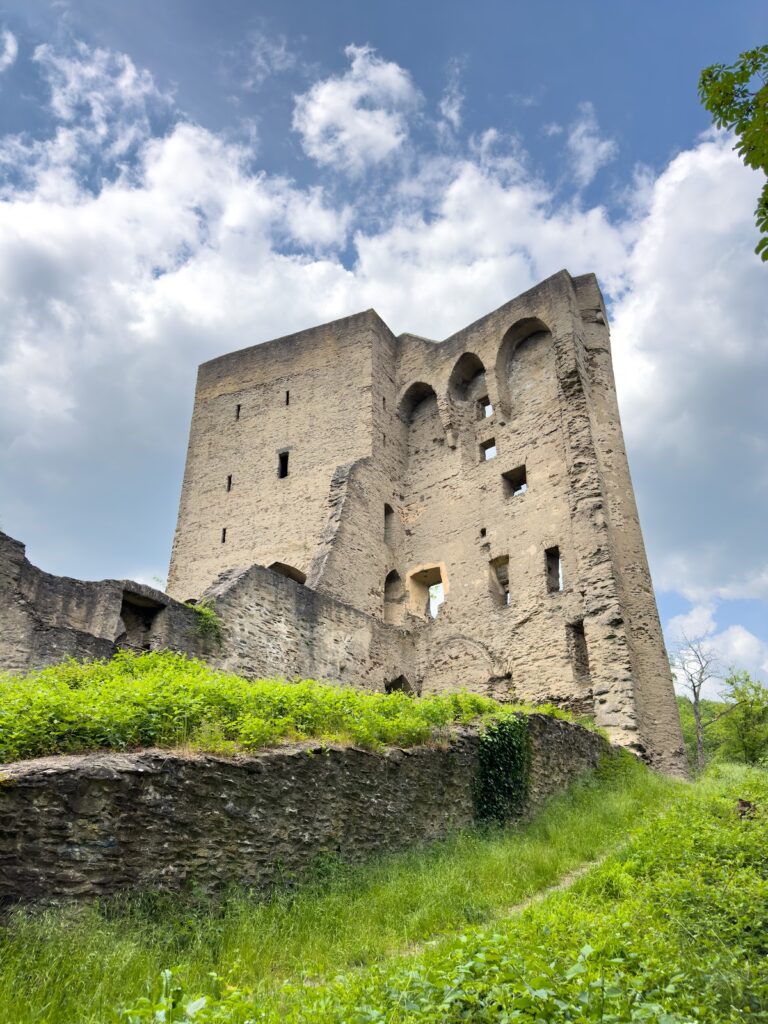
The former castle occupied a position on the Lahn. Parts of its defensive wall survive beside the south-west tower, while the foundations of the Magdalene Chapel remain near the monastery gate. These fragments do not allow the original appearance of Arnstein Castle to be reconstructed, but they preserve physical evidence of the fortress that preceded the monastery.
Abbey church
Medieval structure
Construction of the church began in 1132 after older castle walls and rock had been removed. The building was consecrated in 1208, after 76 years of construction. Its Romanesque and Gothic elements belong to this extended building history. The nave and transept originally had flat wooden ceilings, while the side aisles already had cross vaults.
High altar and pulpit
The large Baroque high altar dates from 1760 and is chiefly wooden. Its tabernacle and altar table are made of colored marble. The original central image of the Virgin Mary is lost. During the nineteenth century, it was replaced by a copy of a painting by the Koblenz painter Caspar Friedrich Heising. In 1924, that image was replaced by a large Sacred Heart relief by the Aachen sculptor Lambert Piedboeuf. He also created the trumpet-playing angels above the relief, which represent the proclamation of Christ’s kingship. The altar was restored in 1971.
The Rococo pulpit dates from 1757. Its sounding board bears the symbol of the Holy Trinity, the Ark of the Covenant with the tablets of the law, and the symbols of the four Evangelists. The Arnstein coat of arms appears on the pulpit’s rear wall and above the western choir.
Altars, artworks, and memorials
The church contains thirteenth-century choir stalls, panel paintings, several epitaphs, and an organ dating from around 1700. An epitaph is a commemorative monument for a deceased person or couple and does not necessarily mark the burial place. A Romanesque stone altar stands in the south aisle, with a Baroque statue of Saint Nicholas. A panel altar dated 1646 occupies the tower of the northern side aisle.
The church’s most significant artwork is the Arnstein Cross, dated to around 1520. It includes a carved wooden corpus measuring 2.20 metres in height. The church also preserves the double epitaph of Oberamtmann Wilhelm von Staffel, who died in 1530, and his wife, Margarete Wolf von Sponheim. Another epitaph commemorates Baron Johann Franz von Marioth of Langenau, who died in 1726, and his wife, Klara Katharina Eleonora von Sohlern, who died in 1704.
Burials and monastic memory
Count Walram I of Nassau was buried at the monastery in 1198. In 1247, his grandson Henry, the son of Count Henry II of Nassau, became a monk at Arnstein.