Laiviai Hillfort: A Fortified Site in Lithuania
Site at a Glance
- Rating
- 4
- Popularity
- Very Low
- Country
- Lithuania
- Primary era
- Medieval
- Eras represented
- Classical, Medieval
- Civilizations
- Unclassified
- Site type
- Military
- Remains
- Fort
On this page5 sections
History
Laiviai Hillfort is a fortified site in Laiviai village, Lithuania, dated broadly from the 1st millennium to the 13th century. Locals also call it Pilale.
A local tradition describes the Salantas as a broad, well-watered river once navigated by warships and trading vessels. Ships supposedly moored beside the hillfort near a tall oak whose branch overhung the river valley and served for loading and unloading goods. The story connects this stopping place with the name Laiviai, which later came to refer to the village.
Other legends tell of a manor that sank into the hillfort and of treasure buried underground, reached through tunnels. These tales may have attracted treasure seekers. Engineer Ignas Jablonskis identified the site as cultural heritage. It was listed as a republican-level archaeological monument in 1972 and recognized as a state-protected monument in 2005.
Remains
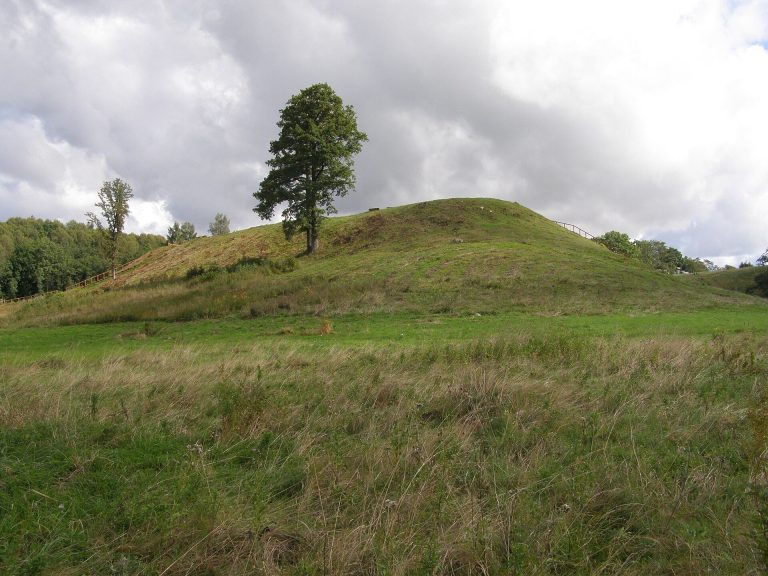
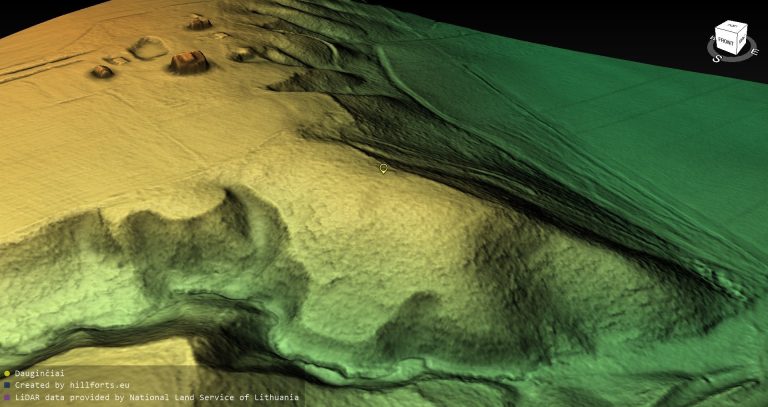
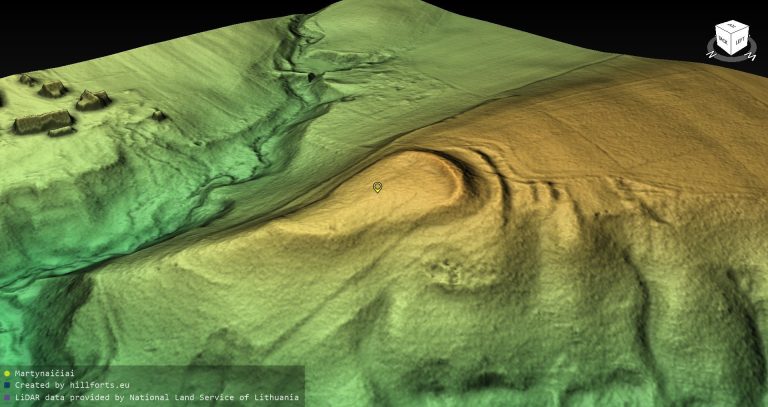
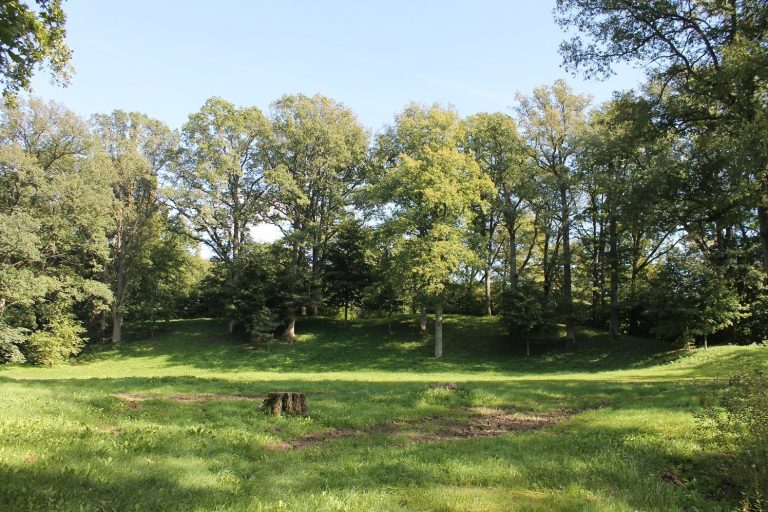
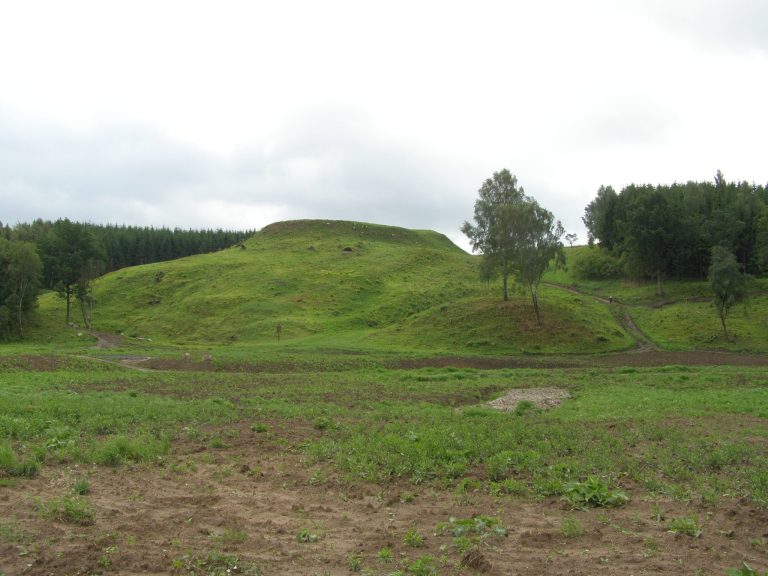
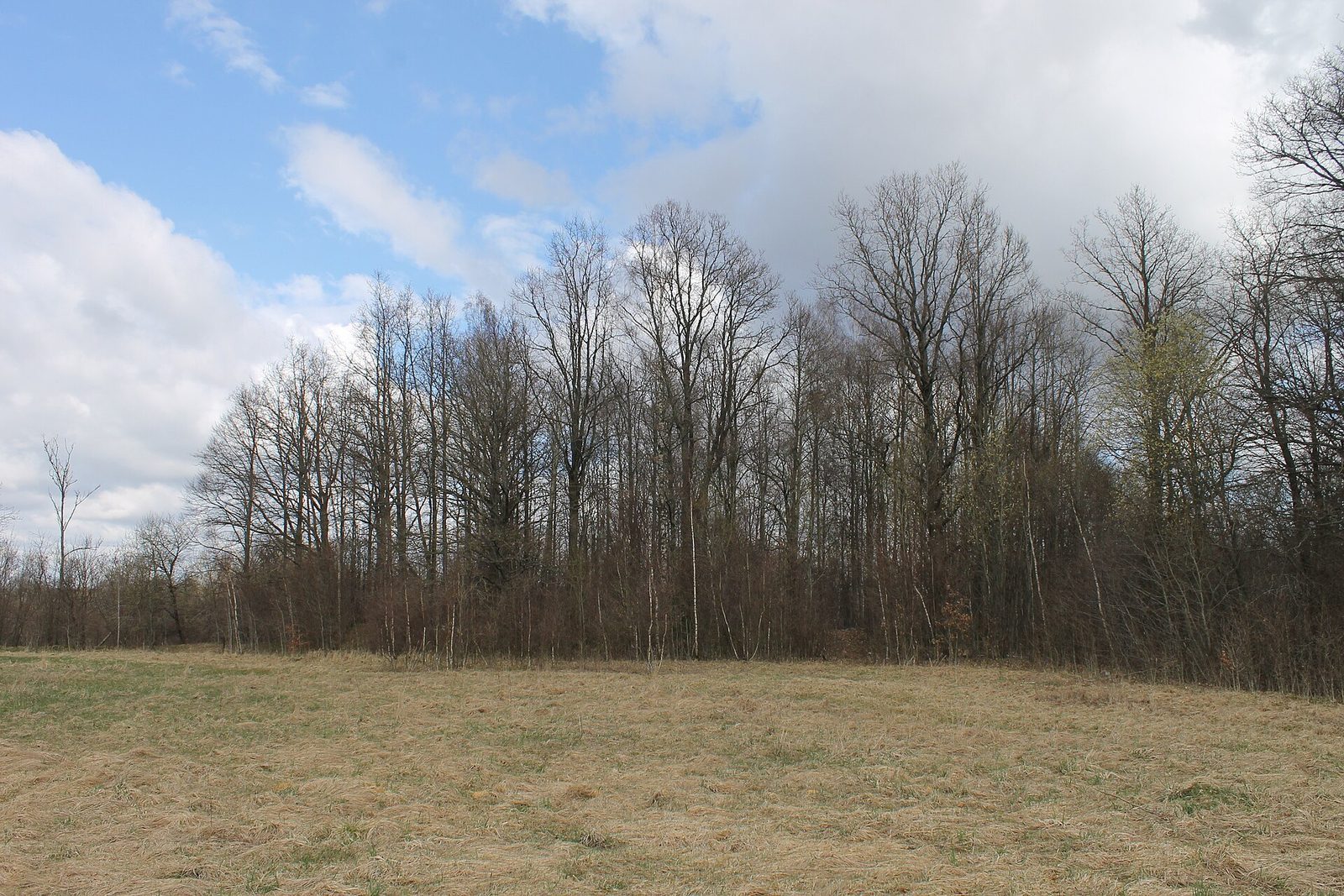
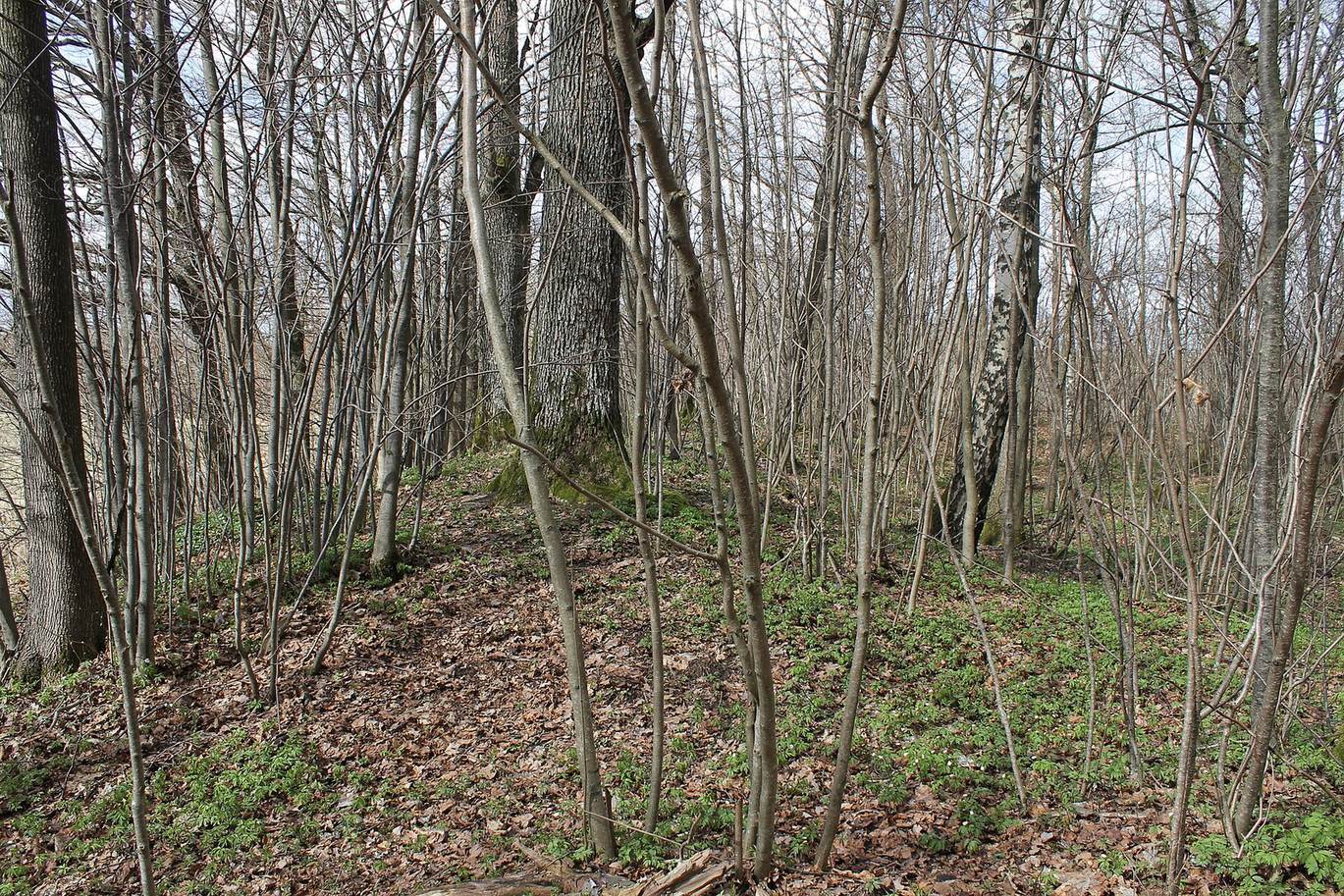
The hillfort occupies a highland spur at the meeting of the Salantas River and Bubinas Stream. Its steep slopes enclose a summit, with traces of settlement at the foot to the south-southwest. Deciduous trees cover the site, while erosion at the stream confluence is wearing away its northeastern slope.
Hillfort landscape
Summit and defenses
The triangular summit platform measures 50 metres along its northeast–southwest axis and 45 metres across at the southwestern end. A semicircular rampart follows that edge for 49 metres. It is 10 metres wide, rising 0.7–1.0 metres above the platform and 1.5–2.0 metres on its outer side. A defensive ditch remains visible on the upland side. The rampart has slumped, and pits dug by treasure seekers remain in the northeastern part of the platform.
Settlement and nearby landmarks
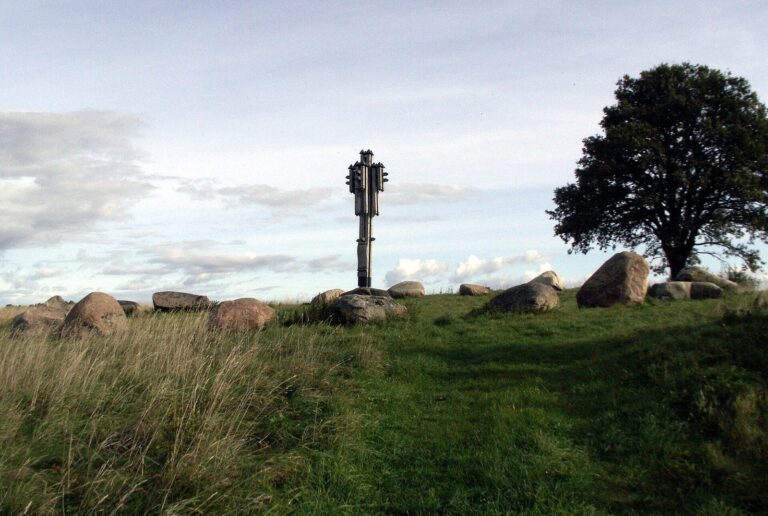
Traces of a settlement’s cultural layer lie south-southwest of the rampart, at the hillfort’s foot. The Laiviai Stone, also called Laumės Kūlis, meaning “Laumė’s Stone,” stands about 70 metres southeast. A laumė is a female supernatural being in Lithuanian folklore. The Laiviai cemetery lies about 350 metres southeast, across the Bubinas.