St. Bartholomäus: A Gothic Pilgrimage Church in Roßholzen
Site at a Glance
- Popularity
- Very Low
- Country
- Germany
- Primary era
- Medieval
- Eras represented
- Medieval, Early Modern, Modern
- Civilizations
- Duchy of Bavaria, Electorate of Bavaria, German, Holy Roman Empire, Kingdom of Bavaria
- Site type
- Religious
- Remains
- Church
On this page10 sections
History
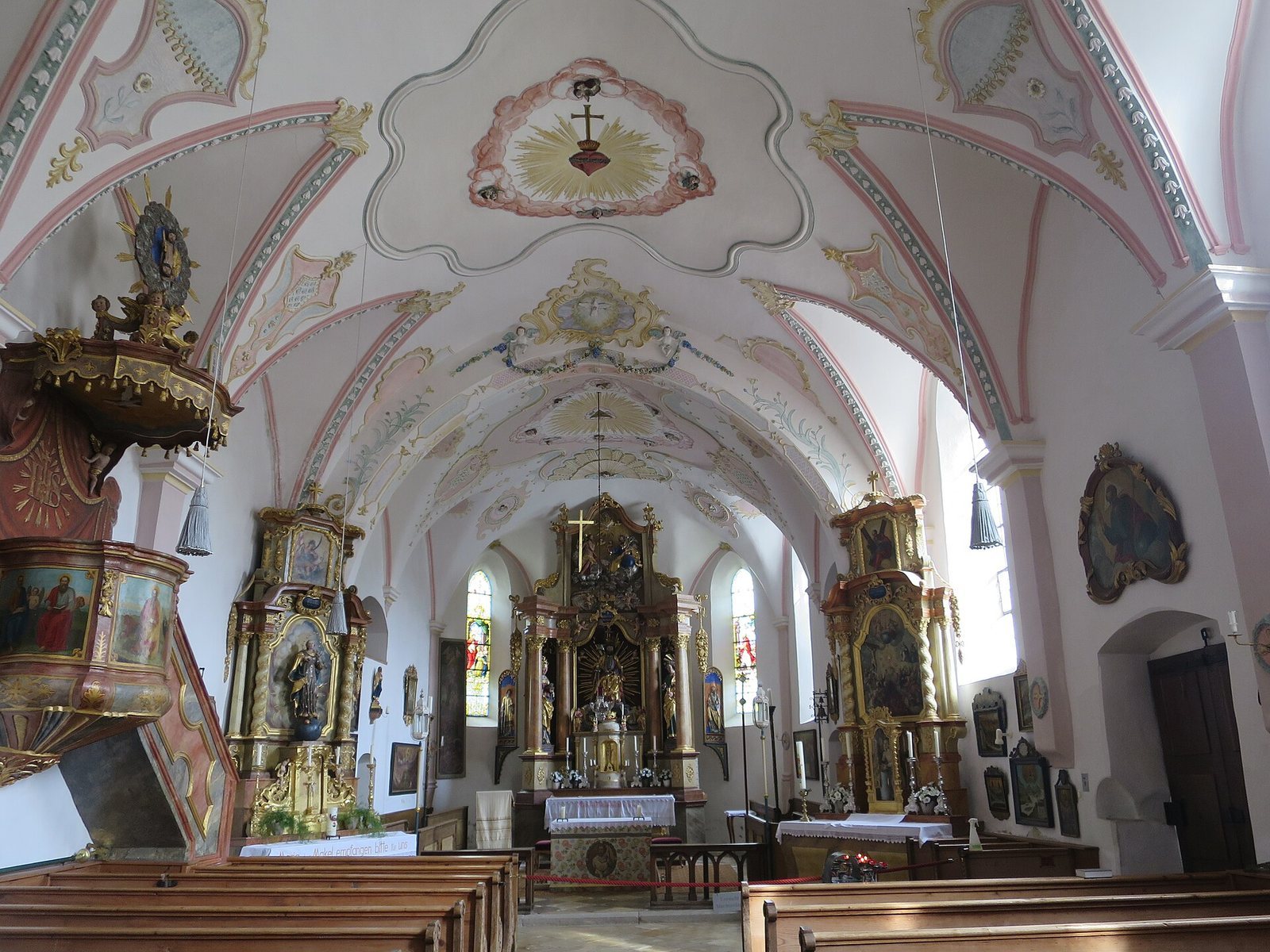
St. Bartholomäus is a Roman Catholic pilgrimage church in Roßholzen, Samerberg, Germany. A church at the site is first mentioned around 788 and was the first church on Samerberg. The present church was built in the 15th century with a Gothic core, a medieval architectural style; its interior was remodeled around 1755 in the Baroque style, associated especially with the 17th and 18th centuries.
St. Bartholomäus is a filial church, meaning it is attached to and served by the parish of the Assumption of Mary in Törwang. That parish is part of the Rohrdorf parish association, which coordinates multiple parishes, and the Rosenheim deanery, a regional grouping of parishes, within the Archdiocese of Munich and Freising, an ecclesiastical territory led by an archbishop.
Remains
Plan and exterior
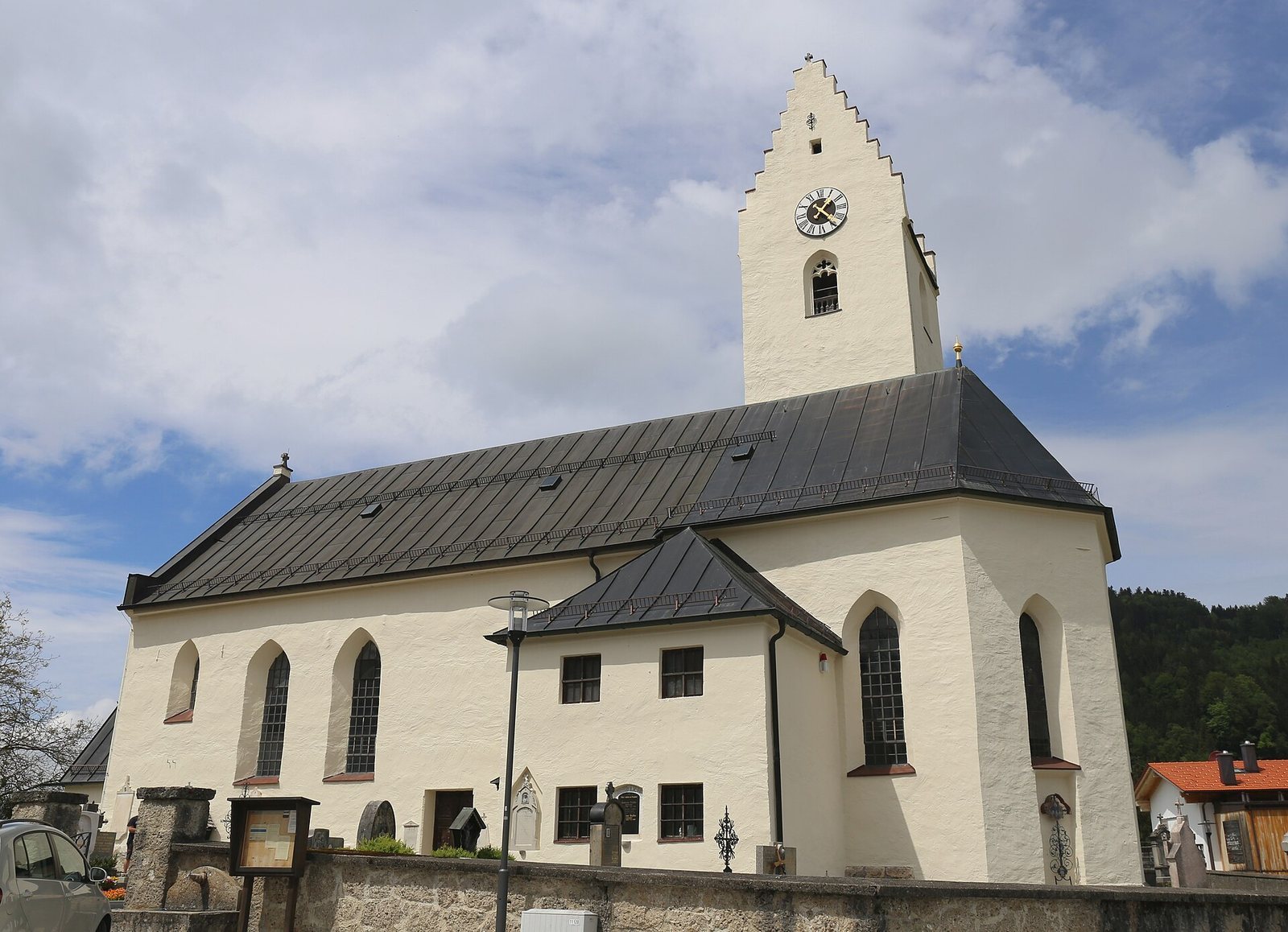
The main worship space is divided into five structural sections, with a narrower choir at the east ending in three sides. Its ceiling is a barrel vault, a continuous curved ceiling, with lunettes, curved openings cut into the vault. A sacristy, a room for clergy and church objects, adjoins the south side of the choir, with an oratory, a small prayer room, above it. A tower flanks the choir on the north, and its uppermost floor holds the bells. The tower has a saddle roof between stepped gables arranged crosswise, with clock faces on the gables. At the west end, a porch leads to the church entrance.
Altars
High altar
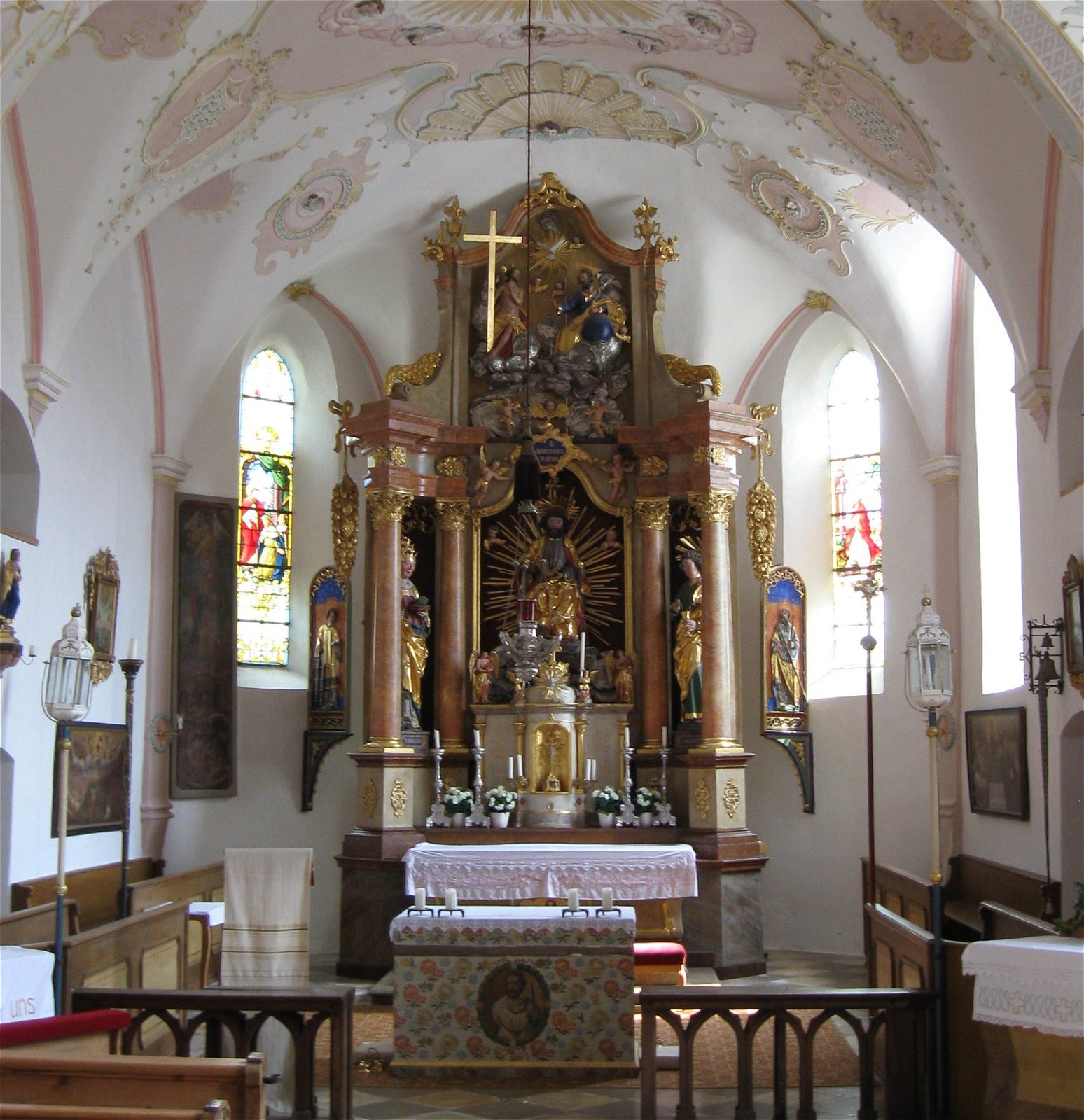
The high altar was made around 1725 and altered in 1776–79. Its decorated structure contains a carved figure of the church’s patron, Saint Bartholomew. Figures of Saint Urban and Saint John the Evangelist, made around 1510, stand to either side. The altar’s upper section depicts the Holy Trinity, the Christian belief in one God as Father, Son, and Holy Spirit. Joseph Götsch made the altar table around 1770 in the Rococo style, a more ornamental development of Baroque art.
Side altars
The two side altars were made around 1725 and stand at an angle against the narrow sides of the recessed choir opening. On the north altar, a cloud-patterned panel forms the background for a large figure of the Immaculate Virgin Mary, reflecting the Catholic belief that Mary was conceived without original sin. She crushes a serpent as a sign of evil. A painting by Jakob Weiß in the altar’s upper section shows Saint George fighting a dragon. A gilded Rococo tabernacle, a container for the Eucharist, made around 1779, stands on the altar table. The south altar has an oil painting of the Seven Holy Refuges, a Catholic devotional theme representing sacred intercessors as sources of protection. Made in 1779 and probably by Simon Zaglacher, it is accompanied by an image of the apostle Andrew in the upper section. A glass shrine on the altar table holds an 18th-century image of Christ scourged, known as the Wiesheiland. It is associated with devotion to the scourged Christ at the Bavarian pilgrimage church of the Wieskirche.
Pulpit and other furnishings
Pulpit
The pulpit was probably designed by Andreas Vordermayr around 1755. Georg Lagler painted the four Evangelists, the Gospel writers, on its balustrade in 1876. A late Gothic relief from the early 16th century shows Saint Bartholomew from the waist up; it is mounted on the sounding board, the canopy above the pulpit.
Choir windows and other works
The church contains numerous works of art from the 16th to 18th centuries, some of them originating from earlier altars. Made around 1900, the choir windows depict biblical scenes in a historicizing style that deliberately draws on earlier artistic forms.
Organ
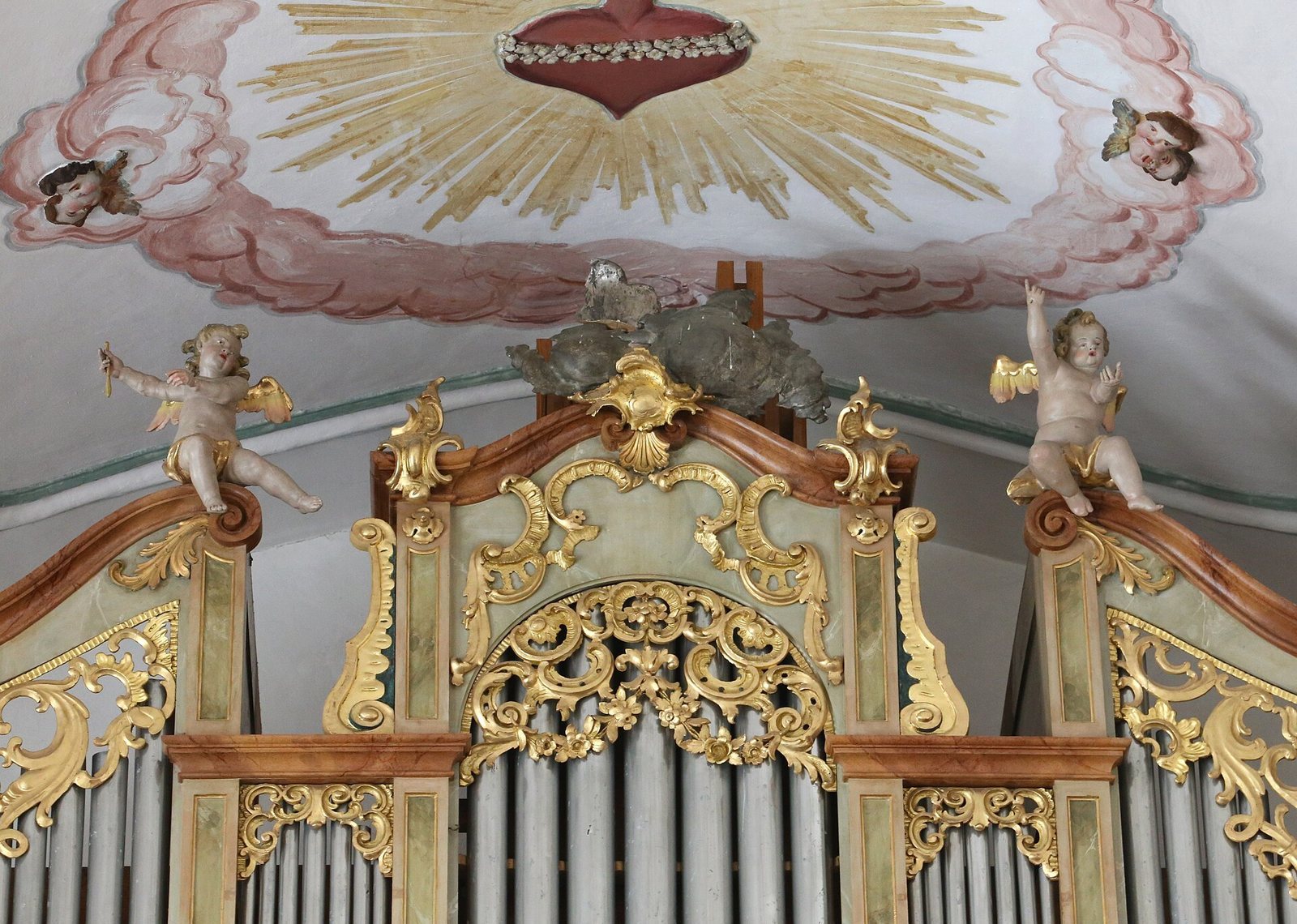
Josef Hackl of Rosenheim built a new organ in 1903. It has seven stops, which select groups of pipes, one manual or keyboard, and a pedalboard. Its pneumatic action uses air pressure to transmit key movements, while cone chests use cone-shaped valves to admit wind to the pipes. An octave coupler links notes at different octave positions, and a second coupler connects the keyboard to the pedalboard.