Mariners’ Chapel of Saint-Vaast-la-Hougue: Surviving Chancel of a Former Parish Church


Site at a Glance
- Rating
- 4.8
- Popularity
- Very Low
- Country
- France
- Primary era
- Medieval
- Eras represented
- Medieval, Modern
- Civilizations
- French, Norman
- Site type
- Religious
- Remains
- Chapel
On this page11 sections
History
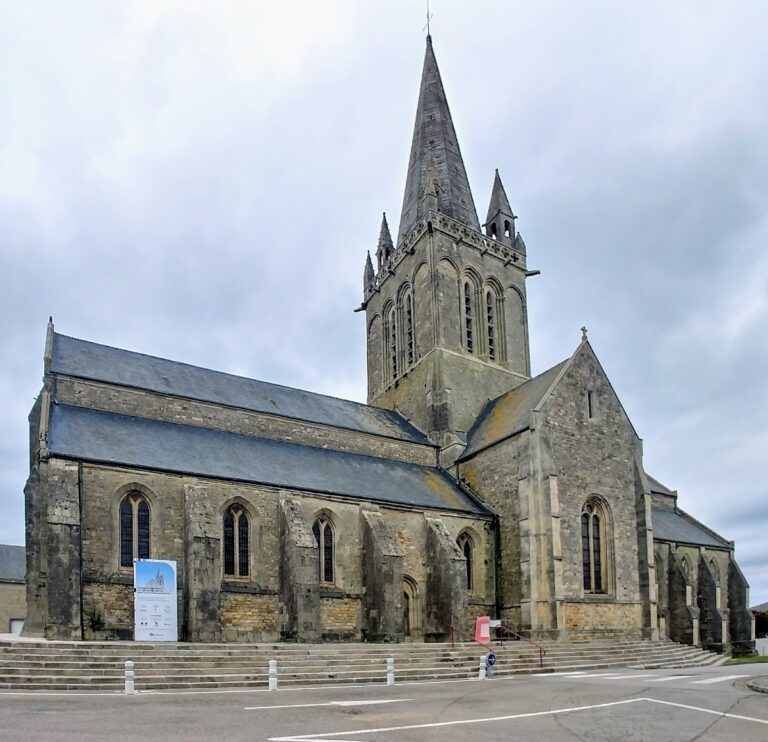
The Mariners’ Chapel of Saint-Vaast-la-Hougue in France is the surviving part of an eleventh-century parish church built in the Romanesque style, a medieval tradition marked by heavy masonry, rounded arches, sturdy supports, and vaulted interiors. Its twelfth-century vaulted chancel, the area around the main altar reserved for the clergy, and its circular apse, the curved end of a church, preserve the earliest phases of the building.
Medieval parish church
The former church developed around its Romanesque chancel and rounded apse. The apse belonged to the eleventh and twelfth centuries, while the chancel received its vaulted form in the twelfth century. The building served as the parish church of Saint-Vaast-la-Hougue for many centuries.
Expansion and enlargement
A square tower with a modest spire was built against the south side of the chancel around 1730. By 1752, the church was too small for the local population, but the king rejected a proposal to enlarge it.
In 1805, the parish priest M. Levéel expanded the church by adding a side nave, a chapel on the north side, and a sacristy. The maritime cemetery around the building was then reconstituted with tombstones from the parish of Rideauville, which had been incorporated into Saint-Vaast-la-Hougue during the French Revolution.
Demolition and continued religious use
The parish church was demolished in 1864. The chancel was also intended for removal when a cannon battery was installed, but it was preserved. From 1864 onward, the surviving building functioned as a chapel rather than as a parish church.
The chapel is dedicated to people lost at sea and continues to serve as a place of Catholic worship and prayer. Only a few almost illegible graves from the former maritime cemetery remain immediately around it. The building was protected as a French historic monument through inscription under an order dated 18 November 1952.
Remains
The chapel stands between the main jetty of the port and the access path to the Hougue peninsula. Its surviving Romanesque fabric consists chiefly of the vaulted chancel and circular apse, while later work enclosed the remains within a wall pierced by a central doorway. The building therefore preserves part of the former church while presenting it through a later outer structure.
Romanesque chancel and apse
Chancel and apse
The low vaulted chancel was supported by Romanesque columns and surrounded by grotesque corbels, projecting stone supports that could carry carved ornament. It ended in a rounded apse older than the nave. Sculpted modillions, small carved brackets often placed beneath a cornice, survive inside the chapel, together with a surviving corbel.
Former nave and west portal
Léopold Delisle, a French historian and archivist known for his work on medieval history and manuscripts, described the former church as having a central nave with side aisles and a small, approximately central bell tower covered with slate. The nave ended in a flat buttress pierced by a small Romanesque window. Its west portal probably dated from the thirteenth century and had capitals, the carved upper parts of columns, supported by six small cylindrical columns, three on each side. A relief cross filled the space within the portal.
The former nave and its side aisles contained five arches resting on cylindrical columns from approximately the same period as the portal. These details survive through Delisle’s description of the demolished part of the church and help define the plan and appearance of the building before 1864.
Later enclosure and interior objects
Entrance wall
The nineteenth-century enclosing wall has a central doorway. Above it are the arms of Jean-Pierre Bravard, bishop of Coutances and Avranches, together with his Cross of the Legion of Honour. The band beneath carries the inscription, “The disciple whom Jesus loved.”
Statue and maritime graffiti
Inside the chapel is a polychrome stone statue of Saint Vaast from the sixteenth century. Saint Vaast was a Christian bishop of the fifth and sixth centuries associated with the early evangelization of northern Gaul. A sixteenth-century graffiti drawing of a carrack also survives. A carrack was a large sailing vessel used during the late medieval and early modern periods, giving the chapel’s interior a direct maritime association.