Montebourg Abbey: A Benedictine Monastery in France
Site at a Glance
- Popularity
- Medium
- Country
- France
- Primary era
- Medieval
- Eras represented
- Medieval
- Civilizations
- Duchy of Normandy, Norman
- Site type
- Religious
- Remains
- Monastery
On this page13 sections
History
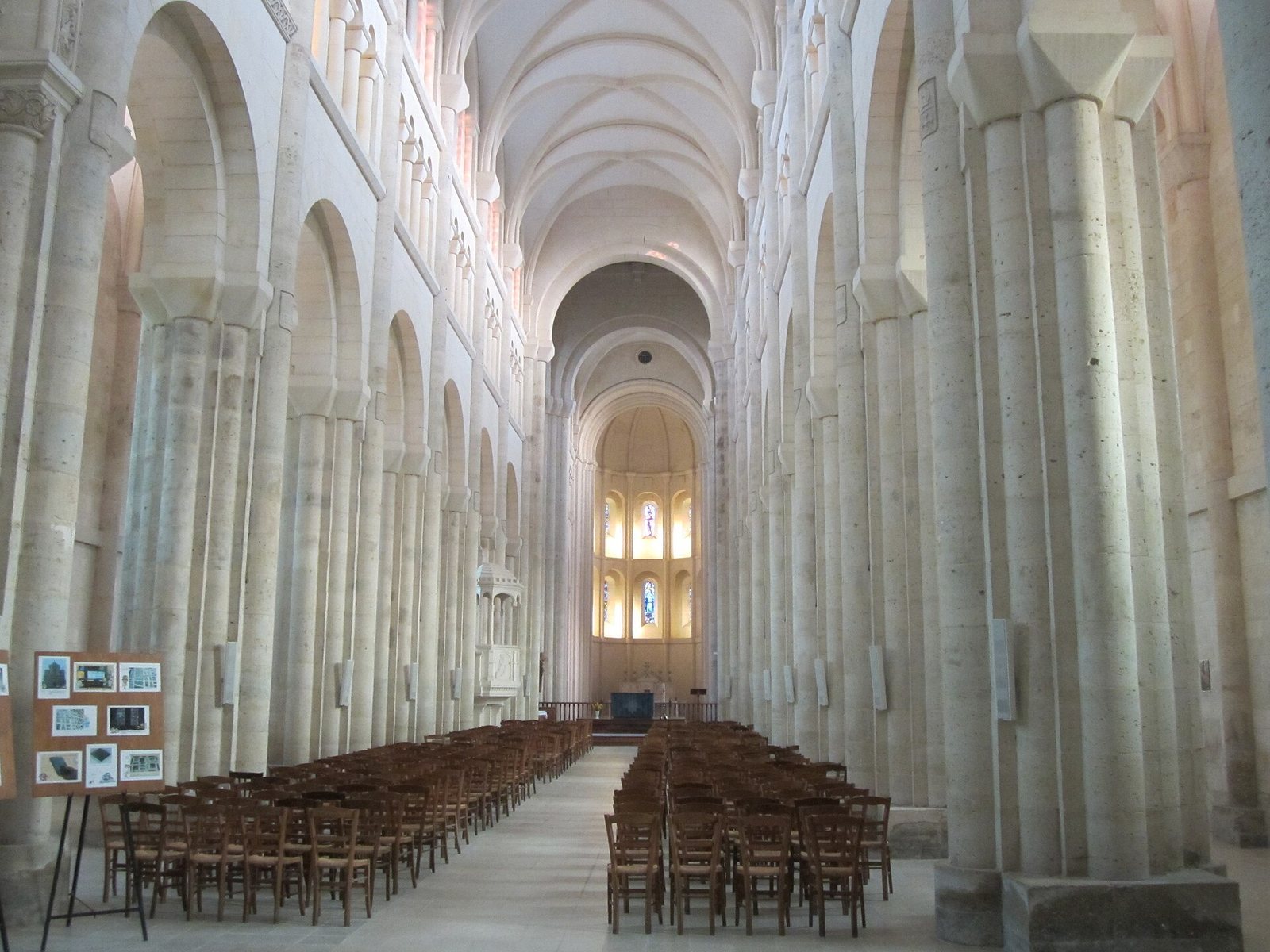
Montebourg Abbey was a Benedictine monastery in Montebourg, France. Benedictines are members of a monastic order that follows the Rule of Saint Benedict. The abbey was probably founded under William the Conqueror after 1066 and before his death in 1087. Its Romanesque church was built between 1100 and 1152, during the period when the monastery was developing as a religious and landholding center in Normandy.
Foundation and Norman endowments
The exact circumstances of the foundation are uncertain. An act from 1042 concerns forest rights granted to Saint-Vigor de Cerisy, but it does not establish that a monastery or parish already existed at Montebourg. No foundation charter survives. A charter attributed at different times to William the Conqueror or his son William Rufus was assembled from confirmations made in the twelfth century.
A later tradition connected the foundation to a hermit named Roger. In this fifteenth-century story, Roger dreamed that a star fell on a hill and that the Virgin Mary told him to build an oratory there. William the Conqueror, the Norman duke who became king of England after 1066, supposedly heard of the miracle while returning through Barfleur and granted Roger land, building supplies, and rights in local forests. The abbots’ list names Roger as the first abbot, but describes him either as a Savoyard hermit or as a monk from La-Croix-Saint-Leufroy.
After William’s death in 1087, his sons disputed control of Normandy and England. Between 1100 and 1107, Henry I granted the abbey’s patronage to Richard de Reviers, lord of Néhou and Vernon, in recognition of his loyalty. Richard and his relatives, including his brother Baudouin, became major benefactors. Henry I, Geoffrey Plantagenet, Stephen of Blois, and Henry II, along with church leaders in the province of Rouen, confirmed donations made by laypeople. Gifts grew through the twelfth century, particularly from the early 1140s to the 1180s. Around 1150, Archbishop Hugues d’Amiens confirmed Abbot Gautier I’s holdings, including a church and chapel at Gatteville.
The monks acquired land and income mainly in Cotentin, but also in Bessin, around Vernon in upper Normandy, and in England. Their English estates included properties in Devon, Dorset, Berkshire, and the Isle of Wight. Payments came in money and goods such as grain, wine, and eggs. The monks also put forward parish priests for appointment by the bishop of Coutances. When Philip Augustus, king of France, took Normandy in 1204, the abbey’s wealth passed into the royal domain.
Dependencies, trade, and pilgrimage
From around the 1150s, donations helped Montebourg establish dependent priories, smaller monastic houses served by monks from the abbey. Richard de Reviers founded the English priory of Loders around 1100–1107; its prior was sometimes also called prior of Axmouth, a church on an important estate in Devon. Other houses included Saint Michael at Vernon, Saint Mary Magdalene at Néville-sur-Mer, and a priory at Néhou that replaced a community of secular clergy established by Richard. Montebourg also maintained Saint John of Montrond in the forest of Néhou and a monk at Saint Magloire on Sark. The priory at Appuldurcombe took shape in the thirteenth century from estates granted over time.
The house at Vernon helped transport wine from the Seine valley to Montebourg, probably by way of Quinéville. The abbey shared a port right there with the lords of Bricquebec, the Bertran family, while the port itself belonged to the Courcy family. Around 1120, fishermen from Saint-Vaast, Lestre, Quinéville, and Saint-Marcouf supplied the abbey with blubber-bearing sea animals caught between the Saire and the Baie des Veys. The monks also received dues from fisheries at the La Perruque mill in Colomby and eel fisheries at Néhou. In March 1268, Henry III of England granted the abbey the right to half of all blubber-bearing sea animals stranded or caught between the boundaries of the bishopric of Coutances and Gatteville church, on Gautier Broc’s land, as well as related dues. An inventory of the abbey’s charters followed in 1312.
Monks collected tolls and other charges at Montebourg’s weekly market and at fairs held on 2 February, 15 August, and Ascension Day. They also collected dues at the fair in Montfarville and half the dues at the Saint-Laurent fair in Tocqueville.
A pilgrimage to Our Lady of the Star grew during the thirteenth century. In 1290, Pope Nicholas IV granted indulgences, remissions of temporal punishment associated with sin in Catholic teaching, for four feasts of the Virgin Mary. Archbishop Eudes Rigaud visited in 1250, when 37 monks lived at the abbey and its annual income was 300 livres, a medieval unit of account. On 27 May 1256 he counted 32 monks, and in 1266 he found 36. The Reviers-Vernon family remained a leading benefactor. William of Vernon granted the monks the right to choose their abbot in 1234; he died in 1277 or 1278.
War and recovery
During the Hundred Years’ War, Cotentin came under the authority of Charles of Navarre. At the request of Philip of Navarre, the Duke of Lancaster landed 2,500 men at Saint-Vaast-la-Hougue on 18 June 1356. They stopped at Montebourg Abbey on 22 June, although whether they looted it is uncertain. The abbey later served as an English military base. French forces retook it in 1375 and placed it under Guillaume de Bordes. In 1378, French authorities ordered Cotentin evacuated to deprive the English forces at Cherbourg of supplies, especially food. It is unclear whether the French continued to hold the fortified site centered on the abbey.
After English forces returned to Normandy in 1417, resistance arose among townspeople and clergy. In 1440, a conspiracy of Cotentin nobles and local leaders included Guillaume Guérin, the abbot of Montebourg. After the war, Guérin undertook extensive rebuilding of the badly damaged monastery. By his death in 1462 it had recovered, and in 1466 it became one of the first abbeys assigned to a commendatory abbot, who received its revenues but did not necessarily live there or lead its monks.
Early modern changes and dissolution
In 1562, Huguenots, French Protestants especially associated with Calvinism, seized Montebourg and looted the abbey. Abbot Bon de Broë founded the town’s first school in 1585 in a building beside rue des Écoles. In 1718, François de Carbonnel de Canisy, formerly bishop of Limoges, established an almshouse and hospice to support poor people and shelter the sick, elderly, and abandoned children of Montebourg.
In 1780, Ange-François de Talaru de Chalmazel, bishop of Coutances, turned the abbey into a retirement home for elderly priests. Only one monk, Dom Claude Jacquetin, remained. Talaru also set up workshops making coutil, a durable twill cloth used for mattress ticking, and lace to provide local employment. The cloth remained well known almost to the twentieth century.
During the French Revolution, a private buyer acquired the abbey as national property and began dismantling its buildings for stone. Charles de Gerville, a Norman antiquarian, saw the final buildings being destroyed in 1818, including the church. Archbishop Hugues d’Amiens had consecrated that church in 1152 in the presence of Henry Plantagenet, the future Henry II of England. In the early fourteenth century, Abbot Pierre IV Ozenne had also rebuilt Montebourg’s parish church of Saint-Jacques.
Reconstruction and continued use
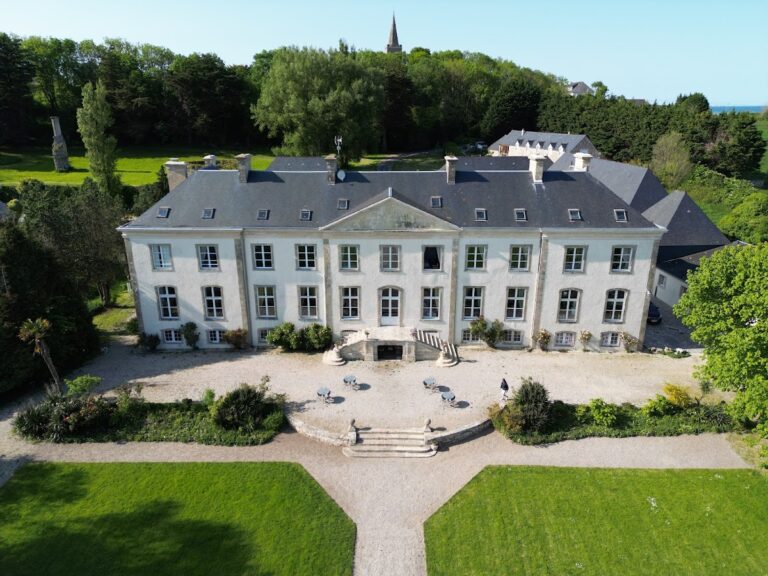
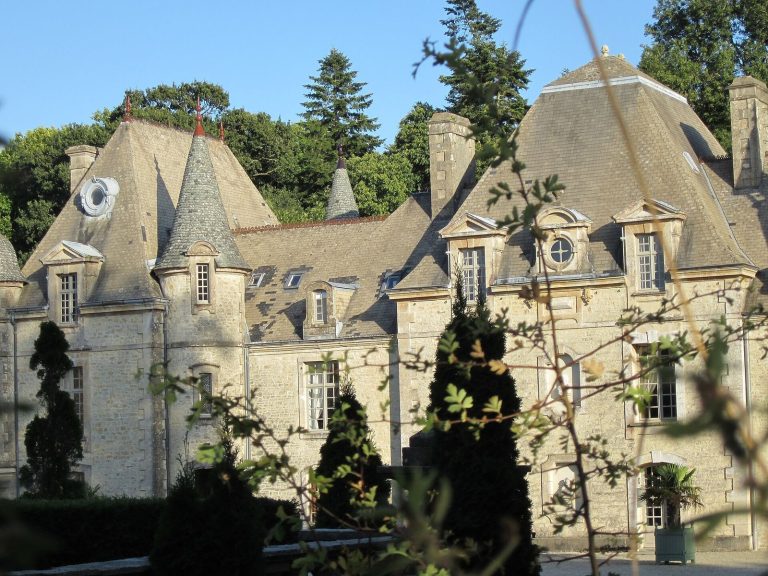
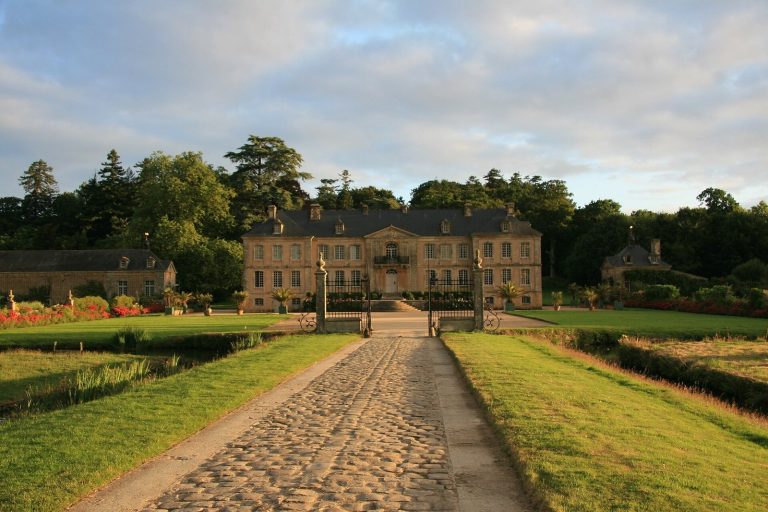
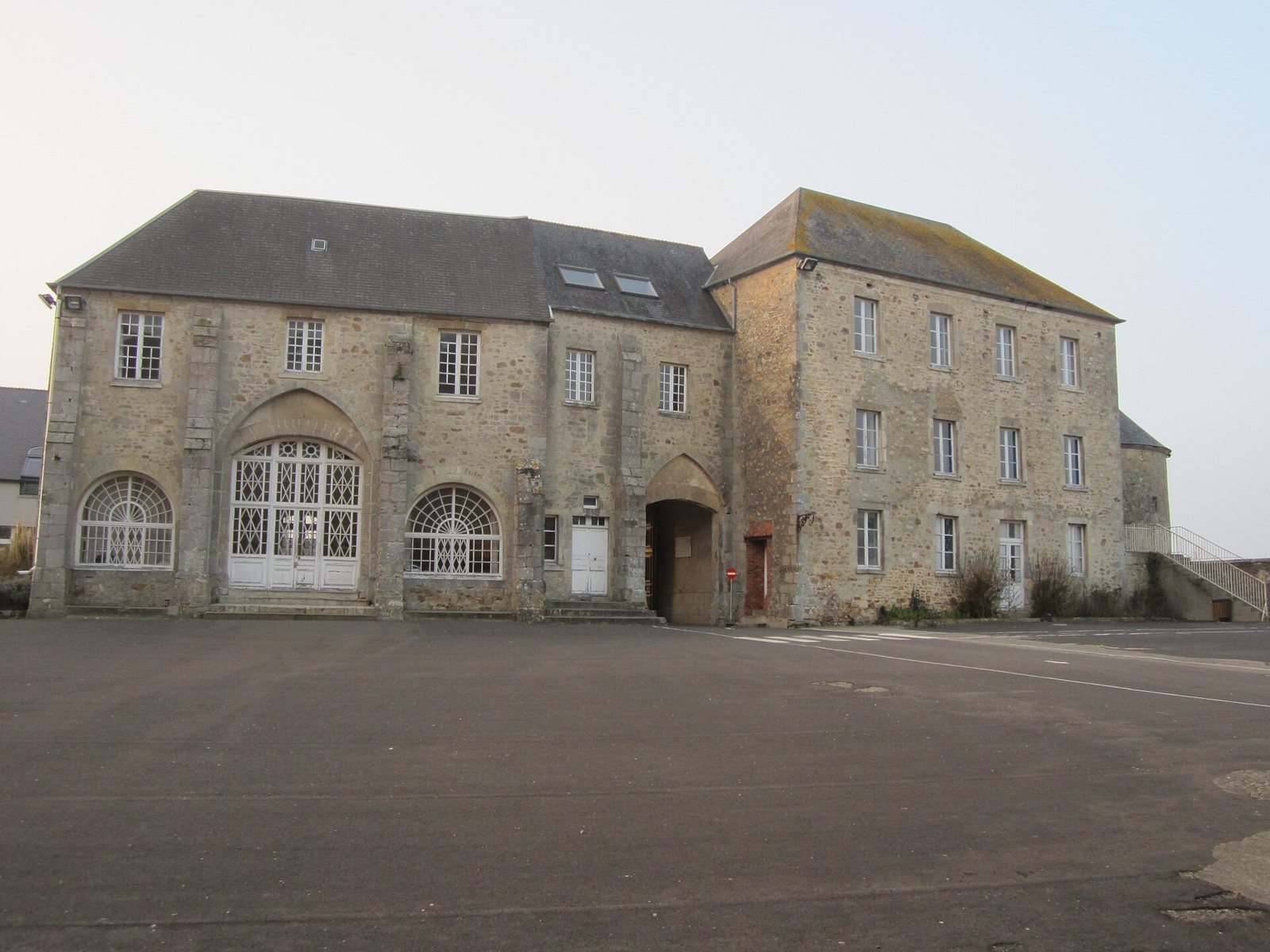
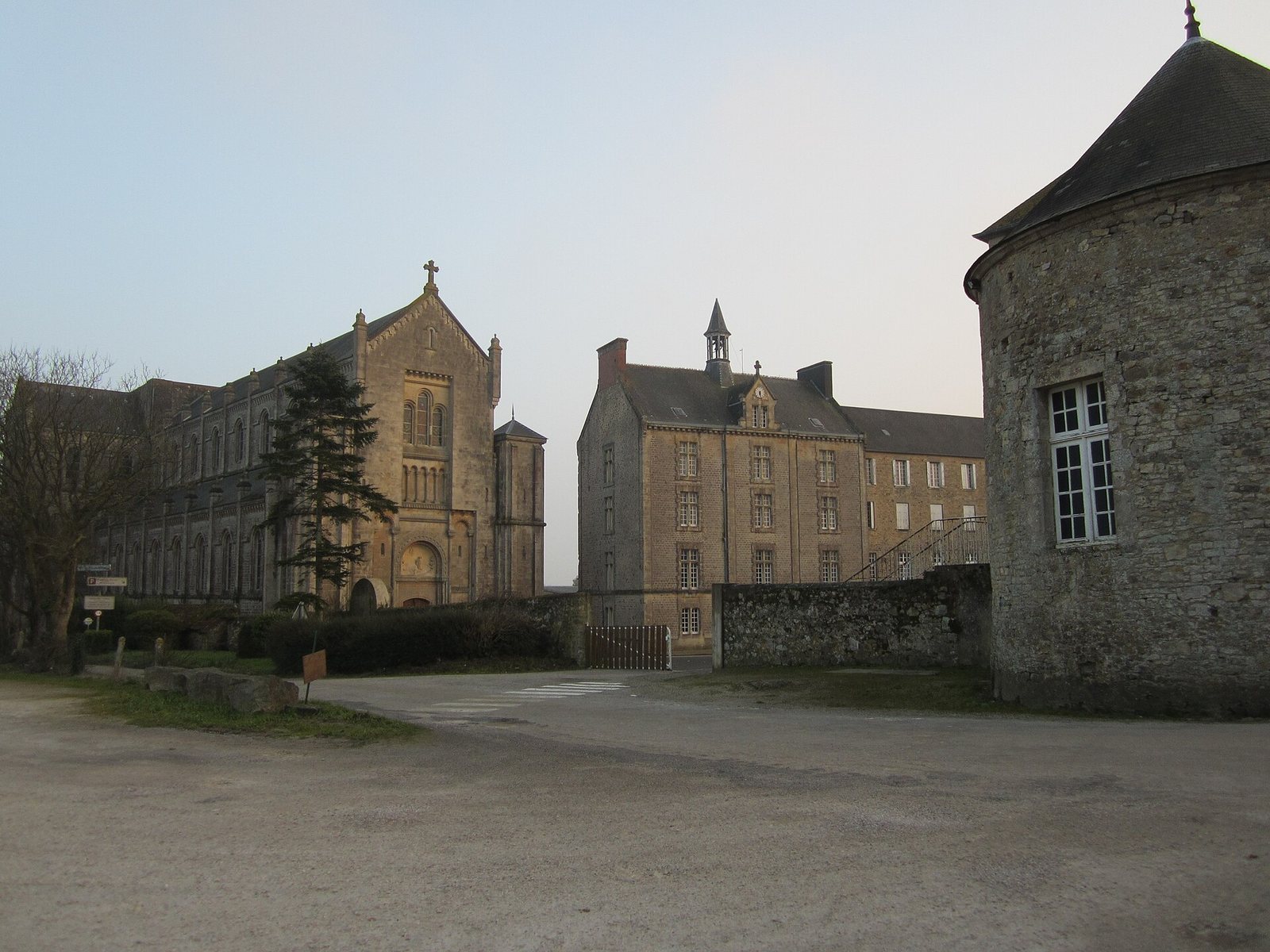
In 1842, Delamare, vicar-general of Coutances, bought the property for the newly formed Brothers of the Christian Schools of Mercy. Bishop Abel-Anastase Germain called on the brothers to rebuild the abbey in 1892. Work began, then stopped when the Combes laws, early twentieth-century French measures restricting religious congregations, forced the brothers to leave France. After their return, rebuilding resumed in the 1920s. It was completed in 1933 and inaugurated in 1936. As the Brothers of Mercy declined in number, they joined the Brothers of the Christian Schools in 1938. The abbey now houses a private lower-secondary school and an agricultural upper-secondary school.
Remains
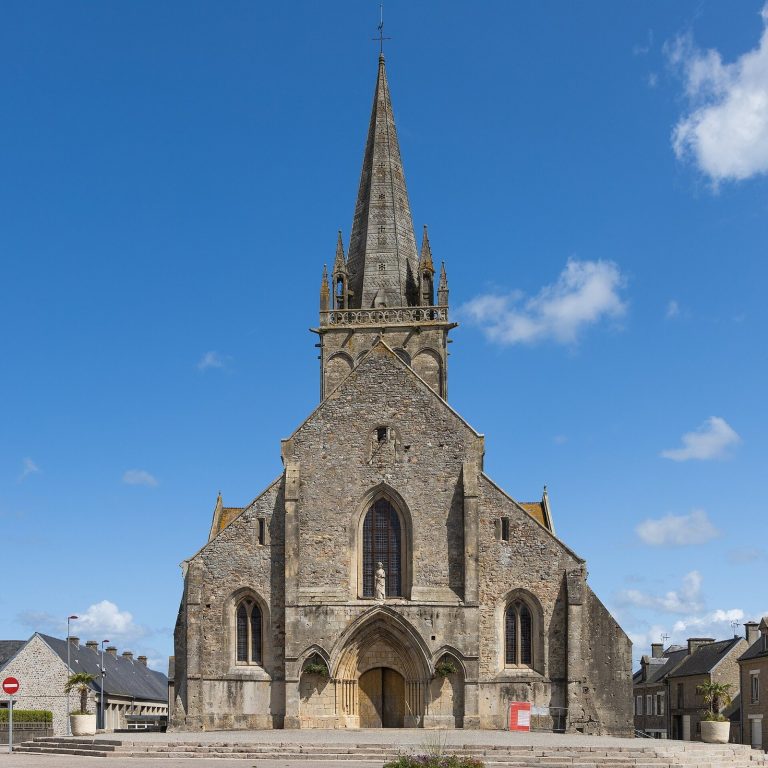
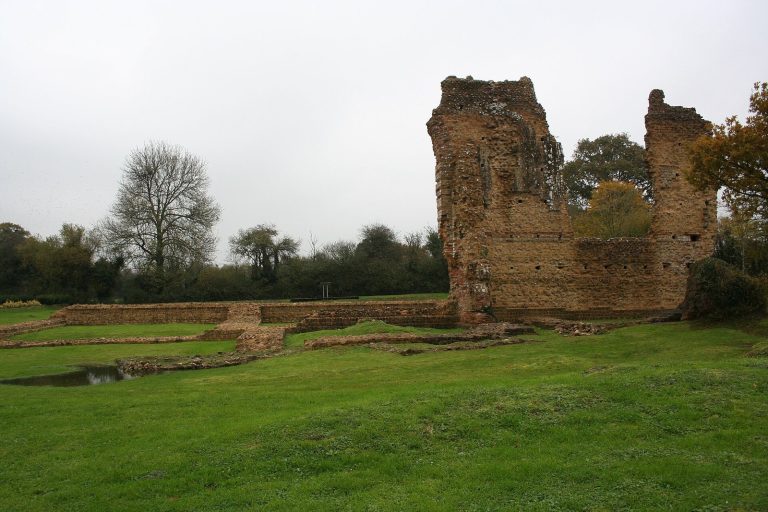
The medieval abbey stood on a hill beside a stream, on ducal land. Its Romanesque church followed a Benedictine plan resembling the church at Bernay. The surviving medieval fabric consists of one wall and several twelfth-century bases for nave pillars. The present abbey also preserves furnishings associated with the monastery and its history.
Church fabric and archaeological remains
The church had a central tower above the crossing, where the transept’s crosswise arms met the nave’s main lengthwise space. The nave rose through three levels, with arcades below, galleries above, and upper windows. The original grant included timber and other building materials from the forests of Montebourg and Brix. Twelfth-century pillar bases and a single wall survive from the medieval complex.
Restoration work after 1944 revealed foundations from an earlier church beneath the parish church of Saint-Jacques, the building that Abbot Pierre IV Ozenne had rebuilt in the early fourteenth century.
Burials and furnishings
Richard de Reviers’s tomb slab
Richard de Reviers was buried in the abbey church with the early abbots, probably in the chapel of Our Lady of the Star, where the monastic community also held its chapter meetings. Charles de Gerville recovered Richard’s Purbeck-marble tomb slab from the ruins in 1817. Measuring 190 by 66 centimetres, it has a double-sloped shape resembling the roof-like lids of early Frankish sarcophagi. Rounded lettering gives the inscription, ‘Richard de Reviers, founder of this monastery.’ A drawing made by a correspondent of François Roger de Gaignières in the seventeenth century shows the tomb. It is among the furnishings that can be viewed at the abbey.
Baptismal font
A twelfth-century baptismal font survives in the parish church.
Saint Giles and his hind
A statue at the abbey depicts Saint Giles with his hind, the animal traditionally associated with the early medieval Christian saint. People invoked Saint Giles against fears.
Heraldic arms
Heraldic shields set into the church’s east end appear to have been reused and are of comparatively modern workmanship. They may have belonged to the abbey’s prior Du Mesnil-Eury, who died in 1704. The abbey’s own coat of arms has a gold field bearing a black anchored cross.