Château de Quinéville: An 18th-Century Residence in Normandy


Site at a Glance
- Rating
- 4.2
- Popularity
- Low
- Country
- France
- Primary era
- Early Modern
- External website
- Open
- Eras represented
- Medieval, Early Modern
- Civilizations
- Duchy of Normandy, French
- Site type
- Domestic
- Remains
- Castle
On this page8 sections
History
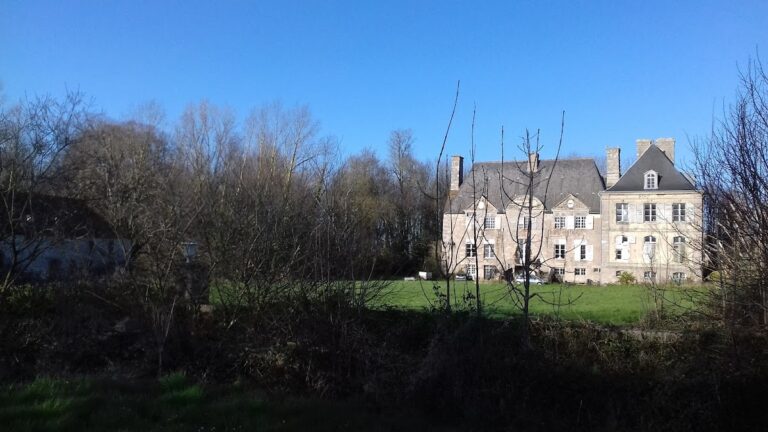
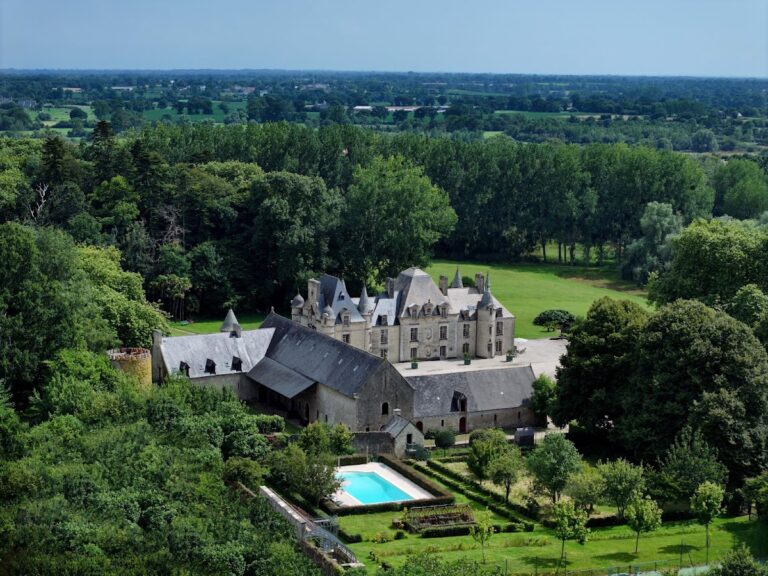
Château de Quinéville is an 18th-century residence in France, in the village of Quinéville in Normandy’s Manche department. Built during the early 18th century on the site of a medieval fortified château, it became the seat of successive noble and wealthy families and later witnessed events connected with the Battle of La Hougue and the Second World War.
The medieval fief and the Montauban family
In the 12th century, the fief of Quinéville belonged to the Montauban family. A fief was a landed possession held in return for service or allegiance. On 1 April 1416, Henry V of England confiscated the property from Robert de Montauban, who supported the king of France, and granted it to Thomas Burgh. The Montauban family recovered the fief in 1450, at the end of the conflict between France and England, and retained it until 1527.
In that year, Catherine de Montauban sold the lordship of Quinéville, together with the lordship of Gonneville, to Jean La Guette. La Guette was a non-noble extraordinary treasurer of the king’s finances, placing the estate in the hands of a royal financial official rather than the family that had held it for much of the medieval period.
The Dancel lordship
From 1565 until the French Revolution, Quinéville belonged to the Dancel family, a wealthy family from the Cherbourg area. In 1567, Gilles Dancel, an esquire and lieutenant general of the bailiff of Cotentin, was assessed for Quinéville as a half-fief of haubert dependent on the viscounty and castellany of Saint-Sauveur-le-Vicomte. A bailiff was a royal or seigneurial official with judicial and administrative authority, while a fief of haubert was a feudal holding associated with military obligations.
The château entered the history of the Battle of La Hougue, a major naval engagement fought off the Cotentin peninsula on 29 May 1692. An Anglo-Dutch fleet defeated the French fleet commanded by Vice-Admiral Anne Hilarion de Tourville. François Dancel, then lord of Quinéville, was present with James II of England, James FitzJames, and Marshal de Bellefonds, and the château housed James II during the battle. James II was the Catholic king of England, Scotland, and Ireland who had been deposed in 1688 and was supported by France. James FitzJames, the Duke of Berwick, was his son and later became a French military commander.
Revolutionary upheaval and rebuilding
During the French Revolution, Georges-Antoine Dancel was imprisoned at the Conciergerie in Paris, while his wife, Madeleine Louise Pulchérie du Moncel, was detained at the Hôtel de Beaumont. Their confinement followed the inclusion of their son, Charles Antoine Dancel, an officer in the French Guards, on the émigré list. He joined the Army of Condé and died in Brussels one year after leaving France.
The château was subsequently sacked, including its dovecote, a building for housing pigeons. The dovecote contained 2,000 nesting boxes, the compartments used by the birds. During the same period, Charles Antoine’s niece, Madeleine Dancel de Breuilly, took refuge at the property after the Augustinian convent of Bayeux, where she had begun her novitiate, was dissolved. The estate had been placed in the care of a gardener. On 8 May 1795, she married Armand Fafin, the village’s new constitutional priest, at the town hall of Valognes.
Later ownership and wartime occupation
In 1815, Georges-Antoine Dancel’s heirs sold the château to Count Louis de Mesnildot, who served as mayor of Valognes from 1816 to 1821 and lived at Quinéville for many decades. The property passed through several inheritances before reaching Madame Lenoir-Lemaire in 1976. With the assistance of the association Les Amis du Château de Quinéville, she undertook its restoration.
During the Second World War, the château was occupied by the Wehrmacht, the unified armed forces of Nazi Germany. In 1942, it received Field Marshal Erwin Rommel during his inspection tour of the defenses along the eastern Cotentin coast. Rommel was a German field marshal known for his commands during the war.
Remains
The surviving château occupies the site of the medieval fortified residence, whose 11th- and 12th-century fabric remains only in the form of vaults. That earlier château was probably destroyed around the time of the Battle of La Hougue and was rebuilt on the same site at the beginning of the 18th century. The later residence is organized around a main building facing the principal courtyard, with two flanking pavilions.
Main residential building
The central section of the main building projects slightly from the façade. It has two fluted pilasters with Ionic columns and capitals, and a carved triangular pediment above. On the first floor, a large French window opens onto a balcony with a Louis XV-style wrought-iron balustrade. The ground-floor windows of the flanking pavilions have arched lintels, while those on the upper floor have straight lintels.
The pediment carries two oval shields accompanied by antique military attributes. One displays the arms of Louis du Mesnildot, described as blue with a silver chevron and three gold crosses arranged two above one. The other represents Marie-Olympe de Monti (1814–1892), with a gold diagonal band and two gold mounts made up of six rounded hillocks, known in heraldry as coupeaux. The rear façade faces a formal French park and is reached by a double-flight staircase.
Park structures
The park contains a large enigmatic chimney and an icehouse that may date from the 14th century. An icehouse preserved ice and kept food cool before mechanical refrigeration. At Quinéville, the structure consisted of a cone sunk into the ground beneath a conical roof. Its entrance lies on the north side, and snow or ice placed inside melted slowly. Channels carried the resulting water away through a drainage system.
Nearby sites