Artillery Fort of Champex: A Swiss Alpine Blocking Fort


Site at a Glance
- Rating
- 4.4
- Popularity
- Low
- Country
- Switzerland
- Primary era
- Modern
- External website
- Open
- Eras represented
- Modern
- Civilizations
- Swiss
- Site type
- Military
- Remains
- Fort
On this page8 sections
History
The Artillery Fort of Champex is a Swiss military fortification at Champex-Lac, in the canton of Valais. Built between 1940 and 1943, it formed part of the Saint-Maurice fortress area, a defensive system guarding Alpine approaches, and served as the main artillery position protecting the Great St Bernard Pass and the road into Val Ferret.
Construction and wartime role
Known by the military designation A 46, the fort was the linchpin of the fortifications around the Great St Bernard. Its artillery was intended to block movement through the pass and support infantry operating along the Great St Bernard axis. The position also helped defend the approach from the Champex area toward the Orsières basin.
The fort operated within a regional command structure that coordinated artillery fire from Champex, Commeire, Follatères, and Dailly. Its garrison, Fortress Company I/22, worked with Fortress Company II/22 at the Commeire artillery fort. Together, the two companies formed Fortress Battalion 22 within Fortress Regiment 19. Commeire was later equipped with 12 cm 1959 fortress mortars, known as “Napoleon.”
The surrounding defensive network
The Champex blocking position was part of Sector South of Fortress Brigade 10. This sector contained 57 infantry bunkers, including 49 in Val d’Entremont. Downstream from the artillery fort, infantry positions at Château Roc, Manoday, and Biolley carried fortress machine guns and 8.1 cm fortress mortars. The Champex group included Châteauroc Ouest, Châteauroc Bas, Châteauroc Centre, Châteauroc Est, the Manoday Sud observer position, and the Manoday inférieur and Manoday supérieur mortar positions.
The wider network extended through Val Ferret, Orsières, and the Forclaz to Le Châtelard. Positions at La Léchère, Le Clou, L’a Neuva, Prayon Est, and Prayon Ouest protected Val Ferret, while several positions around Bioley and Orsières covered the approaches farther downstream. The Forclaz–Le Châtelard blocking position included installations at the Col de la Forclaz, La Madeleine, Le Châtelard, Finhaut, and the Fort Litroz. La Madeleine was destroyed in 2008.
Cold War modernization and declassification
During the Cold War, the period of strategic tension between the Soviet-led and Western blocs after the Second World War, the fort was repeatedly modernized. Its systems were adapted for operation in a possible nuclear war, reflecting the continued military value assigned to Switzerland’s Alpine fortifications after 1945.
The Artillery Fort of Champex was released from military secrecy in 1999. This change marked the end of its classified military status and allowed its history and construction to be interpreted as part of the Saint-Maurice fortress system.
Remains
Rock-cut installation and setting
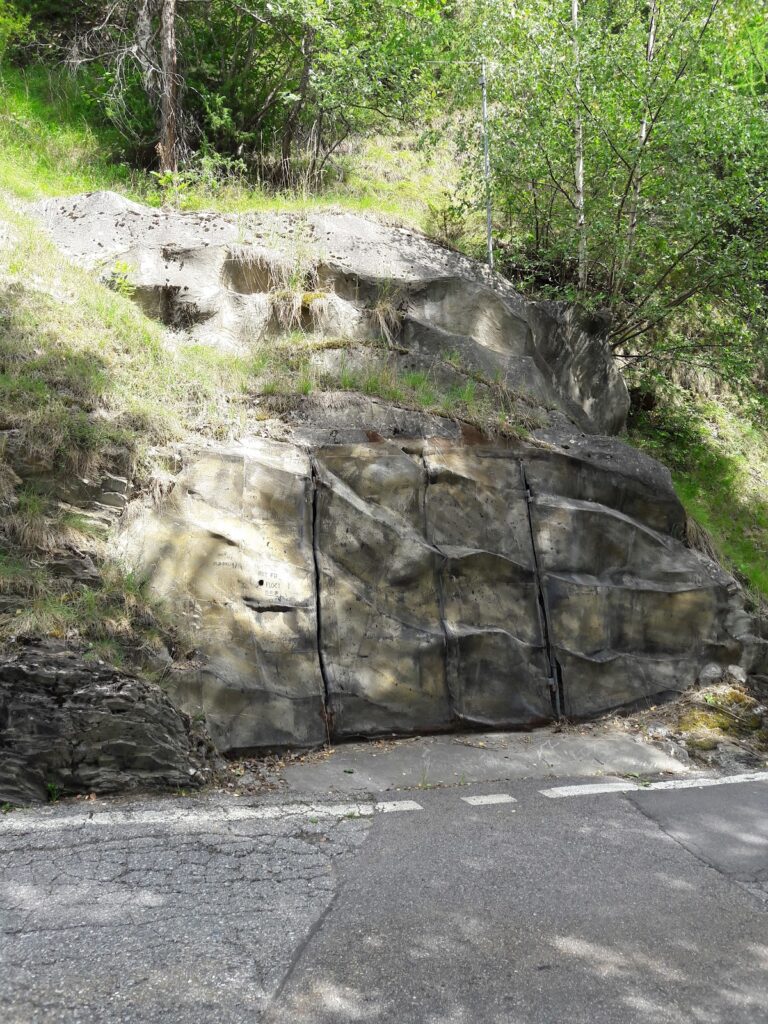
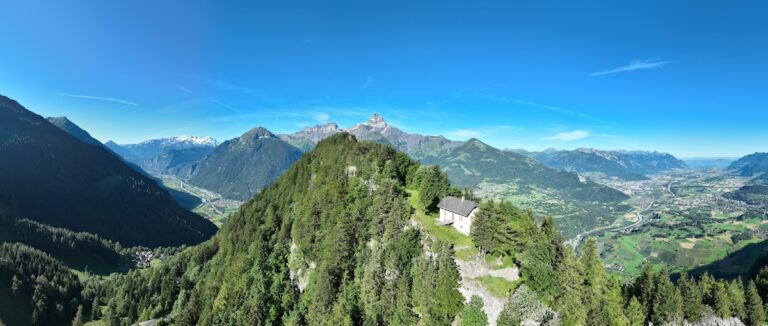
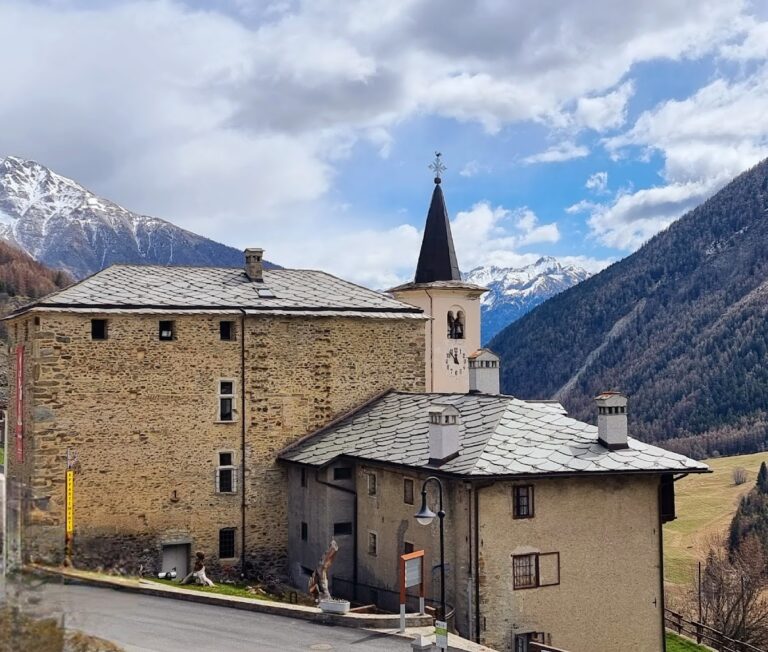
The fort stands at the southern entrance to Champex-Lac, at about 1,450 metres above sea level, beneath the southern ridge of Le Catogne, whose elevation is given as 2,598 metres. Built entirely into the rock, it overlooks the Orsières basin approximately 500 metres below. The installation consists of a rock fort with four casemates, protected chambers from which weapons could be operated, and about 600 metres of tunnels.
Artillery and command facilities
Its armament comprised two 10.5 cm guns and two 7.5 cm guns, with protection from six anti-aircraft guns. The underground complex contained gun positions for two batteries, two ammunition magazines, two observation posts, and two surveying posts. A fire-control centre observed targets, calculated firing data, and directed the artillery batteries. A command post and fire-control centre for the group or battalion coordinated artillery fire across the Saint Bernard region.
Self-contained internal infrastructure
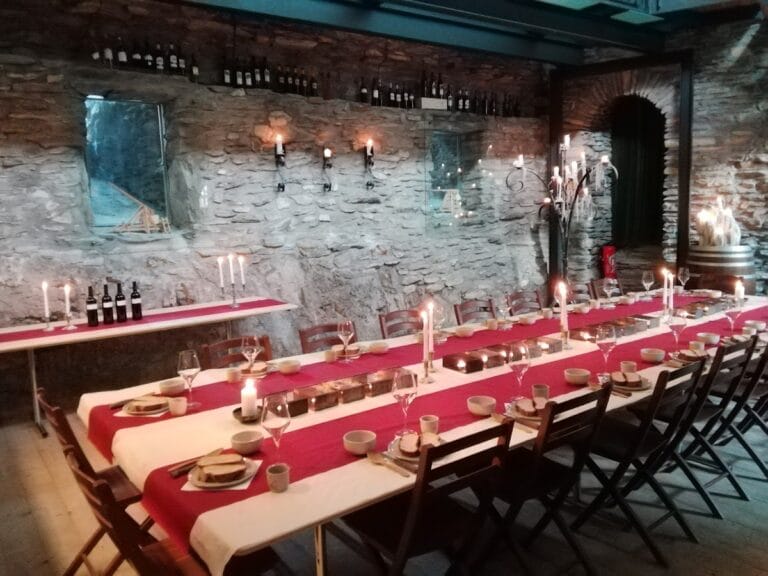
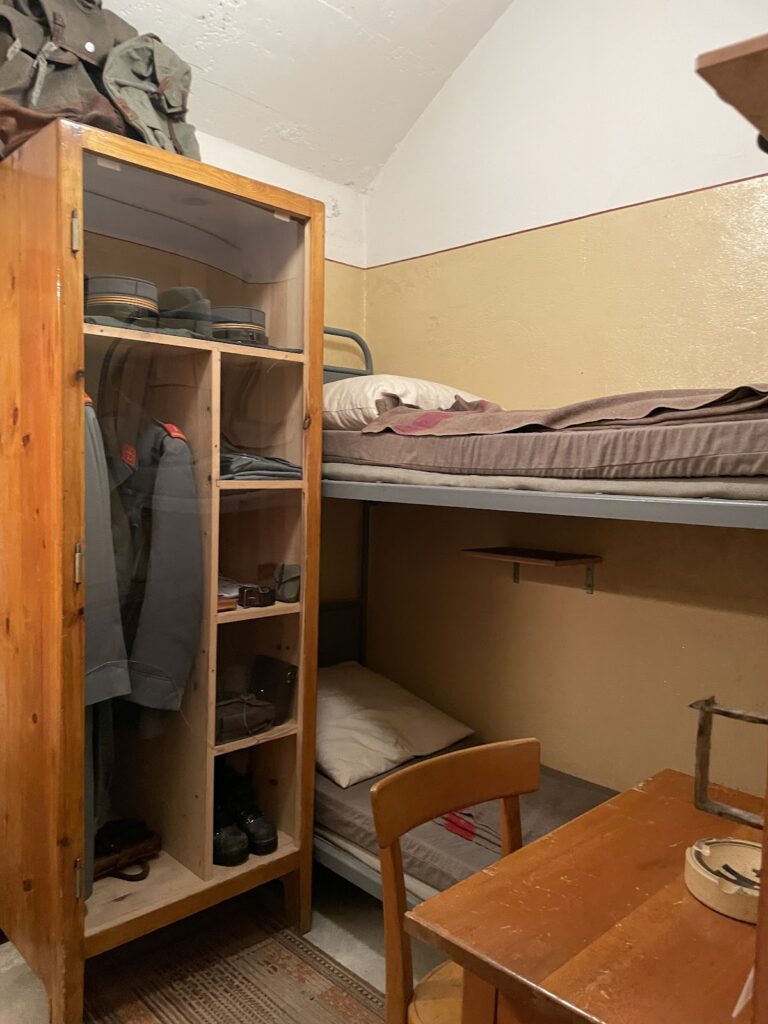
The fort was designed to operate autonomously during an emergency. It could accommodate a garrison of 300 personnel, with a kitchen, dining hall, officers’ mess, three soldiers’ sleeping rooms, and separate quarters for non-commissioned officers and officers. Two machinery rooms held filtration equipment, engines, and electrical generators. A water reservoir was supplied by an underground spring, while a telephone exchange supported communications within the installation and its associated positions.
Nearby sites