Ostrý Castle: A Gothic Ruin on a Basalt Ridge in Czechia

Site at a Glance
- Rating
- 4.5
- Popularity
- Low
- Country
- Czechia
- Primary era
- Medieval
- Eras represented
- Medieval
- Civilizations
- Holy Roman Empire, Kingdom of Bohemia
- Site type
- Military
- Remains
- Castle
On this page6 sections
History
Ostrý Castle is a Gothic castle ruin in Czechia, built by the Markvartitzers on royal estates during the thirteenth century. The Markvartitzers were a major Bohemian noble family whose members held estates and administrative offices in northern Bohemia. It is uncertain whether they owned Ostrý or administered it for the crown.
Origins and royal possession
The castle was originally called Šarfenštejn, a name derived from the German Scharfenstein. It first appears indirectly in 1268 through the designation “Marquardus de Sarfnstain.” During the reign of King Přemysl Otakar II, a powerful thirteenth-century ruler of Bohemia, the castle formed part of the royal estates.
In 1283, the young King Wenceslas II transferred Ostrý to Jan of Michalovice. Jan, a Bohemian nobleman, became known for his success in tournaments during a journey to Paris around 1295. His descendants retained the castle until 1406.
Late medieval conflict and abandonment
Hynek Berka of Dubá acquired Ostrý in 1406. The castle later passed to the Wartenbergs, another Bohemian noble family, and was repeatedly pledged. Conflict between the Wartenbergs and the Upper Lusatian Six-City League, an alliance of six towns with military and political influence in the region, brought the castle to a violent end. Upper Lusatian forces captured and burned it in 1445 after a four-day siege.
Ostrý was abandoned by 1515 or shortly afterward and gradually became a ruin. Its original Sorbian population was later supplemented by colonists from Saxony. The castle has been protected as a Czech cultural monument since 1966.
Remains
Ridge setting and approach
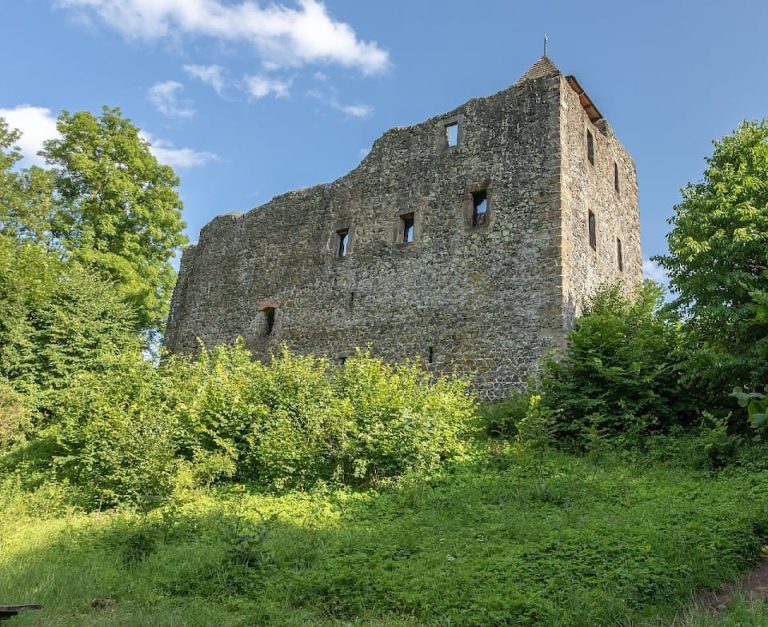
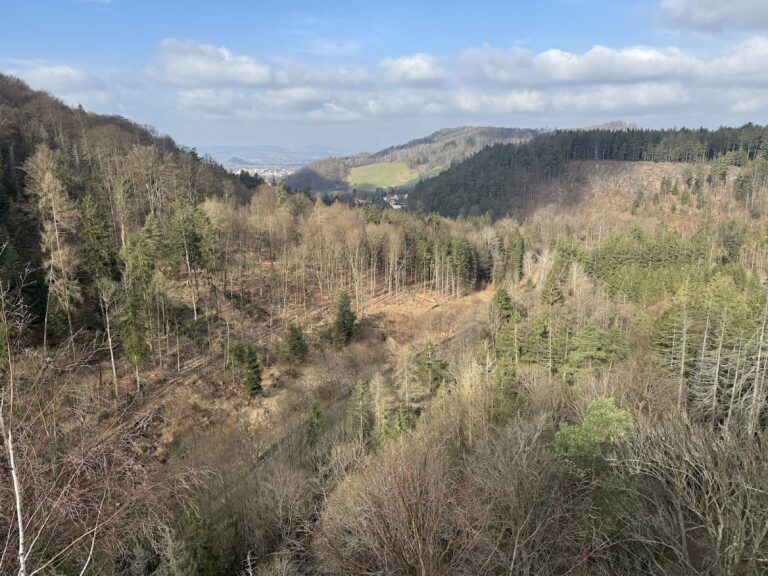
Ostrý stands on a narrow basalt ridge about 250 metres above sea level, above the Ploučnice valley in the eastern Bohemian Central Uplands. The Ploučnice River surrounds the ridge on three sides. An approach to the castle core ran along the western side, where a strong wall near the entrance blocked the route. That wall was later strengthened with a buttress, while another substantial wall protected the approach from the west.
Castle core and defensive tower
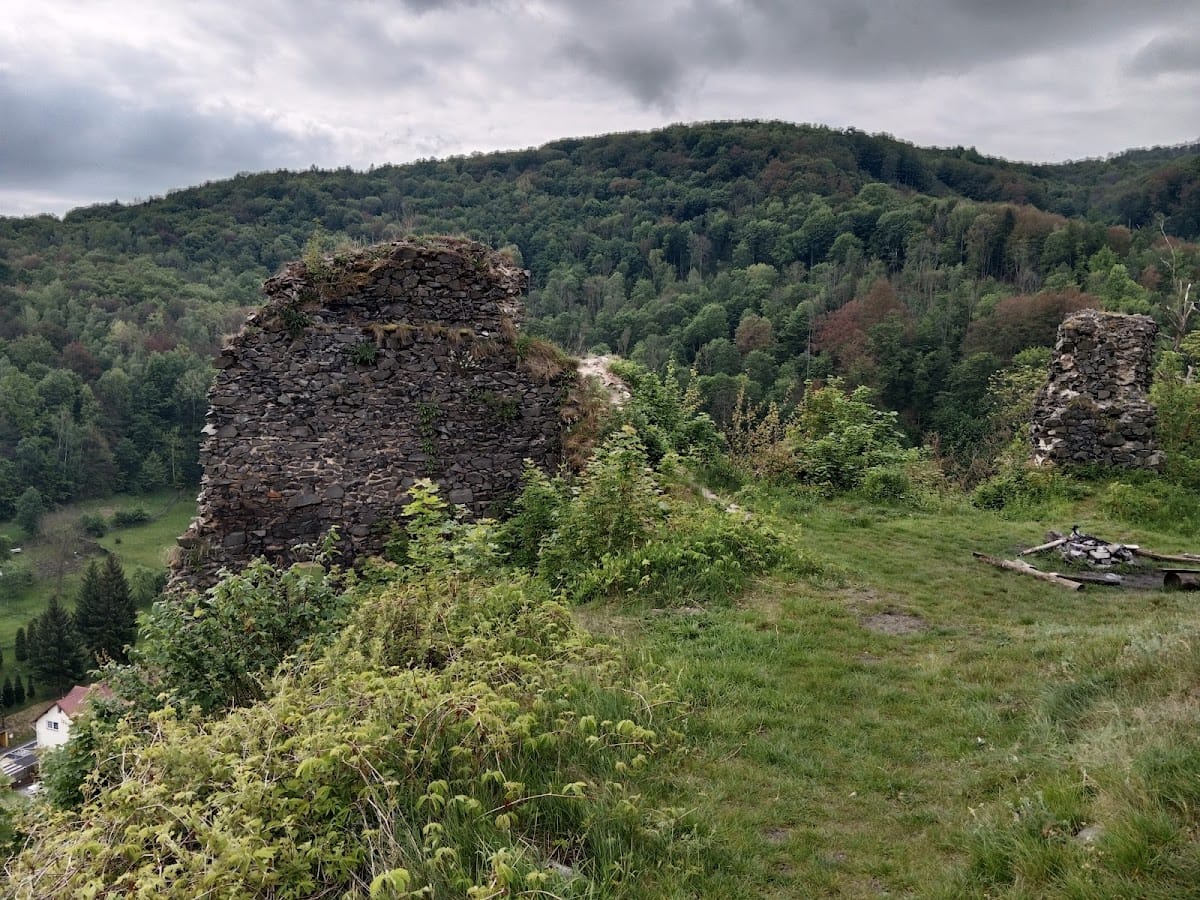
The castle core followed a pentagonal ground plan. A bergfried, the principal defensive tower of a Central European medieval castle, was added at the front of the core. Its surviving remains rise above the valley and form the most prominent part of the medieval structure. Portions of the outer walls and remnants of the tower make up the remaining medieval fabric of the ruin.