Dufour Fortifications: A Nineteenth-Century Defensive System in Switzerland


Site at a Glance
- Rating
- 3
- Popularity
- Very Low
- Country
- Switzerland
- Primary era
- Modern
- Eras represented
- Modern
- Civilizations
- Swiss
- Site type
- Military
- Remains
- Fort
On this page17 sections
History
Creation and strategic purpose
The Dufour fortifications are a group of defensive works in Switzerland, extending across Bex in the canton of Vaud and Saint-Maurice and Vérossaz in the canton of Valais. Their creation at Saint-Maurice began in 1831 under the direction of Guillaume Henri Dufour, a Swiss military engineer who later became a general. The system took his name.
The project emerged amid fears that the political situation in Europe could produce a general war. Its purpose was both practical and demonstrative. The fortifications protected the bridge that was then the first crossing of the Rhône above Lake Geneva, while also showing travelers on the Milan to Paris route through Saint-Maurice that Switzerland intended to defend its territory.
Expansion and later history
The defensive system was reinforced and completed in successive phases in 1848, 1859, and 1892. These works added artillery positions, walls, ditches, and other improvements to the positions established in 1831.
The fortifications were gradually abandoned during the twentieth century, and most of the system was later restored. The Rhône Battery was destroyed in 1959 when the defile was widened. The Arzillier Battery is classified as a Swiss cultural property of national importance.
Remains
Vaud-side positions
The works on the right bank of the Rhône occupied positions above and beside the routes approaching the crossing. They combined artillery batteries with infantry defenses, including the principal work facing the Chiètres plateau.
Rhône Battery
Built in 1831 and reinforced in 1848, the Rhône Battery held six artillery pieces, meaning six individual guns. Three fired toward Bex and three fired across the Rhône toward the road to Monthey. A crenellated wall, with regularly spaced raised sections and openings for defenders, flanked the battery. The work was destroyed in 1959 during the widening of the defile.
Petite Tenaille
The Petite Tenaille was built in 1831 with two artillery pieces and enlarged in 1859 by eight additional guns. Situated above the Rhône Battery, it controlled the road to Bex.
Grande Tenaille
The Grande Tenaille was established in 1831 and strengthened in 1859 with a wall and a ditch. It was the system’s principal infantry work. Its irregular defensive form was a hexagonal bastion, a projecting fortification designed to provide defensive fire, intended to block an attack from the Chiètres plateau.
Crête Redoubt
The Crête Redoubt was established in 1831 as a second infantry redoubt, or small fortified defensive work. It controlled the Chiètres plateau.
Arzillier and Capucins Batteries
The Arzillier Battery was built in 1831 as a one-gun position covering the road between Saint-Maurice village and the bridge. The Capucins Battery, also dating from 1831, reinforced it.
Valais-side positions
On the left bank of the Rhône, the works were placed around Saint-Maurice Castle, the Saint-Martin hill, and the terrace occupied by the Wielandy Battery. Together they covered approaches to the bridge and the road axis toward Monthey.
Wielandy Battery
The Wielandy Battery was built in 1831 with three artillery pieces. It covered the area extending from Lavey to the bridge.
Saint-Maurice Castle Batteries
Two batteries at Saint-Maurice Castle were built in 1831. Each contained three artillery pieces, and together they blocked the road axis toward Monthey.
Saint-Martin and Clocher Batteries
The Saint-Martin Battery was built in 1848 on Saint-Martin hill and contained two artillery pieces. The Clocher Battery was also built in 1848, with three guns, and occupied the same terrace as the Wielandy Battery.
Bridge and high-ground defenses
Additional works protected the crossing from elevated positions and provided infantry defenses on the surrounding heights. Their locations allowed the system to cover the bridgeheads, the fortified areas protecting the ends of the bridge, as well as the plateau approaches.
Dufour Tower
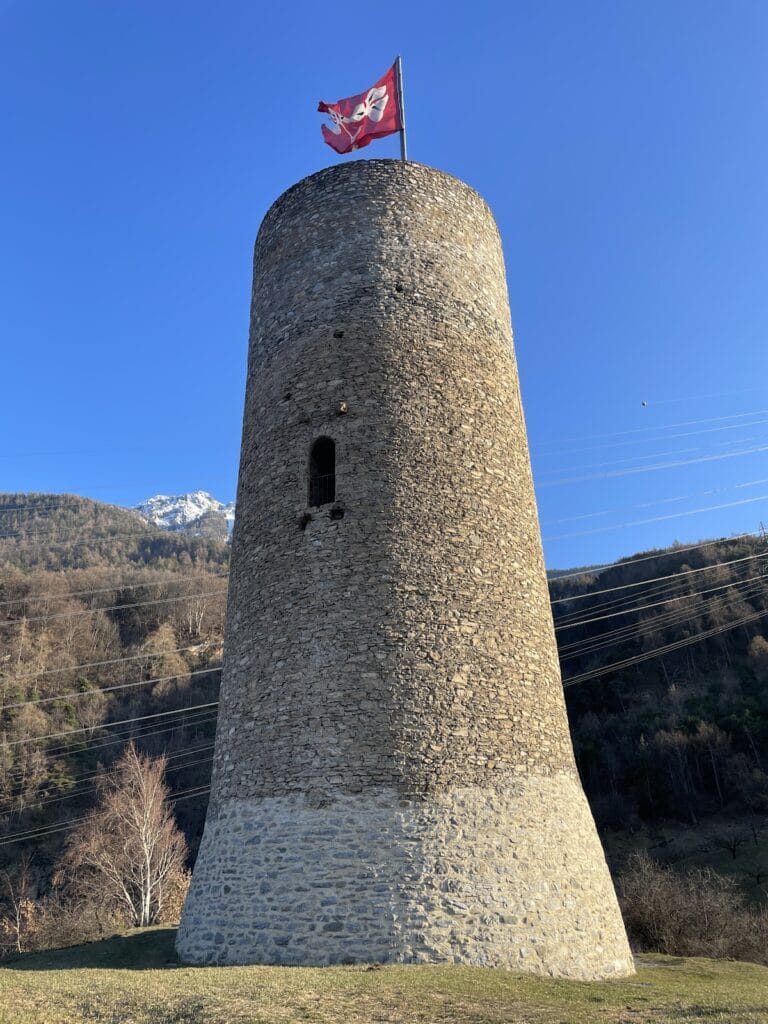
The crenellated Dufour Tower was established in 1831 and extended in 1848. Located above the castle, it covered and flanked both bridgeheads.
Vérossaz Redoubt
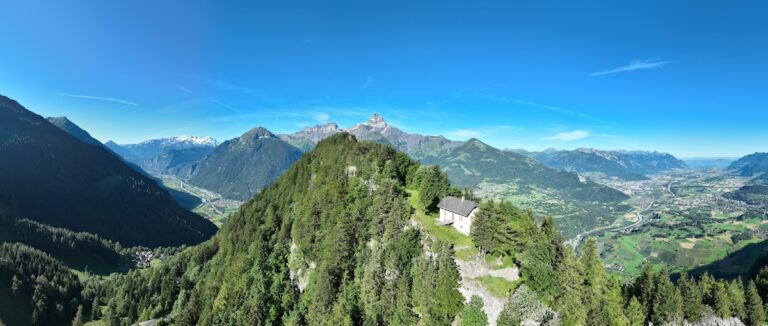
The Vérossaz Redoubt was built in 1831 as an infantry work shaped as an irregular hexagon.
Nearby sites