Kuznechiki Hillfort: An Early Iron Age and Old Russian Settlement
Site at a Glance
- Popularity
- Low
- Country
- Russia
- Primary era
- Iron Age
- Eras represented
- Iron Age
- Civilizations
- Unclassified
- Site type
- Military
- Remains
- Fortified Town
On this page18 sections
History
Early Iron Age and Dyakovo occupation
Kuznechiki Hillfort is an archaeological settlement in Russia, about 1 km northeast of Borodino. It is described as the oldest archaeological monument in Podolsk Urban Okrug. Its earliest occupation belongs to the early Iron Age, followed by deposits associated with the Dyakovo culture, an Iron Age tradition of the region around Moscow and the upper Volga.
The hillfort was also known as Borodinskoye and Gorodok. Evidence from the site reflects successive periods of settlement, with an Old Russian settlement later established on the location of the Dyakovo-culture settlement. Old Russian refers to the medieval East Slavic world of Rus’.
Old Russian occupation and archaeological study
The first recorded mention of Kuznechiki appears in M. A. Sablin’s 1879 list of burial mounds. Archaeologists A. F. Dubynin and K. A. Smirnov led excavations at the site from 1963 to 1965. The hillfort is recorded as fully investigated.
Remains
Platform and deposits
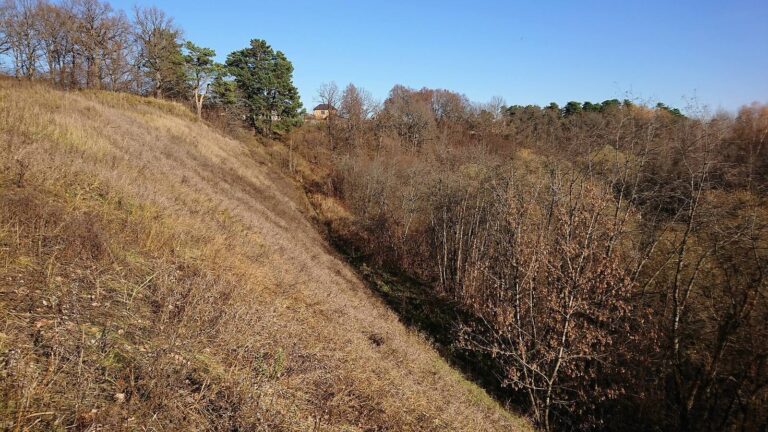
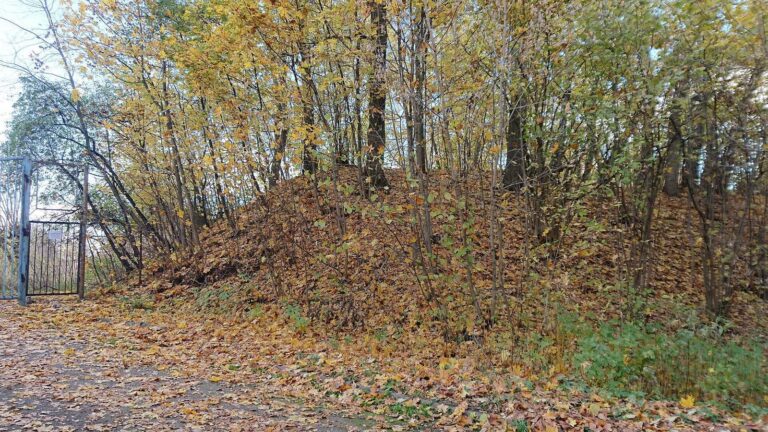
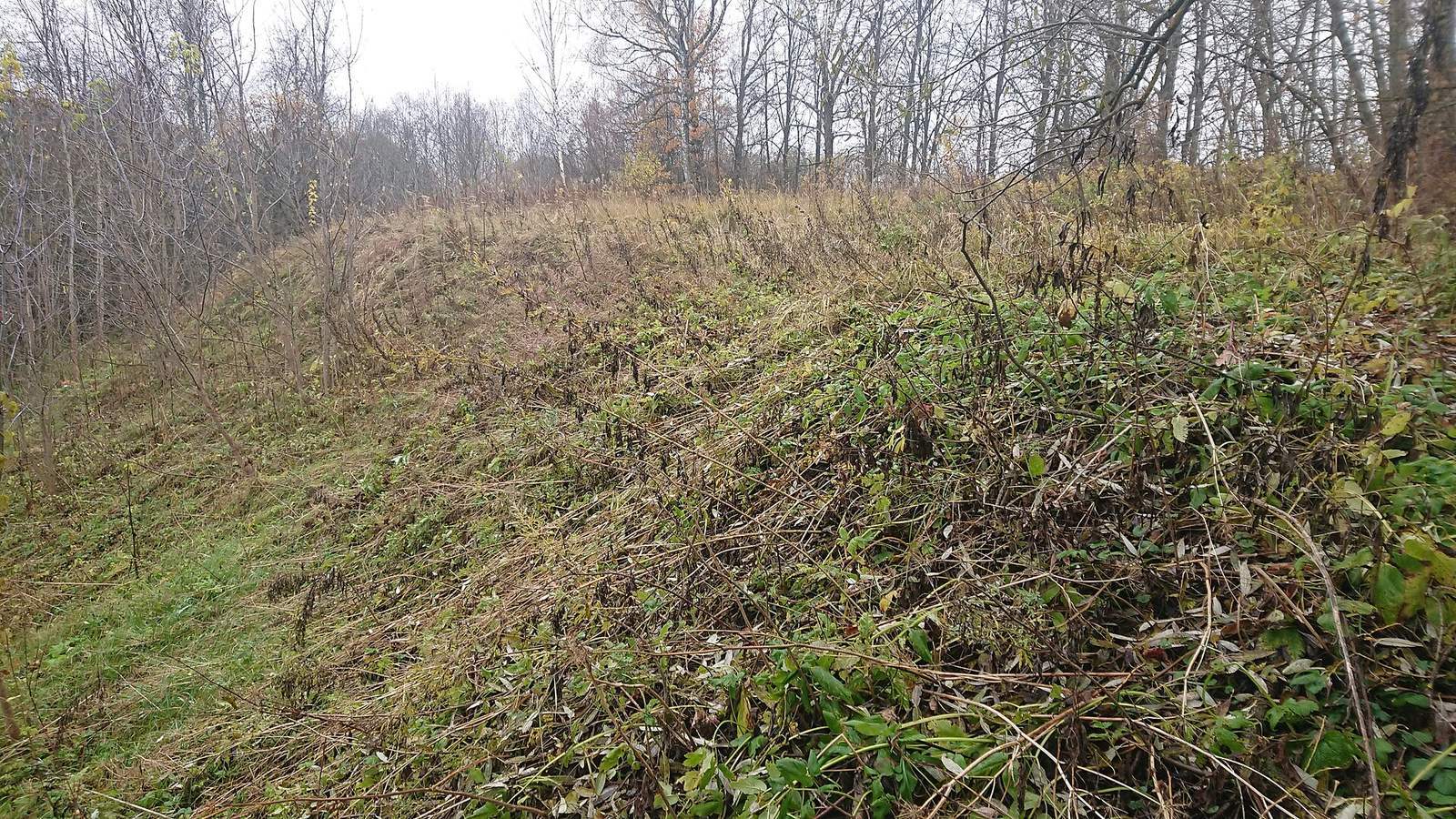
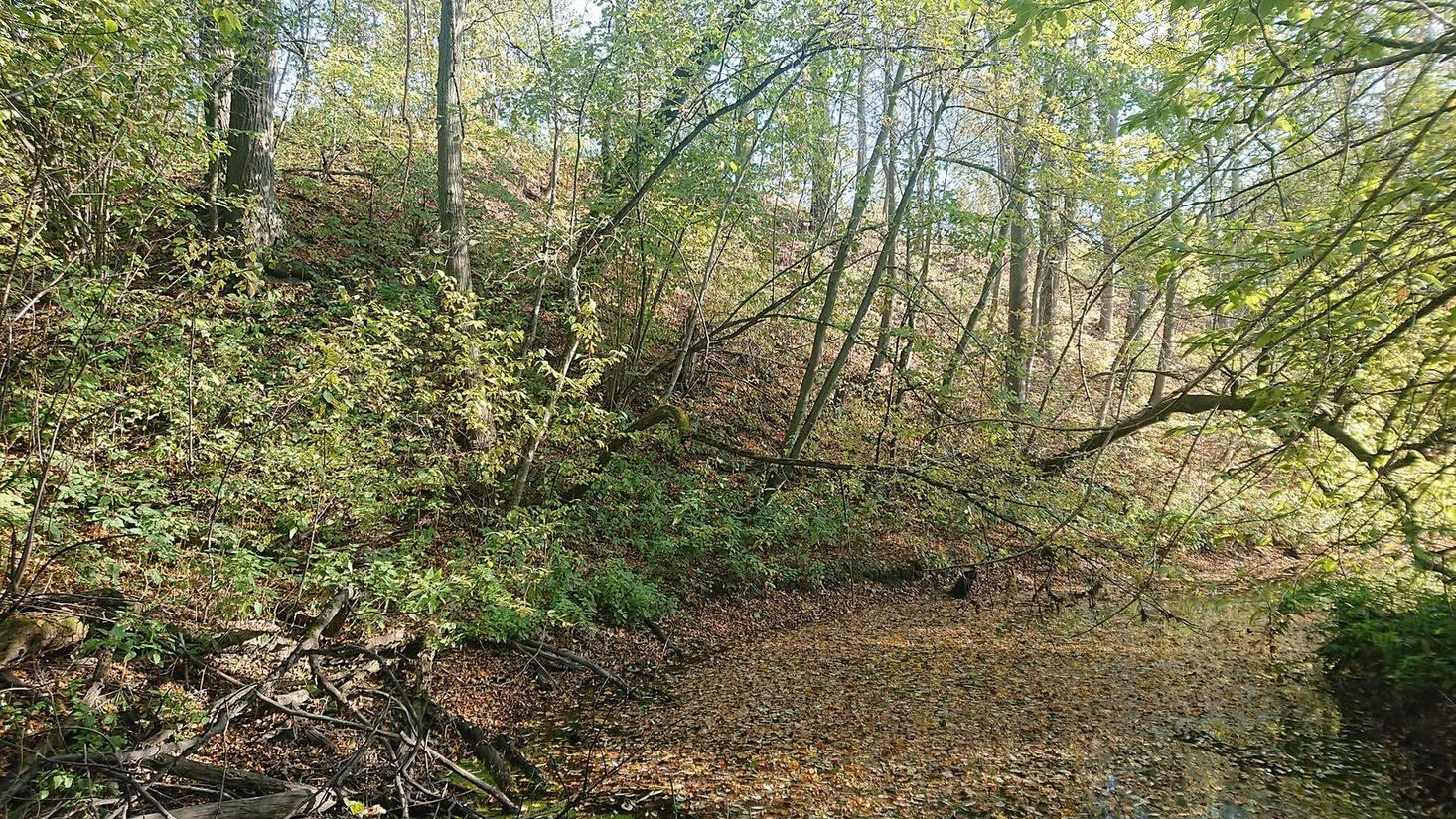
The hillfort stands on a bend of the Petritsa River. Its oval platform is elongated from north to south, measures 25 by 60 m, and rises 7–10 m above the river. Two ramparts, each no more than 0.7 m high, remain on the northern side. The western edge and part of the eastern edge are eroded, and later digging has disturbed the surface in many places. The cultural layer, soil accumulated through human occupation, reaches 0.6 m thick at the center and 1.2 m near the edges. It comprises a basal layer directly above natural soil, up to 0.2 m thick, and an upper layer up to 0.4 m thick, divided into lower and upper horizons. Different pottery types occur together in these deposits.
Buildings and defenses
Early circular buildings
The oldest building identified in the lower layer was circular and had a central posthole reaching 0.4 m deep. Its form resembled a partly sunken dwelling. A second circular building stood to its west, with paired posts around its perimeter. A hearth lay between the two buildings, while smaller postholes were found to its south.
Long houses
A long building crossed the platform diagonally from northeast to southwest. It measured about 40 m long and 3.6 m wide, and cross-partitions divided it into compartments, with paired vestibules between them. Interior postholes may have supported a gabled roof. Clay and sand floor layers, collapsed hearths, charcoal and ash deposits, and storage pits were found inside. A similar building stood parallel to its west, where only slight traces survive. A third, lighter building followed the eastern edge of the platform; some postholes from its wall frame remain.
Defensive structures
A structure in the northern part of the hillfort also served a defensive purpose. Traces of a fortified entrance lie at the northern promontory beside the structure, with ditches and irregular postholes of varying sizes. The platform may have been reorganized more than once: one building entrance was shifted 2 m farther into the site.
Later buildings
Small rectangular buildings in the lower horizon of the upper layer took the place of the long houses. Their remains include depressions from the lowest courses of logs, sections of floor decking and domestic pits. A small circular building, probably used for domestic purposes, contained a fishing-net weight.
Pottery
Pottery from the lower layer
Pottery in the lower layer includes smooth-walled vessels, mesh-impressed ware and pottery decorated with strokes. Some pieces bear stamped ornament. Bumpy-surfaced vessels and pots are more numerous than other forms, while large, elongated vessels were used to store food. Unornamented smooth-walled pottery predominates among the finds. Other smooth-walled vessels have pinched, cord-impressed or incised decoration, and some rims have notches. Mesh-impressed vessels are commonly weakly profiled and jar-shaped. The less numerous stroke-decorated vessels are weakly profiled and shaped like truncated cones, with varied hatching made mainly with a comb stamp and sometimes with a pointed tool.
Pottery from the upper layer
Handmade, burnished and partly burnished Dyakovo pottery predominates in the lower horizon of the upper layer. The vessels are finely made, thin-walled and usually well fired; some have black-burnished surfaces. Low, well-profiled pots with open mouths are the most common forms, alongside fewer deep, well-profiled bowls. Mostly intact miniature smooth-walled vessels were also found. Some are decorated, and their shapes and ornament generally resemble those of larger vessels; they may have been toys. Wheel-made pottery from the upper horizon belongs to the period of the Old Russian settlement.
Objects and production
Animal remains and bone objects
Animal bones from the basal layer are mainly from domestic pigs, cattle and horses; wild animals are represented by beaver and marten. Bone and horn objects form the largest group of finds. They include arrowheads, dart points, a chisel, needles for net-making and sewing, awls, sockets, tubes, horse-bit cheekpieces, a hunting call, carved knife handles, ornaments made from animal teeth and other household items. Fragments of stone axes and arrowheads may belong to a period before the Dyakovo-culture hillfort was established.
Objects from the upper layer
Finds from the lower horizon of the upper layer include oval clay weights, spindle whorls, beads and bead spacers, children’s toys, brick fragments, other weights, female human-shaped figurines and small tablet-like pieces decorated with dots. A spindle whorl is a weighted tool used in hand spinning. Stone objects include net sinkers, spindle whorls, sharpening stones and quernstone fragments; a quernstone is used to grind grain.
Metalworking and ornaments
Iron objects include sickles, arrowheads, knives, a spoon-carving tool, chisels, horse bits, fire steels, a needle, awls, pins, rods, rings, fasteners and buckles. Non-ferrous-metal objects number about one quarter as many as the iron objects, and the bronze pieces are personal items or ornaments. A thin, narrow plate decorated with dots may have formed part of a torc, a rigid neck ring, or a headband. Smithing slag, casting ingots, crucibles, casting ladles and molds indicate that metalworking took place at the settlement. Enamel fasteners, a spectacle-headed pin and disk-shaped plaques did not originate at Kuznechiki; glass and paste beads were imported.
Later-period finds
The upper horizon also contained two fragments of twisted glass bracelets dating to the 12th–13th centuries and a knife with a mark characteristic of knives from the 16th–17th centuries.