House of the Relief of Telephus: A Roman Residence at Herculaneum
Site at a Glance
- Popularity
- Medium
- Country
- Italy
- Primary era
- Classical
- Eras represented
- Classical
- Civilizations
- Roman
- Site type
- Domestic
- Remains
- House
On this page10 sections
History
Origins and enlargement
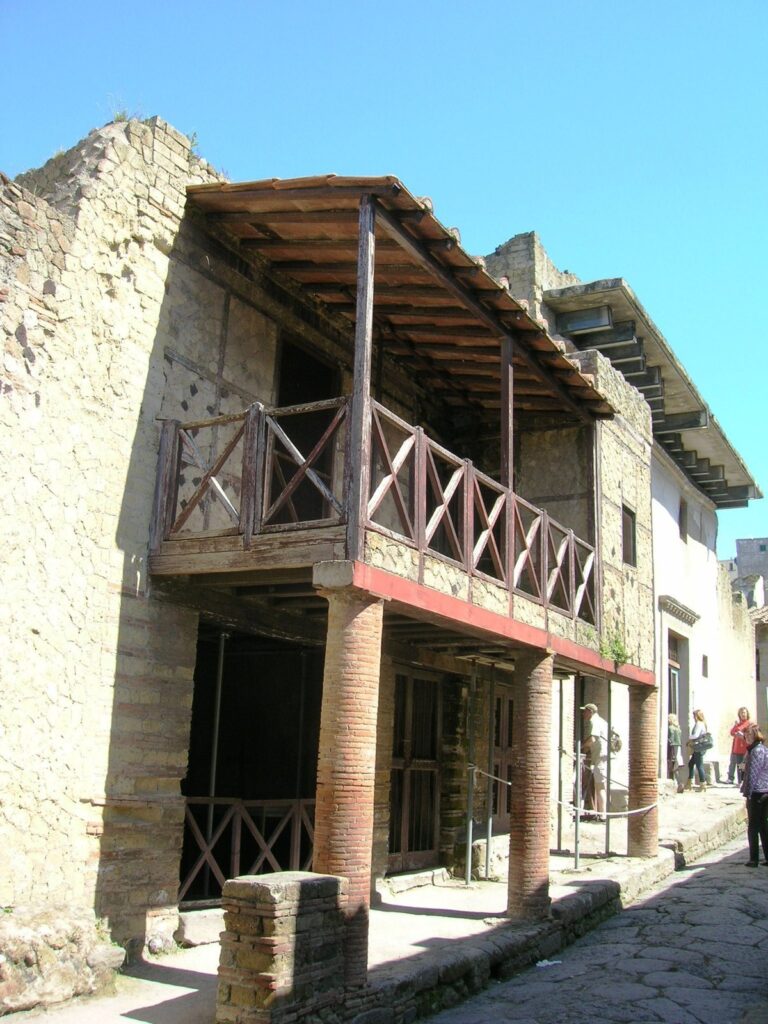
The House of the Relief of Telephus was a Roman residence at Herculaneum, Italy, which took shape around AD 50 when a large house of the Augustan period was divided into three homes. A smaller building had stood on the site in the second century BCE. The residence had previously been joined to the House of the Gem and probably belonged to Marcus Nonius Balbus, a Roman senator and magistrate.
Repairs and burial
After the earthquake of AD 62, renovations were carried out to repair damage to the house. In AD 79, the eruption of Vesuvius buried it beneath mud.
Excavation
Excavations brought the residence back to light in the early twentieth century. Most of the house was uncovered between 1934 and 1936 under the direction of Italian archaeologist Amedeo Maiuri.
Remains
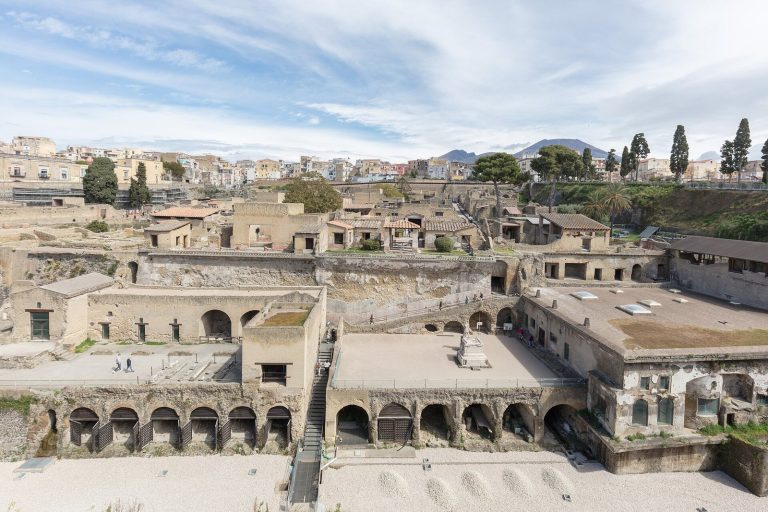
The house covers about 1,800 square metres and is Herculaneum’s second-largest residence, after the House of the Albergo. Its irregular plan developed through repeated extensions toward the sea. The surviving residence occupies three levels, while the earlier building on the site extended across four. It stands near the Suburban Baths, with a private entrance connecting the two, on the edge of the ancient city where the ground drops steeply toward the sea.
Atrium and adjoining rooms
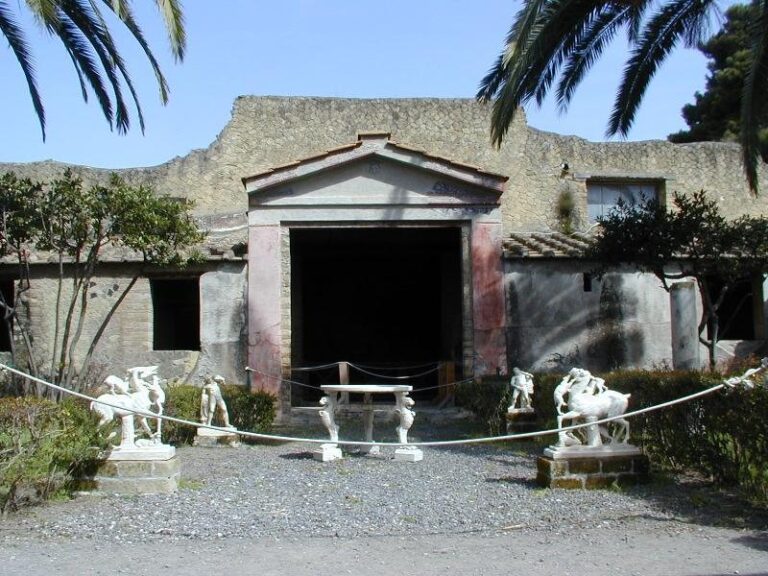
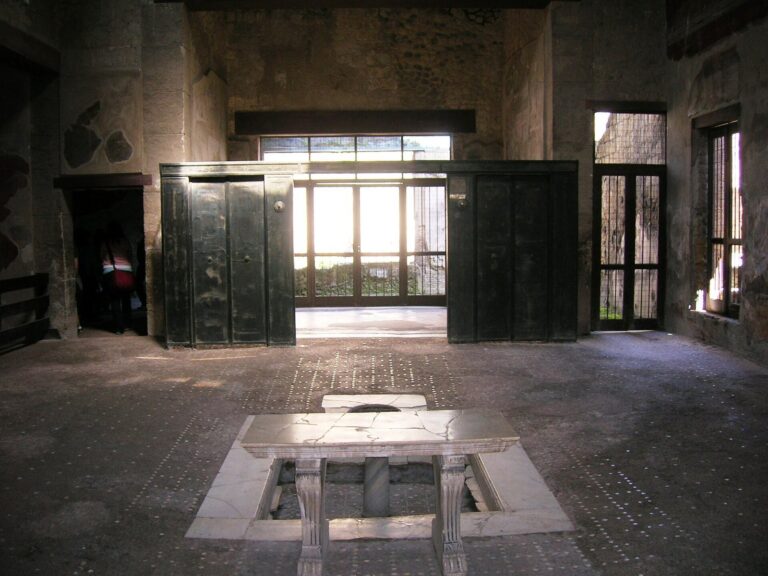
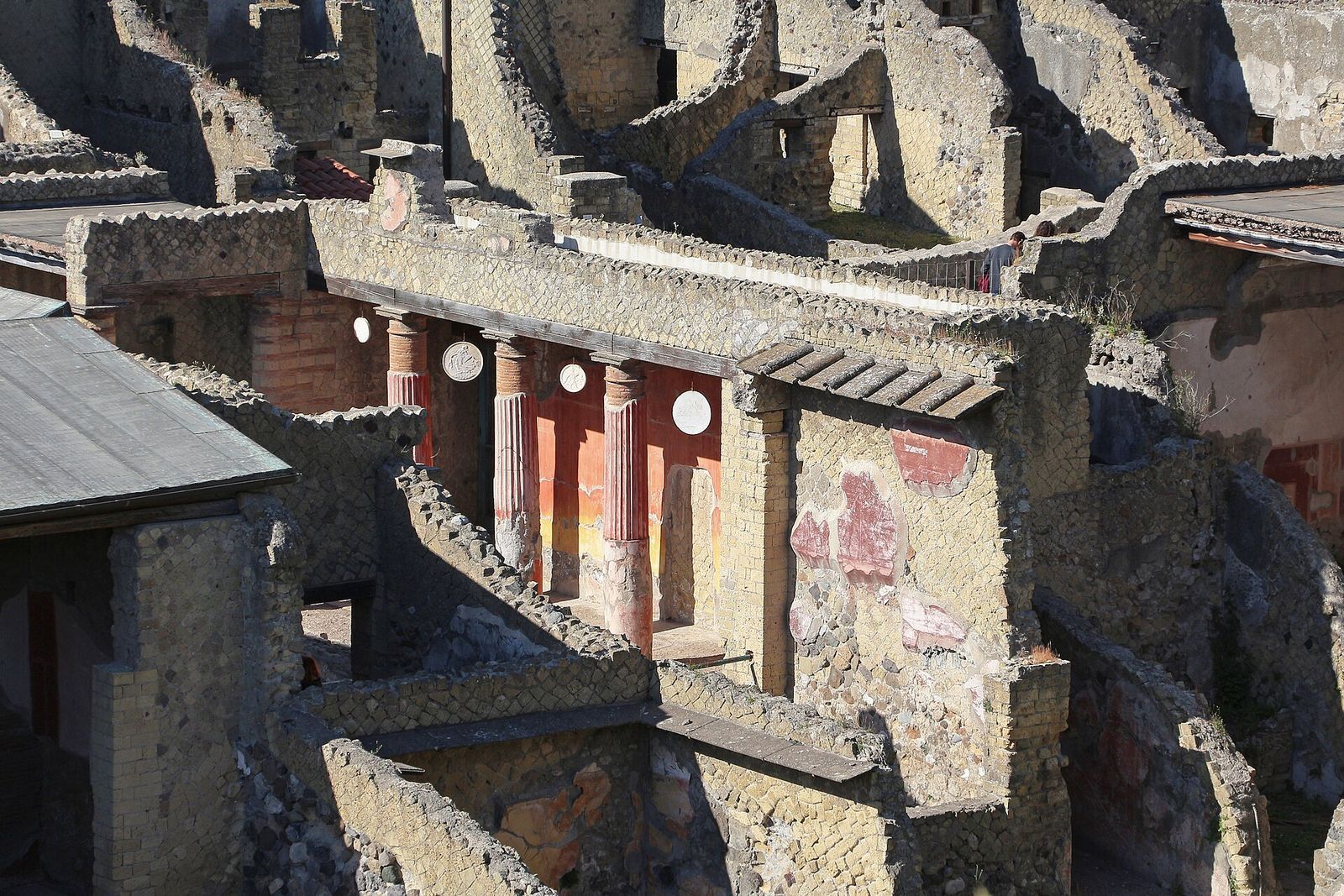
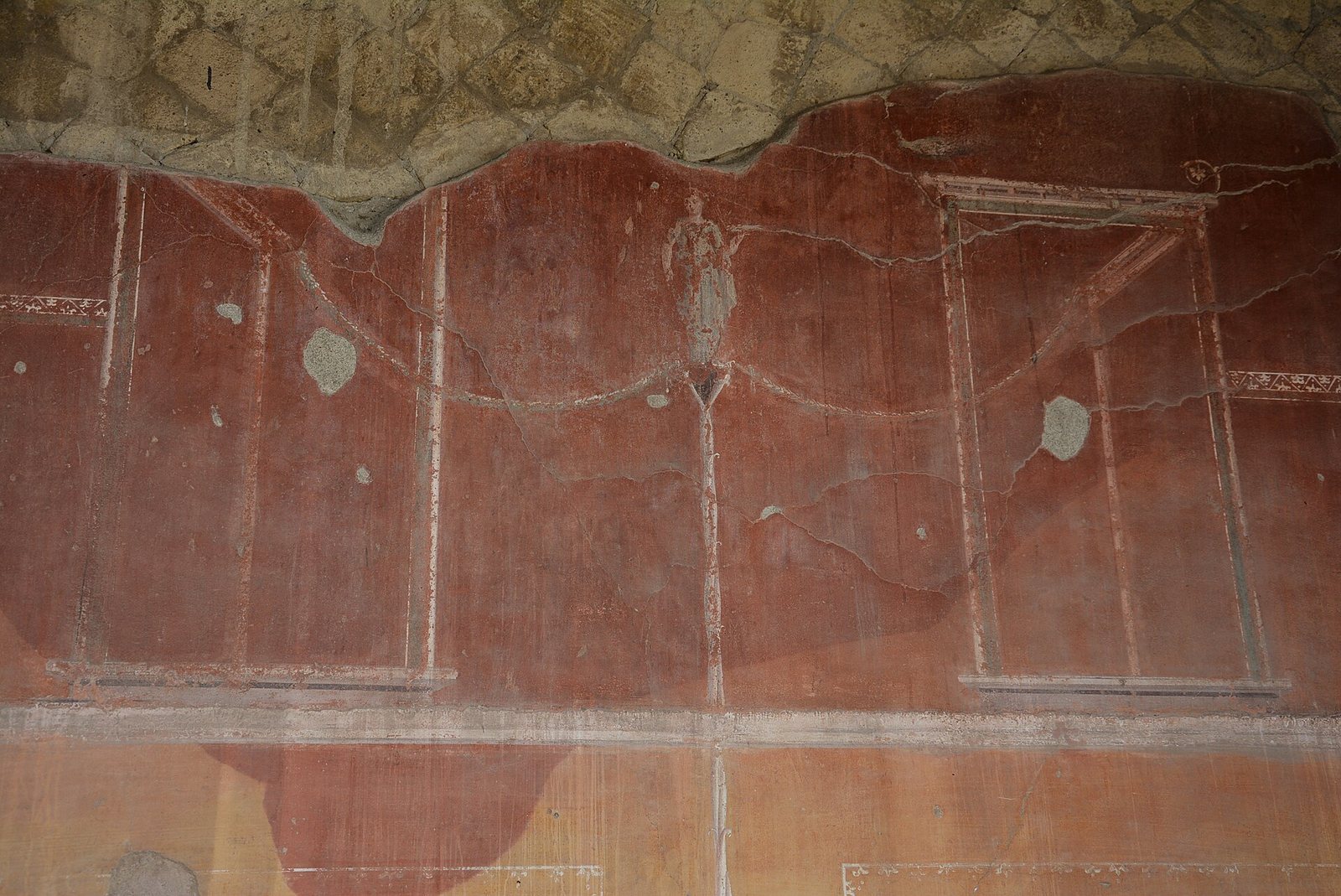
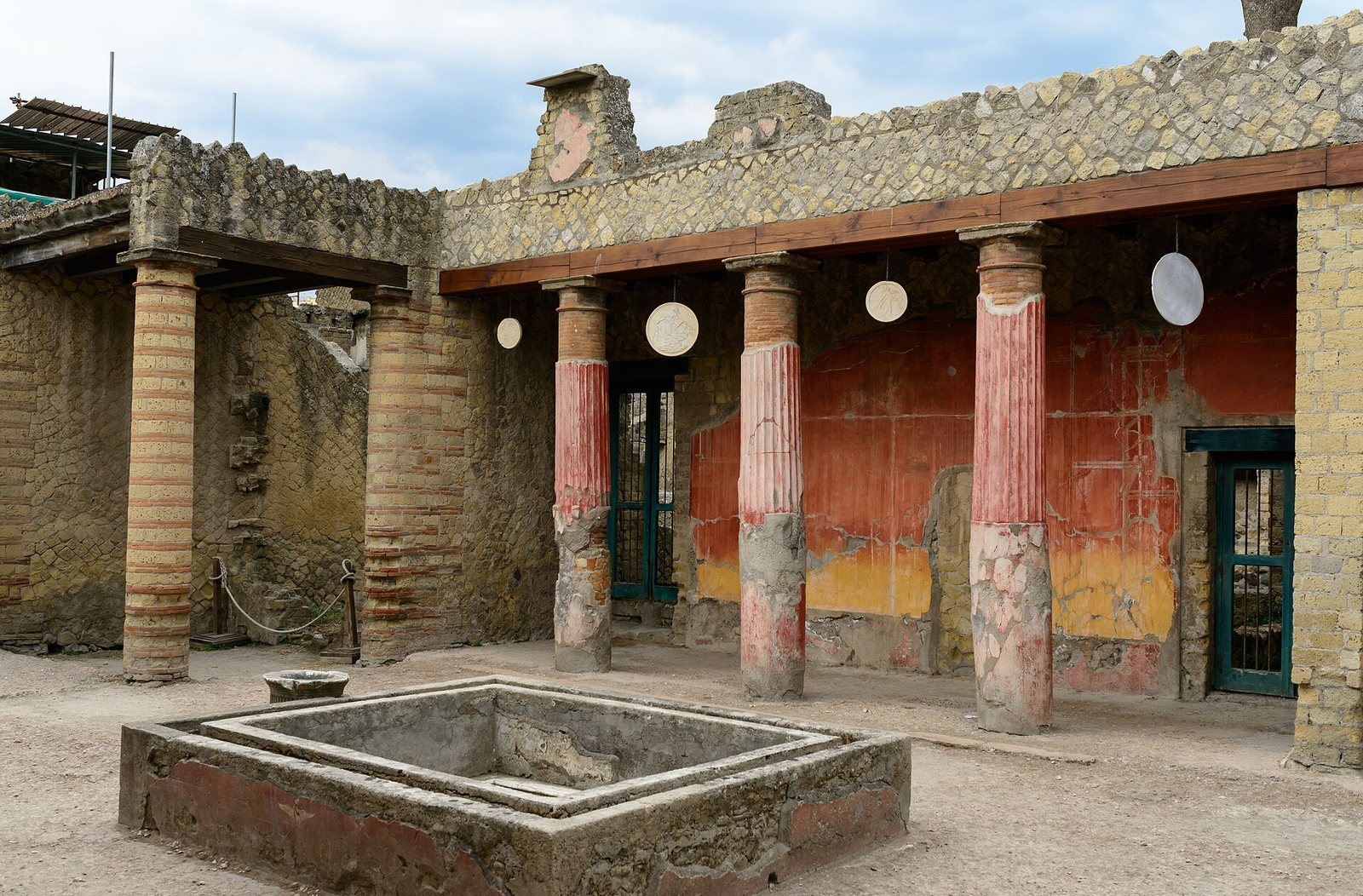
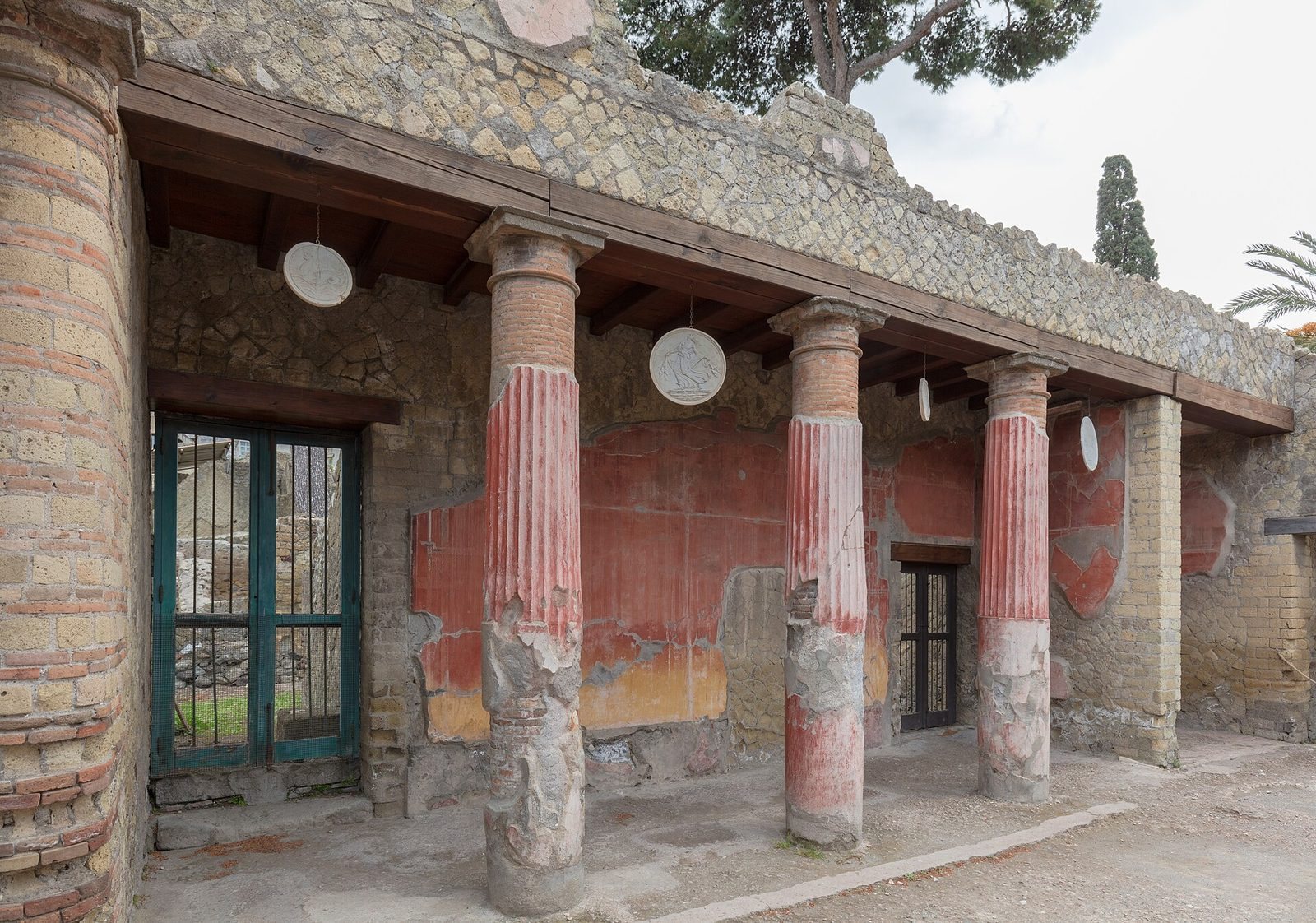
Beyond the entrance vestibule is an atrium arranged to resemble a courtyard surrounded by columns. Its central marble basin was converted after the AD 62 earthquake into a low enclosure for plants. Two side colonnades supported the upper floor, with brick columns coated in red plaster. Architectural paintings decorated the walls; gases from the eruption changed their yellow surfaces to red. Eight carved marble discs, including examples with scenes associated with Dionysus, were found between the columns.
Rooms opening onto the atrium included a private chamber where the relief of Telephus was found, a large reception room originally lined with marble, and a stable accessible from both the atrium and the street. A formal room had a white mosaic floor bordered by two black bands and walls finished in yellow plaster.
Garden courtyard
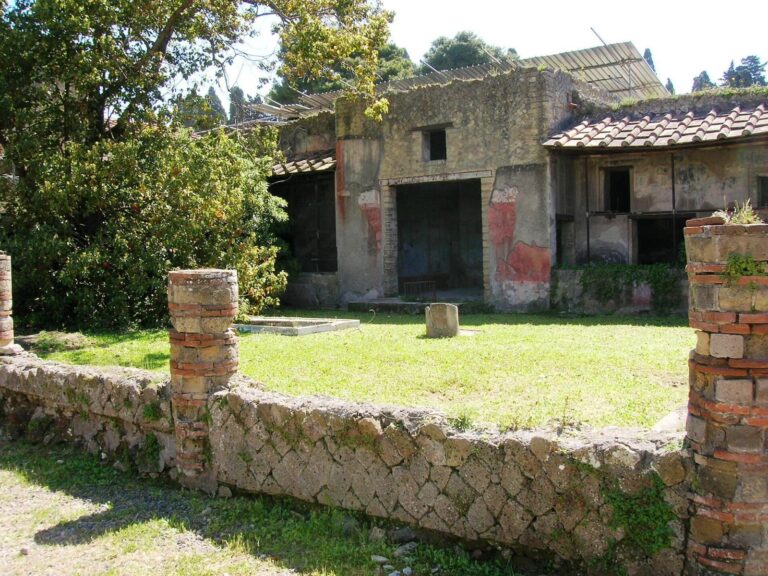
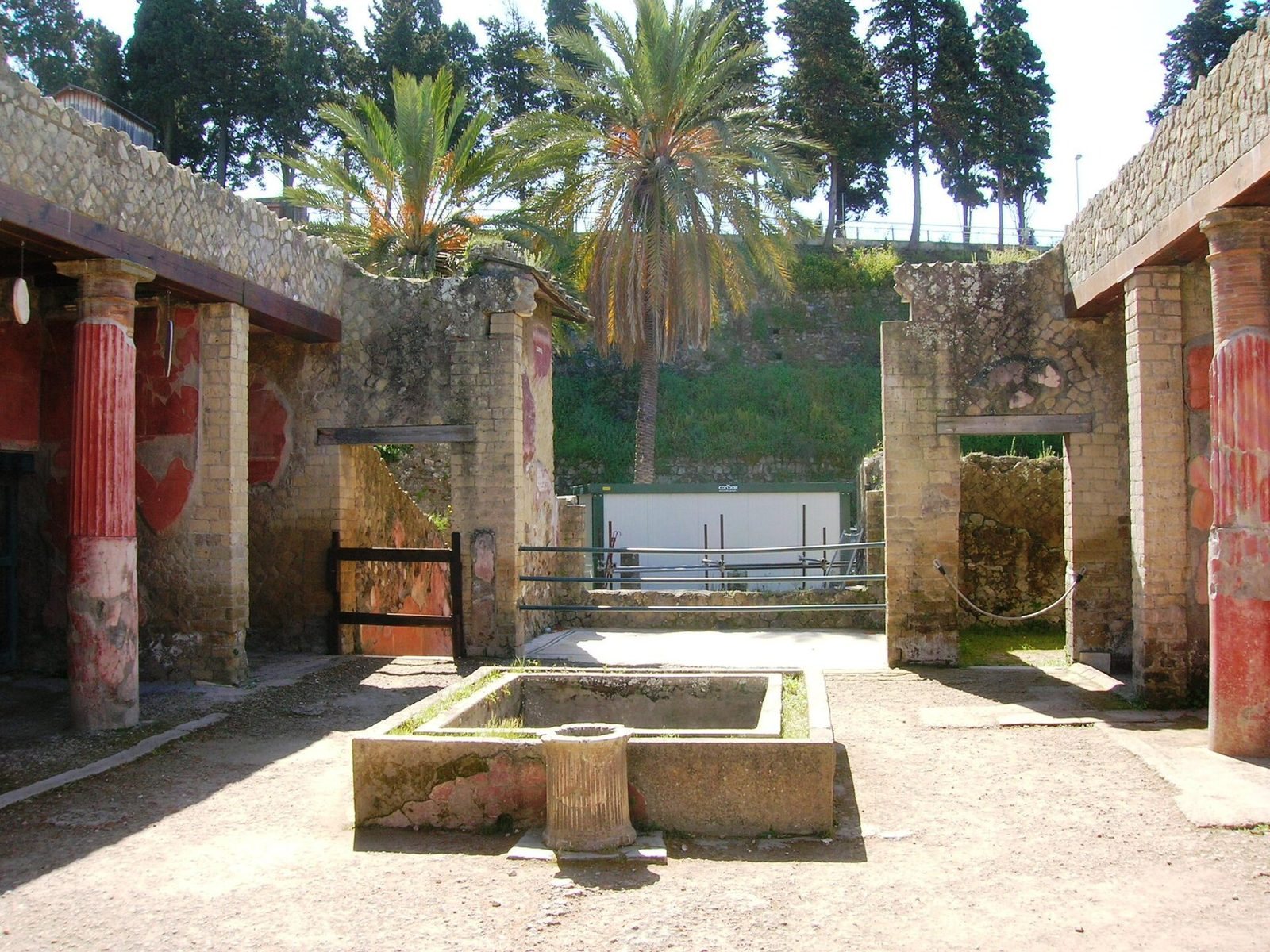
A sloping corridor leads to a large courtyard surrounded on all four sides by rows of columns. The 32 columns use alternating bands of masonry and enclose a garden and a pool, whose blue plaster survives. Three rooms around the courtyard have mosaic floors. Beneath them are further rooms that remain unexplored, with decorated plaster edges visible.
Multi-level section
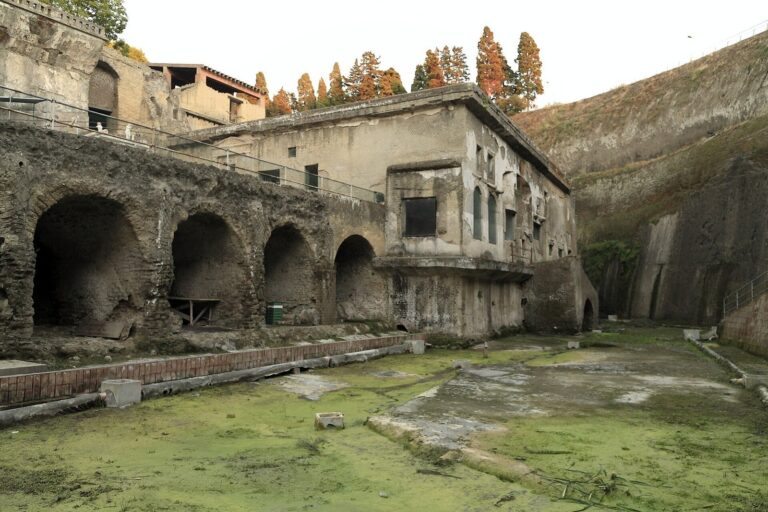
A separate corridor leads to a tower-like part of the house. Its exterior is decorated with half-columns and arches, and each level is divided into three or four rooms. The lower levels had already fallen out of use by the time of the eruption because of damage caused by the sea. The well-preserved upper floor has a multicoloured marble floor and walls faced with Cipollino and Africano, two decorative marbles. The level below has a less costly marble floor made from shaped stone pieces, with red-and-white plaster walls patterned to resemble wallpaper.
Rooms above the slope
At the end of a row of smaller rooms, two larger chambers stood high above the slope, one above the other. Both had large windows and once looked directly toward the sea. The upper chamber had coloured-marble wall lining. In the lower one, pilasters with Corinthian capitals divide the lower wall, while paintings of stripes on a red ground cover the upper part.
Wood and household finds
After about a metre of mud was cleared from the beach, excavators found roughly 30 square metres of uncharred wooden pieces from the house. They probably belonged to a roof and preserve blue and red colouring, as well as marks showing how the pieces fitted together. In 2009, the wooden roof of the upper chamber was found at the foot of the slope. Finds from the house also included several Neo-Attic statues, in a Roman-period style inspired by classical Greek art, along with remains of a bed and a chest. A bronze seal probably belonged to a servant.
The relief that gives the house its modern name depicts two mythological scenes involving Telephus, a legendary king of Mysia and son of Heracles. The original is held at the National Archaeological Museum in Naples, while a copy is at Herculaneum.