Kuressaare Castle: A Medieval Fortress and Cultural Museum in Estonia
Visitor Information
Google Rating: 4.7
Popularity: Medium
Official Website: linnus.samu.ee
Country: Estonia
Civilization: Crusader, Early Modern, Modern
Site type: Military
Remains: Castle
History
Kuressaare Castle is situated in the town of Kuressaare on the island of Saaremaa, Estonia. It was originally established by the German crusaders after their conquest of Saaremaa in 1227 and served as the residence and fortress of the bishops of the Saare-Lääne bishopric, also known as Ösel-Wiek.
The earliest written mention of the stone castle dates back to 1381, although some historians speculate about an earlier wooden fortification on the site possibly from the 11th century; however, no conclusive evidence supports this theory. Construction of the stone fortress mainly took place in the late 13th and 14th centuries, culminating with the completion of the convent building by 1381. The castle’s initial layout featured a centrally placed round defensive tower known as “Pikk Hermann” and a surrounding quadrangular convent structure that functioned as both the bishop’s residence and the administrative heart of the bishopric.
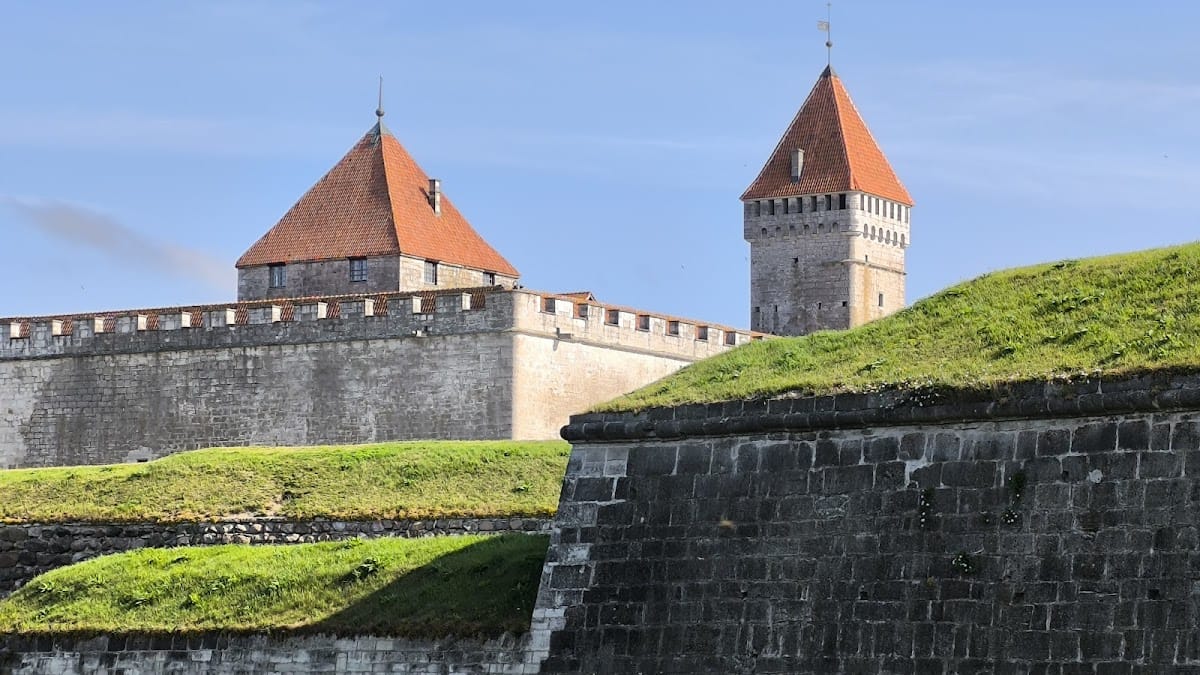
During the 14th and 15th centuries, the castle’s defenses were significantly enhanced. A massive outer ring wall measuring 625 meters in length and rising 7 meters high was erected, along with bastions and artillery towers designed to withstand the growing threats posed by gunpowder weaponry. Among these additions was a large cannon tower, built around 1470, aimed at strengthening the fortress’s artillery capabilities.
Kuressaare Castle remained the main seat of the Saare-Lääne bishops until the outbreak of the Livonian War in the 16th century. In 1559, facing the pressures of war and politics, Bishop Johannes V sold the castle and its associated estates to the Danish-Norwegian crown. Under Danish rule, the fortress was modernized with new earthworks, bastions, and a moat filled with seawater to improve its defense.
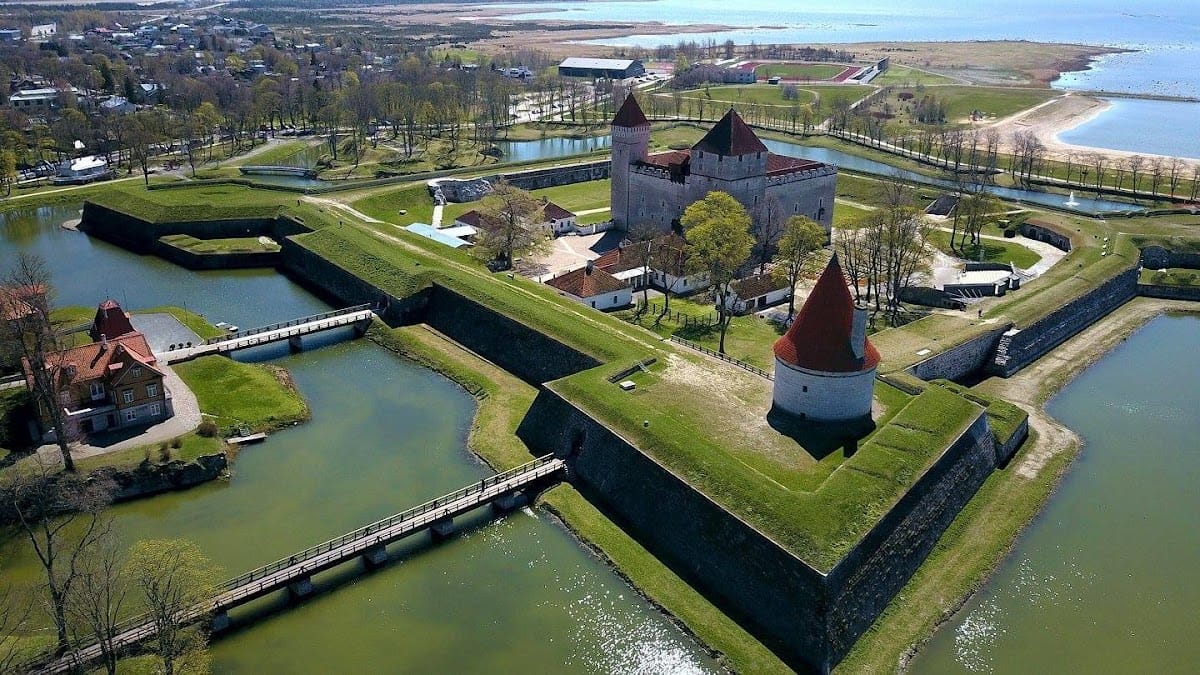
Following the Treaty of Brömsebro in 1645, control of Saaremaa, including the castle, passed to Sweden. The Swedish authorities undertook further modernization efforts, transforming the fortress into a Vauban-style star fort by 1706. This renovation introduced Italian-style bastions, reflecting contemporary military architectural trends intended to resist artillery sieges more effectively.
After the Great Northern War, Kuressaare Castle became part of the Russian Empire. Over the 18th and 19th centuries, its military importance declined steadily, leading to the withdrawal of the garrison in 1836. During the 19th century, the castle found a new, less prestigious role as a poorhouse, illustrating its transition away from military and administrative functions.
The early 20th century saw renewed interest in the castle’s preservation. Between 1904 and 1912, architects Karl Rudolf Hermann Seuberlich and Wilhelm Neumann led a restoration project aiming to conserve and restore key structural and decorative elements. Another major restoration took place in 1968 under the supervision of architect Kalvi Aluve.
The castle’s history also carries darker episodes. During the Soviet occupation in 1941, it was used as a fortress and a place of execution, where over 90 civilians were killed in the courtyard. Subsequently, during Nazi occupation, more than 300 people were executed on the premises. Today, Kuressaare Castle serves as a museum preserving the history and culture of the region.
Remains
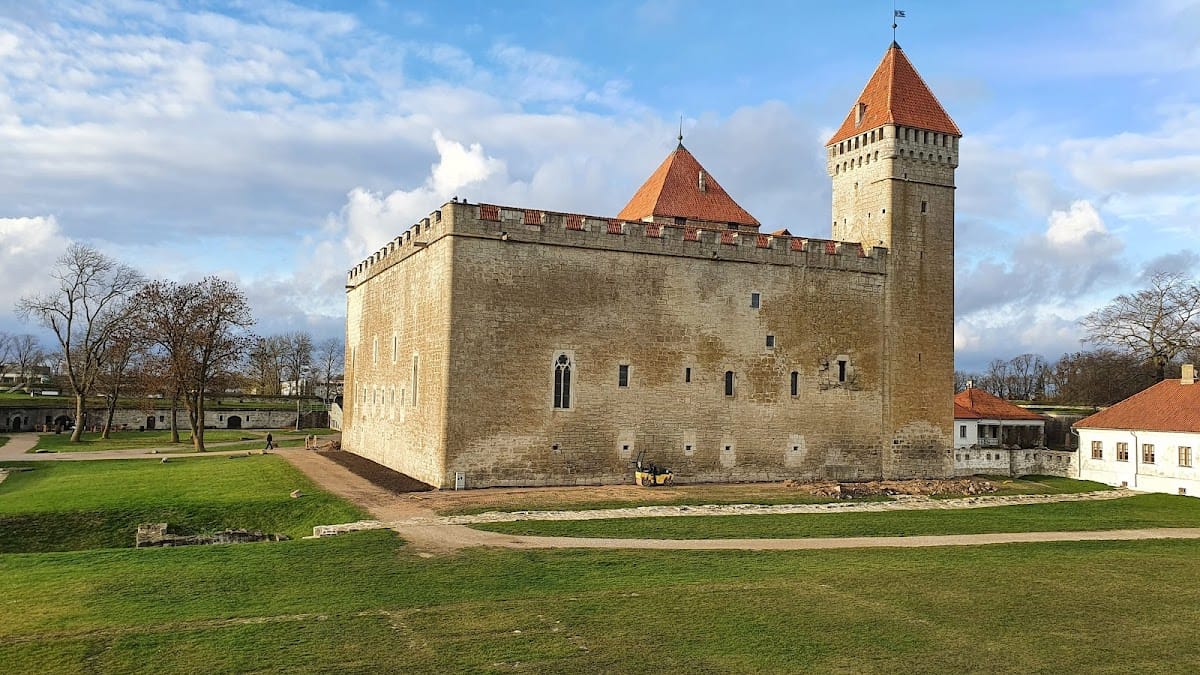
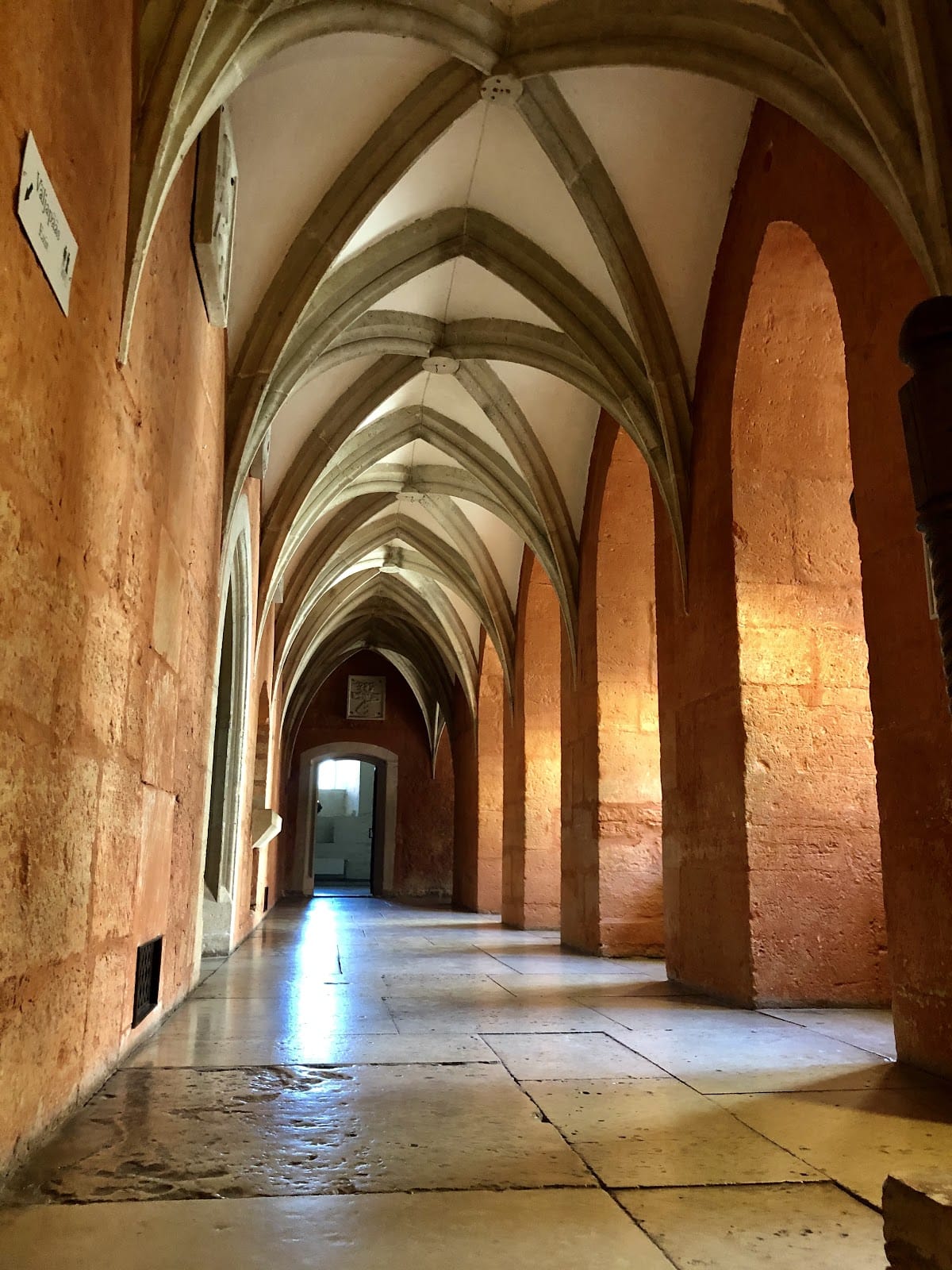
Kuressaare Castle is a well-preserved example of late Gothic stone fortification, organized around a roughly square courtyard enclosed by the convent building. Each side of this main structure measures about 43 meters in length. The fortress showcases a combination of defensive and residential architecture typical for a bishop’s stronghold during the medieval period.
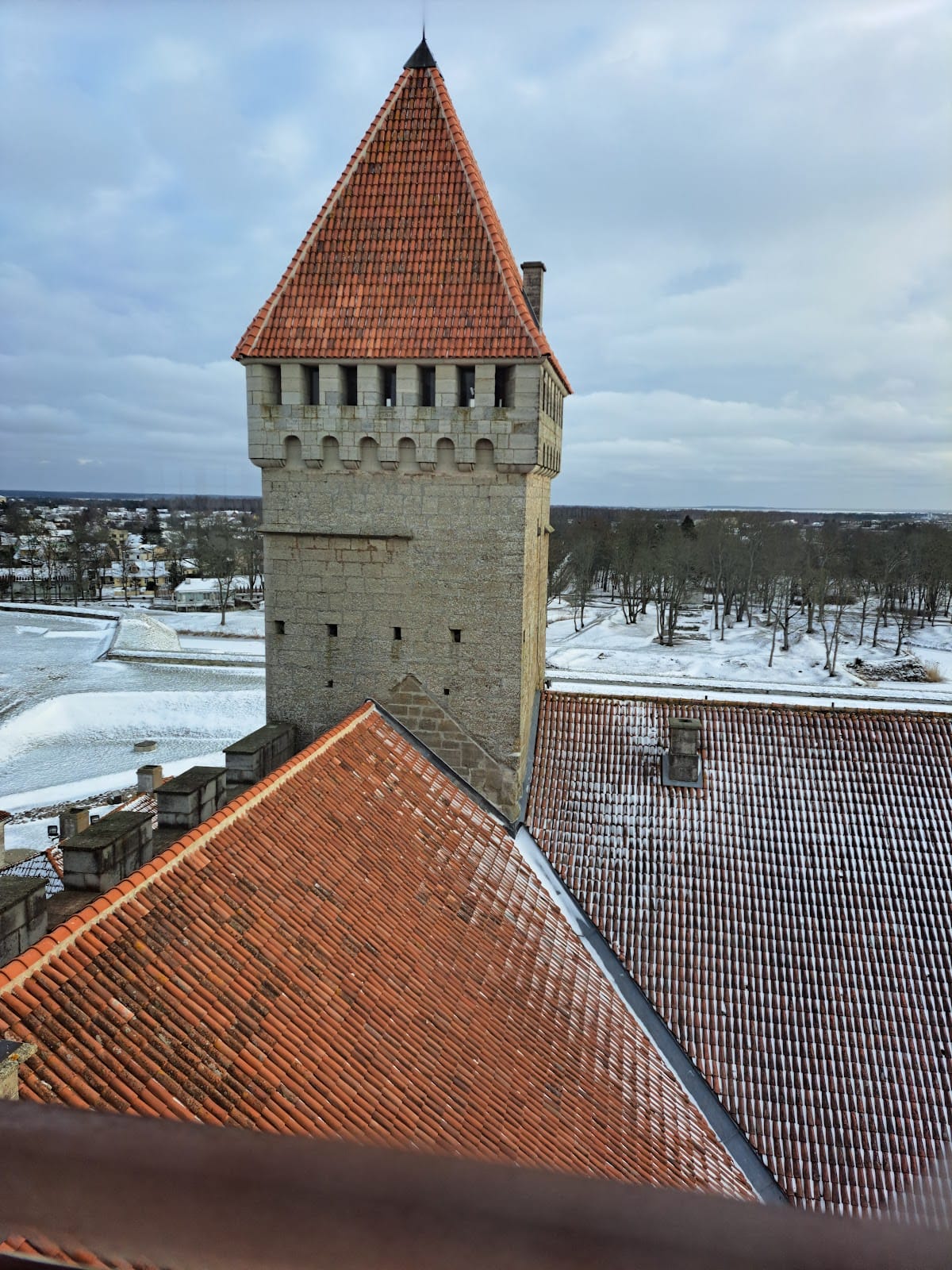
A defining feature of the castle is its northern corner, occupied by “Pikk Hermann,” a seven-story high defensive tower reaching 37 meters. This tower served multiple roles: a watchtower, a place of last refuge during attacks, and a prison. Its design includes a single entrance set 9 meters above ground level, connected to the main building by a bridge. This elevated entrance was a deliberate defense measure to slow attackers. Inside, the tower retains medieval narrow staircases and oak galleries, along with early 20th-century neo-Gothic frescoes and tiled fireplaces.
Surrounding the central courtyard and buildings, a ring wall with battlements forms a protective barrier. This wall includes a one-meter-wide uncovered walkway used by defenders to move between different wings of the castle. The defensive walkway seen today was restored during renovations in the 1980s using early 20th-century plans.
The castle’s main gate is secured by a two-story oriel, constructed as part of the late 20th-century reconstructions. This gate structure houses an original portcullis mechanism on its lower floor and defensive openings on the upper floor. These apertures were used historically to drop stones or boiling pitch and to shoot arrows at assailants. Horizontal beams could be fitted across the gate’s embrasures to reinforce the entrance further in times of attack.
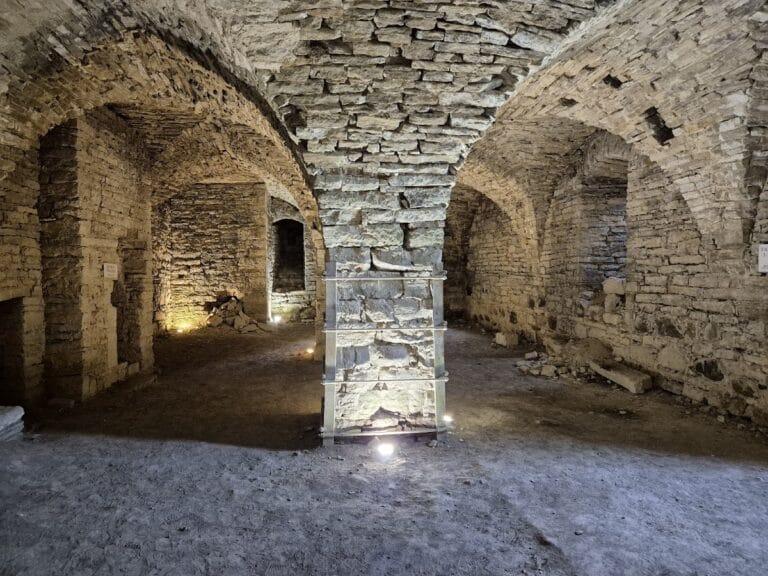
Beneath the castle lie various utility spaces, including kitchens, a brewery, and a prison cellar known locally as the “walled-in knight’s cellar.” This prison cellar is tied to a legend about a monk said to have been imprisoned alive during the 16th century, reflecting the castle’s historical role in both governance and justice.
An important technological feature of Kuressaare Castle was its hypocaust heating system, found in the southwest and northwest wings. This system used large fireplaces and a network of ducts to channel warmth beneath floors and into essential rooms like the bishop’s chambers and the refectory. Portions of this heating system have been carefully restored to illustrate medieval engineering solutions for comfort.
On the main floor, representative rooms display vaulted ceilings supported by octagonal pillars. These include the refectory, the largest multifunctional hall in the castle, which served as a place for meetings and as a church space for laypeople. The castle’s chapel, located in the southern corner of the convent building, stands out as its tallest room. It is decorated with elaborately carved sacrament niches featuring Gothic ornamental elements such as pinnacles and crockets.
Late medieval defensive enhancements extended beyond the stone walls. The castle was encircled by a 625-meter-long outer ring wall, supplemented later with bastions and earthworks designed to resist artillery attacks. A large cannon tower dating from the 1470s was restored in the 1970s. The entire defensive system included four bastions with interconnected curtain walls forming the main rampart, surrounded by a wide moat filled with seawater. An additional outer line of defenses featured ravelins—triangular fortifications placed to protect the main walls—linked by covered roads.
Inside the bishop’s residence can be found baroque carved epitaphs honoring members of Saaremaa’s nobility. The interiors also preserve medieval fireplaces and staircases in the towers. The castle’s doors in the refectory showcase 20th-century neo-Gothic design, harmonizing with the historical ambiance.
The castle grounds incorporate a park established in 1861 and several nearby wooden spa buildings constructed in the late 19th and early 20th centuries, reflecting later periods of civilian use and leisure development adjacent to the fortress.
Presently, Kuressaare Castle serves as a cultural repository, housing permanent exhibitions that highlight local history and natural heritage, while its spaces host concerts and temporary exhibitions, linking its rich past with continuing cultural activities.