Krasnyi Gorodets: A Frontier Fortress of the Pskov Republic


Site at a Glance
- Rating
- 5
- Popularity
- Very Low
- Country
- Russia
- Primary era
- Medieval
- Eras represented
- Medieval
- Civilizations
- Pskov Republic
- Site type
- Military
- Remains
- Fort
On this page12 sections
History
Krasnyi Gorodets is a medieval fortress site in Ukraine, associated with Kropyvnytskyi, that was built by the Pskov Republic in 1464 on the Sinyaya River. It defended the republic’s southwestern frontier against raids from Livonia and Lithuania and remained involved in conflicts between Pskov, Moscow, the Livonian Order, and the Polish-Lithuanian state for more than a century.
Foundation and Pskov rule
Construction was directed by Pskov Prince Ivan Alexandrovich and Alexei Vasilyevich, a posadnik, or senior civic official. By 1470, the fortress had its own seal. The Livonian Order disputed control of the territory in 1471, but a large army sent by the grand prince to Pskov in November 1473 helped pressure the order into the treaty of 1474, which confirmed the territory for the Pskov Republic. In 1475, the fortress had a recorded population of 200 people under the command of Foma Andreevich Tretyakov, a voevoda, or military commander and governor.
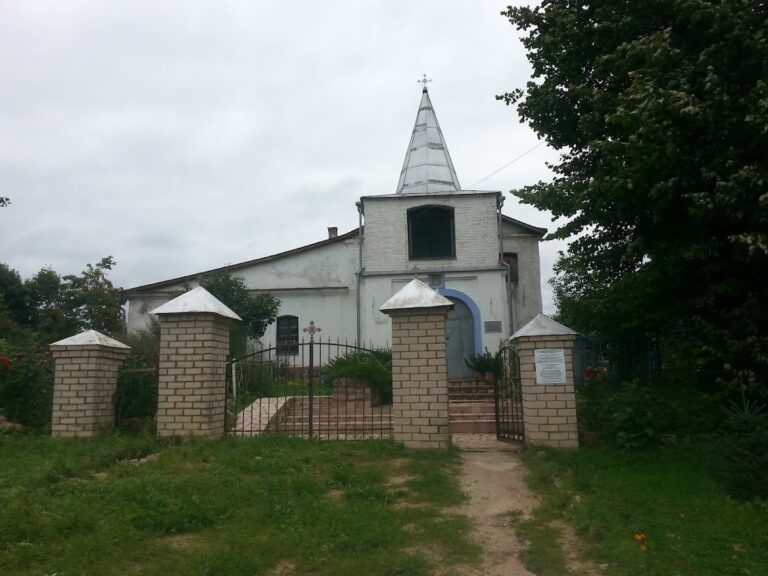
In 1502, a Livonian army led by Land Marshal Johan Platten besieged Krasnyi Gorodets. The attackers withdrew after mistaking what appeared to be a gathering near the Chapel of Saint George, on the opposite bank of the river, for a large relief force. The inhabitants commemorated the victory by building the Church of Saint Paraskeva Pyatnitsa in the settlement outside the fortress.
Moscow rule and sixteenth-century conflicts
The Pskov Republic was incorporated into the Grand Duchy of Moscow, also known as Muscovy, in 1510. During the Lithuanian incursions into the Pskov lands in 1517 and 1518, ordered by Sigismund I, a detachment led by Pan Cherkas captured Krasnyi Gorodets. The inhabitants were imprisoned in the fortress church, but a Russian force commanded by the voevoda Lyatsky defeated the detachment, freed the prisoners, and sent Cherkas to Moscow.
The Livonian War, a sixteenth-century struggle over Livonia and access to the Baltic Sea, brought further attacks. German knights burned and plundered the settlement outside the fortress in 1559 without besieging the stronghold. Lithuanian detachments appeared nearby in 1563, and in March 1565 they devastated the surrounding area before making an unsuccessful attempt to take the fortress.
Destruction and changing control
During Stefan Batory’s campaign against Pskov in 1580 and 1581, the inhabitants abandoned and burned Krasnyi Gorodets. They carried their property to Pskov and joined the city’s defense. Batory, king of Poland and grand duke of Lithuania, used the abandoned site as a depot for plunder. His forces also built temporary fortifications about 200 meters southwest of the fortress ruins and stationed a garrison there with light artillery. After the Russian victory at the Siege of Pskov, the 1582 Treaty of Jam Zapolski returned Krasnyi Gorodets to the Russian Tsardom.
In 1611, during the Time of Troubles, a period of political crisis, dynastic conflict, foreign intervention, and civil war in Russia, 300 mercenaries under Pan Lisovsky captured the fortress. Lisovsky used it as a base for raids on nearby settlements, reaching the Streltsy settlement of Pskov on one occasion. The 1618 Truce of Deulino transferred Krasnyi Gorodets to the Polish-Lithuanian Commonwealth, the state formed by the union of the Kingdom of Poland and the Grand Duchy of Lithuania.
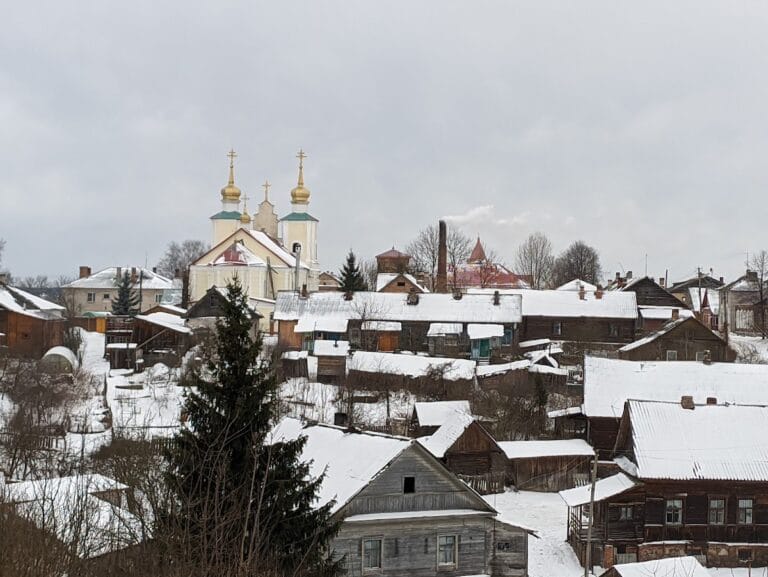
The 1667 Truce of Andrusovo returned Krasnyi Gorodets to the Russian lands, and the transfer was confirmed by the Perpetual Peace of 1686. By that time, the ruined fortress had lost its military importance and was not rebuilt. The settlement that later developed on the site became the urban-type settlement of Krasnogorodsk, named in its honor, while a recreation area was eventually established on the former fortress site. By the end of the eighteenth century, the fortress had seriously deteriorated and was no longer restored.
Archaeological protection
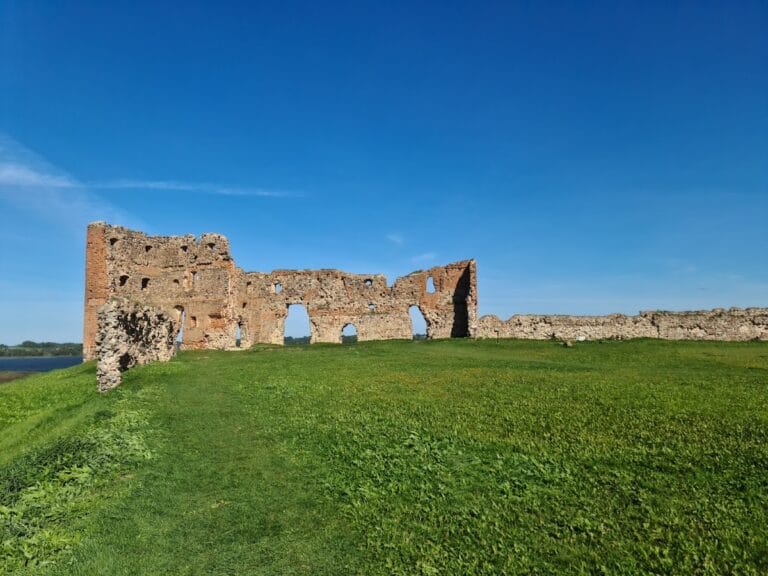
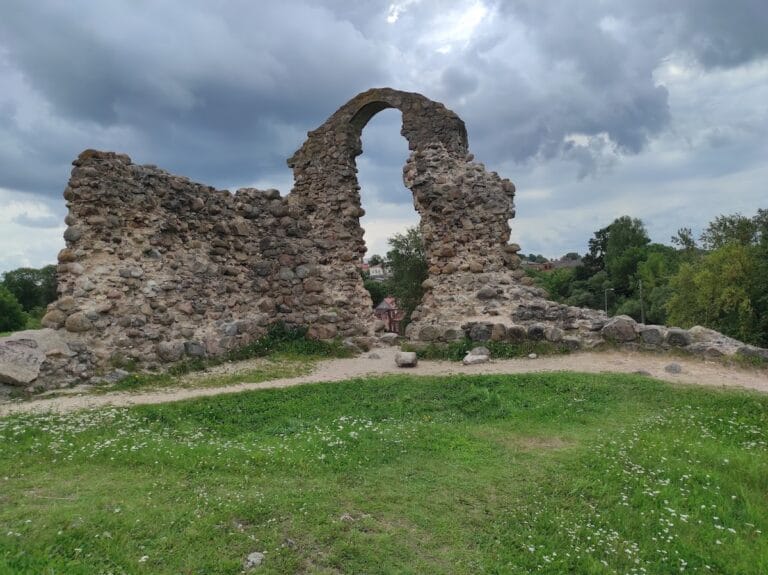
On 20 February 1995, the hillfort at Krasnogorodsk was recognized by presidential decree as an archaeological monument. It was placed under state protection as a cultural-heritage site of federal significance, preserving the former fortress site after the wooden stronghold itself had disappeared.
Remains
The former fortress occupies the northern part of a small plateau in the northwestern part of Krasnogorodsk, on the left bank of the Sinyaya River. The river borders the site to the east, the Smorodinka River to the north, a small lake to the west, and marshy lowland to the south. The plateau rises 9 meters above the Sinyaya’s water level, while additional earthworks strengthened its natural position.
Earthworks and layout
Ramparts and ditch
The defensive earthworks form ramparts between 3 and 7 meters high, with the greatest height on the southern side. A broad ditch, reaching up to 50 meters across, was cut there to connect the lake with the Sinyaya River. Together, the plateau, waterways, marshy ground, ramparts, and ditch shaped the fortress’s defensive setting.
Fortified enclosure
The fortified area followed an irregular quadrilateral plan, with sides measuring 150, 40, 130, and 70 meters. Its entrance stood on the northeastern side. The walls and towers were built of wood, and the fortress’s three projecting towers were arranged with the quadrilateral enclosure to eliminate areas that could not be covered by defensive fire.
Water supply and religious buildings
Concealed water passage
The fortress had a carefully constructed concealed water passage. Descriptions place its outlet either at the Sinyaya River or at the lake, and its destination remains uncertain.
Church of the Transfiguration
A Church of the Transfiguration of the Savior stood within the fortress. The building was part of the stronghold during its period of military use and was also the place where the inhabitants were imprisoned during Pan Cherkas’s capture of the site in 1517 or 1518.