Pridvorica Monastery: A Serbian Orthodox Monastery in Serbia


Site at a Glance
- Rating
- 4.7
- Popularity
- Very Low
- Country
- Serbia
- Primary era
- Medieval
- Eras represented
- Medieval, Early Modern, Modern
- Civilizations
- Ottoman, Serbian
- Site type
- Religious
- Remains
- Monastery
On this page7 sections
History
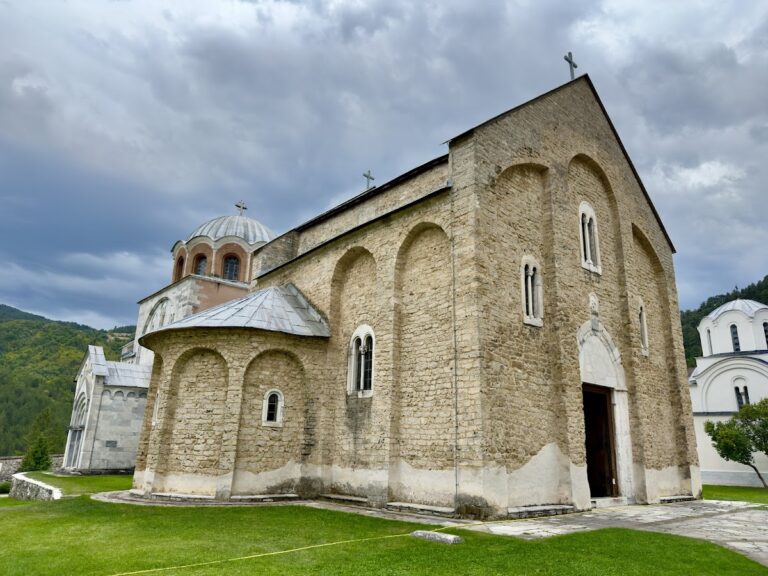
Pridvorica Monastery is a Serbian Orthodox monastery in Pridvorica, Serbia, founded as a nunnery in the twelfth century in the period of the Nemanjić dynasty. Its church, dedicated to the Transfiguration, is traditionally dated to around 1195, approximately the time when the neighboring Studenica Monastery was established.
Foundation and medieval community
The monastery’s foundation is linked by tradition to a servant who served at the court of the Nemanjić dynasty, the medieval Serbian ruling house known for establishing and supporting major Orthodox monasteries. This association is said to explain the name Pridvorica. The monastery’s early existence as a women’s religious community is also connected with a charter issued by Stefan Nemanja, the twelfth-century Serbian ruler who founded the Nemanjić dynasty, to Studenica Monastery.
The nuns of Pridvorica practiced weaving and passed their skills to people in the surrounding area. After its period as a nunnery, the foundation served for centuries as a local church. This long change in function preserved its religious role while altering the character of its community.
Restoration and renewed monastic life
The church was restored twice. The first restoration took place after 1557, while the second occurred in the middle of the nineteenth century. Both interventions substantially changed the building’s exterior appearance. During the second restoration, an iconostasis, the screen separating the sanctuary from the nave in an Eastern Orthodox church, was installed.
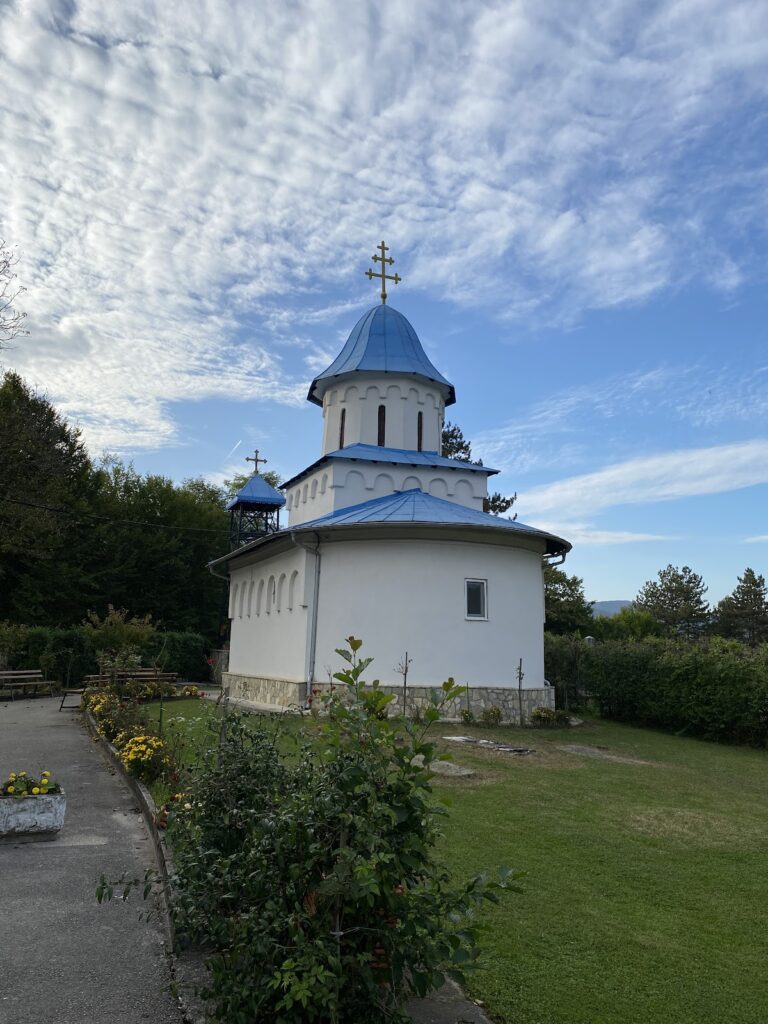
Pridvorica was re-established as a male monastery in 2007. Its community consists of the monastery’s superior and two novices. The monastery belongs to the Eparchy of Žiča, an administrative diocese of the Serbian Orthodox Church. It is protected in Serbia as a cultural monument of great importance and is among the few monasteries with its own coat of arms.
Remains
The monastery church
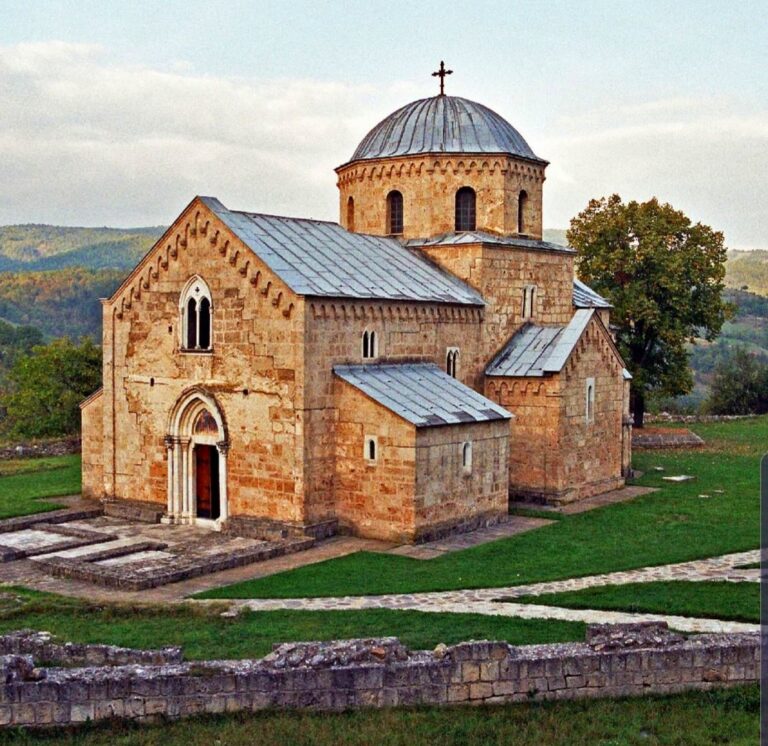
Pridvorica Monastery stands on the left bank of the Studenica River. Its church is a single-nave, single-domed building from the twelfth-century tradition of the Raška architectural school, a medieval Serbian style combining Byzantine planning with Romanesque elements. Stylistic assessment places the structure in the late twelfth or the first half of the thirteenth century, while traditional dating assigns its construction to around 1195.
Plan and exterior
The church has a transept, a broad semicircular apse, and projecting compartments for the proscomidion and diakonikon. The proscomidion is the sanctuary area where bread and wine are prepared for the Eucharist, while the diakonikon is the adjoining space associated with liturgical preparations and storage. A spacious narthex, or entrance hall, precedes the nave. The dome carries a frieze of blind arcades, and similar arcade ornament gives the outer facade its distinctive character, although the exterior was substantially modified by later restorations.
Interior decoration and furnishings
The interior was once covered with frescoes, most of which have disappeared. Small but valuable fragments remain in the upper zones of the church. The iconostasis installed during the nineteenth-century restoration includes royal doors, the principal central doors used during the liturgy. These doors were painted in 1835 by Sreten Protić-Molerović, son of Janko Mihailović Moler.