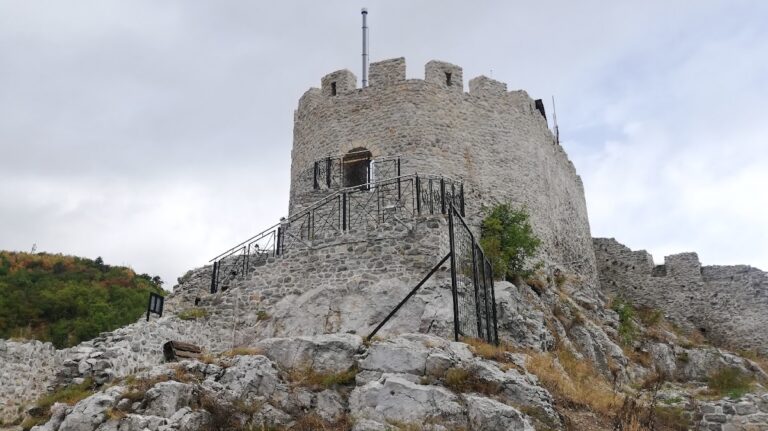
Klisura Monastery: A Medieval Serbian Orthodox Monastery in Serbia


Site at a Glance
- Rating
- 4.9
- Popularity
- Low
- Country
- Serbia
- Primary era
- Medieval
- Eras represented
- Medieval, Early Modern, Modern
- Civilizations
- Ottoman, Serbian
- Site type
- Religious
- Remains
- Monastery
On this page7 sections
History
Klisura Monastery is an active women’s monastery in Stupčevići, Serbia, near Arilje. It arose in the medieval Serbian state at the end of the thirteenth century in the Raška architectural style, although its founder and exact construction date are unknown. The monastery belongs to the Žiča Eparchy, the territorial diocese of the Serbian Orthodox Church, and its church is dedicated to the Holy Archangels Michael and Gabriel.
Medieval foundation and early destruction
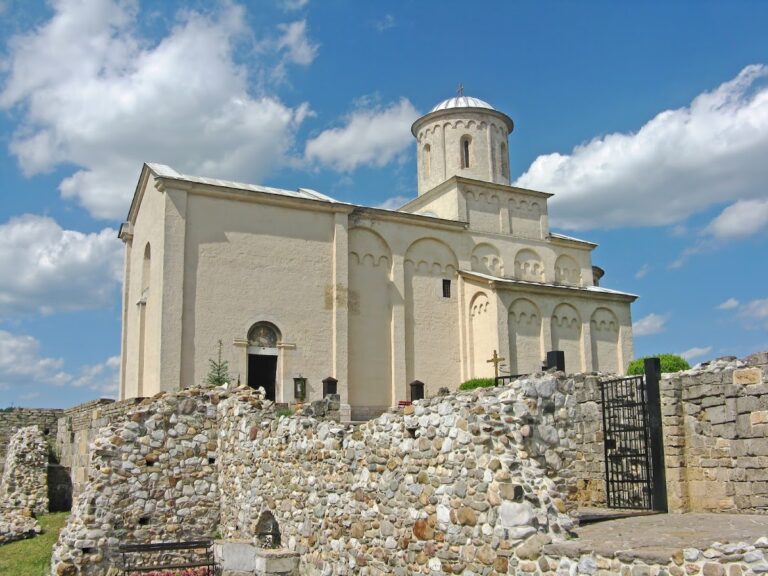
The monastery stands in the territory of the village of Dobrače, about 13 kilometres south of Arilje, in the Moravica gorge. Its earlier name, Dobrača Monastery, came from the surrounding area, while the later name Klisura refers to the gorge. The church’s design resembles the Church of St. Achilleus in Arilje, which served as the seat of the medieval Moravica bishopric. Folk tradition associates Klisura with the Nemanjić dynasty, Serbia’s principal medieval ruling house, known for founding and endowing churches and monasteries.
The monastery’s first devastation is associated with 1459, the year in which the Serbian state finally collapsed. During the Morean War, a late-seventeenth-century conflict between the Ottoman Empire and Venice and its allies, the church, then known as the Dobrača church, was probably burned in 1688. After the war and the Great Migration of the Serbs, a large Habsburg-directed movement of Serbs from Ottoman-held territories in 1690, the monastery was abandoned.
Rebuilding and changing names
The church was rebuilt in 1798 by the monk Jaćim Karlaga, who came from Foča, with help from the local population. A record from 1858 identified Karlaga as a member of the Rašković family of Stari Vlah. Another destruction or collapse followed in 1813, and repairs were carried out in 1815 and 1816 through the efforts of Miloš Obrenović, a Serbian ruler and founder of the modern Obrenović dynasty. The writer and travel author Joakim Vujić visited the monastery in 1826.
Until the middle of the eighteenth century, the monastery was called Dobrački. It was later renamed Klisura after a cloudburst and torrent completely destroyed the monastery complex. In 1867 it was described as a “small monastery,” reflecting its limited dimensions and its small stone church with a single dome. During the nineteenth century, Dobrača, Trešnjevica, Stupčevići, and Latvica were attached to it as parish branches. In 1872, only Abbot Chrysantije and the hieromonk Janićije, a monk who was also an ordained priest, lived there. The 1898 classification of Orthodox monasteries in the Kingdom of Serbia placed Klisura in the third order, with the hieromonk Joakim Milošević as its resident.
War, reconstruction, and modern status
Austro-Hungarian forces raided the monastery several times in 1915 and 1916 during the First World War, damaging or destroying parts of the complex. The monastery buildings were constructed during the interwar period under the direction of the superior Domentijan Zdravković. Bulgarian occupation forces set fire to and destroyed part of the complex during the Second World War. After the war, a new monastic residence was built, and from 1961 Klisura has functioned as a women’s monastery. It is protected as an immovable cultural asset and designated as a cultural monument.
Remains
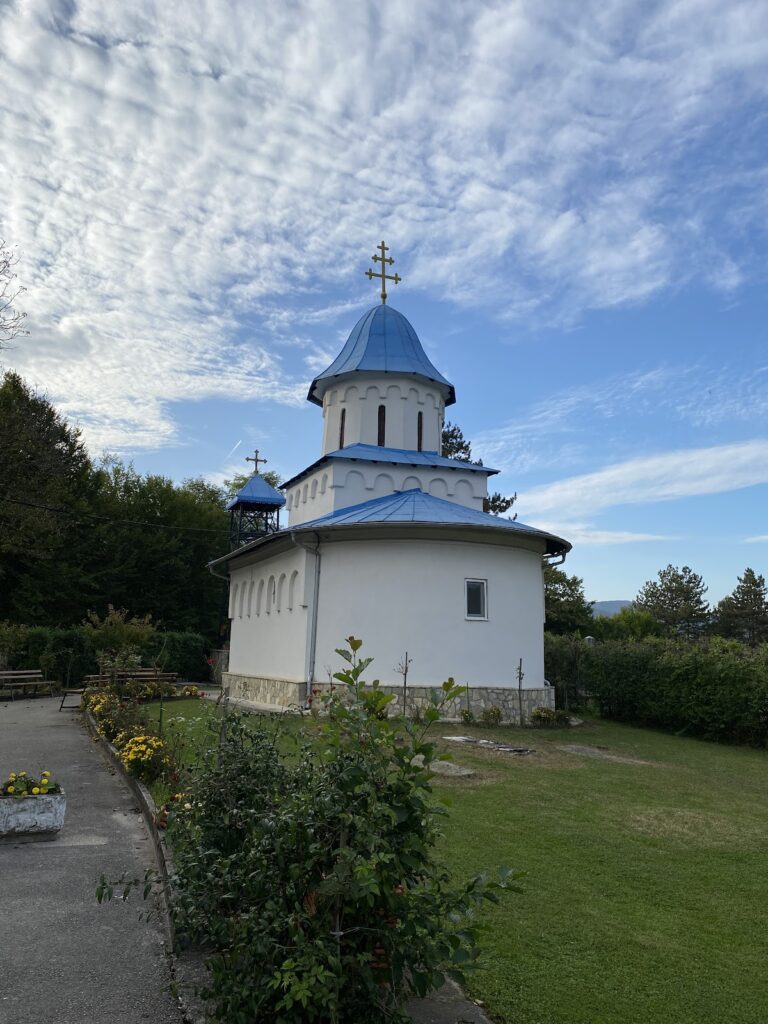
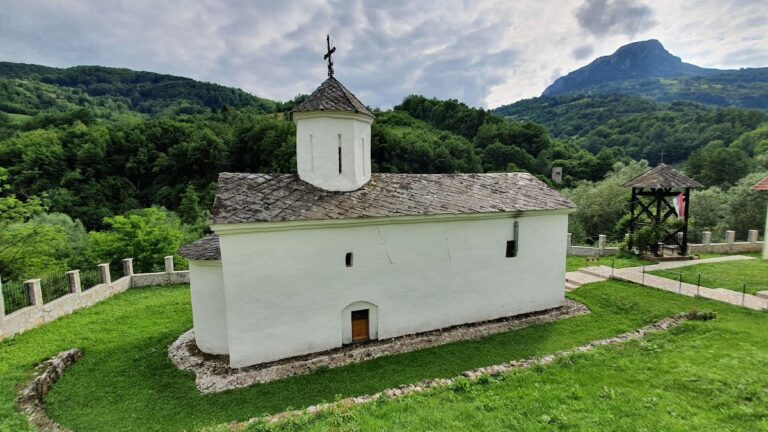
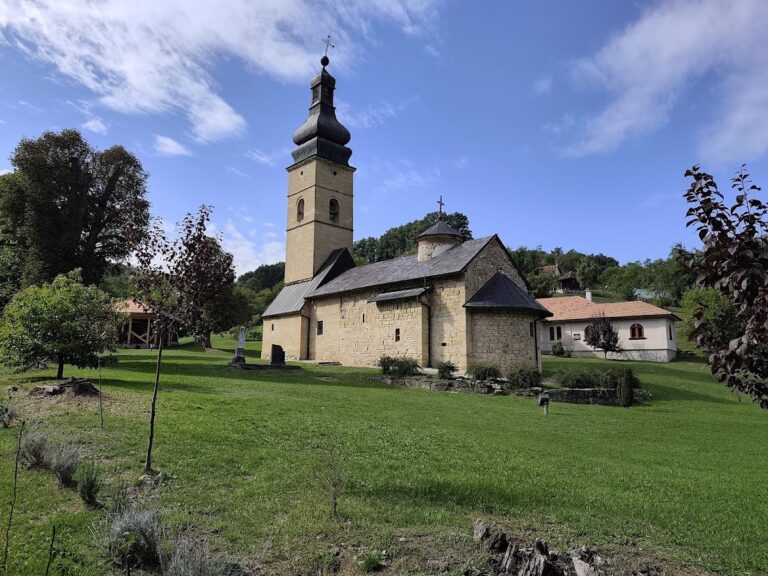
The surviving church is a small stone building with a single nave. At its eastern end is a semicircular altar apse, while a narthex, or entrance vestibule, adjoins the nave. A wooden exonarthex, an additional outer vestibule, extends westward in the form of a porch. An octagonal dome rises above the nave. The church follows a Raška-style architectural model associated with medieval Serbian building, and its form is related to the Church of St. Achilleus in Arilje and to churches at Pridvorica, Morača, and Sveta Trojica on Ovčar.
Interior painting
The church’s original wall paintings were destroyed when the building burned in 1688. The present frescoes were painted in 1952 by the academic painter Jaroslav Kratina. Alongside classical Christian subjects, Kratina included figures from Serbian epic tradition, among them the Kosovo Maiden, the Mother of the Jugović brothers, and Vojvoda Rajko.
Iconostasis
The church contains an iconostasis, the screen separating the sanctuary from the nave and carrying icons. Made by Dimitrije Posniković in 1867, it has 42 icons. Thirty-one were painted in Odesa, while Posniković painted the remaining 11 himself.
Nearby sites