Kotor Castle: A Medieval Fortress in Bosnia and Herzegovina


Site at a Glance
- Rating
- 4.6
- Popularity
- Very Low
- Country
- Bosnia and Herzegovina
- Primary era
- Medieval
- Eras represented
- Medieval
- Civilizations
- Kingdom of Bosnia
- Site type
- Military
- Remains
- Castle
On this page9 sections
History
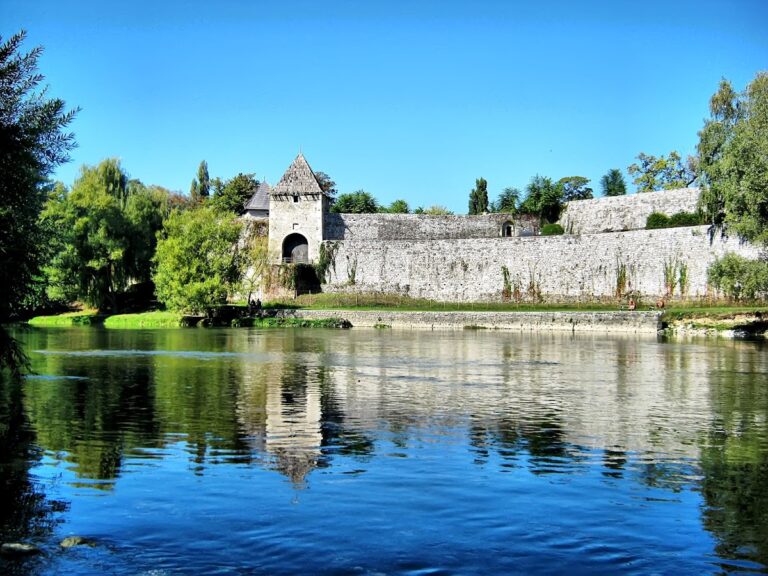
Kotor Castle, also known as Kotorgrad, is a medieval fortress above Kotor Varoš in Bosnia and Herzegovina, built in the fourteenth century during the period of the medieval Bosnian kingdom. It became the first and preferred seat of Hrvoje Vukčić Hrvatinić, a powerful Bosnian nobleman and duke of the Hrvatinić family, who controlled territories and fortified seats in the medieval Bosnian state. The fortress was first mentioned in 1382 and remained Hrvoje’s favored estate until his death there in 1416.
Hrvoje Vukčić Hrvatinić and the medieval fortress
Hrvoje held Kotor alongside his other fortresses at Ključ and Jajce. The castle stood within the lands of Donji Kraji and the parish of Vrbanja, giving its owner a fortified seat in an important local area. Kotor later became part of the Jajce Banovina, a territory governed by a ban, a high-ranking regional ruler or governor in the medieval and early-modern Balkans.
Ottoman conquest and military administration
The Ottomans conquered Kotor in 1519, fifty-two years after the official fall of Bosnia. The defense of the fortress at the battle of Večićko Field offered the strongest resistance to the Ottoman advance down the Vrbanja Valley. Afterward, Ottoman forces overran Banja Luka, Srbac, Kobaš, Derventa, and the whole Posavina region, briefly crossing into Slavonia.
Kotor retained a military role under Ottoman rule. Its mustafiz, members of the fortress garrison, held timars, revenue assignments commonly granted for military or administrative service, extending to villages around Visoko and to Dubrovnik near Visoko. These places were probably important commercial centers. Hamdija Kreševljaković proposed that Kotor’s garrison had moved there from a city nearer Visoko.
The fortress in the nineteenth century
Ottoman commanders of Kotor included Huseinaga in 1557, Salihaga until 1748, his hereditary successor Avdaga from 1758 until after 1793, Mehmedaga in 1810, and Mehmedaga’s son Abdurahmanaga in 1816. In 1858, Salihaga voluntarily transferred the office of dizdar, the commander responsible for a fortress, to his brother Avdaga. The dizdar’s timar at Tačbil was valued at 3,400 akces, small Ottoman silver coins used in financial records.
The fortress maintained its own military crew until 1838. During the Austrian occupation of the right bank of the Sava, the crews and administration of the Kobaška captaincy were transferred to Kotor. The Kobaška captaincy remained under the judicial jurisdiction of the Jajce captaincy. In 1833, Kotor was recorded as having one cannon.
Kotor Castle is protected as a National Monument of Bosnia and Herzegovina. Its surviving fabric reflects prolonged carelessness and neglect, affecting the remains of this medieval fortress.
Remains
Kotor Castle is a limestone fortress arranged around a tower slightly above the ridge overlooking the Jakotina River and a dungeon positioned directly above a waterfall. A stone staircase once connected these two principal elements. The tower and dungeon now survive as ruins, while broken sections of the staircase remain visible.
Fortress structures
Tower
The limestone tower stood slightly above the ridge over the Jakotina River and formed one of the two central elements of the stronghold. An anonymous description characterized Kotor as a small walled fortress equipped with small cannons and accompanied by a suburb of about seventy houses. A very large bell remained in the tower until Kotor Varoš was liberated in 1945. Its later fate is unknown.
Dungeon and connecting staircase
The dungeon was positioned directly above the waterfall and connected to the tower by a stone staircase. The staircase survives in broken fragments that can still be seen, while the dungeon itself remains in ruin. Together, these features preserve the basic relationship between the elevated tower and the lower part of the former fortress.
Waterfall and local tradition
The waterfall associated with the stronghold was traditionally linked with the name “Bobas” or “Bobac” and with a powerful source of drinking water. Water from the source reportedly continued to reach more distant households in Kotor Varoš for the iftar, the meal that breaks the daily fast during Ramadan, during the 1960s. The population associated with Kotor traditionally favored the form “Bobac,” while residents of other parts of the town preferred “Bobas.” Both forms remain part of local tradition.