Kossakówka: A Neo-Gothic Artists’ Villa in Kraków
Site at a Glance
- Popularity
- Very High
- Country
- Poland
- Primary era
- Modern
- Eras represented
- Modern
- Civilizations
- Austrian Empire, Habsburg
- Site type
- Domestic
- Remains
- Elite Residence
On this page8 sections
History
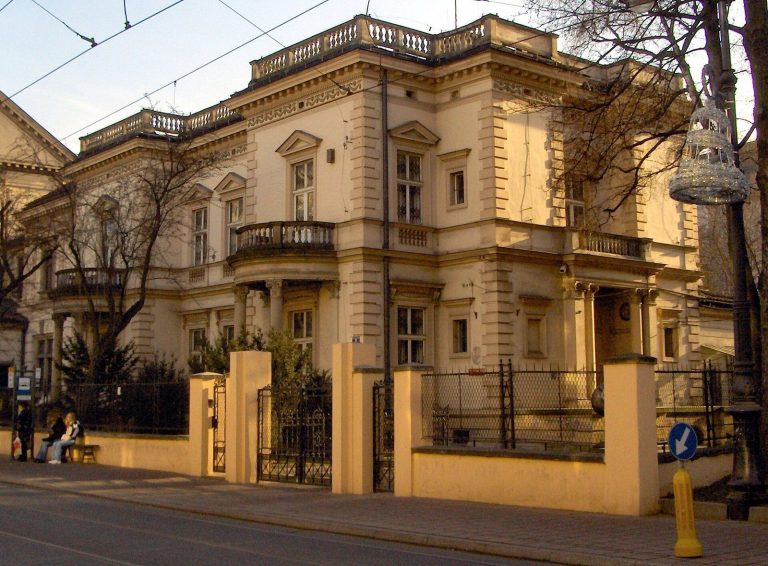
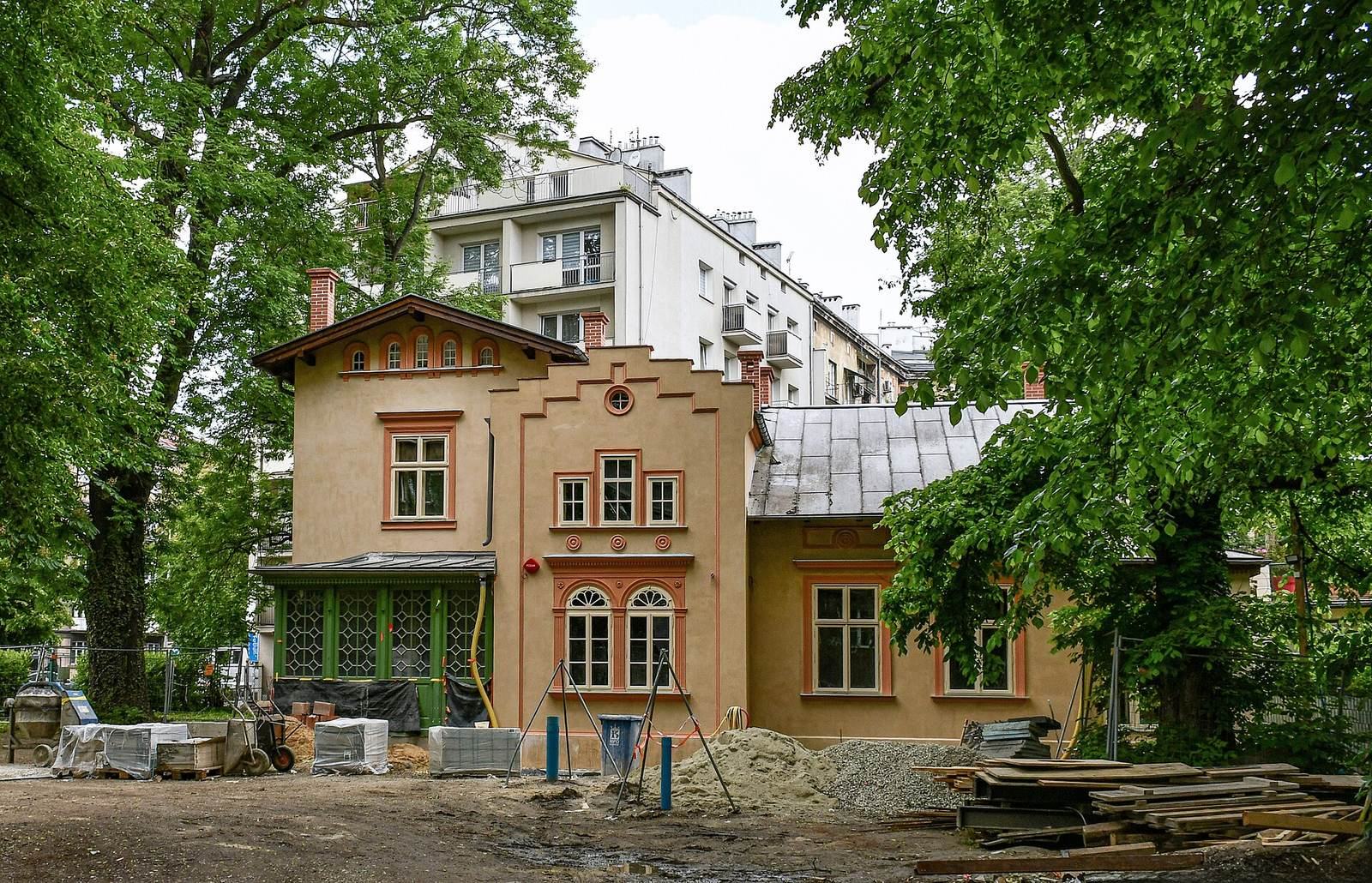
Kossakówka is a Neo-Gothic villa built in 1851 in Kraków, Poland. Neo-Gothic is a nineteenth-century revival style drawing on medieval Gothic forms. The house became a home and workplace for several generations of the Kossak family and, until the Second World War, welcomed members of Kraków’s intellectual and artistic circles.
From Wygoda to the Kossak home
Architect Jan Bogumił Trenner designed the villa for Wincenty Kołodziejski, and it was first called Wygoda. Juliusz Kossak bought it in 1871 and moved in with his wife and five children. While Juliusz studied painting in Munich, his family lived in the house. He later set up a painting studio there and worked in the villa. The square, then called Plac Latarnia, was renamed after his death in 1899.
Expansion and family life
In 1884, Juliusz’s son Wojciech took over the villa and commissioned architect Tadeusz Stryjeński to enlarge and remodel it. Stryjeński carried out further work in 1910. The house held studios used by both Juliusz and Wojciech. Wojciech’s wife, Maria Kossak, cared for the family home, which also housed the next generation, including painter Jerzy Kossak, poet Maria Pawlikowska-Jasnorzewska, and writer and satirist Magdalena Samozwaniec.
War, preservation, and decline
After Wojciech died in 1942, his son Jerzy took over the house. He lived there with family members, including his second wife, Elżbieta Dzięciołowska-Śmiałowska. After Magdalena Samozwaniec died in 1972, Elżbieta’s eldest daughter Dagmara lived in the villa.
After the Second World War, the villa faced demolition. Elżbieta persuaded Poland’s Minister of Culture, Włodzimierz Sokorski, to recognize it as a national heritage site. It entered Poland’s register of monuments on 25 May 1960 and was renovated with state funding, but that support later ended. The buildings were unoccupied and deteriorating by the 1980s. Conservation work followed in 2014 and 2017. Kraków acquired the ruined villa from its owners, and the Museum of Contemporary Art in Kraków completed its purchase of the villa and garden on 27 December 2019. The historic city complex that includes Kossakówka received the Historic Monument of Poland designation in 1994, a national status for places recognized for historical or cultural importance.
Remains
The property
The property comprises a Neo-Gothic villa and its associated garden. The villa has approximately 350 square metres of usable floor area and was divided into two parts.
The villa
One part of the house was intended for women. It later became known as “Grandma’s House” and eventually “Jerzówka.” The villa was in ruins when acquired.
Garden and avenue-side parcel
The villa stood near a park on the outskirts of the city, within a property described as surrounded by a 16-hectare garden. An additional parcel on the avenue side, covering 4.11 hectares, was acquired on 16 December 2020.