St Bartholomew’s Church in Jeżewo: A Gothic and Baroque Parish Church
Site at a Glance
- Popularity
- Very Low
- Country
- Poland
- Primary era
- Early Modern
- Eras represented
- Medieval, Early Modern, Modern
- Civilizations
- Polish–Lithuanian Commonwealth
- Site type
- Religious
- Remains
- Church
On this page10 sections
History
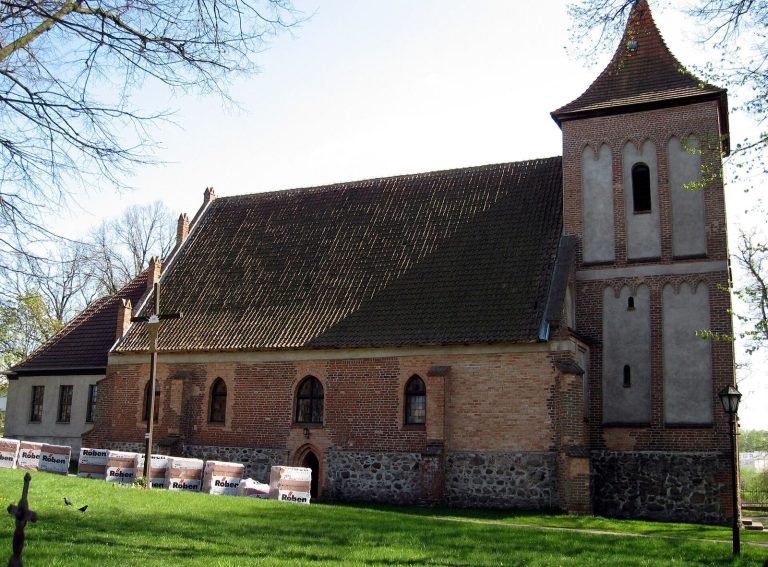
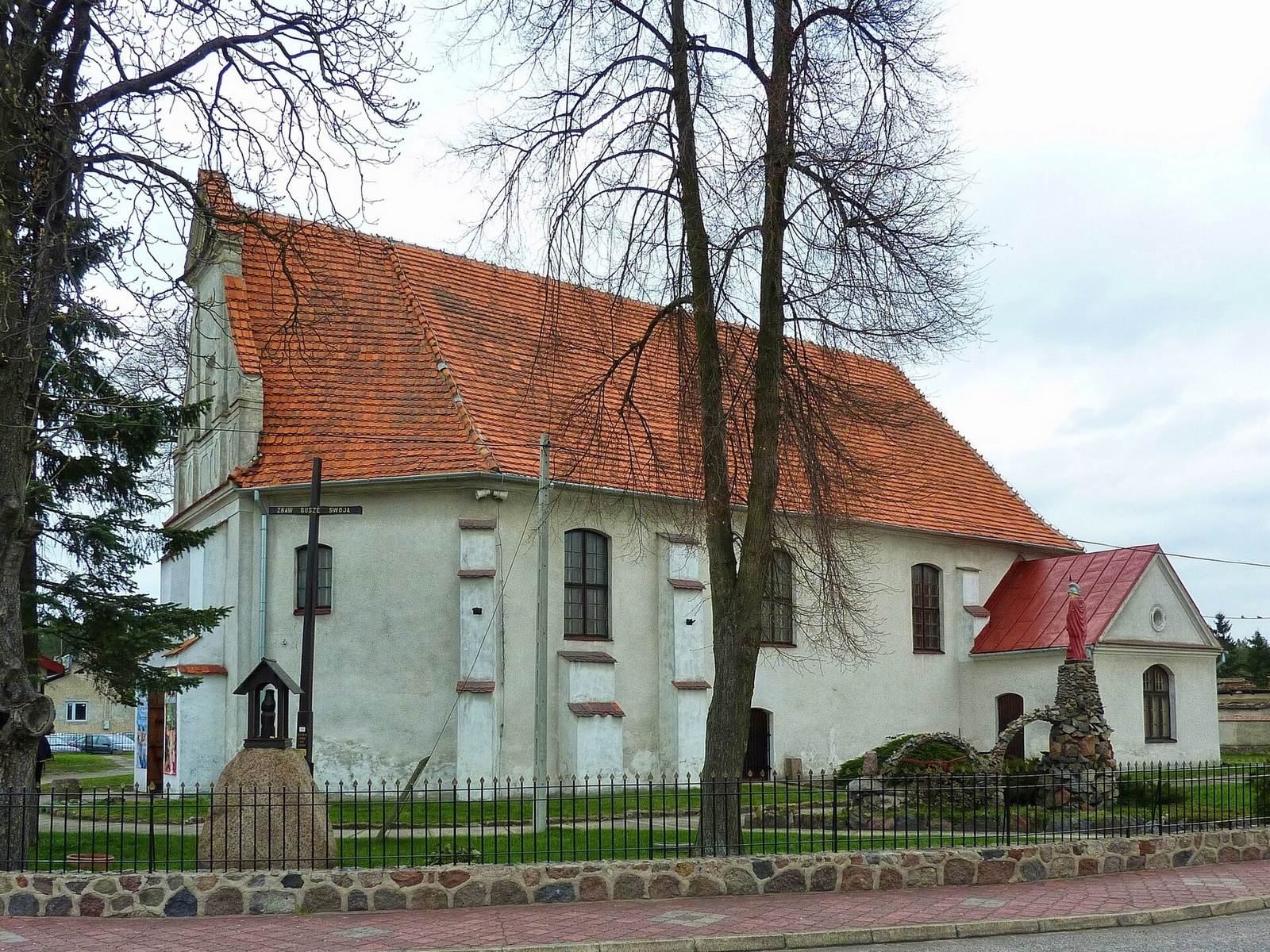
St Bartholomew’s Church in Jeżewo is a Roman Catholic parish church in Poland, built in masonry in the late 15th century. It combines Gothic, a medieval European architectural style, with Baroque, a later style associated with dramatic, ornate design. Dedicated to Saint Bartholomew, one of the twelve apostles in Christian tradition, the church celebrates its feast on 24 August. Its parish belongs to the Sierpc deanery, a grouping of parishes, within the Diocese of Płock, a territorial church jurisdiction overseen by a bishop.
Foundation and dedication
The church was probably erected by Dominik and Jan Jeżewski, canons of Płock, clerics attached to a cathedral or collegiate church. Local parish priests may also have contributed to its construction. In 1598, the consecrated church was dedicated to Saint Bartholomew.
Rebuilding and parish devotion
Around 1740, the church was rebuilt as a three-aisled building. In 1763, a bequest from Antoni Bagieński, a deputy official in the Płock castle court administration, established a confraternity, a lay religious association organized around shared devotional or charitable practices. The association may also have supported the founding of an altar dedicated to Our Lady of the Rosary. General Jeżewski paid for repairs to the church in 1791.
Modern repairs and renewal
After the Second World War, extensive repairs and modernization were carried out through the efforts of Father Ignacy Prądzyński. Father Marek Andrzej Piotrowski later oversaw interior painting. The church was entered in Poland’s monument register on 7 May 1962.
Remains
Plan and construction
The church has an elongated-octagonal plan, three aisles, and a traditional east–west orientation, with its sanctuary toward the east. Its walls are brick covered with plaster. The building’s combination of Gothic and Baroque features reflects its architectural character.
Interior furnishings
Altars
In 1598, the main altar held a sculpture of the Virgin Mary surrounded by other saints; side altars were dedicated to Saint Andrew and Saint Nicholas, who may have been co-patrons. An altar for offerings stood in the middle of the church. Four altars were recorded in 1817. A painting of the Assumption of the Virgin Mary in the main altar was later replaced by an image of Our Lady of Częstochowa, a widely venerated image of the Virgin Mary. The surviving altars are dedicated to Saint Bartholomew and Saint Anthony.
Baptismal and holy-water vessels
The church retains an 18th-century late-Baroque baptismal font, which holds water for baptism, and an 18th-century granite holy-water stoup, a vessel for water used in devotional practice.
Organ and later interior work
A twelve-stop organ made by the Warsaw workshop of Czesław Kruszewski was funded in 1975. In 2011, parishioners acquired a new altar and pulpit and installed new lighting. They repainted the interior and restored the Stations of the Cross, devotional stations recalling episodes of Jesus’ journey to crucifixion, in 2014. Stained-glass windows depicting the Virgin Mary and Saint Joseph were installed in 2019, followed in 2020 by windows showing Saint Barbara, Saint Francis, Saint Jadwiga, and Saint Peter the Apostle.