Sanctuary of Our Lady of Leśniów, Patroness of Families: A Marian Shrine in Żarki, Poland
Site at a Glance
- Popularity
- Medium
- Country
- Poland
- Primary era
- Early Modern
- Eras represented
- Medieval, Early Modern, Modern
- Civilizations
- Kingdom of Poland, Polish–Lithuanian Commonwealth
- Site type
- Religious
- Remains
- Sanctuary
On this page10 sections
History
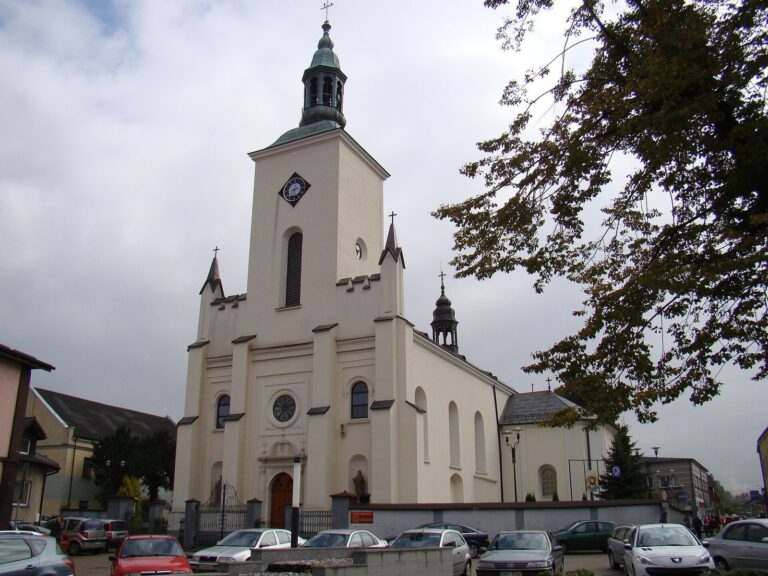
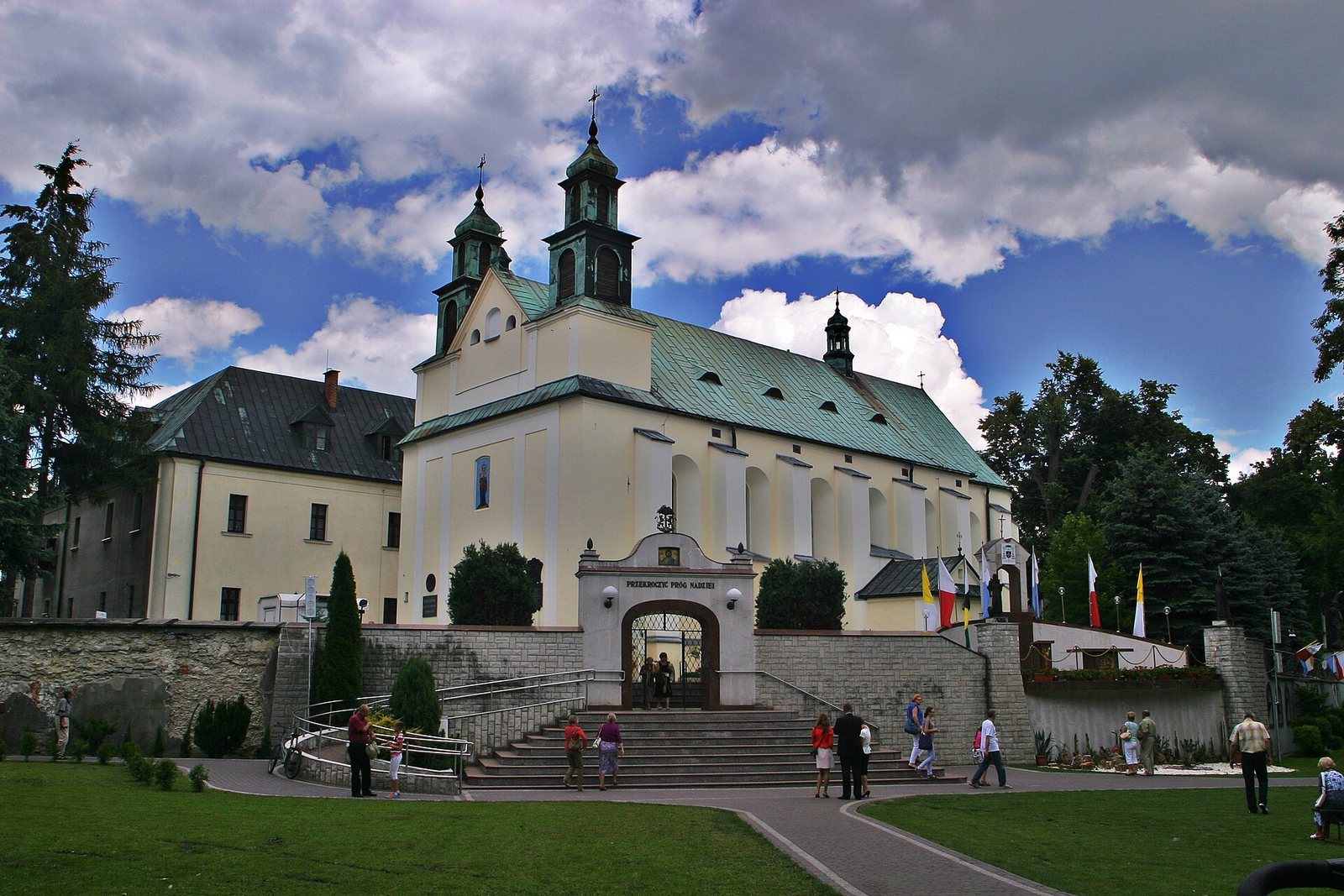
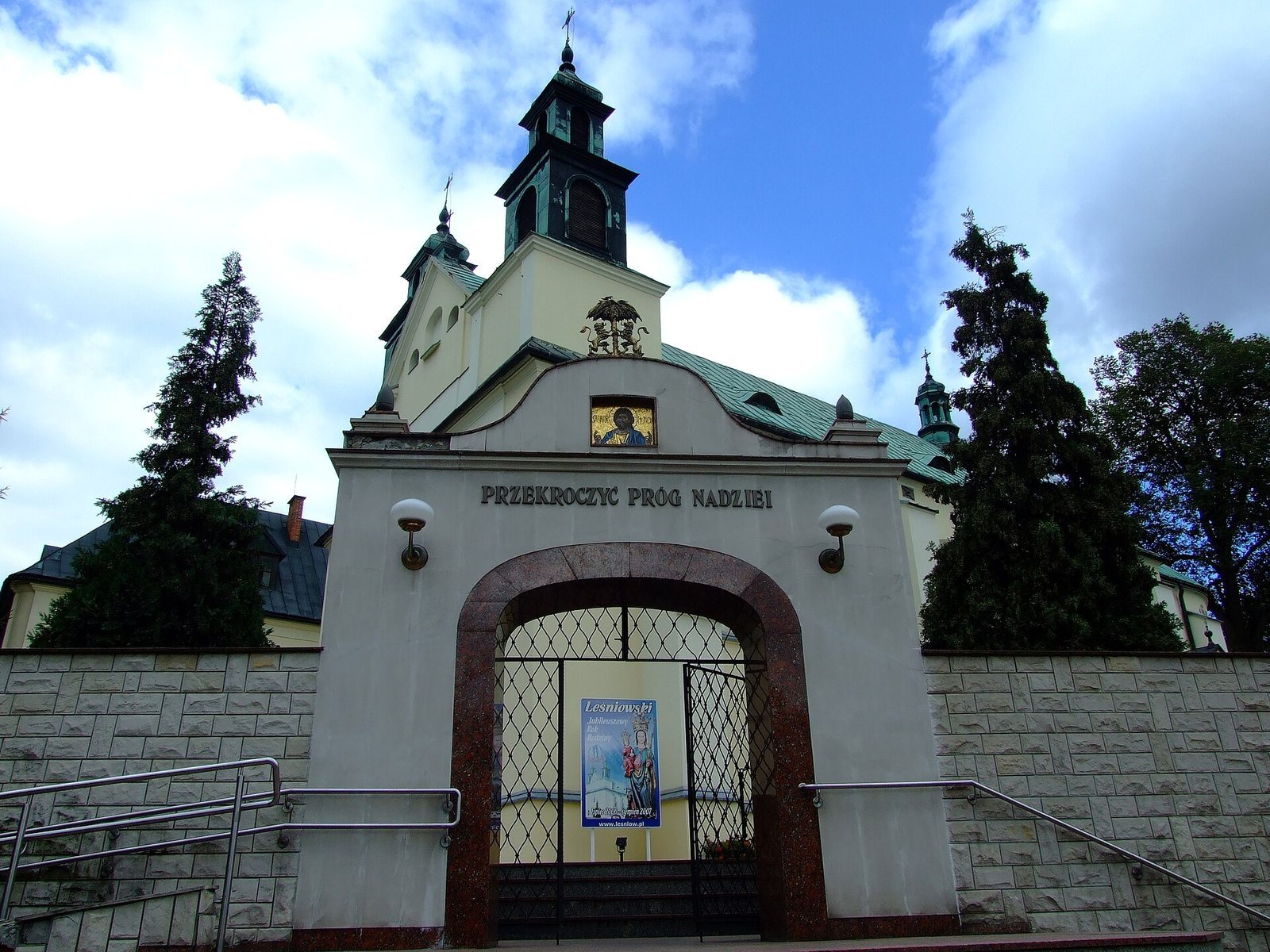
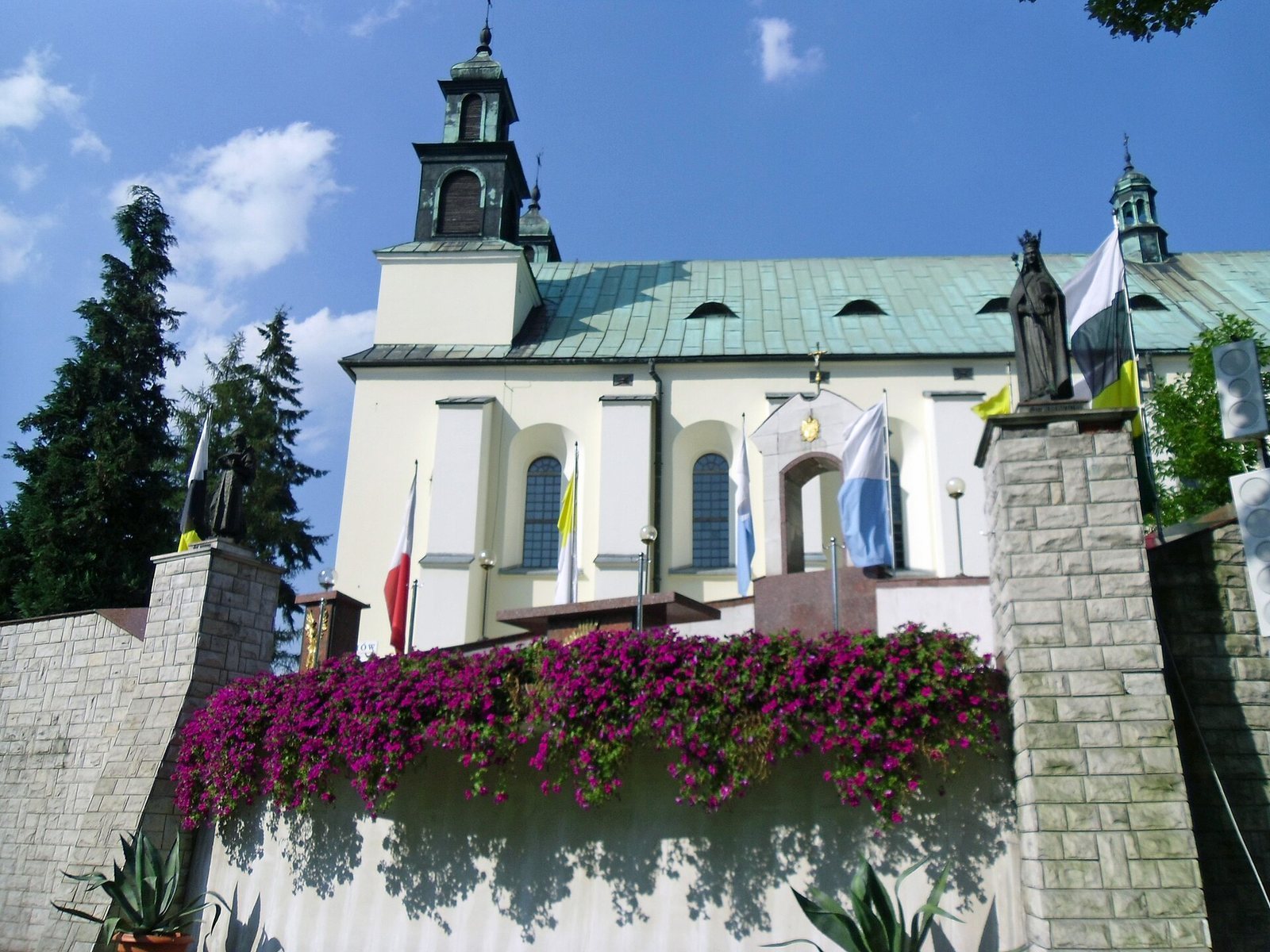
The Sanctuary of Our Lady of Leśniów, Patroness of Families, is a Roman Catholic Marian sanctuary in Leśniów, a district of Żarki, Poland. Dedicated to the Visitation of the Blessed Virgin Mary, it belongs to the parish of Saints Simon and Jude Thaddeus. A wooden church probably stood here by 1325, giving the sanctuary medieval origins.
Early church and foundation tradition
The church is associated with completion dates in 1559, 1762, and 1791. A local foundation legend places a celebrated event here in 1382, when Duke Władysław Opolczyk, a 14th-century duke of Opole, stopped at a clearing beside the wooden church while traveling to Opole. His party had no drinking water, and he prayed for strength and a safe return.
In the story, a statue of Mary holding the Child shone with golden light. A clear spring then emerged beneath a moss-covered stone at the Child’s gesture. People credited its water with restoring strength, healing wounds, and curing illness. The duke left the statue in the church. The legend also connects an icon of Our Lady of Belz that he carried with the image later venerated at Jasna Góra, the Pauline monastery in Częstochowa, as Our Lady of Częstochowa, also known as the Black Madonna.
Pauline administration and rebuilding
Discalced Carmelites, a reformed branch of the Carmelite order, used the monastery for the two years before 16 May 1706. On that date, Żarki’s owner, Józef Męciński, granted the church and its wooden monastery to the Paulines, members of the Order of Saint Paul the First Hermit. Work on a masonry monastery began in 1755 and finished in 1768. The church was enlarged during the same period.
Coronation and modern devotion
In 1967, Cardinal Stefan Wyszyński, Primate of Poland, crowned the statue of Our Lady of Leśniów. Karol Wojtyła, then Metropolitan Archbishop of Kraków and later Pope John Paul II, attended. Through Wojtyła’s efforts, the Congregation for Divine Worship and the Discipline of the Sacraments, a Roman Curia department concerned with Catholic worship and sacramental discipline, set 2 July as the feast of Our Lady of Leśniów and approved a Mass formulary in her honor.
The crowns used at the 1967 coronation were stolen from the sanctuary on the afternoon of 2 December 2010. On 2 July 2011, the statue was crowned again with new crowns, which Pope Benedict XVI had blessed at a general audience on 22 June.
Remains
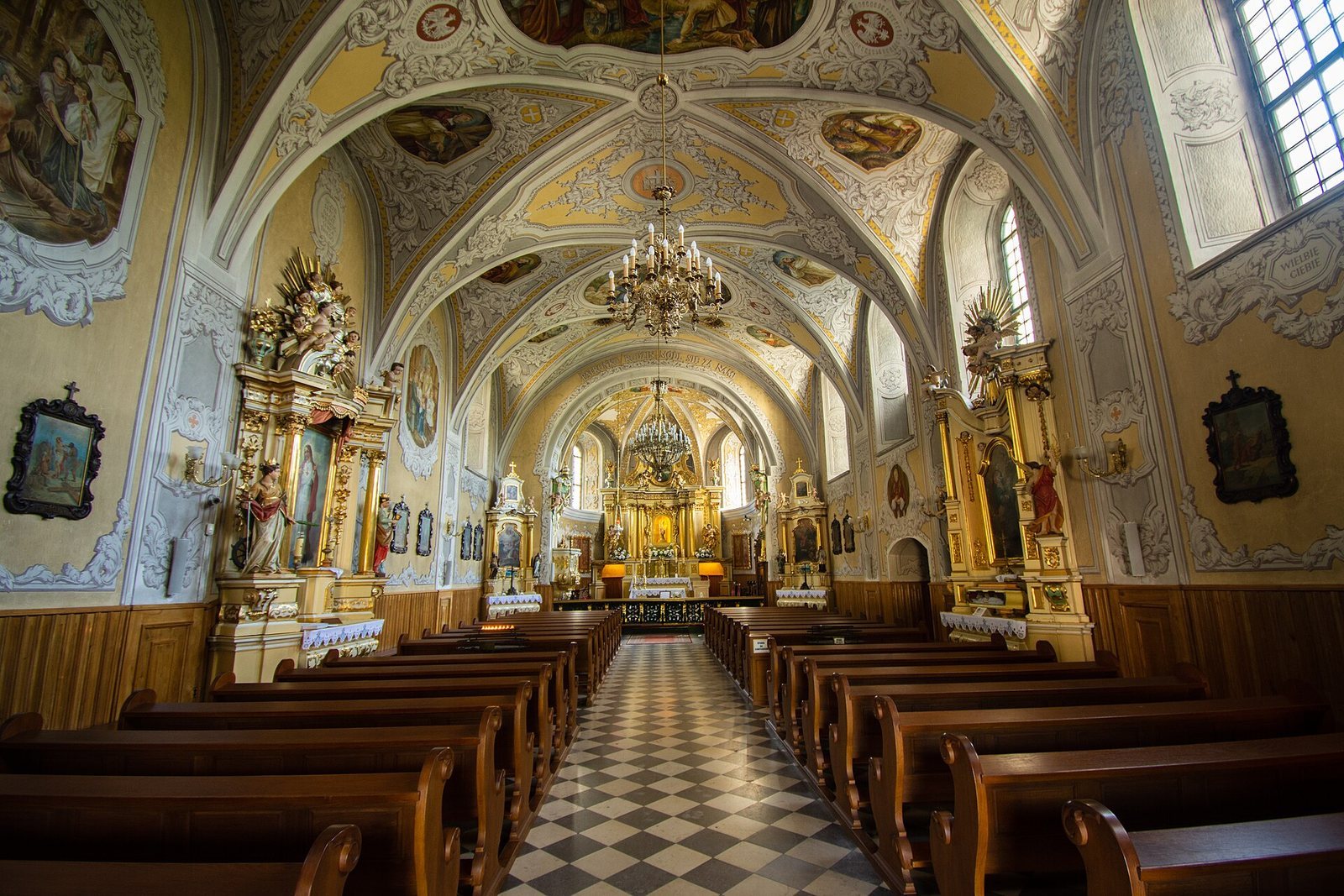
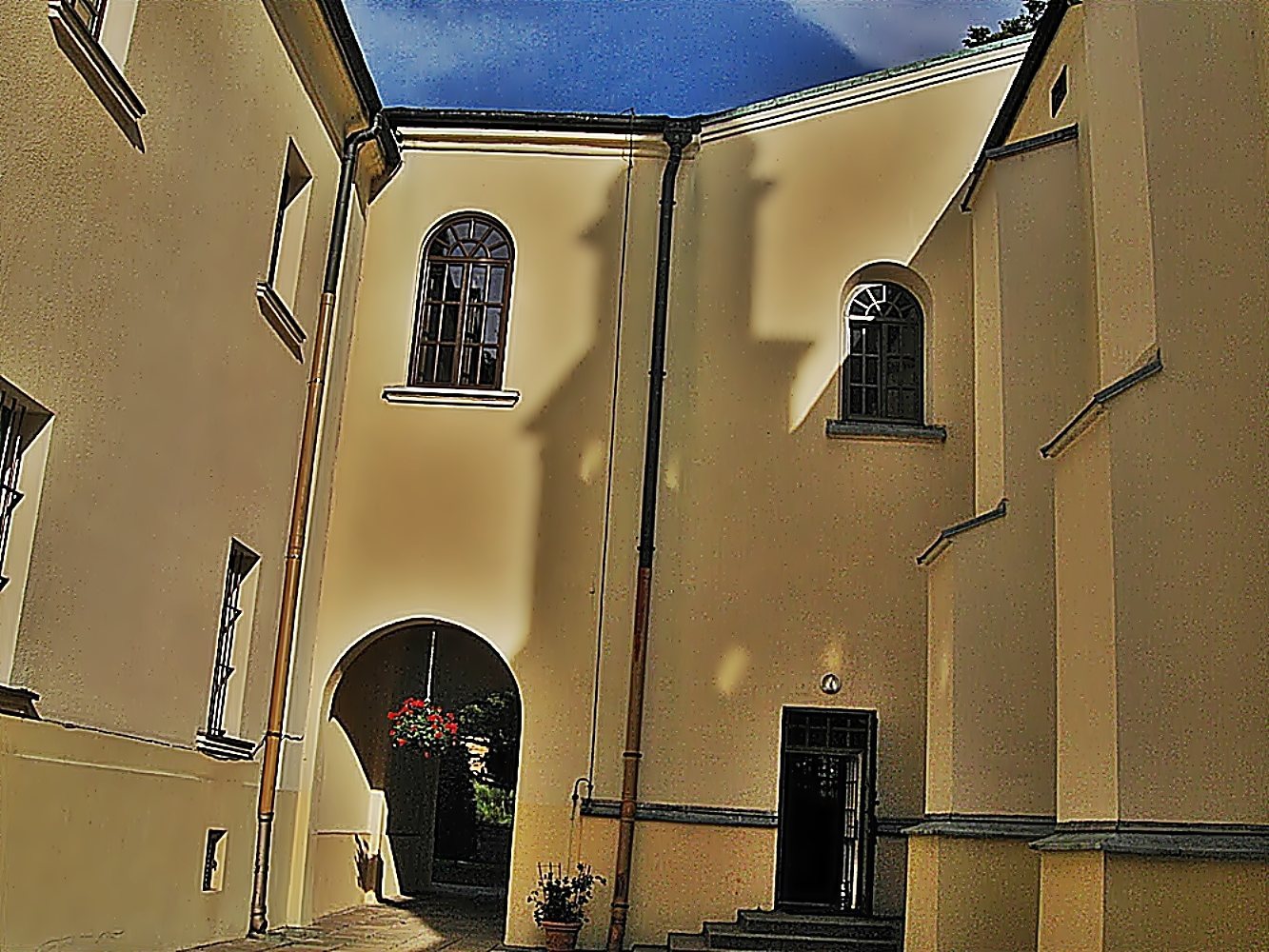
The brick church combines Gothic design, associated with medieval pointed forms, Renaissance design drawing on classical models, and Baroque composition with elaborate decoration. Its lengthened central space, added porch, and small bell turret shape the building’s surviving form.
Church and associated features
Church fabric
The church’s nave (the central worship space) was lengthened, and a masonry porch was added. A small bell turret (a structure housing a bell) stands on the decorated gable.
Altar and furnishings
A Baroque altar made in 1730 holds the venerated statue at its center. The church’s 18th-century furnishings include confessionals, Rococo choir stalls (in a lighter, more ornate style), and decorative railings. Two side altars date from the 19th century and honor Saint Joseph, regarded in Christianity as Mary’s husband and Jesus’s foster father, and Saint Paul the Hermit, an early Christian ascetic associated with the beginnings of hermit monasticism.
Marian statue and crowns
The statue depicts Mary holding the Child. In the 18th century it was adorned with gilded crowns and robes made from valuable material. The monastery’s then-prior, Father N. Raciborski, commissioned crowns in 1746; Częstochowa goldsmith Jan Szabelski made them.
Spring
The spring associated with the sanctuary is located in the foundation legend beneath a moss-covered stone. The Paulines enclosed it and arranged its surroundings.