Koroglaš Monastery: A Medieval Serbian Orthodox Church in Serbia


Site at a Glance
- Rating
- 4.2
- Popularity
- Very Low
- Country
- Serbia
- Primary era
- Medieval
- External website
- Open
- Eras represented
- Medieval
- Civilizations
- Serbian
- Site type
- Religious
- Remains
- Monastery
On this page6 sections
History
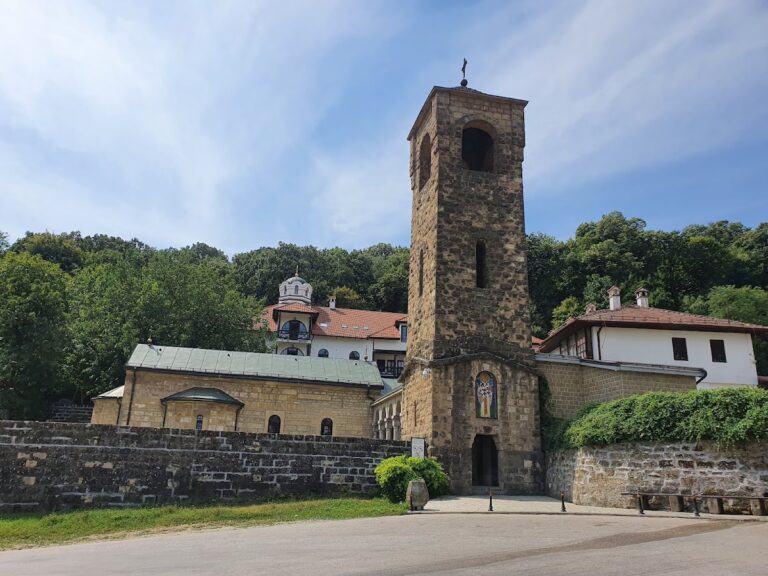
Koroglaš monastery is a former Serbian Orthodox monastery near Miloševo in eastern Serbia. Its surviving church belongs broadly to the fourteenth or early fifteenth century and reflects the Moravian school, a late-medieval Serbian architectural and artistic tradition associated with churches built under Serbian rulers and patrons. The monastery’s founder and precise foundation date are unknown. It is protected by the Republic of Serbia as a monument of culture of great importance.
Medieval origins and tradition
Stylistic analysis places the church within the Moravian school, although its exact date cannot be established. A Romanian and Serbian tradition connects its foundation with Mircea cel Bătrân, or Mircea the Elder, the late-medieval ruler of Wallachia. According to this tradition, Mircea built the church after the Battle of Rovine in 1395, following a final battle near Koroglaš. The church was supposedly established in honor of the Christian dead and the Serbian prince Marko Kraljević, a fourteenth-century ruler who later became a major figure in South Slavic epic tradition. This account remains legendary and is not confirmed by surviving written sources.
The monastery is affiliated with the Eparchy of Timok, a territorial jurisdiction of the Serbian Orthodox Church. The church is identified today with a dedication to the Ascension, the Christian feast commemorating Jesus’s ascent to heaven, while its original dedication is unknown.
Ruination and archaeological investigation
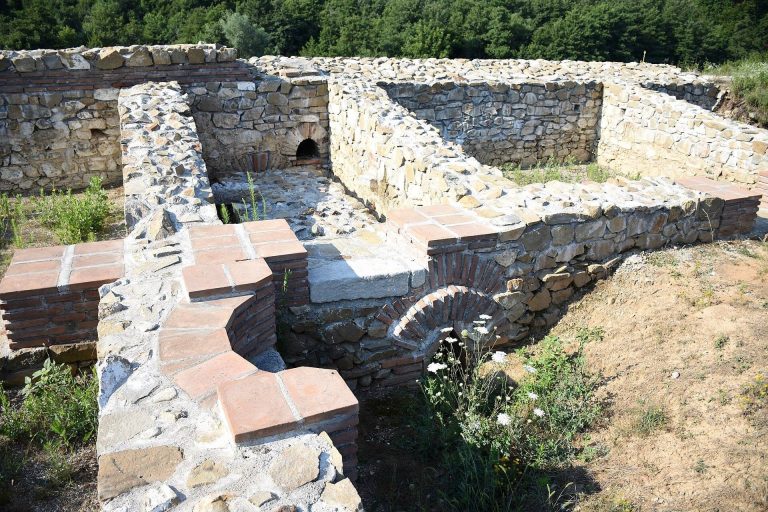
The church stood in a long-ruined state, and its fresco decoration was almost entirely destroyed. Conservation work took place in 1975 and 1976, followed by partial renovation. The monastery remains abandoned and in ruins. Archaeological work around and within the church revealed evidence of the site’s medieval use, including a large cemetery and objects connected with the people buried there and with activity inside the building.
In 2005, the Federation of Romanians in Serbia and the Romanian church in Malainița planned a memorial Orthodox service at the monastery for Romanians and Serbs said to have fallen at the Battle of Rovine. Serbian police prohibited the service.
Remains
The church
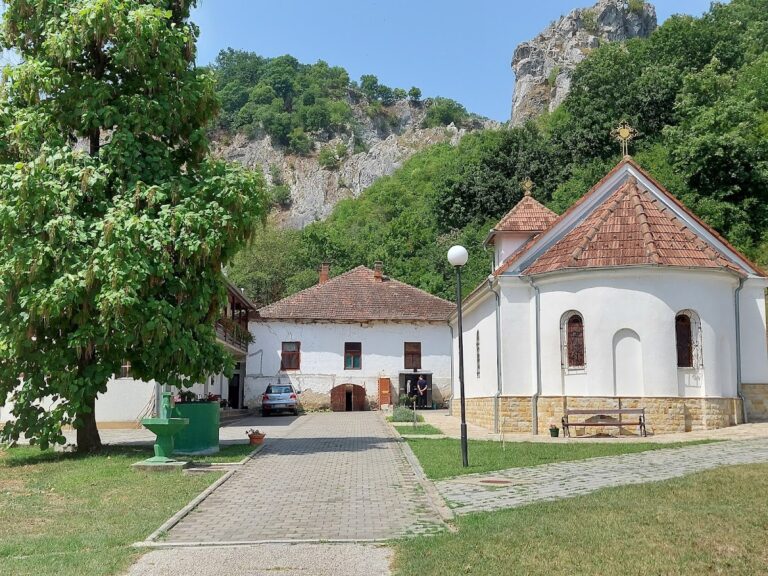
The surviving monastery church has a single-nave rectangular plan. Its altar apse is three-sided or polygonal on the exterior, semicircular inside, and covered by a semi-dome. Easily worked local dressed stone, bonded with lime mortar, forms the walls. Red ceramic ornaments, including circles and crosses, are set into the masonry, while ceramic tubes around the windows are said to produce sounds in windy conditions.
Shallow niches ending in semicircular arches articulate the north and south façades. The present two-pitched roof was added during twentieth-century conservation. Fragments of fresco painting survive in very poor condition, but they indicate that the original decoration was of high quality. Excavations inside the church produced glazed and unglazed ceramic fragments, glass vessels, and coins of Andronikos and Michael IX Palaiologos.
The medieval necropolis
A medieval necropolis surrounds the church and contains approximately 150 graves with rich funerary material. Finds include jewelry, buckles, clasps, silver buttons, and a Byzantine skyphos, a deep drinking vessel usually made with two horizontal handles. The objects date from the twelfth to the fourteenth century and help place the cemetery within the medieval history of the site.
The gravestones were reportedly standing vertically in 1937, but they now lie horizontally on the ground. Archaeological finds from the church and cemetery are preserved in the permanent exhibition of the Museum of Krajina in Negotin.