Kōmyō-ji Temple: A Jōdo Buddhist Head Temple in Kamakura
Site at a Glance
- Popularity
- High
- Country
- Japan
- Primary era
- Early Modern
- Eras represented
- Medieval, Early Modern, Modern
- Civilizations
- Ashikaga shogunate, Japanese, Tokugawa
- Site type
- Religious
- Remains
- Temple
On this page16 sections
History
Kōmyō-ji Temple is a Jōdo (Pure Land) Buddhist temple near the coast at Zaimokuza in Kamakura, Japan. It belongs to the Chinzei branch of Jōdo Buddhism, serves as a head temple for the Kantō region, and holds the rank of Great Head Temple, a high position within its religious institution. Its principal image is Amida Buddha, the focus of Pure Land devotion. The temple’s foundation is traditionally dated to 1240, though its early history remains uncertain.
Origins and medieval development
One temple tradition credits Hōjō Tsunetoki, a regent who governed Kamakura, and the priest Nen’a Ryōchū with founding Renge-ji, or Temple of Lotuses, in 1240. It places the early temple in Sasukegayatsu Valley, near Jufuku-ji. According to the same tradition, Tsunetoki received a divine instruction in a dream to rename it Kōmyō-ji, meaning Temple of Shining Light, and move it to its present seaside location in 1243. Historical records do not confirm that renaming or transfer. Another tradition calls the early temple Goshin-ji and links it to Ryōchū. His arrival in Kamakura is dated to 1259 or 1260, later than the traditional foundation date, leaving the temple’s beginnings unsettled.
Hōjō Tokiyori and other Kamakura regents later supported Kōmyō-ji. Under Ryōchū, who led the temple for more than forty years and died there in 1287, it developed into a complex of seven principal buildings and a center of Amida devotion in Kantō. It also became part of several pilgrimage routes: it is the eighteenth temple on the Kamakura Thirty-Three Kannon circuit, the twenty-second on the Kamakura Twenty-Four Jizō circuit, and the second Kamakura site on the Tōgoku Hundred Flower Temples circuit. It is also included in a Seven Kannon pilgrimage associated with Nyoirin Kannon.
Religious and financial support continued under emperors, shoguns, the military rulers of Japan, and regional lords. Patrons included Ashikaga Takauji, founder of the Ashikaga shogunate, Toyotomi Hideyoshi, and Tokugawa Ieyasu, who established the Tokugawa shogunate. Emperors Go-Hanazono, Go-Tsuchimikado, and Go-Uda each presented the temple with calligraphy. Nearby Wakaejima, an artificial harbor, handled much of the cargo brought into Kamakura, and some of the temple’s timber may have arrived through it. Wakaejima is a National Historic Site and the sole surviving example of an artificial harbor from the Kamakura period.
Muromachi and Edo periods
During the Muromachi period, the monk Yūsō Shōnin restored the temple. In 1495, Emperor Go-Tsuchimikado designated Kōmyō-ji as a temple for prayers on behalf of the imperial household. That year is also linked to the start of the Jūya Hōyō, or Ten Nights Memorial Service. Its original observance involved ten days and nights of continuous prayer. At Kōmyō-ji today, it lasts three days and nights of sutra chanting, and the service is also held at Jōdo temples elsewhere in Japan.
Under Tokugawa rule, Kōmyō-ji became the leading institution in the Kantō Jūhachi Danrin, a network of eighteen Jōdo temples devoted to priestly training and study. It held first rank in the group. The Naitō clan, whose lords governed territories including Iwaki and later Nobeoka, chose Kōmyō-ji as its family funerary temple. It was the only Buddhist temple in Kamakura to serve in that capacity for a regional lord. The clan’s tombs were moved there from Reigan-ji in Edo.
Modern preservation
The main hall was designated an Important Cultural Property in 1999. Preservation repairs began in November 2019 because of deterioration and the passage of about fifty years since its previous repair. The building had undergone about six major repairs since it was constructed.
Remains
The compound brings together buildings from different periods, with gates, the main hall, gardens, and memorial grounds. The first gate is the oldest surviving building, while the Founder’s Hall dates from 1924, the most recent construction date given for a building in the compound.
Gates and main hall
First gate
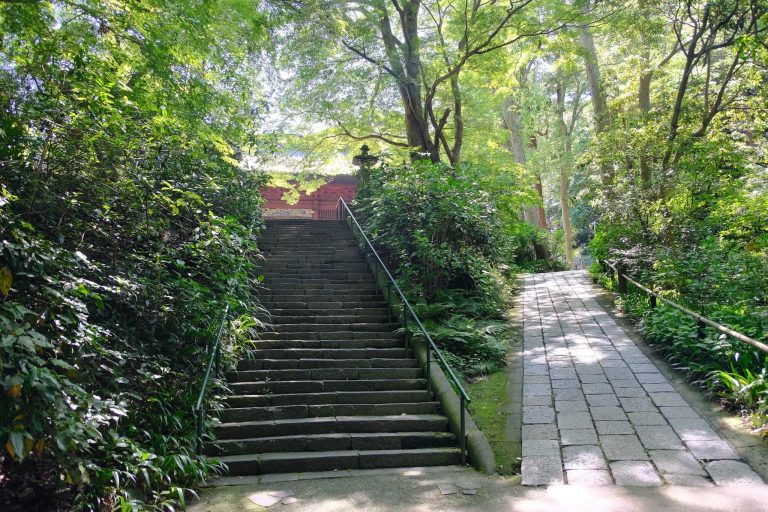
The first gate was initially built in 1495 in a style influenced by Zen temple architecture. Restored in 1624–1628, it is the compound’s oldest surviving building, dating in its present form to the first half of the seventeenth century. Some timber from the earlier gate is thought to have been reused in the restoration.
Principal gate
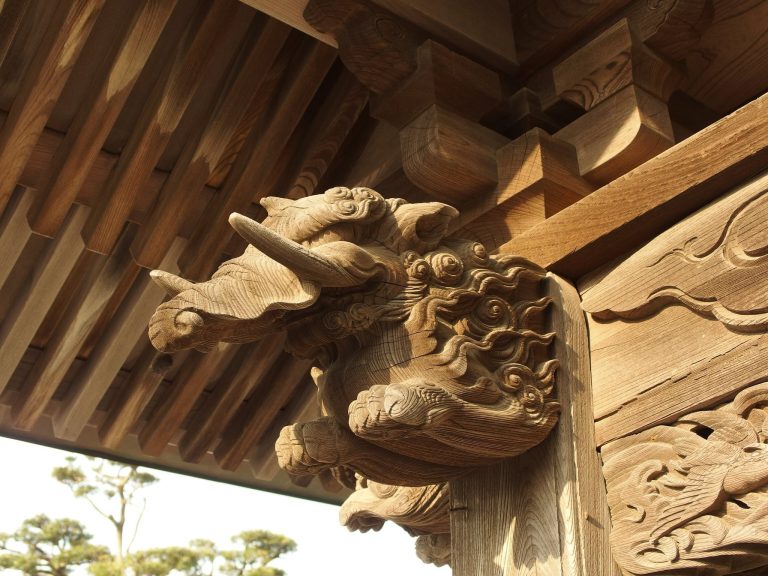
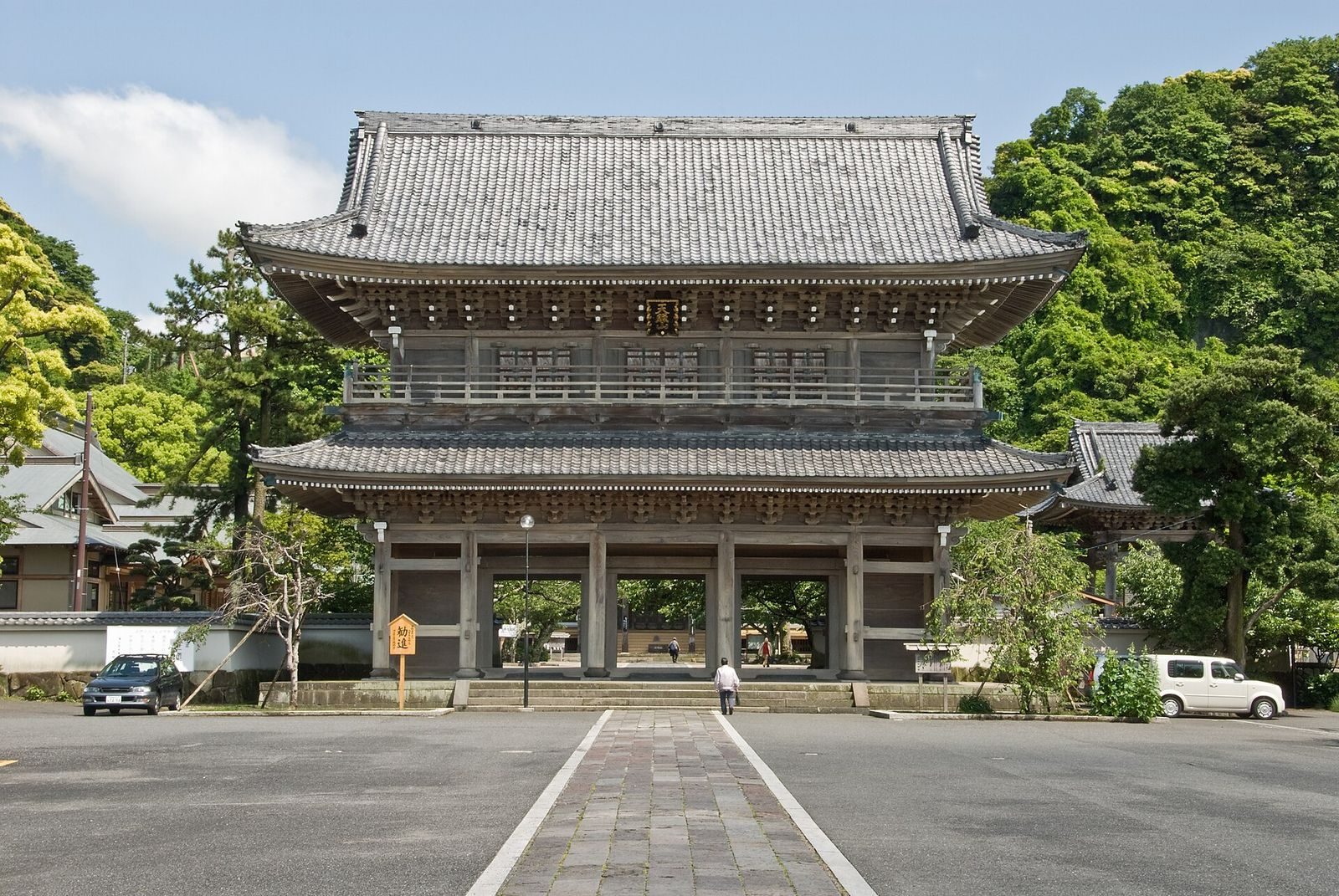
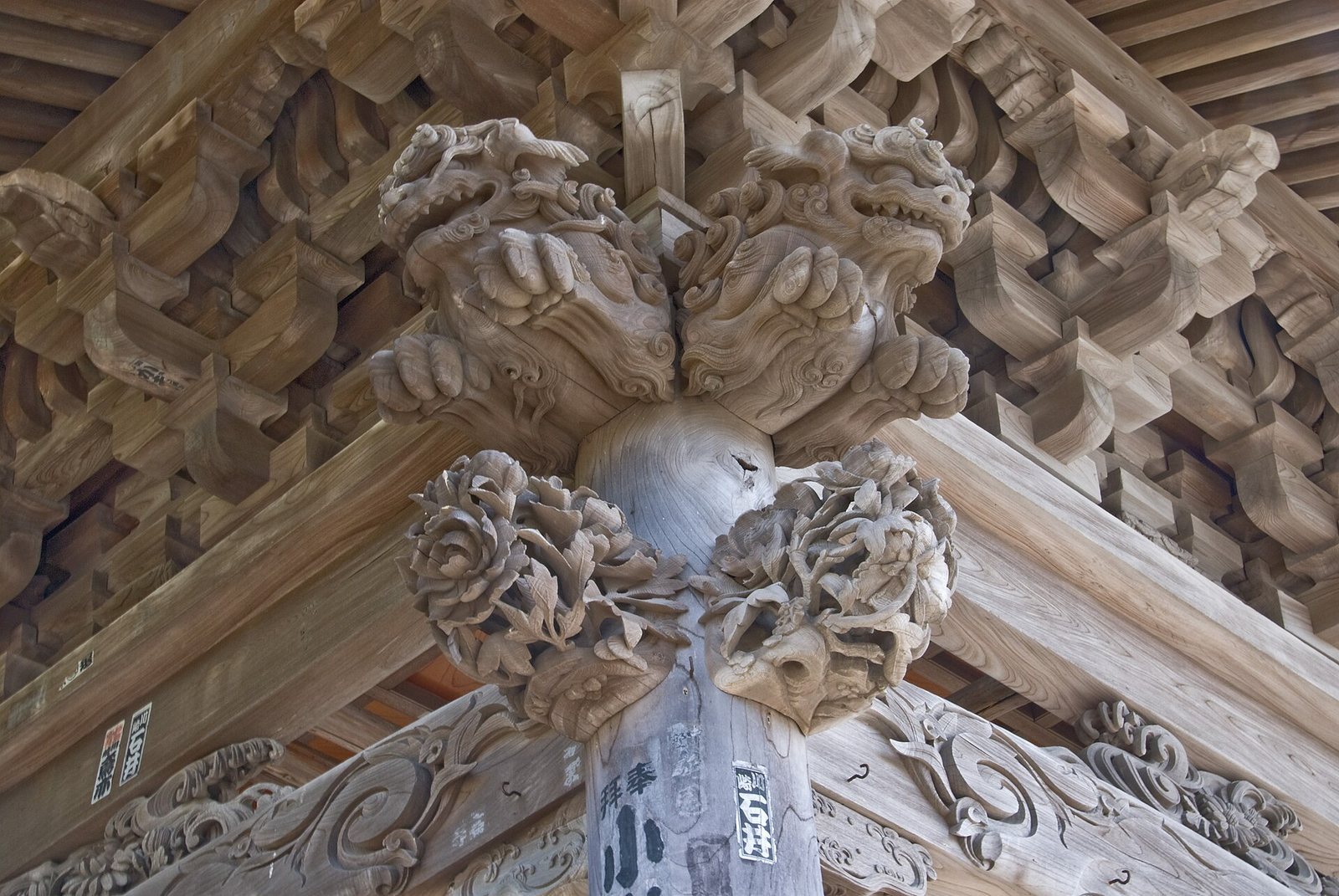
The principal gate is a two-storey structure rebuilt in 1847 after an earlier gate. It has five bays, or spans between columns, across its front, with three passageways. Its lower level follows traditional Japanese design, while the upper level reflects Zen temple style. Tradition holds that the gate was moved from Tsurugaoka Hachimangu. Its roof uses tiles from the Mikawa region; a tile maker shipped 31,223 tiles to the temple between 1909 and 1911.
The inscription Tenshōzan, the temple’s mountain name meaning Mountain of Divine Enlightenment, appears on the gable below the gate. Emperor Go-Hanazono wrote it in 1436 and sent it to the temple. Late Edo-period statues occupy the upper storey, including Shakyamuni with the bodhisattvas Monju and Fugen, the Four Heavenly Kings, and sixteen Buddhist disciples who attained liberation, known as arhats.
Main hall
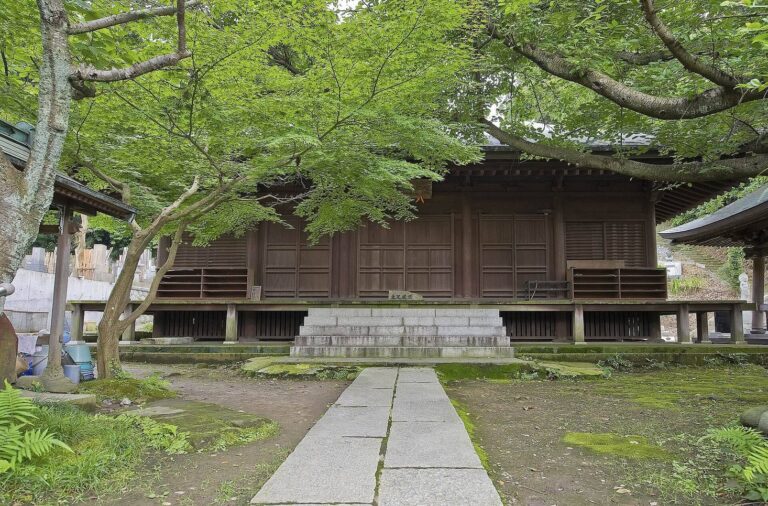
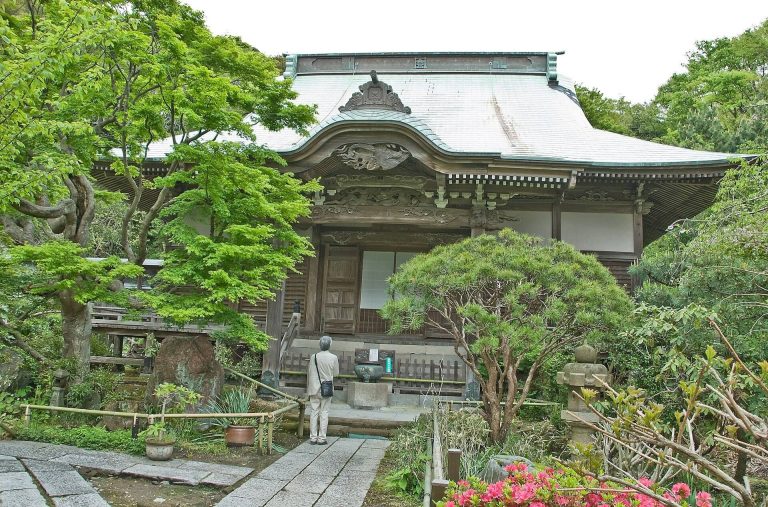
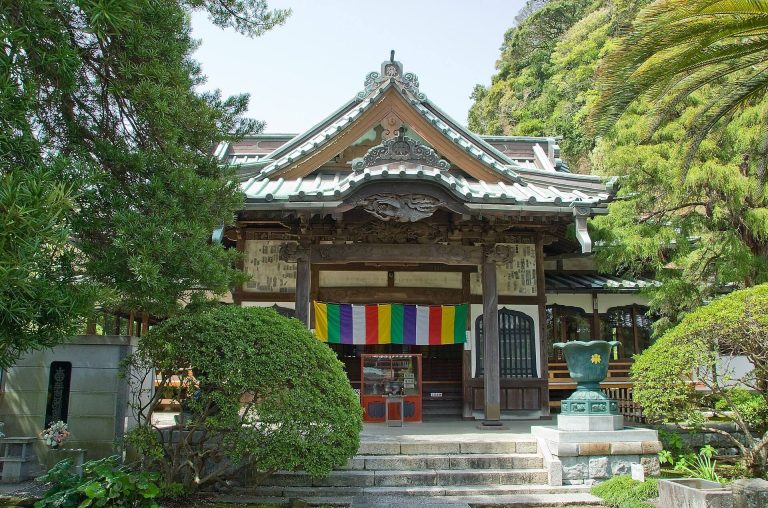
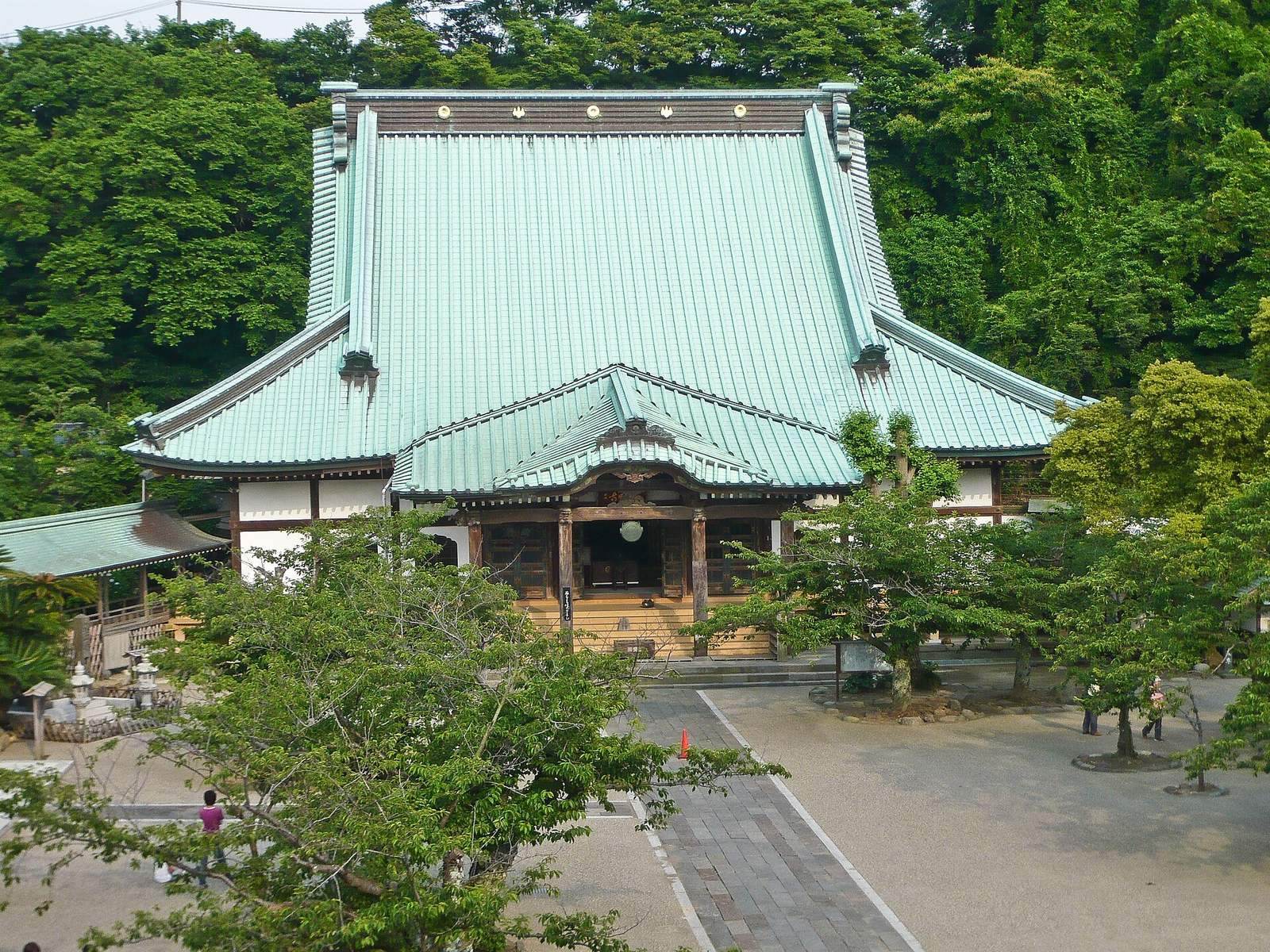
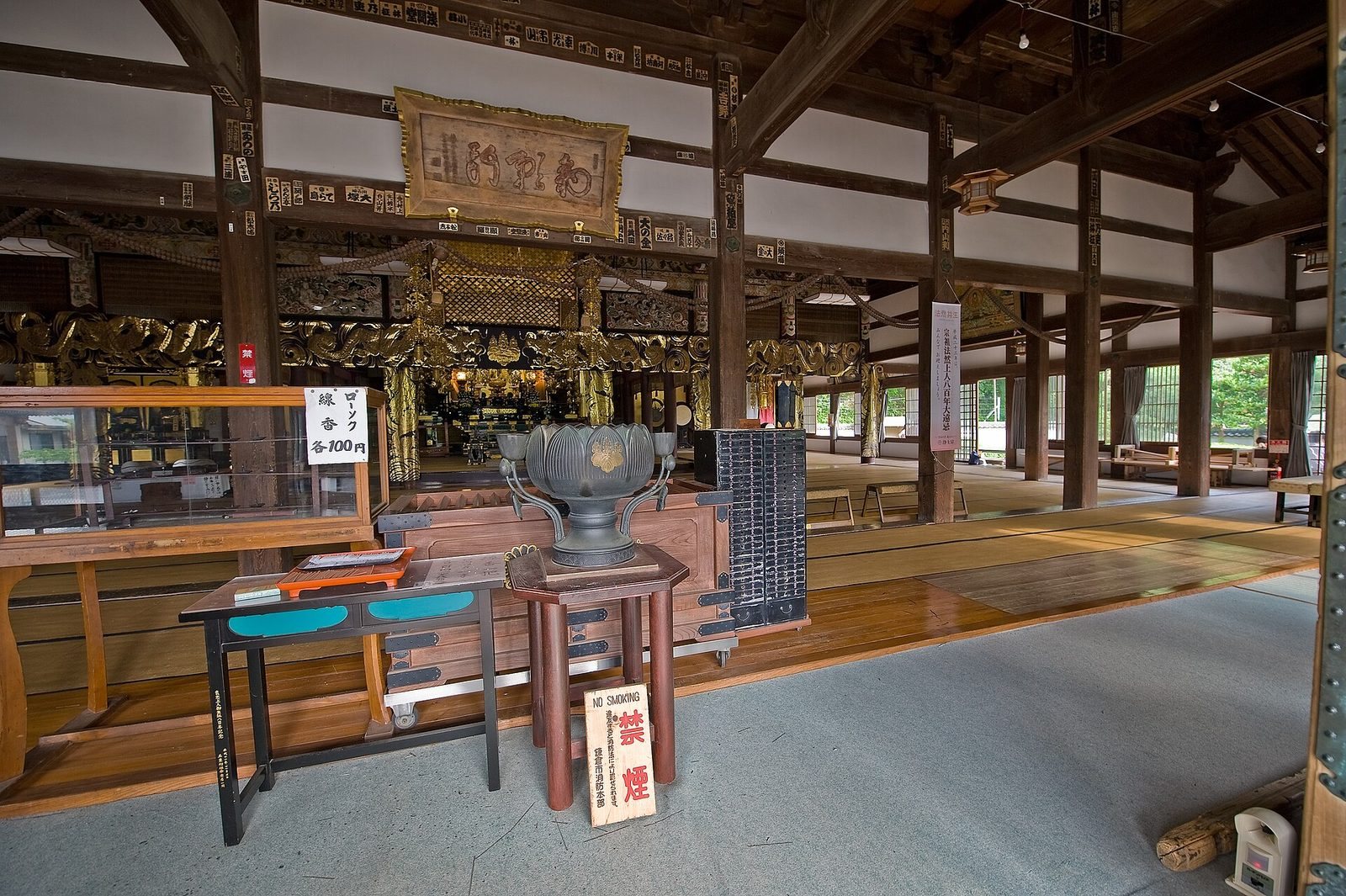
Built in 1698, the main hall measures about 25 metres in both width and depth and has a nine-by-eleven-bay plan. Its roof has sloping sides and gabled ends, with copper sheets laid in a pattern resembling rows of roof tiles. Inside, the broad tatami-matted outer hall is divided into front and rear areas by columns. Beyond it are the inner sanctuary, side sanctuaries, and rear sanctuary, with the inner section raised by one level. The hall suffered little damage in the 1923 Great Kantō Earthquake and retains much of its original form.
Gardens and adjacent buildings
Founder’s Hall and study
The Founder’s Hall, built in 1924, and a study room stand to the left of the main hall. The Founder’s Hall is the newest building in the compound.
Lotus pond garden
A lotus pond lies between the Founder’s Hall and the study. The pond dates to the early seventeenth century, and tradition attributes the garden centered on it to Kobori Enshū, an official and garden designer of the early Edo period.
Dry rock garden
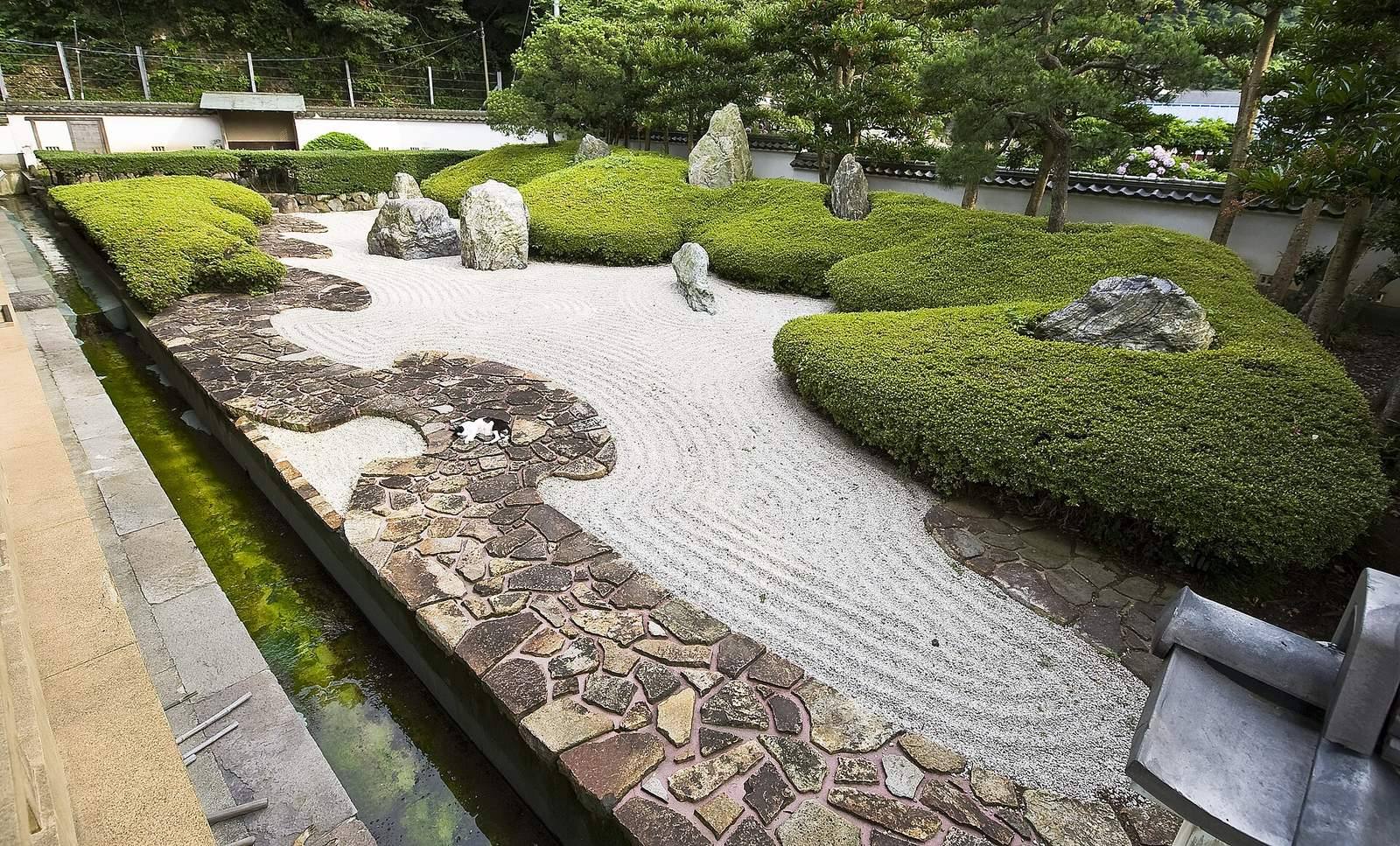
Beside the main hall is a dry landscape garden arranged with raked white gravel, rhododendrons, and eight stones representing religious figures. Three stones on the left, set among plants, form an Amida triad: Amida Nyorai is central, with Seishi to the left and Kannon to the right. The other five represent Shakyamuni and the Pure Land teachers Zendō, Hōnen, Benchō, and Ryōchū. The garden is called the Garden of the Descent of the Three Honored Ones and Five Patriarchs. Gardens of this kind are more often associated with the Rinzai school of Zen than with Jōdo temples.
Other grounds and memorials
Temple buildings and cemetery
An Inari shrine, bell tower, and reception hall also stand within the compound. Its Buddhist cemetery includes the Naitō family tomb area, where more than 200 stone funerary monuments include the graves of successive lords and their principal wives.
Animal Memorial Hall
Immediately beyond the principal gate, beside the cemetery, the Animal Memorial Hall serves as a crypt for animal ashes. Volunteer veterinarians established and maintain it. After sutra chanting, ashes are placed there; a narrow wooden memorial tablet bearing an animal’s name may accompany them. The temple holds memorial services for animals in its main hall each spring and autumn.