Hongaku-ji Temple: A Nichiren Buddhist Head Temple in Kamakura


Site at a Glance
- Rating
- 4.1
- Popularity
- Low
- Country
- Japan
- Primary era
- Unclassified
- External website
- Open
- Eras represented
- Unclassified
- Civilizations
- Unclassified
- Site type
- Religious
- Remains
- Temple
On this page15 sections
History
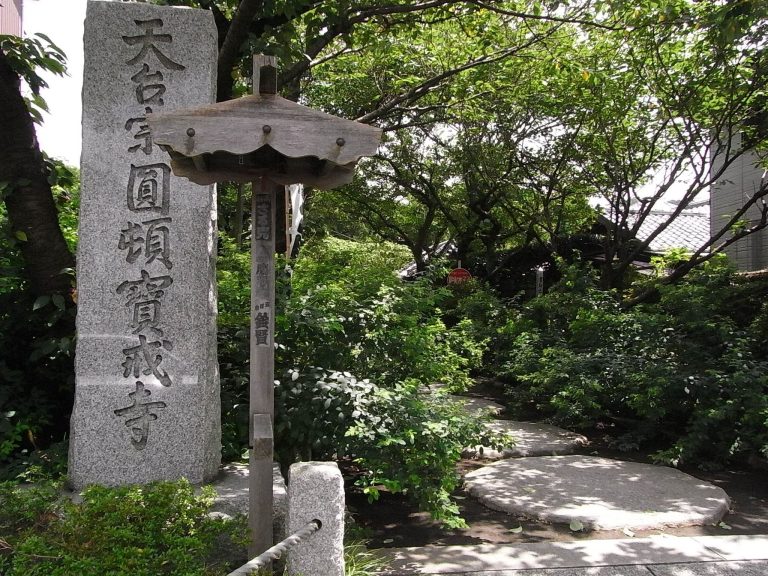
Hongaku-ji Temple is a Nichiren Buddhist head temple in Kamakura, Japan, founded in 1436 by Ichijo-bo Nisshu during the Muromachi period. Its history is closely connected with the Eikyo Persecution, the growth of Nichiren Buddhism in Kamakura, and the temple’s later role as a center of devotion.
Foundation and the Eikyo Persecution
Nisshu, known for his vigorous missionary work, moved to Kamakura from Hongaku-ji in Mishima, Shizuoka. Tradition connects the temple’s foundation with his victory in the Eikyo Debate against Shinkai, a priest of Hokaiji. The debate was followed by persecution of Nichiren Buddhists in Kamakura.
Ashikaga Mochiuji, the Kamakura kubo, was an Ashikaga official who governed Kamakura and the eastern regions of Japan. He initially planned to suppress Nichiren Buddhism in the city by closing 16 temples and persecuting priests and followers. Several hundred believers gathered at the Enma Hall at Arai, now Enno-ji, and the situation became explosive. Mochiuji then withdrew the measures, donated Ebisudo and its 12,000-tsubo estate to Nisshu, and authorized the establishment of a Hokke temple. This episode became known as the Eikyo Persecution.
Ebisudo and Nichiren’s Association
Before the present temple gate stood a hall called Ebisudo. It is traditionally attributed to Minamoto no Yoritomo, who founded the Kamakura shogunate in 1192 and established Kamakura as the center of Japan’s first military government. According to tradition, Ebisudo served as a guardian facility in the southwest, regarded as an inauspicious direction for the shogunate, and belonged to the Tendai tradition, a major Japanese Buddhist school based on Chinese Tiantai teachings.
Nichiren, the thirteenth-century Japanese Buddhist reformer who founded the tradition bearing his name, is traditionally said to have stayed at Ebisudo for more than 40 days after returning from exile on Sado in 1274. During this period, he prepared for his third submission of the Treatise on Establishing the Correct Teaching for the Peace of the Land.
Nichicho and the Eastern Minobu
During the fifteenth century, Nisshu’s disciple Nichicho became Hongaku-ji’s second chief priest. After spending 15 years at the temple, he became the 11th chief priest of Kuon-ji on Mount Minobu and worked to revive that institution, which was then in decline.
Nichicho later transferred part of Nichiren’s remains from Mount Minobu to Hongaku-ji. This allowed elderly people and women who could not easily make the pilgrimage to Minobu to venerate them. Hongaku-ji consequently became known as “Eastern Minobu.” Nichicho also attracted particularly strong devotion connected with the healing of eye diseases, leading to the popular name “Nichicho-sama.”
Regional Development and Modern Recognition
From the Sengoku period onward, the Later Hojo, Toyotomi, and Tokugawa families successively guaranteed the temple’s holdings, assessed at 12 kan and 200 mon. Hongaku-ji developed into a regional head temple with ten associated subtemples and branch temples.
Its formal status as a head temple was granted in 1974, at a milestone commemorating 700 years of its founding. On April 25, 2016, Hongaku-ji was recognized as a component cultural property of Japan Heritage. Its main hall, guest hall, and other buildings are registered tangible cultural properties, while several associated objects are designated cultural properties of Kamakura City. The temple also represents Ebisu in the Kamakura and Enoshima Seven Lucky Gods pilgrimage and Manjushri as the third site in the Kamakura Thirteen Buddhas pilgrimage.
Remains
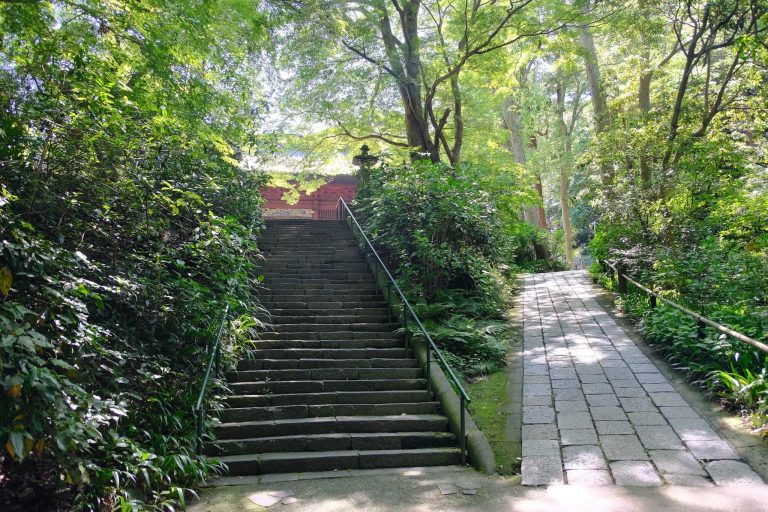
The precinct lies in Komachi, near Kamakura Station. Its principal buildings include a main gate associated with the former Ebisudo, the main hall, and the guest hall. Across Komachi-Oji, also called Tsuji-Sessho-dori, stands Myohon-ji, a sacred-site head temple of Nichiren Buddhism.
Temple Buildings
Main Gate and Former Ebisudo Site
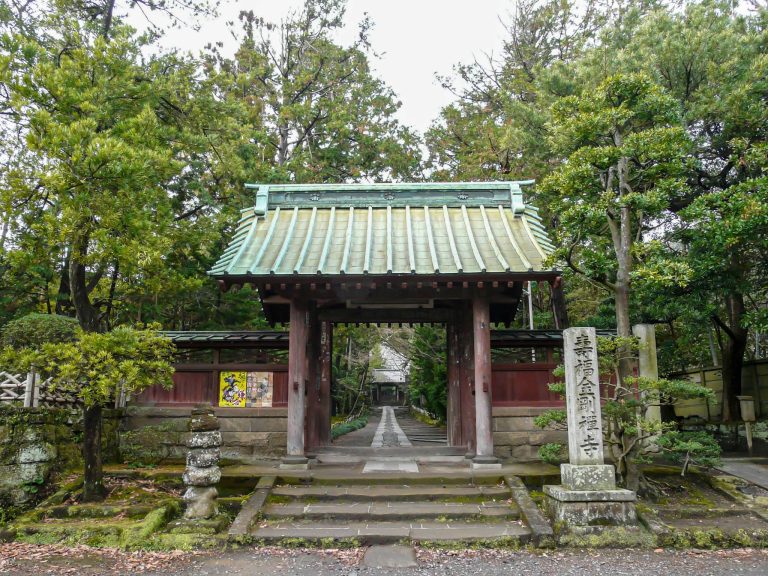
The main gate occupies the site associated with Ebisudo, the earlier hall connected by tradition with Minamoto no Yoritomo and with Nichiren’s stay in Kamakura after his return from Sado. The gate therefore marks the physical setting of a building that preceded the present temple and became part of Hongaku-ji’s foundation history.
Main Hall and Guest Hall
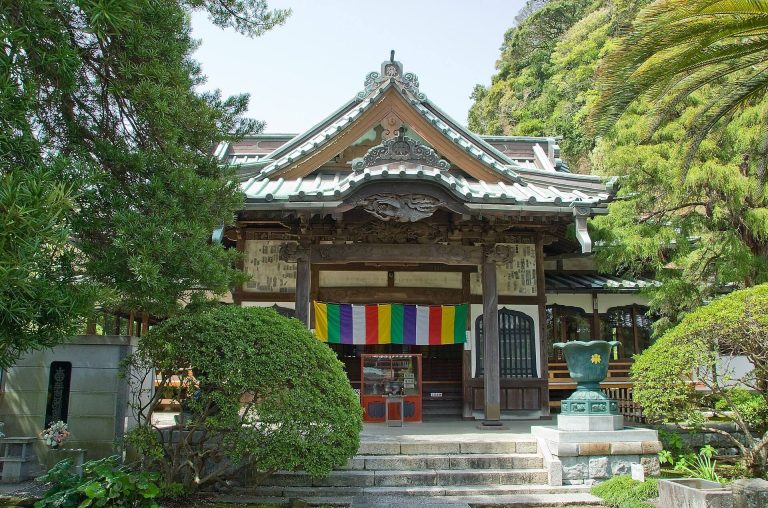
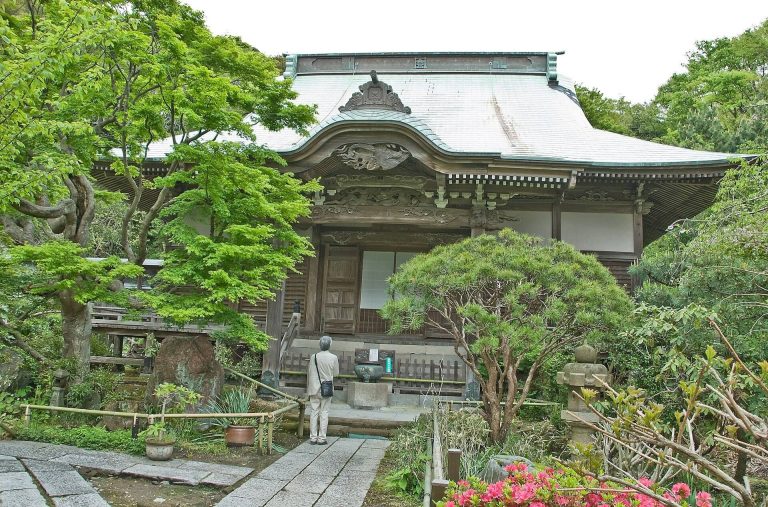
The main hall and guest hall form part of the temple’s surviving architectural complex. Both are registered tangible cultural properties, together with other buildings in the precinct. The principal object of worship is the Sanpo-son, or Three Jewels image, representing the Buddha, the Buddhist teaching, and the Buddhist community.
Sacred Images
Shakyamuni Buddha Group
A seated Shakyamuni Buddha with two seated attendants is designated as a cultural property of Kamakura City. The central image wears a crown and follows a Song-style manner. It is considered a work of the Northern and Southern Courts period and is currently displayed at the Kamakura Museum of National Treasures.
Other Buddhist Images
The temple’s other sacred images include a Three Treasures Founder image made in 1823, a statue of Nichiren produced during the Meiji period, and statues of Kishimojin, Nisshu, and Nichicho. Together, these images represent the temple’s Buddhist teachings, historical founders, and important figures in its institutional development.
Ritual Objects and Records
Two Heavenly Kings
A wooden group of Two Heavenly Kings dates from the late Edo period. The figures represent the Heavenly Kings of the East and South, and repairs dating from around the end of the Tokugawa shogunate remain visible on the sculptures.
Bell and Temple Documents
A temple bell and the Hongaku-ji documents and sacred teachings are designated cultural properties of Kamakura City. These objects preserve material evidence of the temple’s ritual life and religious transmission alongside its buildings and images.