Kolossi Castle: A Crusader Fortress and Hospitaller Commandery in Cyprus
Site at a Glance
- Rating
- 4.4
- Popularity
- Medium
- Country
- Cyprus
- Primary era
- Medieval
- External website
- Open
- Eras represented
- Medieval
- Civilizations
- Crusader, Kingdom of Cyprus, Knights Hospitaller
- Site type
- Military
- Remains
- Castle
On this page7 sections
History
Kolossi Castle is a former Crusader fortress in Cyprus, built by Frankish forces around 1210 and later rebuilt as a Hospitaller stronghold in the fifteenth century. Standing on the southwestern edge of Kolossi village, about 14 kilometres west of Limassol, it held a strategic position in the administration of southern Cyprus during the medieval period.
Frankish origins and Hospitaller rule
The first castle probably arose after a Cypriot king named Hugh granted the territory of Kolossi to the Knights of the Order of Saint John of Jerusalem, commonly called the Hospitallers. This military-religious order had been founded to care for pilgrims and later became a major Crusader military and administrative power. The name Kolossi derives from Garinus de Colosa, a local feudal lord.
After the Hospitallers lost Acre, Kolossi became their headquarters from 1301 to 1306. The Templars seized it in 1306 during factional conflict within the Crusader Kingdom of Cyprus, but the Hospitallers recovered the castle in the early fourteenth century. Their headquarters moved to Rhodes in 1310, while Kolossi retained a strong garrison and continued as a commandery, an administrative estate or district of a military-religious order.
Destruction, administration, and production
Genoese forces damaged or destroyed the castle in 1373, and Egyptian Mamluk forces attacked it in 1402, 1413, 1425, and 1426. Earthquakes caused further destruction to the earlier building. In 1380, the Hospitallers confirmed Kolossi’s status, and the site increasingly became a residence for grand masters rather than serving mainly as a defensive stronghold. Its administration controlled the economy of approximately 60 villages.
Kolossi was also a major center for storing and processing sugar made from locally cultivated sugar cane, one of medieval Cyprus’s principal exports. The surrounding area was associated with Commandaria, a sweet Cypriot wine whose name is traditionally linked to the local Templar grand commandery. The wine was reportedly praised at the wedding banquet of Richard the Lionheart and Berengaria of Navarre in nearby Limassol as the “wine of kings and the king of wines.”
The fifteenth-century castle and later ownership
The present castle was begun in 1454 under Louis de Magnac, a Hospitaller commander. In 1488, the castle and neighboring estates, together with the hereditary title of grand commander of Cyprus, were granted to George Cornaro. The grant rewarded his role in persuading his sister, Catherine Cornaro, the last queen of Cyprus, to surrender sovereignty to the Republic of Venice. The Cornaro family retained the title during Ottoman rule, and in 1799 it passed by inheritance to the Motsennigo family.
Remains
Fortified tower and courtyard
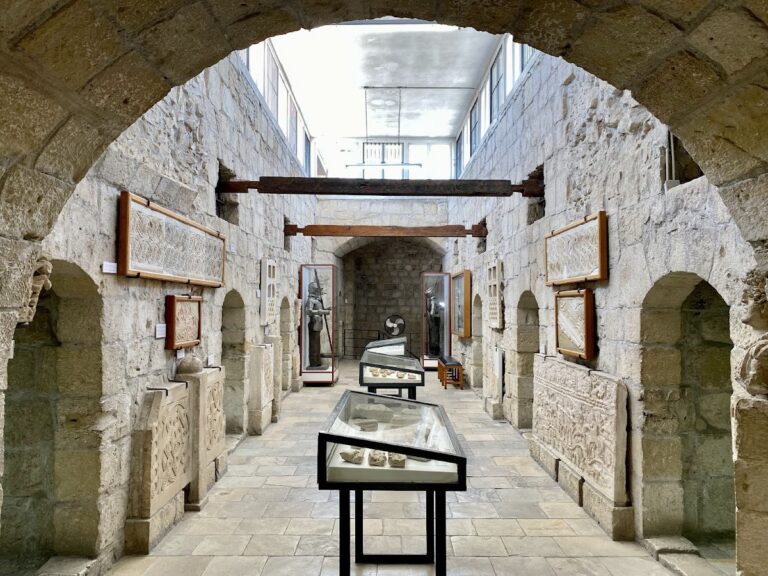
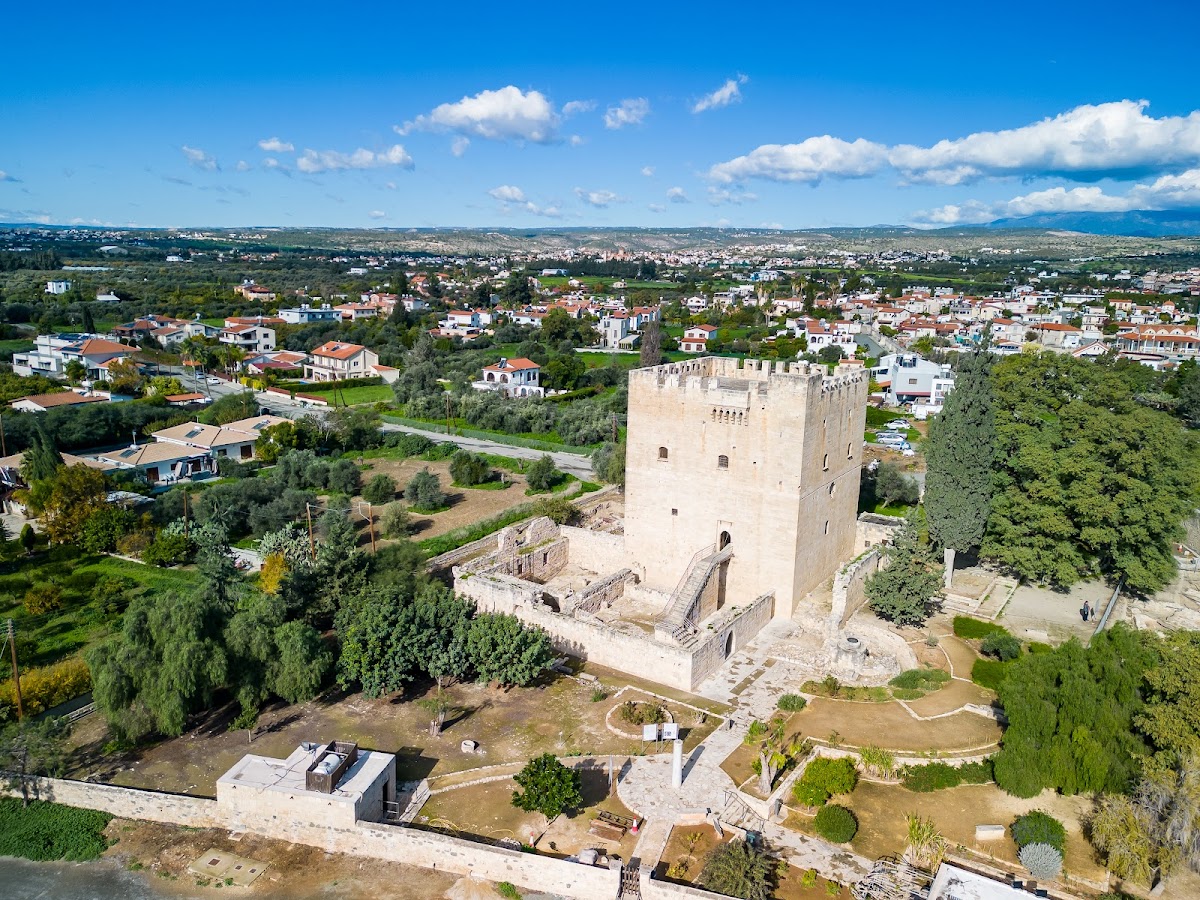
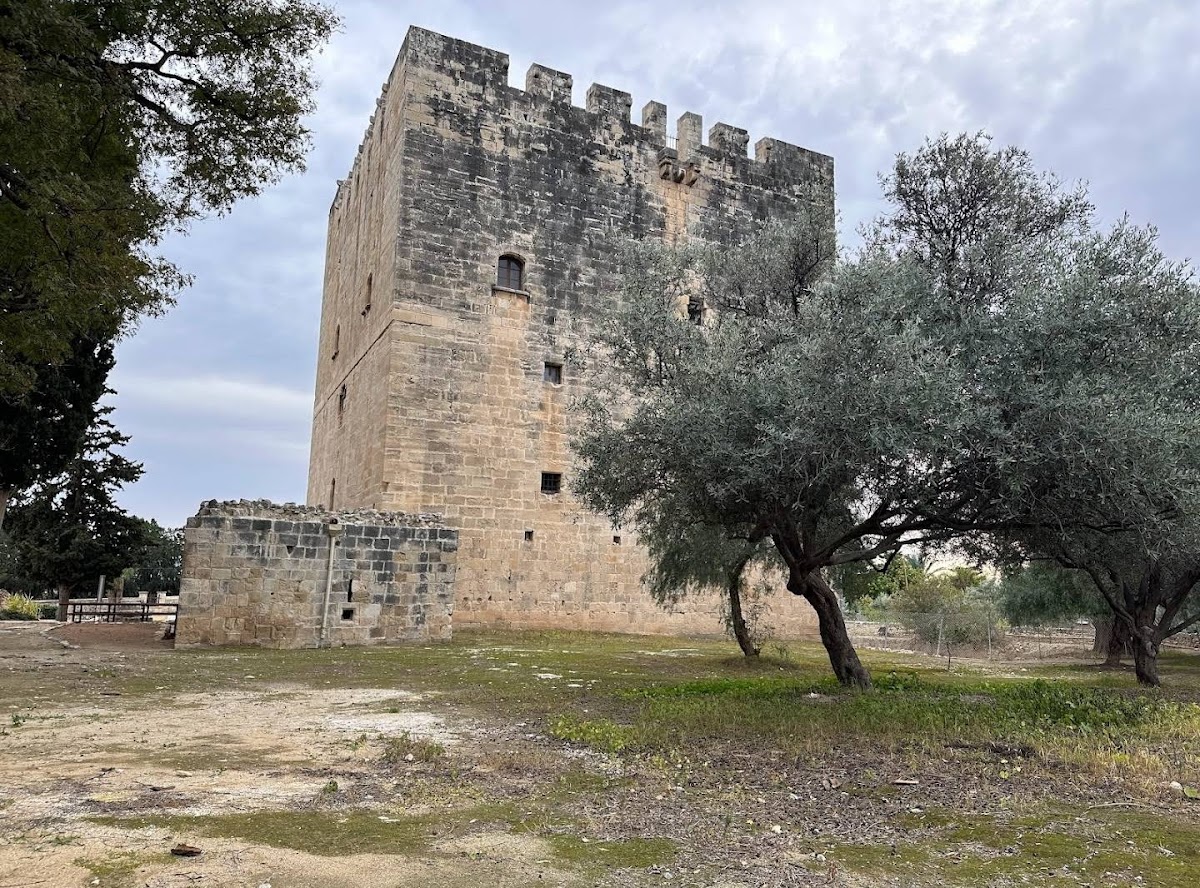
The surviving complex centers on a stone donjon, the principal fortified tower of a medieval castle, with three levels and an adjoining rectangular courtyard measuring approximately 30 by 40 metres. The tower reaches about 21 metres at its highest point, while its overall height is also given as approximately 23 metres. Its walls are up to 1.25 metres thick. Storage areas and two underground cisterns occupied the ground level.
A drawbridge provided access to the first level. One of its two large rooms contains a wall painting of the Crucifixion of Jesus Christ, indicating its use for religious services. The adjoining room has a fireplace and served as a dining and living room. Residential quarters occupied the upper level, while the roof formed a defensive platform equipped with loopholes, narrow openings for observation or weapons, and machicolations, projecting openings through which defenders could attack those below.
Heraldic and industrial remains
A cross-shaped niche on the eastern facade holds four coats of arms. The centrally placed arms belong to the Kingdom of Cyprus, while the others represent Louis de Magnac and the grand masters Jean de Lastica and Jacques de Milly. Remains of the first castle survive to the east and west of the present building.
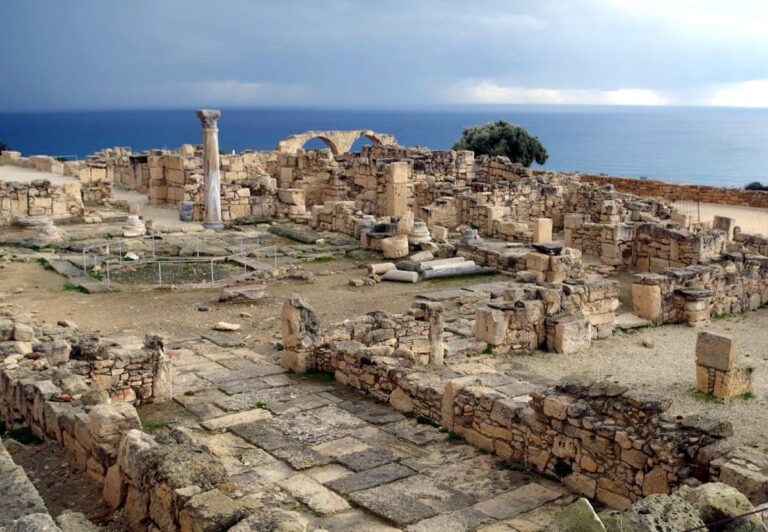
The wider complex includes the residential tower, a former sugar mill and refinery, and fragments of the surrounding walls. It stands within a largely agricultural landscape. The land is relatively flat to the southeast and rises toward hills to the northwest, while the nearest bay lies to the southwest. Papavounos, the highest nearby point at 576 metres above sea level, is approximately 9.4 kilometres north of the castle.