Limassol Castle: An Ottoman Fortress and Medieval Stronghold in Cyprus
Site at a Glance
- Rating
- 4.3
- Popularity
- Medium
- Country
- Cyprus
- Primary era
- Early Modern
- External website
- Open
- Eras represented
- Classical, Medieval, Early Modern
- Civilizations
- Byzantine, Crusader, Kingdom of Cyprus, Knights Templar, Ottoman, Roman, Venetian
- Site type
- Military
- Remains
- Castle
On this page13 sections
History
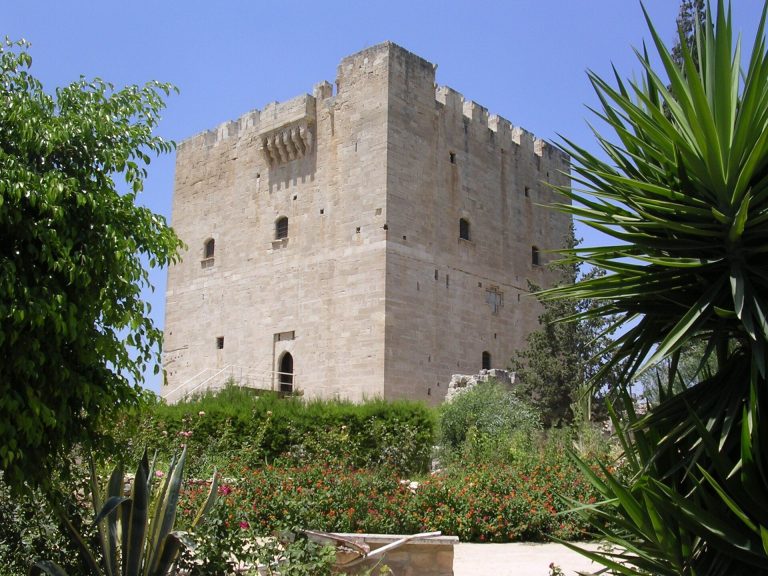
Limassol Castle is a square Ottoman-period fortification near the old harbor of Limassol in Cyprus, rebuilt and reinforced by Ottoman authorities in 1590 to protect the city and its harbor. Its site has a much longer history, including an early Christian basilica, a Byzantine fortress, medieval rule by the Lusignans and military orders, and repeated destruction and reconstruction between the thirteenth and sixteenth centuries.
Early Christian and Byzantine foundations
Archaeological investigations indicate that the site was occupied by an early Christian basilica between the fourth and seventh centuries. A Byzantine fortress was later built there in the tenth or eleventh century. This earlier stronghold covered a substantially larger area than the castle that survives today, although the exact boundaries of the later fortress rebuilt by Guy de Lusignan in 1193 have not been established.
The Lusignan and military-order period
Cyprus came under the rule of Richard I of England, commonly known as Richard the Lionheart, in 1191 during the Third Crusade. On 12 May that year, Richard married Berengaria of Navarre in the small Byzantine Church of Agios Georgios, which stood east of the castle site. An earthquake later destroyed the church completely. A different tradition places the marriage and Berengaria’s coronation as queen of England in the castle chapel.
Guy de Lusignan, the first Lusignan lord of Cyprus, substantially rebuilt the badly damaged fortress in 1193 with the assistance of the Knights Templar and the Knights Hospitaller. These were medieval Catholic military orders with religious, military, and administrative possessions in the eastern Mediterranean. The castle passed to the Templars in 1196. In 1308, Amaury II of Tyre, then ruler of Cyprus, acted on papal orders to arrest the Templars and inventory their Cypriot property. In 1312, King Henry II transferred the Templar possessions, including Limassol Castle, to the Hospitallers, although most of that order had already left Cyprus for Rhodes.
A major earthquake centered near Paphos badly damaged the castle in 1222. During the conquest of Cyprus by Holy Roman Emperor Frederick II in 1228, the fortress became a prison for Cypriot barons who resisted him, including sons of the regent John of Ibelin, and for the young King Henry I of Lusignan. The castle was enlarged in the thirteenth century, when the Templars built a large Gothic church on the site of the earlier Byzantine church.
War, earthquakes, and reconstruction
From the thirteenth through the sixteenth centuries, invading forces and earthquakes repeatedly damaged or destroyed the castle. Genoese forces reduced it to ruins in 1373, at the beginning of the war between Cyprus and Genoa, after capturing and burning Limassol. King James I ordered reconstruction in the late fourteenth century, and the work continued into the early fifteenth century.
The castle served as a center of resistance against the Genoese in 1402 and 1408. It resisted attacks by a Mamluk fleet in 1413 and 1422. The Mamluks, the military ruling elite of Egypt and Syria, captured it in 1425 after Saracen slaves revealed breaches in the walls that had been poorly repaired. Here, Saracen was a medieval European term for Muslims, especially those from the eastern Mediterranean or the Islamic Middle East.
Cyprus and the castle passed to the Republic of Venice in 1489. A powerful earthquake substantially damaged the fortifications in 1491. Ottoman forces first captured Limassol and the castle in 1538, when the declining fortress had no garrison and was occupied only by the castellan and his family.
Venetian demolition and Ottoman rebuilding
After the Venetians regained Limassol, the military governor Marco Antonio Bragadin ordered the severely damaged castle demolished so that the Ottomans could not recapture and use it. The work was prolonged by its high cost, and the final destruction came in the earthquake of 1567 or 1568. In anticipation of an Ottoman invasion, the Venetians rebuilt and strengthened the castle with massive walls designed to resist artillery. Ottoman forces captured it by assault in 1570.
The Ottomans fully rebuilt and further reinforced the heavily damaged fortification in 1590. Its basement and first floor were converted into prison cells. During the nineteenth century, the entire castle became a prison, a function it retained until 1950. After the central prison moved to Nicosia, the castle was declared an archaeological monument and transferred to the Cyprus Department of Antiquities, which undertook reconstruction and major restoration.
From prison to museum
The restored castle later housed a district museum and storage for the Medieval Museum. From 1963 to 1974, it also contained a post of the Cyprus National Guard. In 1975, objects from the Nicosia Medieval Museum were transferred to Limassol because the Nicosia museum stood in the buffer zone separating Greek Cypriot and Turkish Cypriot areas. The Cyprus Medieval Museum began operating in the castle on 28 March 1987. Its collections contain material from different parts of Cyprus dating from the fourth to the seventeenth centuries.
Remains
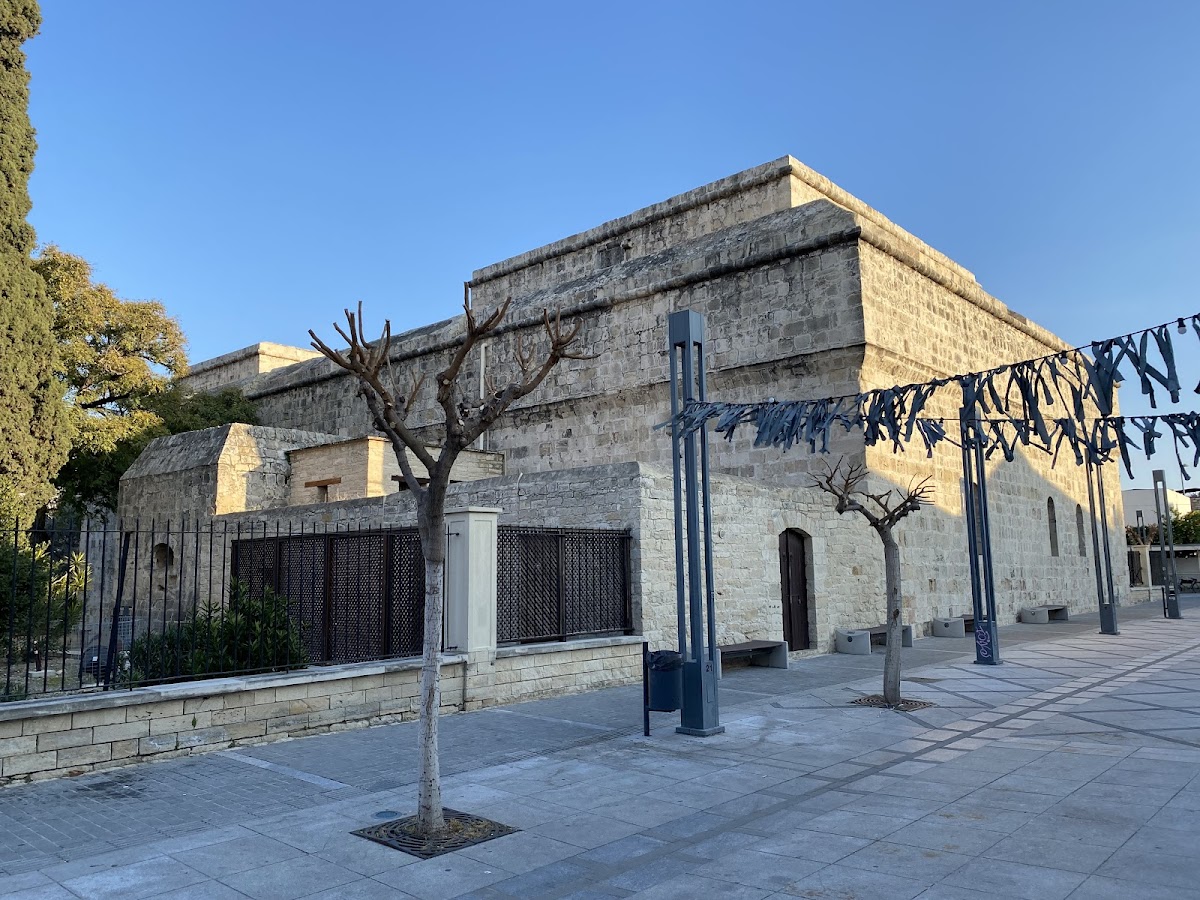
The surviving castle stands near the old harbor at the western edge of Limassol’s historic city center. It is a square-plan Ottoman fortification associated with the defense of the harbor and city. Its walls are approximately 2 meters thick, and three storeys of rooms are attached to the eastern side. The entrance leads through a guardroom. From there, stairs descend into a large underground area with cross-vaults, formed by the intersection of two barrel vaults, while a spiral staircase rises to the roof.
Fortification and late medieval interior
Walls and central hall
The late medieval rebuilding included a complete refurbishment of the interior. A high central hall with a vaulted ceiling was protected on its western side by powerful curtain walls, which enclosed and linked the principal defensive elements. The former nave was replaced by two rows of small chambers divided by a narrow passage. The spacious basement was reorganized into three galleries without external exits.
During Bragadin’s demolition, the central column supporting the castle hall collapsed and was never rebuilt. The nearby Gothic Templar church was also dismantled down to its structural frame. The precise boundaries of the castle reconstructed by Guy de Lusignan in 1193 remain uncertain, while the surviving square fortification reflects the later Ottoman rebuilding and reinforcement.
Chapel and underground spaces
The surviving chapel attributed to the Templar castle is square in plan and Gothic in form. Built from yellowish stone, it stands above an earlier church reached by a small staircase. The basement beneath it was used as a prison during both Venetian and Ottoman rule. Excavated material beneath the castle indicates the presence of another church, possibly the city’s first cathedral and possibly connected with the Templars, although those interpretations remain uncertain.
Displayed architectural and archaeological material
Stone memorials and carved decoration
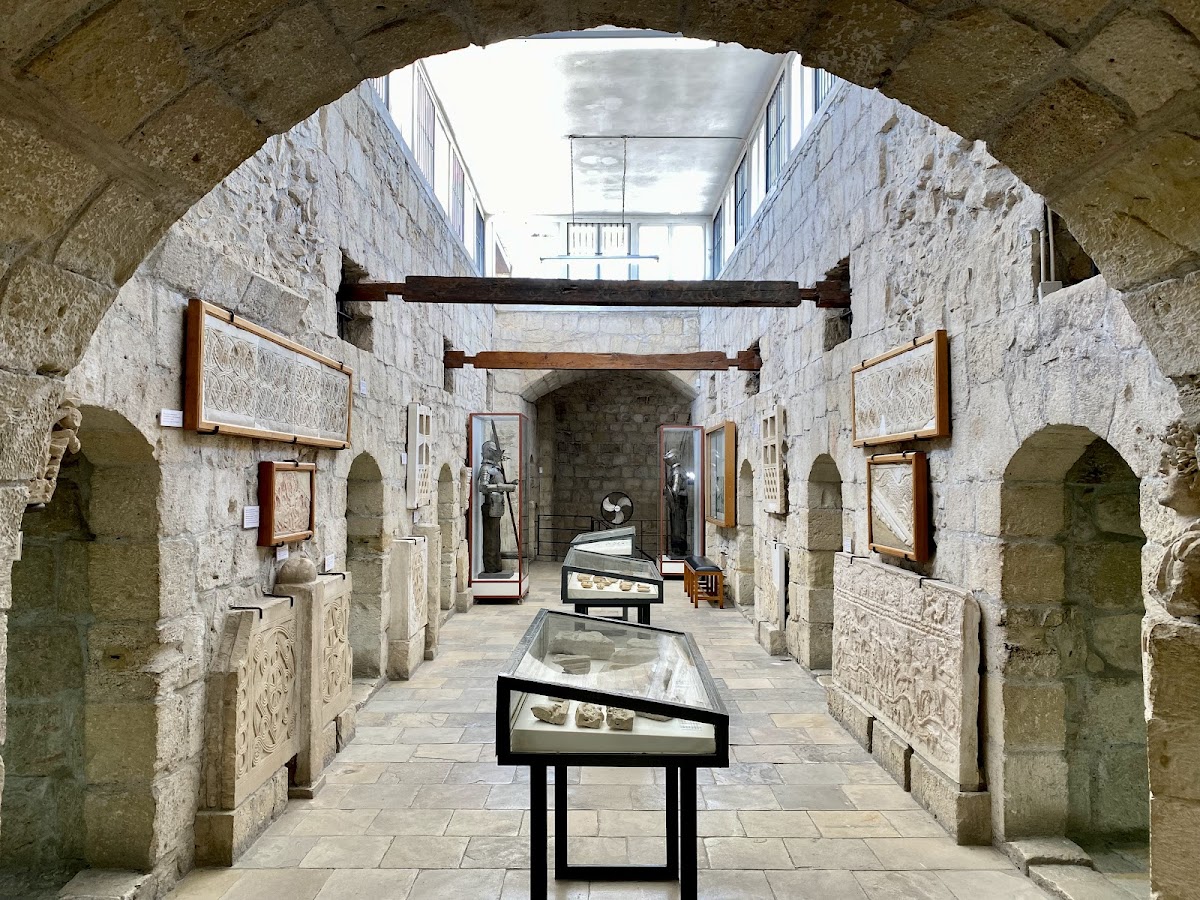
The central hall displays carved stone tombstones from the fourteenth century. A decorated plaster cast depicting saints was made from the portal of Hagia Sophia Cathedral in Nicosia and is also exhibited there. A long basement corridor contains Frankish and Venetian carved stone tombstones showing deceased monks, knights, and aristocrats. Their coats of arms, personal attributes, and short epitaphs provide visual and written details connected with the people commemorated.
Museum collections
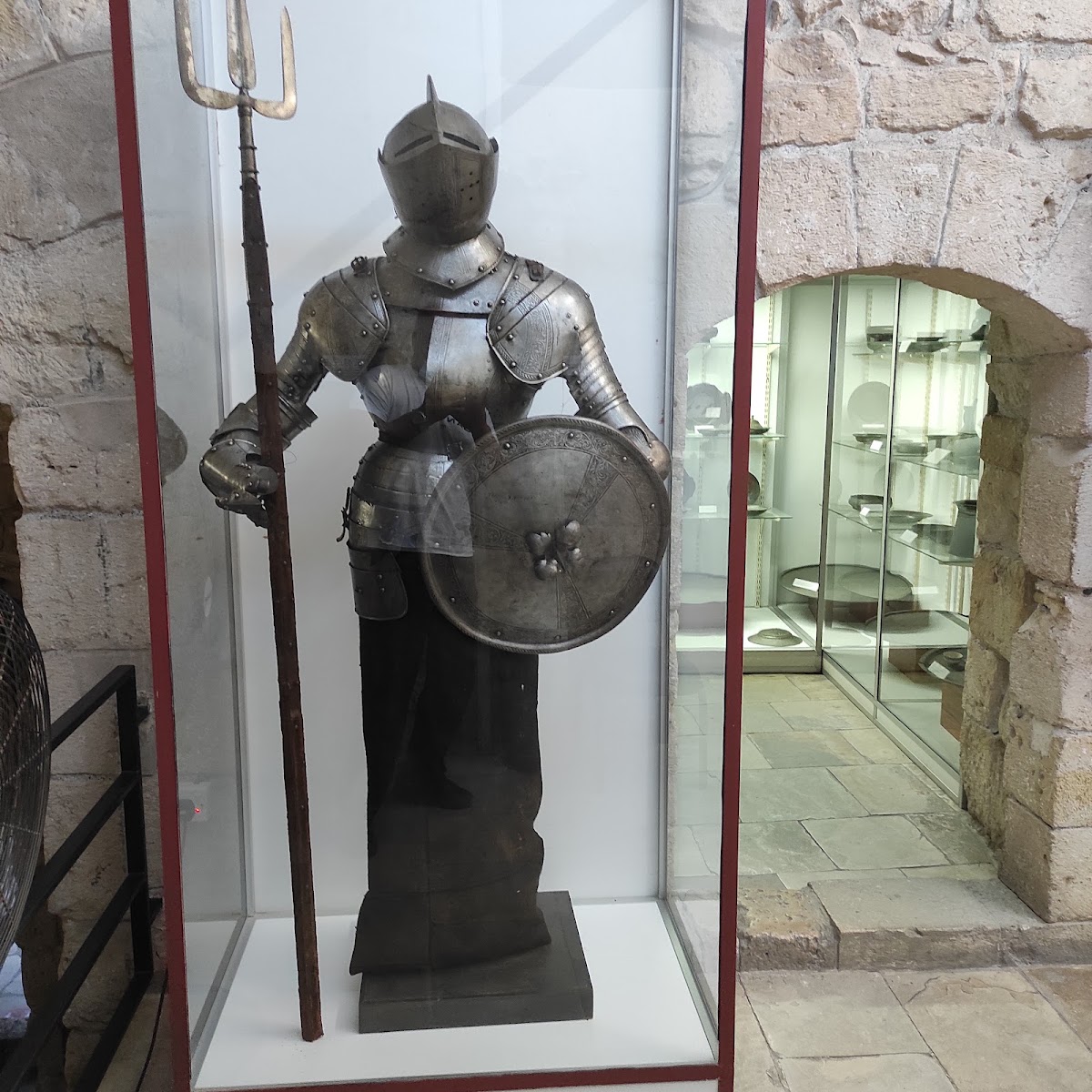
The upper floor contains medieval weapons and armor, carved marble fragments from the early Christian basilica, coins, oil lamps, and gold, silver, and bronze objects. Medieval pottery is displayed with these materials. A headless human skeleton is also presented as an exhibit of the Cyprus Medieval Museum, whose collections span the fourth through the seventeenth centuries.