St. Katharinen Monastery on Linzer Höhe: A Cistercian Nunnery in Germany
Site at a Glance
- Popularity
- Medium
- Country
- Germany
- Primary era
- Early Modern
- Eras represented
- Medieval, Early Modern
- Civilizations
- Holy Roman Empire
- Site type
- Religious
- Remains
- Church
On this page6 sections
History
Early community and Cistercian foundation
St. Katharinen Monastery on Linzer Höhe was a Cistercian nunnery in Germany, in the upland settlements above Linz am Rhein known as the Linzer Höhe. Established around 1200 and dedicated to Catherine of Alexandria, a Christian saint traditionally honored as an early martyr, it belonged to the Cistercians, a Catholic monastic order that developed from the Benedictine tradition.
A monastery chronicle written by a confessor who served from 1701 to 1711 preserves a tradition of an earlier community of canonesses at the site during the lifetime of Bernard of Clairvaux, a leading Cistercian abbot and religious reformer. Canonesses were women living in a religious community under a canonical rule, generally with less enclosure than nuns. The tradition says that their community burned in 1201. The monastery was subsequently rebuilt, and its church was probably erected by 1208, a date associated with the sacristy in the chronicle.
In 1230, the knight Gundolf von Hammerstein gave his serf, the shepherd Wigand von Hilkerscheid, to the abbess and convent. A foundation charter associated with Gerhard von Rennenberg and his wife, Benedikta von der Neuerburg, records that Mechthild of Sayn allowed the women’s community to become a Cistercian monastery. Although the charter gives the date 1238, it probably dates to 1257. Its authenticity is accepted; after its original writing faded, it was probably recopied in 1668.
Church rebuilding and church authority
In 1261, Heinrich II, Archbishop of Trier, asserted his diocesan rights over the monastery against the Archbishop of Cologne and took the house under his protection and jurisdiction. Pope Nicholas III confirmed Trier’s rights in 1277. In 1281, the monastery came under the supervision of Himmerod Abbey, another Cistercian house.
The monastery and church were rebuilt during the first half of the 14th century. In 1317, Heinrich II, Archbishop of Cologne, offered an indulgence to people who contributed to the work. An indulgence was understood in Catholic teaching as remission of temporal punishment associated with sin. In 1324, Balduin, Archbishop of Trier, authorized the church and altar to be consecrated. Building work continued in the 15th century, when Cardinal Nicholas of Cusa offered a hundred days’ indulgence in 1451.
Fire, dissolution, and later use
Swedish forces burned the monastery and church in 1631, during the Thirty Years’ War, the major European conflict fought from 1618 to 1648. The fire left the masonry standing, and the church was rebuilt in 1638.
The monastery was dissolved on 31 August 1803 under the Final Recess of the Imperial Deputation, a settlement that secularized many church territories in the German states. Its property passed to the Prince of Nassau-Usingen. The last abbess, Walburga Queng, was then 67 and had lived at the monastery for 50 years; ten nuns remained. Walburga and four nuns spent their remaining years at the Katharinenhof in Linz am Rhein. The other nuns and lay sisters returned to their home towns. The prioress was Franzisca Volcks of Linz, the cellarer, who managed provisions and household stores, was Maria Teresa Queng of Koblenz, and the provost, Friedrich Zorn of Dorndorf, had held office since 1791. Zorn received a pension of 225 gulden.
The estate included farmsteads at Ronig, the Erler Hof, and farms at Linz and Leubsdorf, as well as property at Dattenberg and Hönningen. It also drew rents and dues from Remagen, Kasbach, Ockenfels, Linz, and Leubsdorf. The buildings and property were first granted to Carl Lebrecht Buchholz of Neuwied on a hereditary lease; he purchased them in 1808 for about 24,000 Reichstaler. Gulden and Reichstaler were German currency units whose values varied by place and period.
Prince Friedrich August of Nassau offered the church to the Linzer Höhe vicariate congregation, which initially declined because of the upkeep costs. Buchholz then sought to lease it as a sheep barn, but the church was ultimately given to the community. After the monastery’s dissolution, it served first as a vicarial church for the parishes of Linz am Rhein and Neustadt (Wied), and became a parish church in 1890. The monastery buildings were taken down for their dressed stone, which was sold in Cologne.
Remains
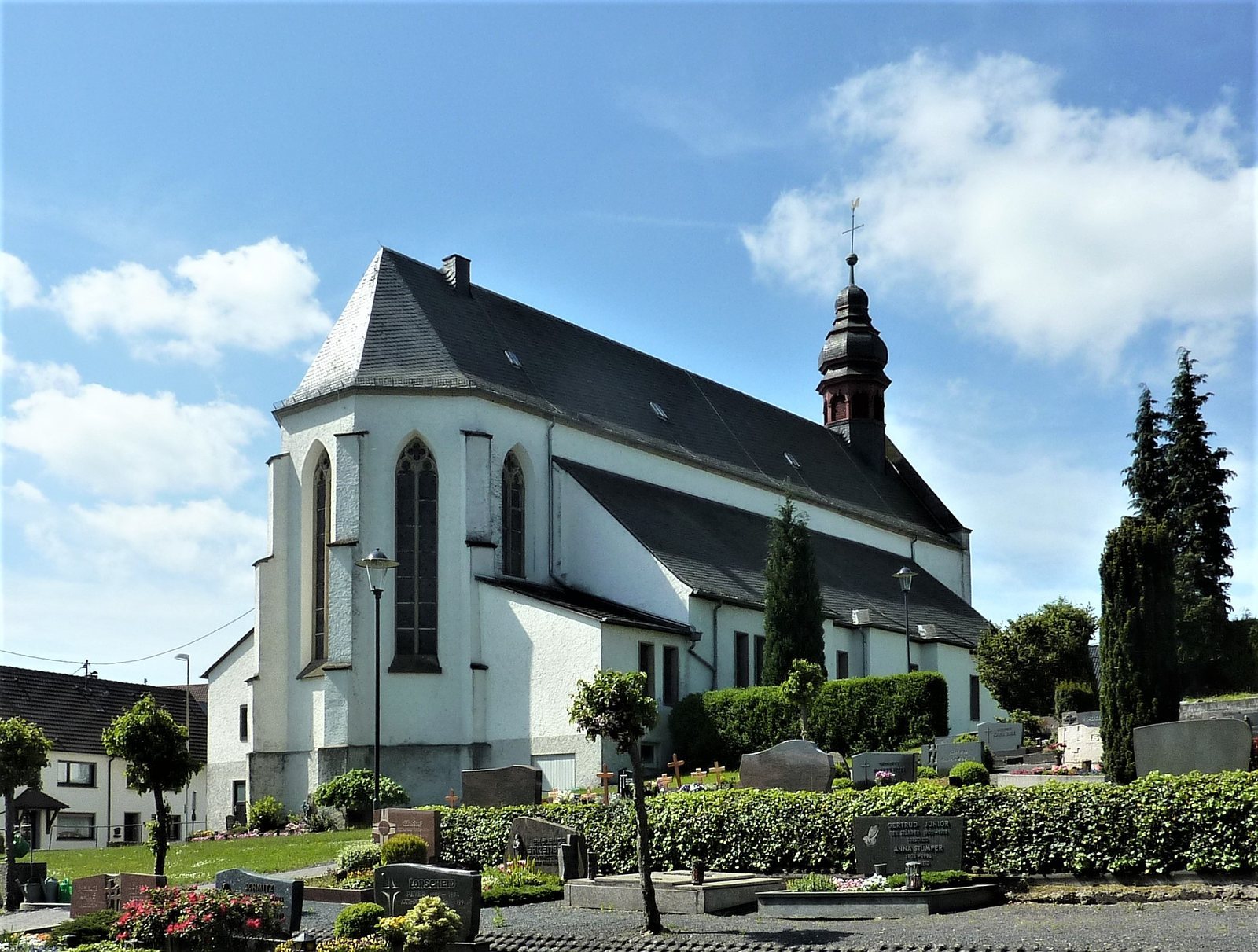
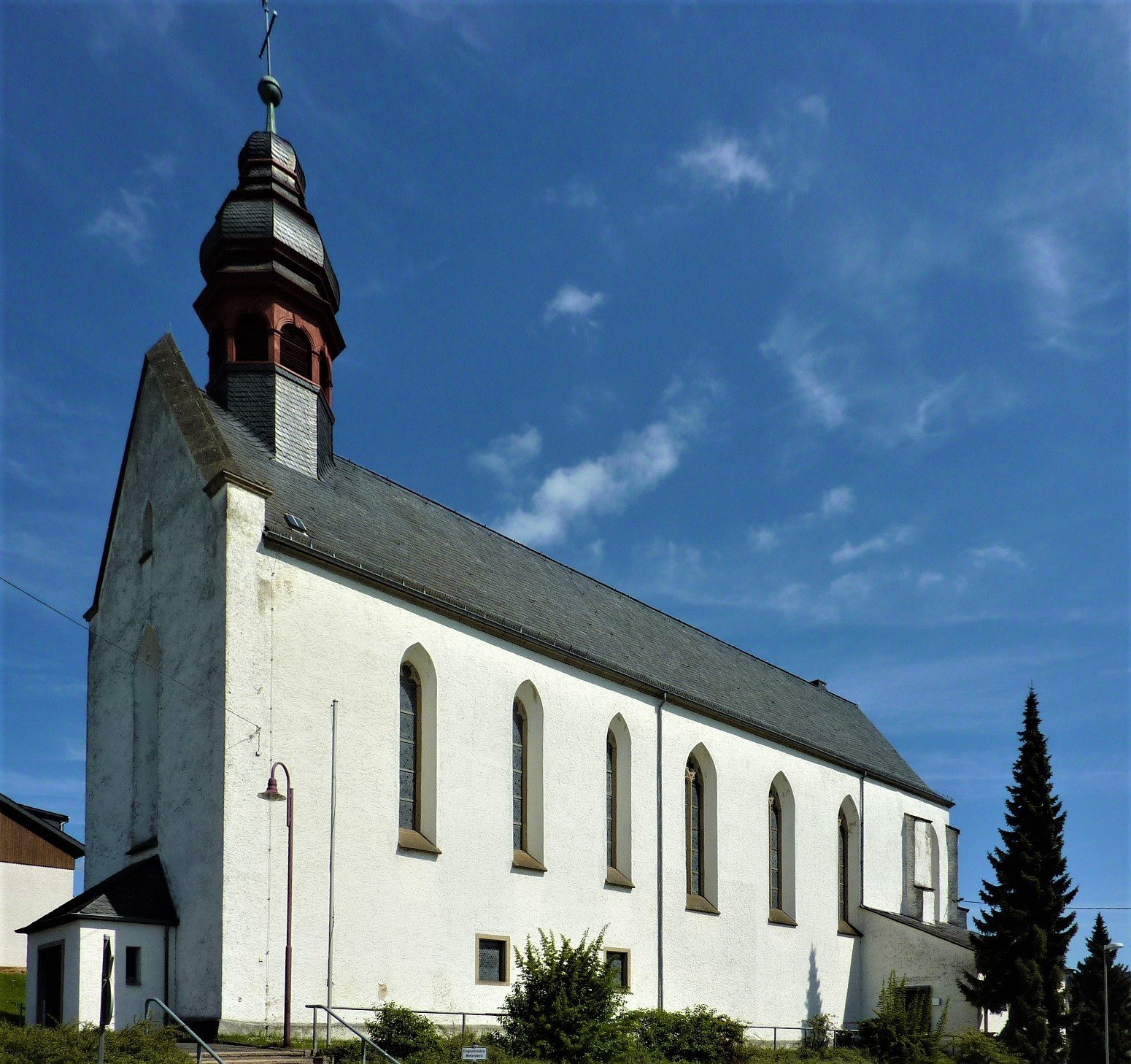
The surviving church
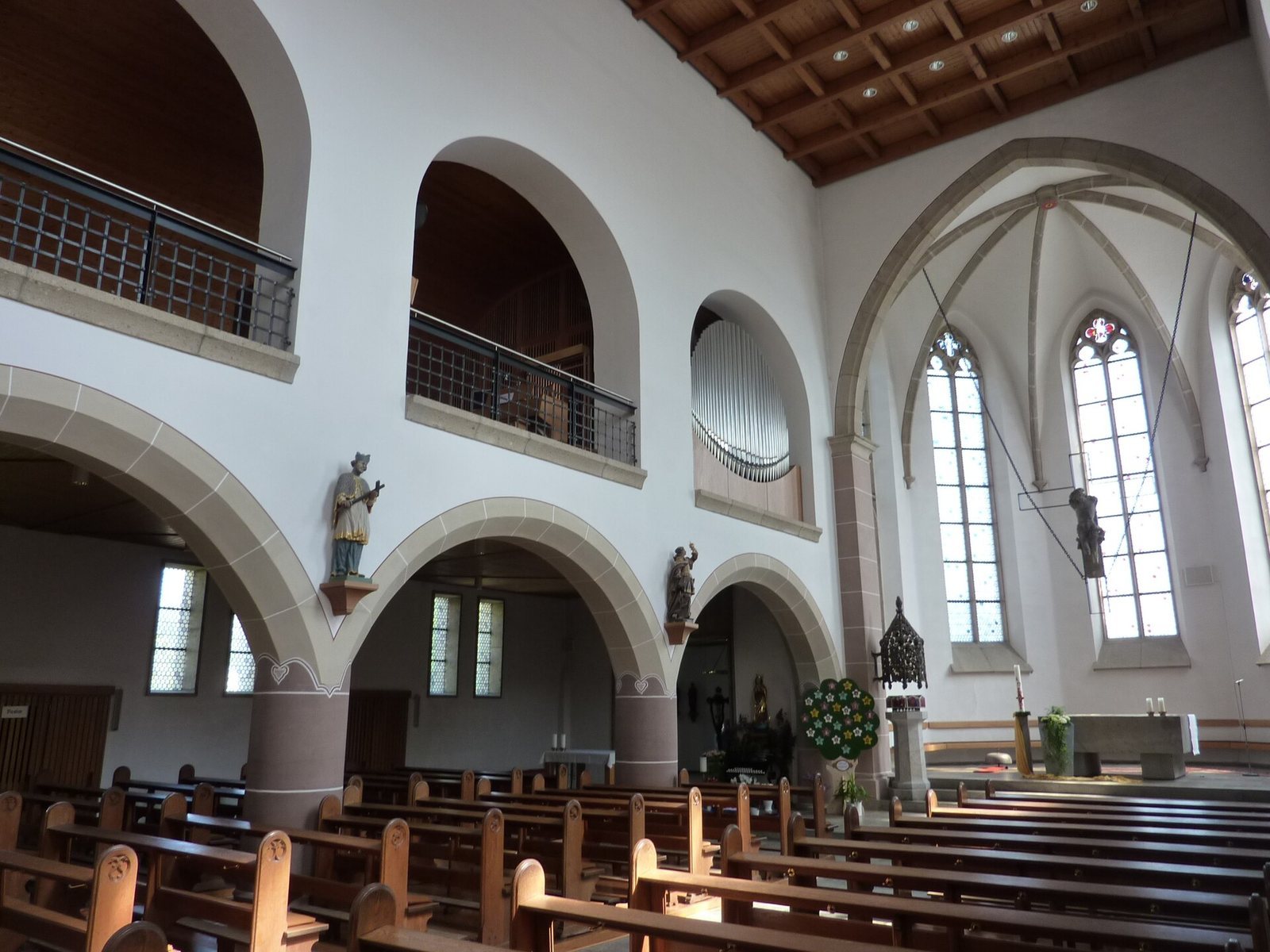
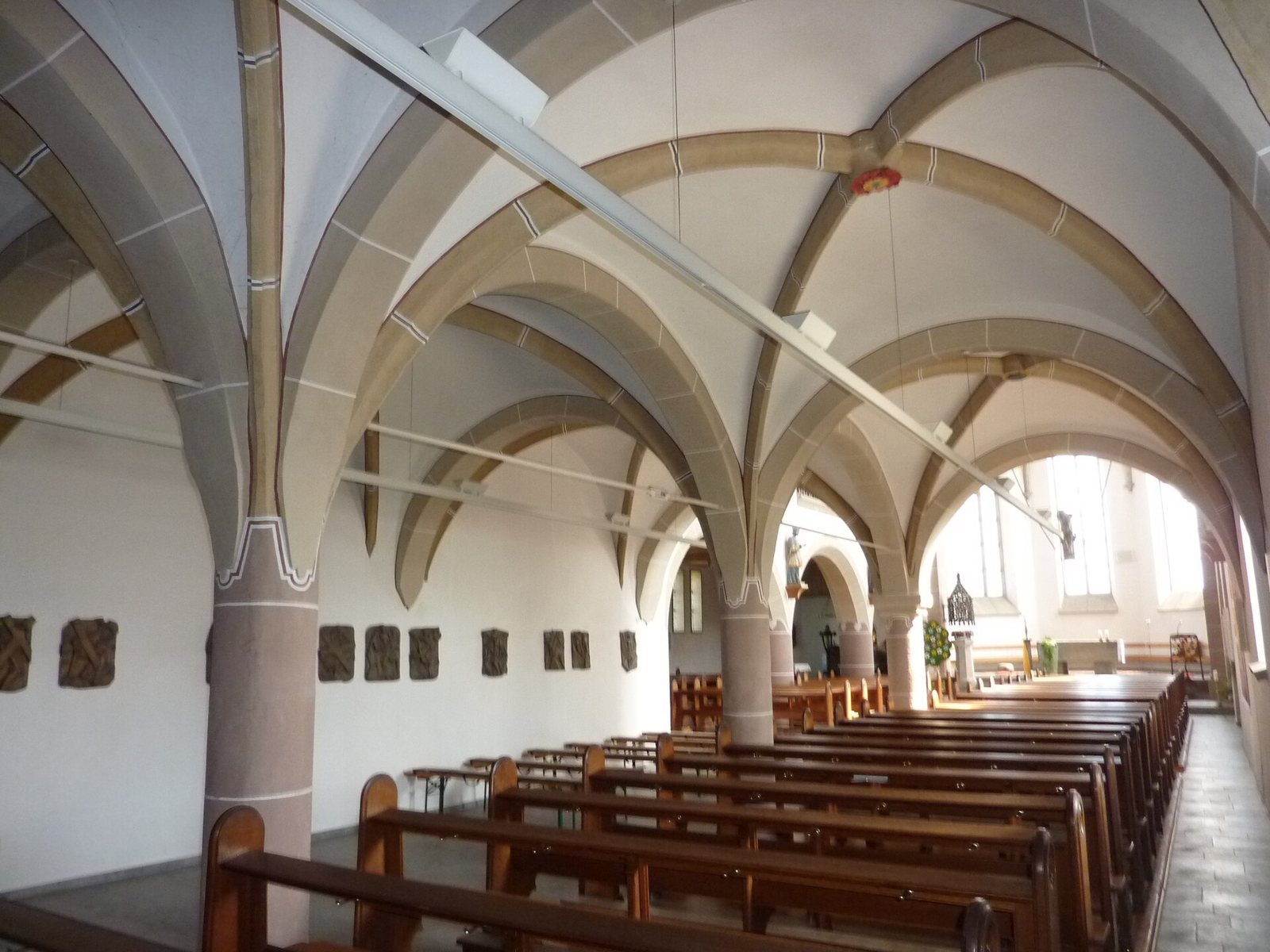
The former monastery church is the surviving structure of the complex. Its west section retains enclosing walls from the first building phase, dated either 1238 or 1257; walls in the east section belong to an extension assigned to the second phase, from 1317 to 1324. During the rebuilding of 1638, the nave was lengthened to twice its earlier size and given a wooden ceiling. The church thus preserves fabric from more than one phase of the monastery’s development, alongside the form created in its 17th-century reconstruction.