Kloster Nimbschen: A Former Cistercian Nunnery in Germany
Site at a Glance
- Rating
- 4.5
- Popularity
- Low
- Country
- Germany
- Primary era
- Medieval
- External website
- Open
- Eras represented
- Medieval, Modern
- Civilizations
- German, Holy Roman Empire, Margraviate of Meissen
- Site type
- Religious
- Remains
- Monastery
On this page11 sections
History
Kloster Nimbschen, also known as Marienthron, is the former site of a Cistercian nunnery near Grimma in Saxony, Germany, founded in 1243 and rebuilt in the Gothic period. The religious community existed until its dissolution in 1536, while the monastery estate continued as an economic enterprise until it was leased in 1542.
Foundation and relocation
Margrave Henry III of Meissen, known as Henry the Illustrious, founded the nunnery near Torgau in 1243 as a religious foundation for the salvation of his recently deceased wife, Constantia of Austria. Its initial endowment included landed property, the parishes of Altbelgern and Weßnig, and the church of Torgau. Some of these holdings had earlier been intended, in 1119, for Reinhardsbrunn Benedictine Abbey.
The nunnery joined the Cistercian order in 1244. This Catholic monastic order developed from the Benedictine tradition and emphasized communal discipline, regular worship, and productive estates. Pforta Abbey became its mother house. Monks from Pforta served as confessors, while its abbots possessed visitation rights and were responsible for pastoral care and assistance with economic affairs.
In 1250, Pope Innocent IV granted the nuns the Cistercian privilegium commune, a general papal privilege for members of the order. The grant did not remove the community from the jurisdictional rights of the bishop of Merseburg, and the monastery’s Cistercian affiliation was confirmed subject to those rights in 1279.
The community moved twice. Around 1250, the nuns relocated to Grimma, where they received a parish and a hospital. Before 1291, they moved again to a newly built monastery near Nimbschen. The foundation also strengthened the territorial authority of the Wettins, the German princely dynasty whose rulers controlled extensive territories in Saxony.
Economic development and dissolution
During the late Middle Ages, the monastery held extensive property along the Elbe and Mulde. The expansion of its landed lordship stagnated from the fourteenth century, and financial difficulties became apparent toward the end of the fifteenth century. Reform efforts by Wettin rulers and the abbots of Pforta, combined with substantial building work, helped restore the community’s economic condition by the 1520s.
Reformist ideas reached the monastery during the Reformation, the sixteenth-century religious movement that challenged the authority and practices of the Western Catholic Church and led to the establishment of Protestant churches. In 1523, nine nuns fled, including Katharina von Bora and Magdalena von Staupitz. Katharina von Bora later left religious life and married Martin Luther, one of the leading reformers.
When the last abbess, Margaretha II von Haubitz, died in 1536, only nine nuns remained from a community of 40 women. The spiritual institution was then dissolved, although its administrator continued to operate the economic enterprise. In 1542, Elector Johann Friedrich of Saxony leased the monastery estate.
Secular estate and later decline
From 1550 to 1948, the secularized property belonged to the Fürstenschule in Grimma, later known as the St. Augustin Gymnasium, as a state school estate. Lease income financed free places at the school for talented pupils from all social backgrounds. The Grimma school authority administered the property and maintained it economically.
The monastery buildings gradually deteriorated and were dismantled for building materials. In 1810, a new monastery estate was created from the remaining material. It became a school outlying estate from 1901, while the adjacent settlement of Nimbschen developed beside the former monastery near Klosterholz.
Remains
Monastic buildings
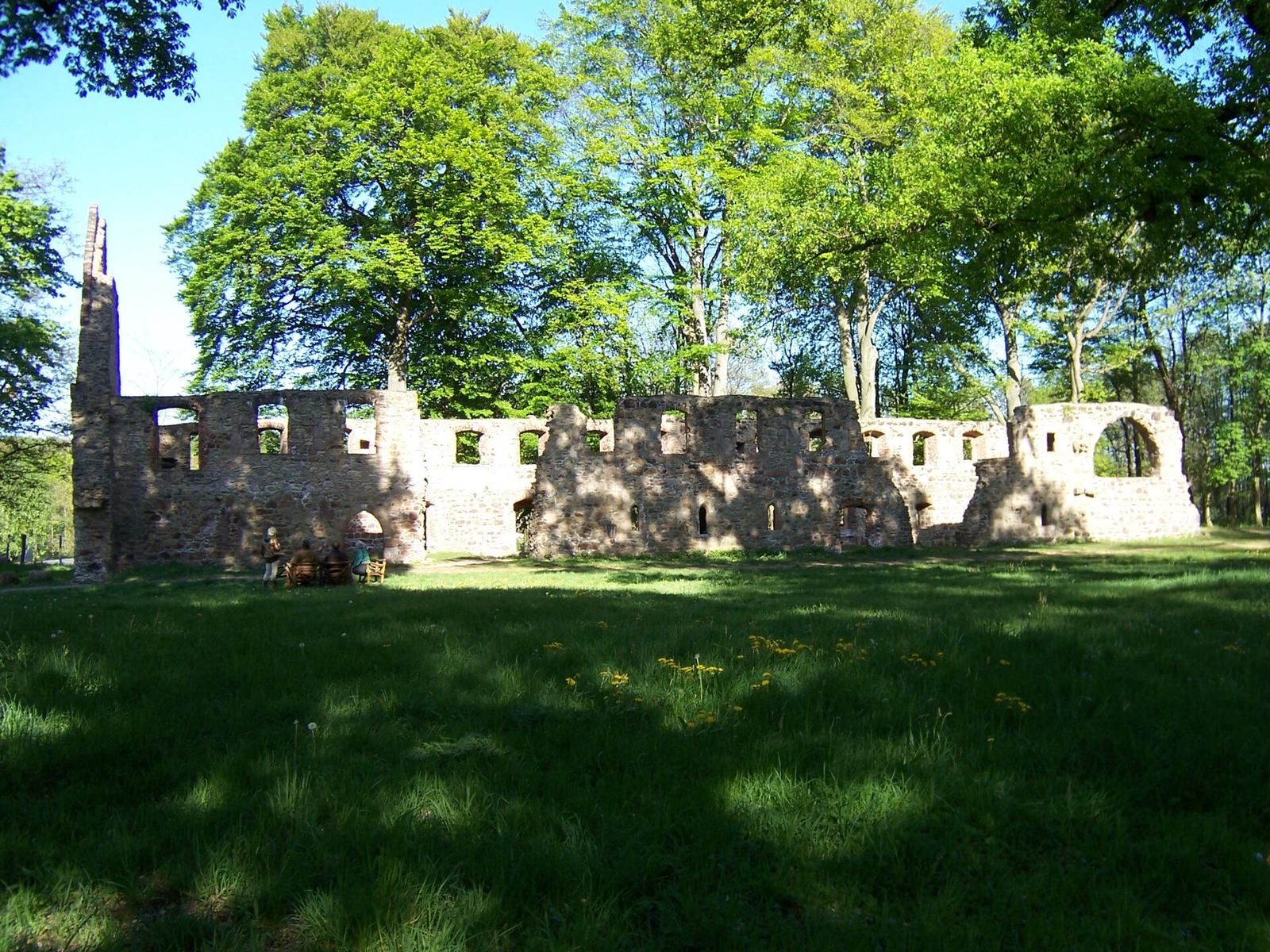
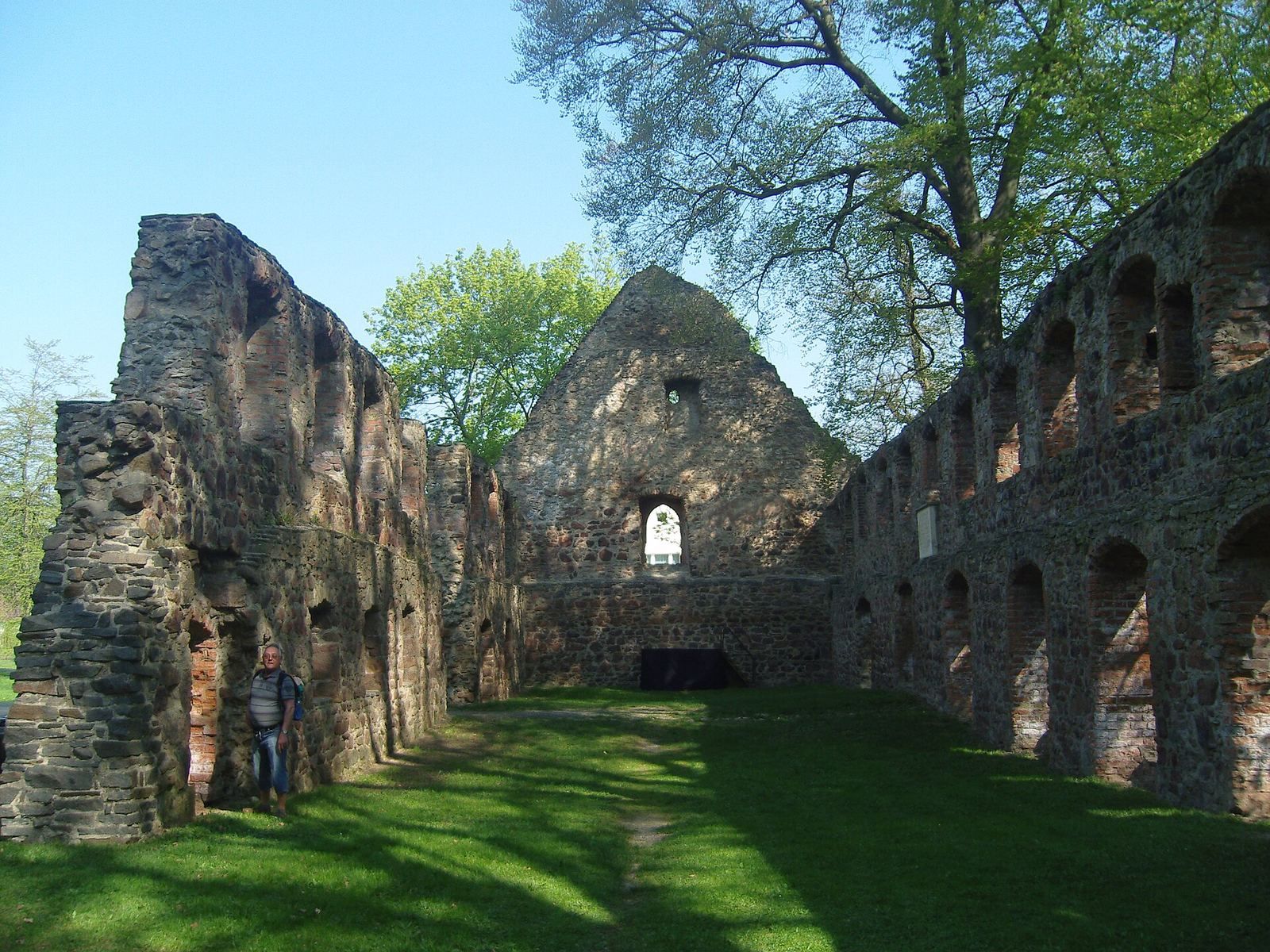
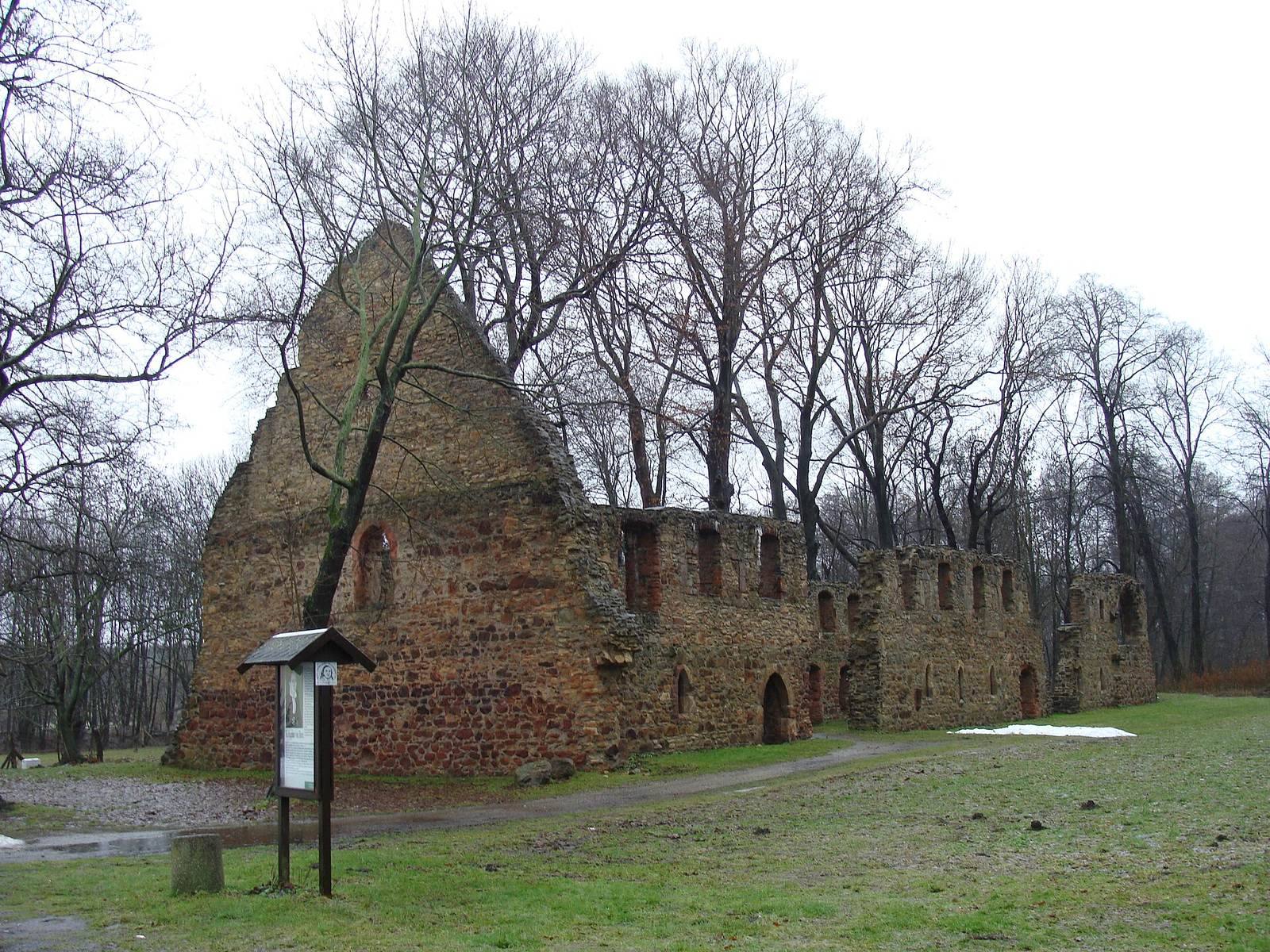
The monastery was established at its present location near Nimbschen before 1291. Its church was consecrated in 1291, and the complex was built in the Gothic style. The former monastery now survives primarily as ruins, while material from the remaining buildings was reused in the construction of the new monastery estate in 1810.
Monastery church
The church formed part of the newly constructed monastery near Nimbschen and was consecrated in 1291. Its Gothic character belongs to the period when the relocated Cistercian community established its permanent home. The surviving monastery is chiefly ruinous, and material from the former buildings was later incorporated into the estate built in 1810.
Hospital buildings
At the earlier Grimma site, the hospital buildings probably provided accommodation for the nuns. They were altered and enlarged between 1250 and 1270, during the period after the community’s first relocation. Their purpose connects the temporary Grimma establishment with the nunnery’s institutional development before the move to Nimbschen.
Later estate and present complex
Monastery estate
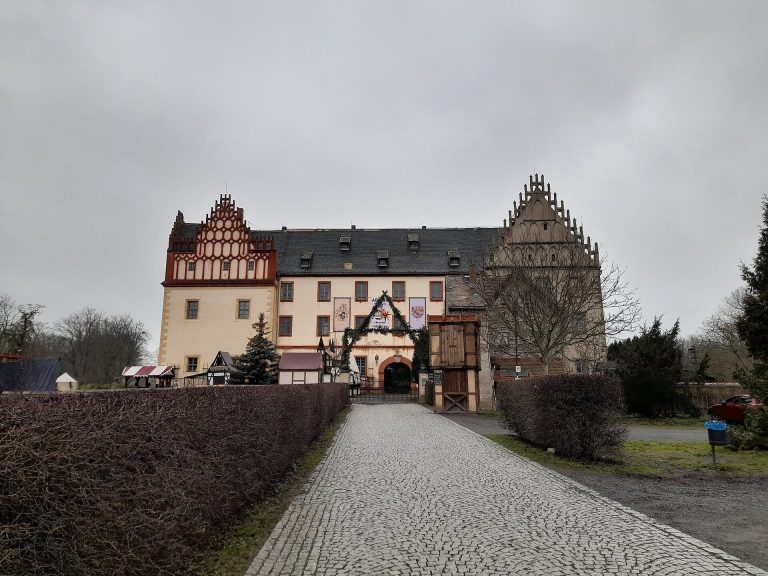
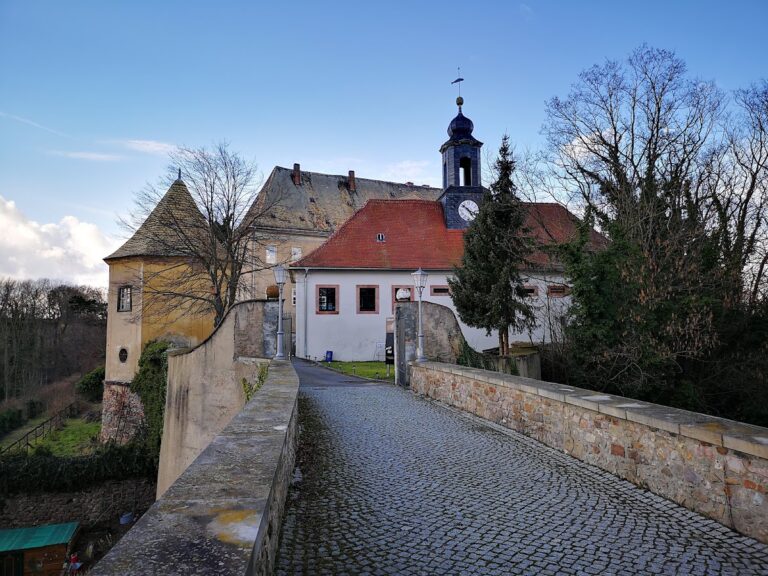
The new monastery estate created in 1810 incorporated material from the deteriorating monastic buildings. It was used as a school outlying estate from 1901, continuing the property’s association with the Grimma school estate after the monastery’s religious functions had ended.
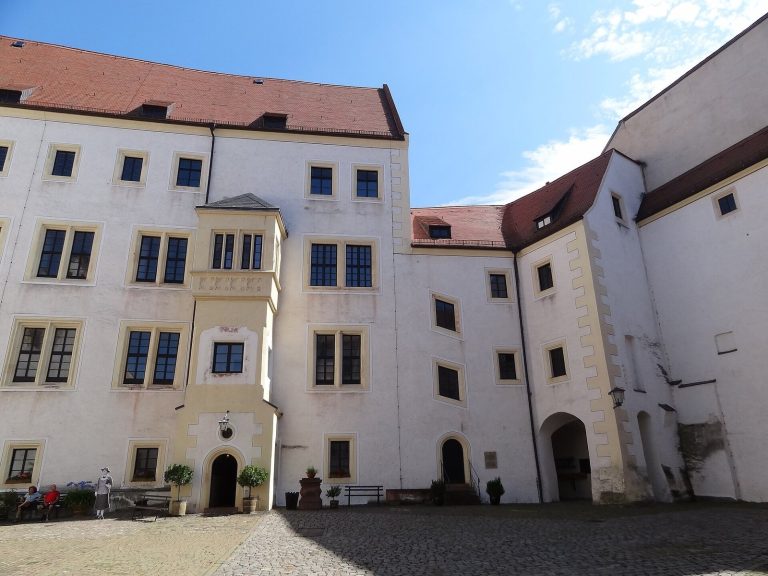
Hotel complex and chapel
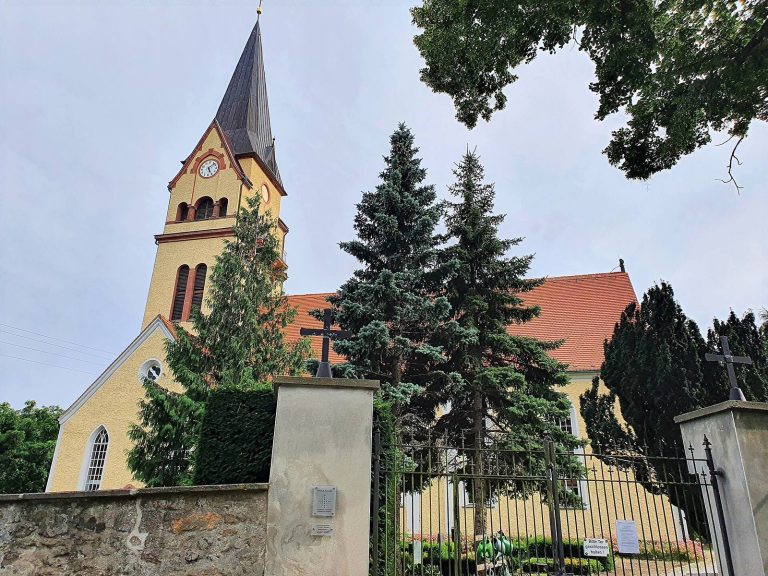
A hotel complex now stands beside the monastery ruins. It includes meeting facilities and a cultural barn, and the complex was affected by the 2002 flood. A chapel was planned beside the ruins, with its foundation stone laid on Reformation Day in 2010.